It was a car road trip. To reach the peaceful landscapes of the Loire Valley, we first had to make it past the seemingly eternal traffic of Paris’s Boulevard Périphérique and then Orly Airport. But once we left the congestion behind, the scenery slowly began to change. The roads became quieter, the horizon wider, and the busy rhythm of Paris gradually disappeared.
We arrived just as the sun was setting. The countryside was bathed in soft summer light, with fields stretching into the distance and small villages appearing along the way.
Montrichard
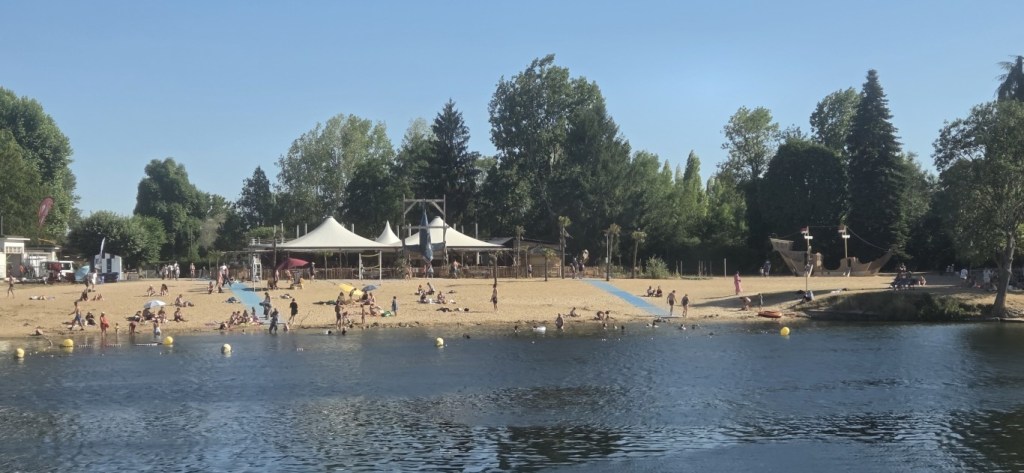
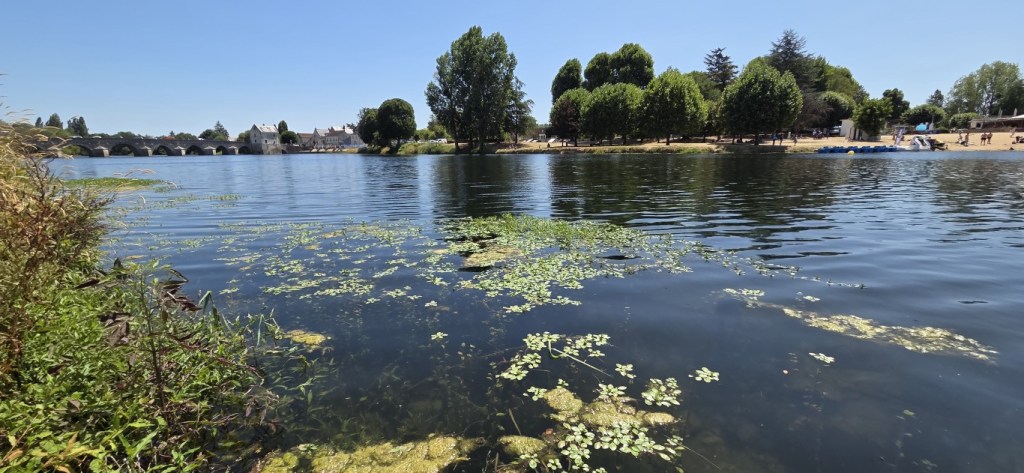
The first town to unfold before us was Montrichard Val de Cher, sitting quietly along the banks of the Cher river. We reached it at exactly the right moment. The setting sun had turned everything golden, its last light falling across the old stone bridge and reflecting in the water below.
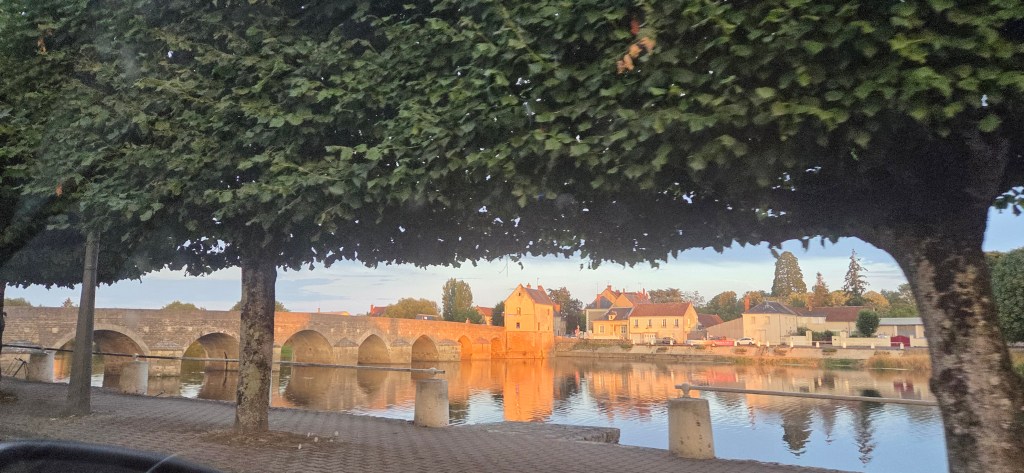
The Pont de Montrichard has medieval origins: the town dates its construction to the 12th century, during Plantagenet rule, when Henry II Plantagenet was both Count of Anjou and King of England.
Château de Razay
Our check-in was at a real château — Château de Razay. It wasn’t my first time sleeping in a castle or fortress, but I was still impressed by its grand chandeliers, oversized mirrors and sweeping staircase. Even the ornate stair handles carried that unmistakable elegance of 18th-century France.
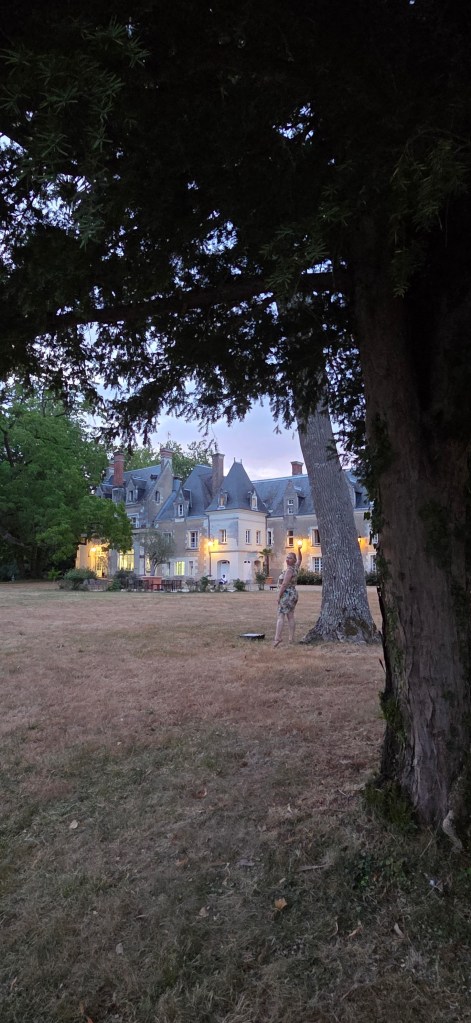
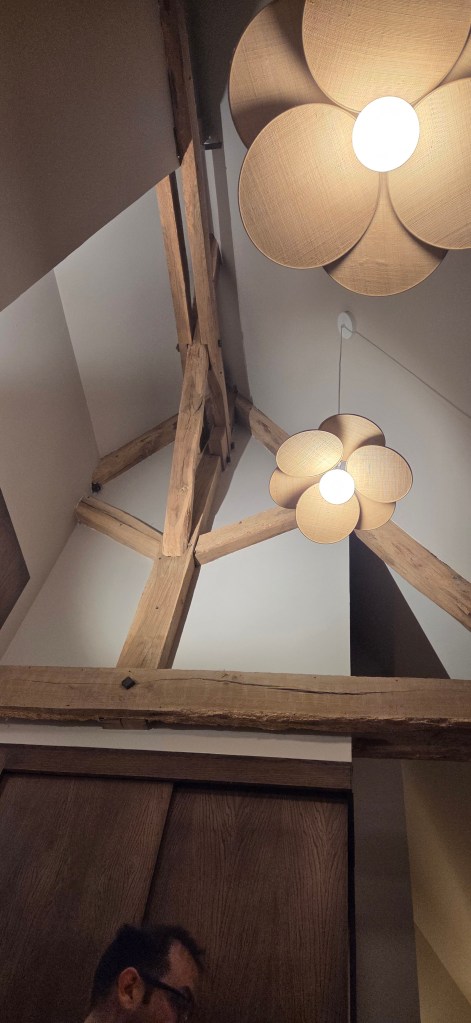
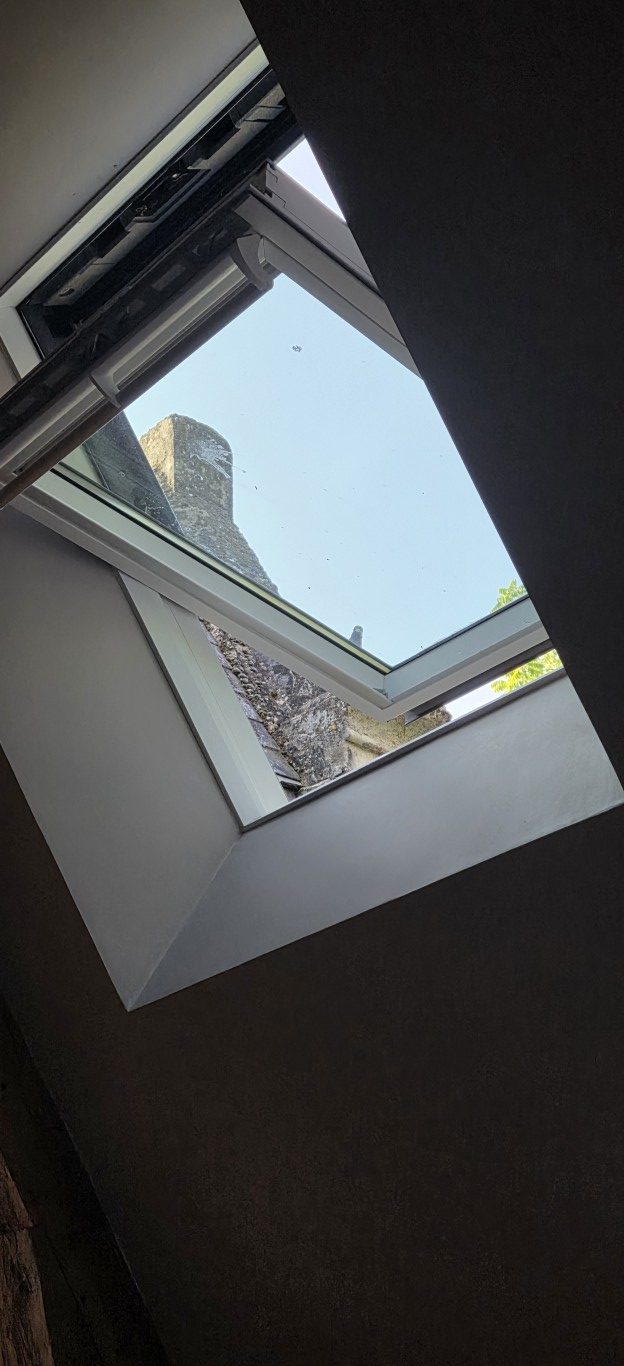
They placed us in the attic, which only added to the feeling that I had somehow wandered into a Cinderella story. Our high-ceilinged room overlooked the château’s chimneys, where pigeons gathered every morning to peer curiously down at our bed. I expected them to come inside and help me sort the wheat from the ashes.
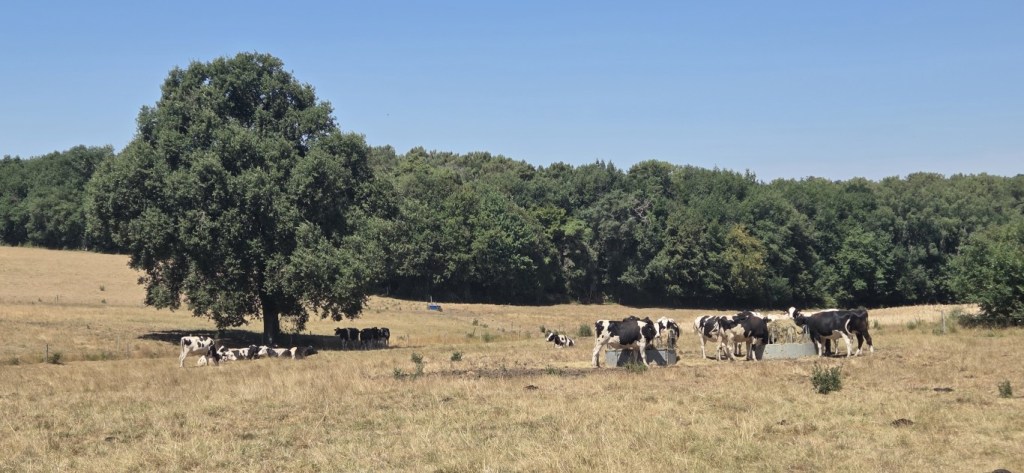
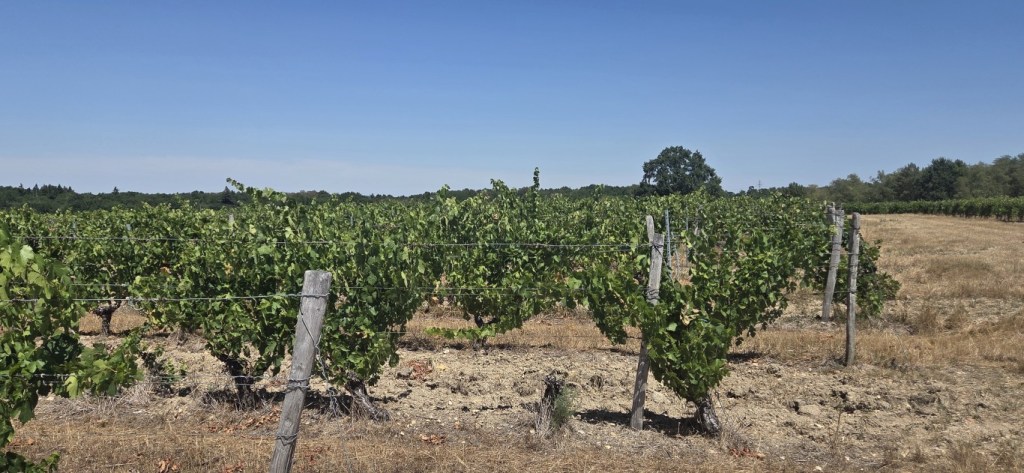
The castle has a mini farm and vineyards. I felt so much at peace when I was there.
Château de Montpoupon
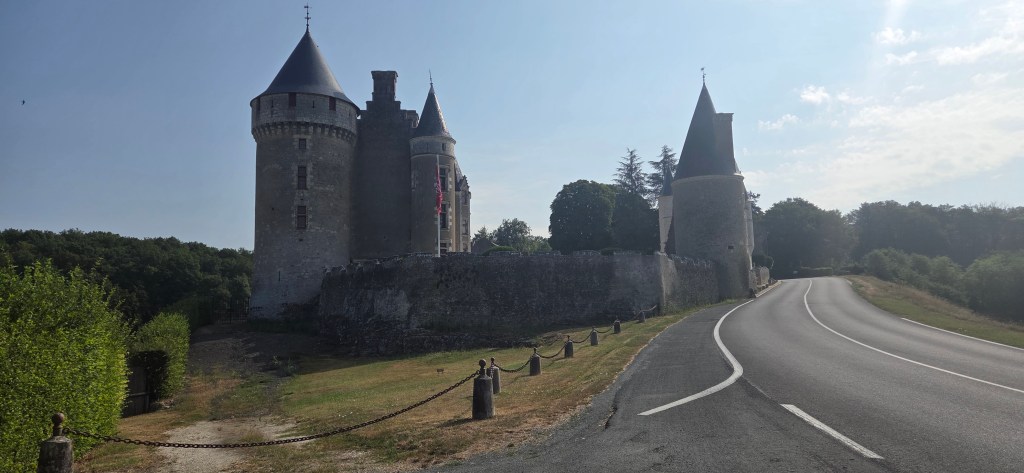
The next morning, we started exploring the valley, beginning very close to our château with Château de Montpoupon. It has a particularly interesting history: the medieval fortress was largely destroyed during the Hundred Years’ War and rebuilt as an elegant Renaissance residence by the de Prie family, who had been inspired by the Italian Renaissance. Perhaps the most charming detail is that it is still a family home — the same La Motte Saint-Pierre family has lived there since 1857 — and it houses a unique museum devoted to horses and the tradition of French hunting.
Soon, the vineyards began to take over the landscape, reminding us that the Loire Valley is as much a land of wine as it is of castles. Here a little cheating sheet:
- If they tell you name of wine like Sancerre and Pouilly-Fumé – this is the name of the region in Loire Valley and most surely you will be served a Sauvignon Blanc
- Vouvray is also a region, famous for Chenin Blanc, and is a sparkling wine
- Saumur is famous for its sparkling Crémant
- Chinon and Saumur-Champigny are also regions and names of the local wine of the cabernet franc variety
- Cheverny produces Sauvignon Blanc
- For red wines the main grape is Cabernet franc with some smaller plantings of Cabernet Sauvignon (then it could be a rose’ as well), Gamay and Malbec.
With so many local appellations and grape varieties, tasting the valley quickly became part of exploring it.
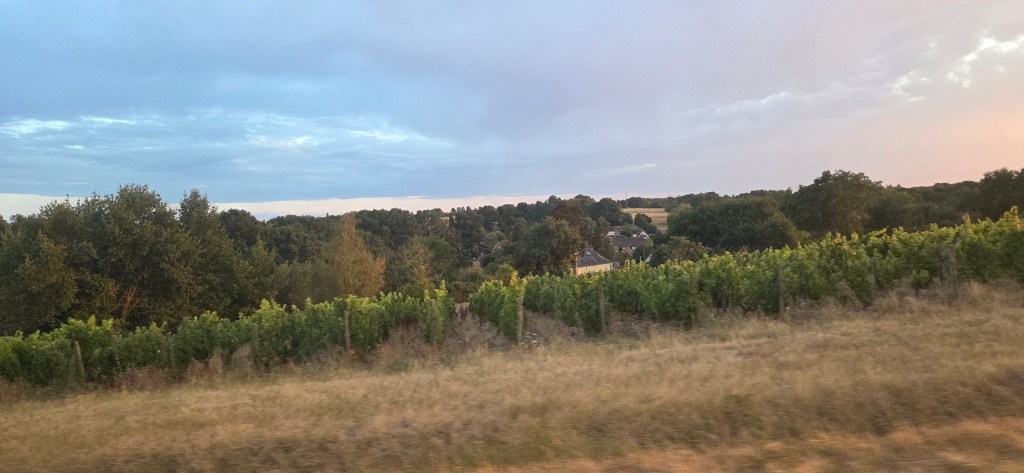
To a continental European girl like me, however, these wines can feel almost too subtle — my taste buds were raised on stronger, fuller continental wines, so I kept searching for a little more character in my glass. My French husband, naturally, mocks me for having absolutely no appreciation for subtilité.
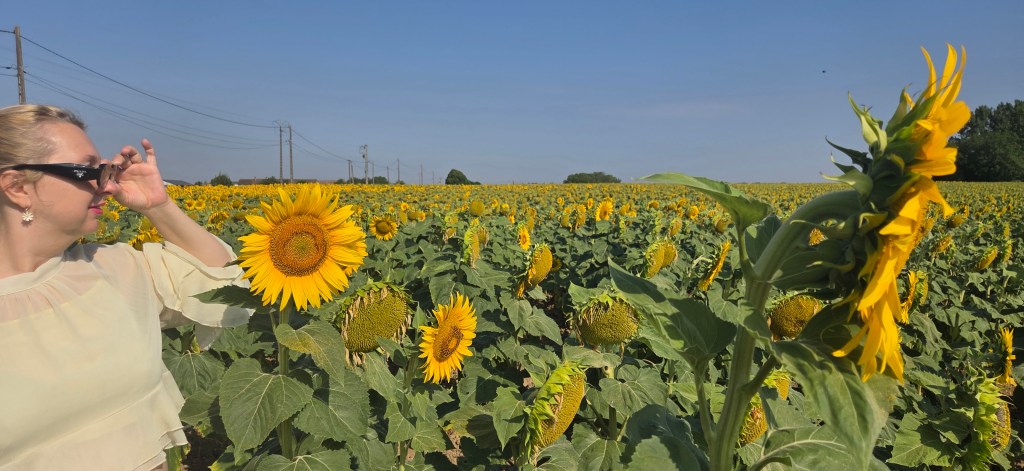
And then came the sunflowers — endless yellow fields glowing under the summer sun. Much of the harvest goes into sunflower-oil production, supplying markets including nearby Paris.
Tours
We arrived in Tours, a city whose history stretches back to Roman times and which later became one of the great centres of medieval France. Tours became a de facto royal centre rather than an official capital in the modern sense. In the 15th and early 16th centuries, French kings—especially Louis XI, who settled at nearby Château de Plessis-lès-Tours—preferred the Loire Valley because it was politically secure, prosperous, strategically located, and surrounded by royal residences and hunting grounds.
For several decades, kings and their entourages moved between Tours and the surrounding châteaux, turning the region into the political and cultural centre of the kingdom.
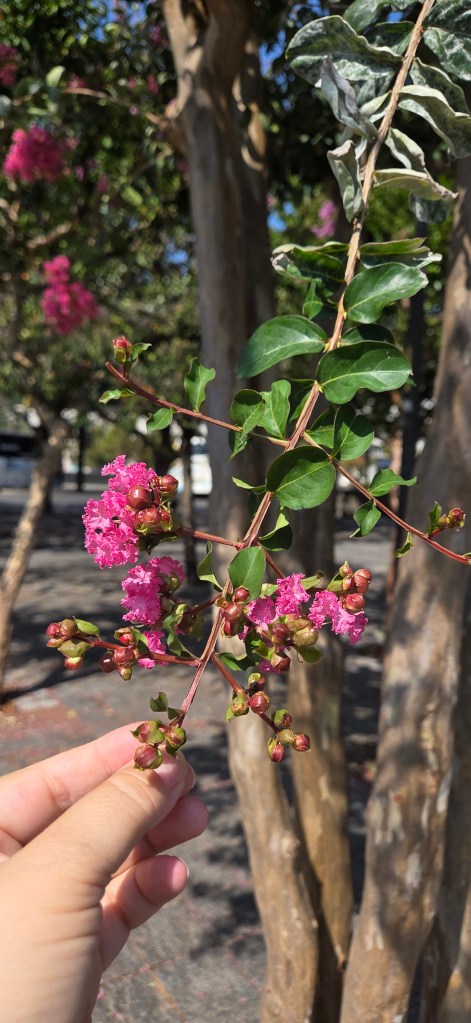
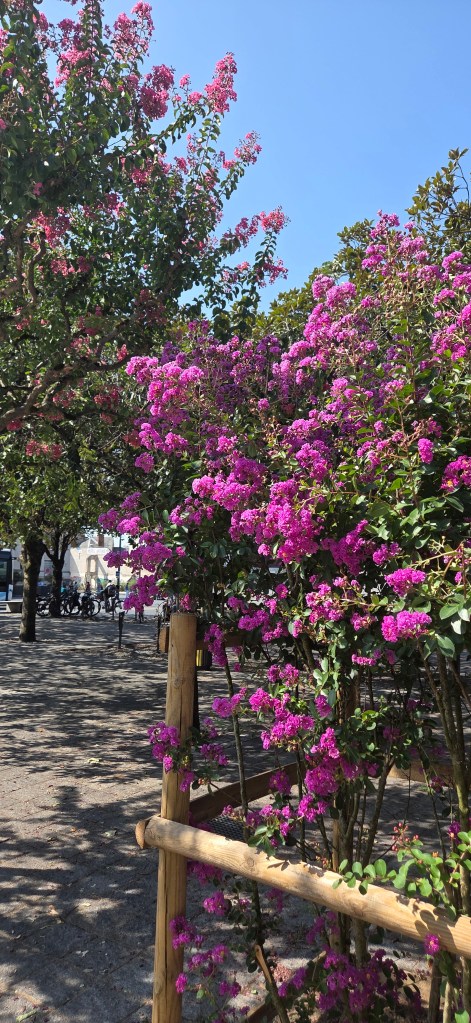
Our first stop in Tours was unexpectedly botanical: the bright pink crape myrtles in front of the main station. Their tiny, crinkled flowers looked almost like pieces of pink crepe paper — something I had never noticed growing back home.
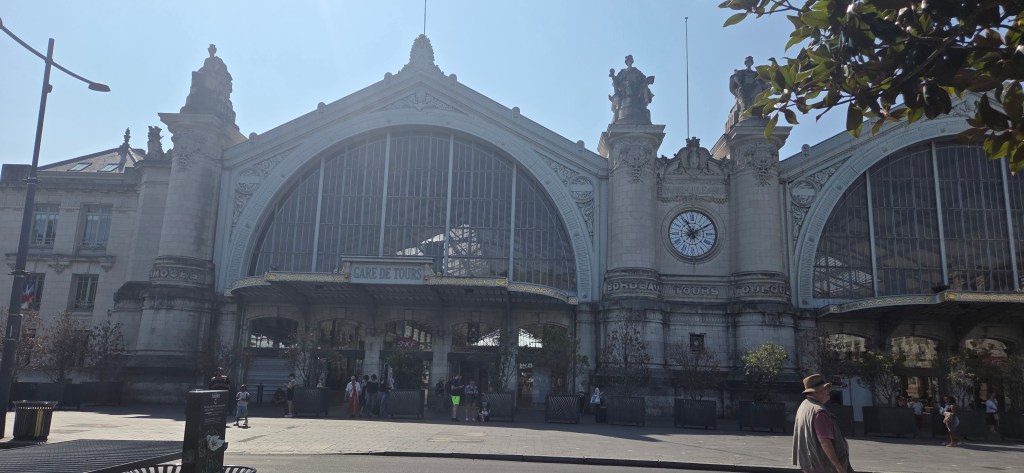
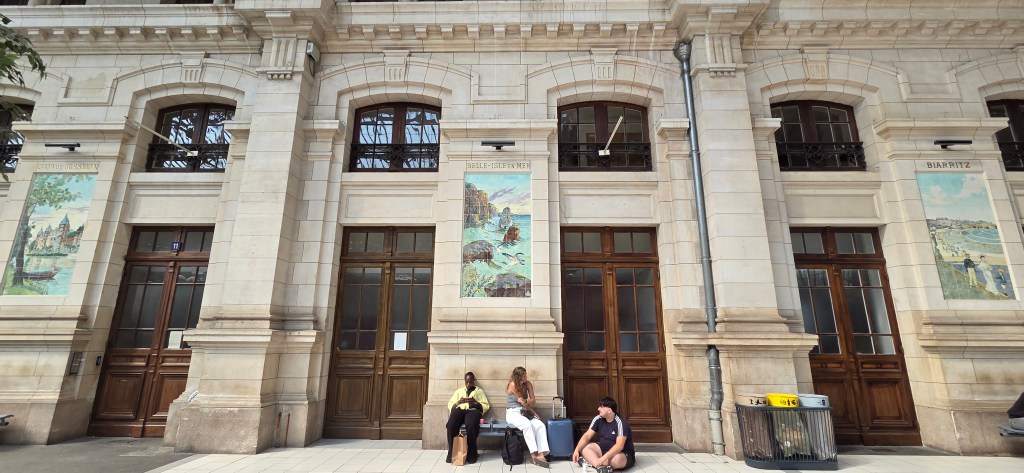
Just behind the flowers stood the monumental Gare de Tours, designed at the end of the 19th century by Victor Laloux — the same architect who would create Paris’s Gare d’Orsay. The building is described as Beaux-Arts/eclectic architecture, although some of its decorative details reflect the artistic transition toward Art Nouveau.
This is the Hôtel de Ville de Tours — Tours City Hall, and it is another monumental work by Victor Laloux, the same architect behind the Gare de Tours and Paris’s Gare d’Orsay. Built between 1896 and 1904, its lavish façade is typical of the Beaux-Arts style, deliberately designed to project the wealth and importance of Tours.
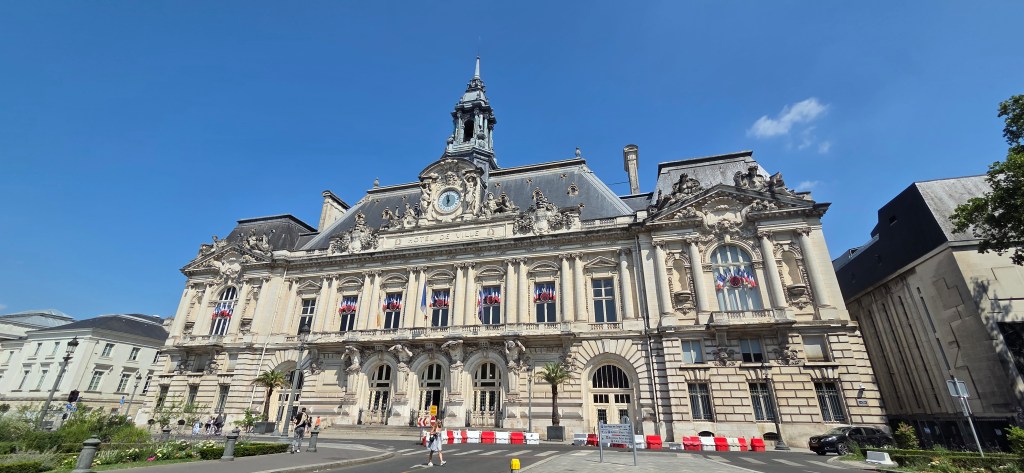
The facade is notable for its sculptures: Atlasses holding the central balcony with allegorical representation of French Republican virtues: Strength, Courage, Education and Vigilance. The clock is carried by two Caryatids, with two main rivers at their feet: Cher and Loire.
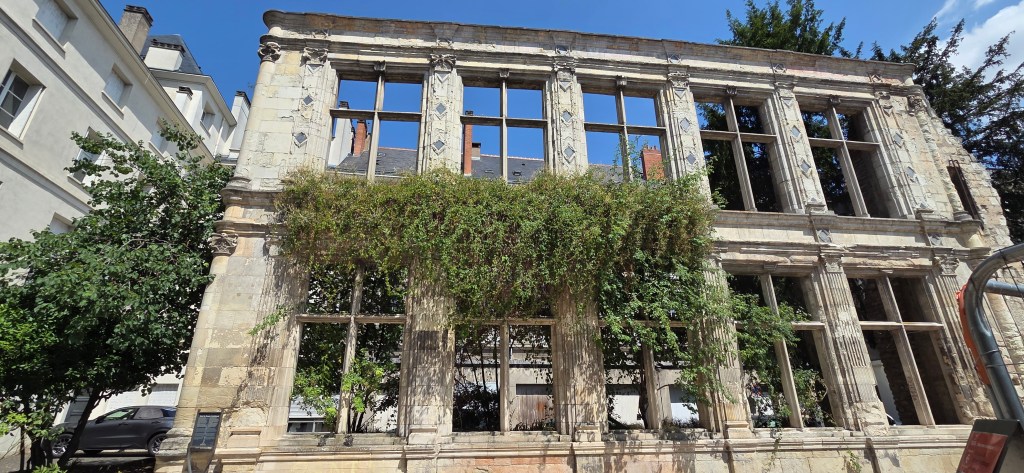
One of the most striking remains is the Hôtel de Beaune-Semblançay, an early 16th-century mansion built for the powerful financier Jacques de Beaune; much of it disappeared in the fires caused by the 1940 bombing, leaving its Renaissance façade standing almost like a theatrical ruin.
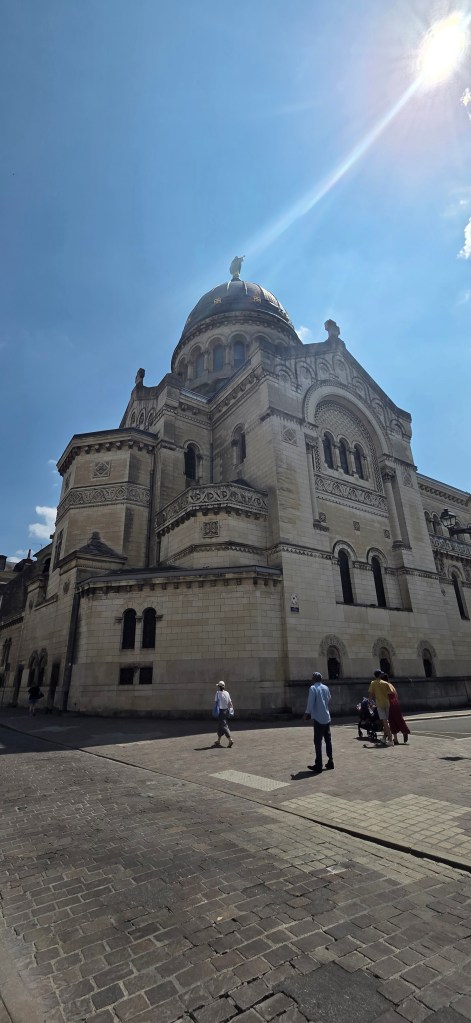
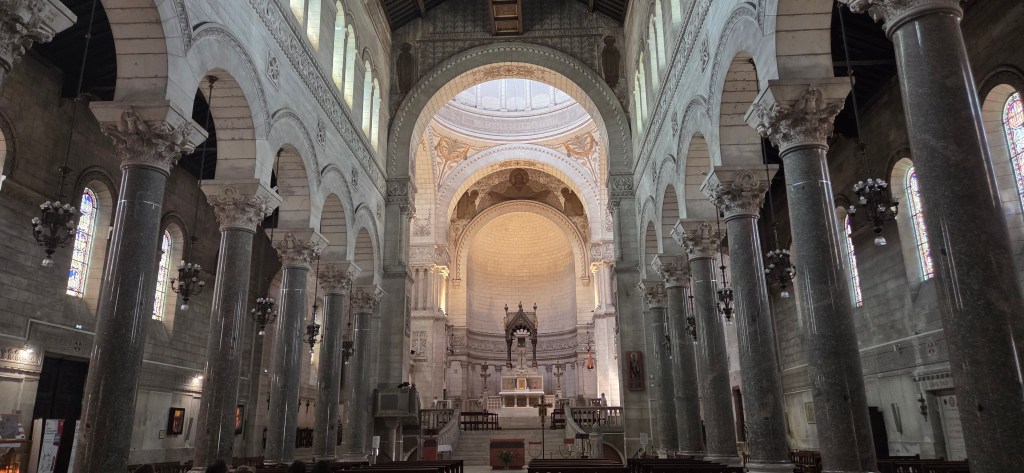
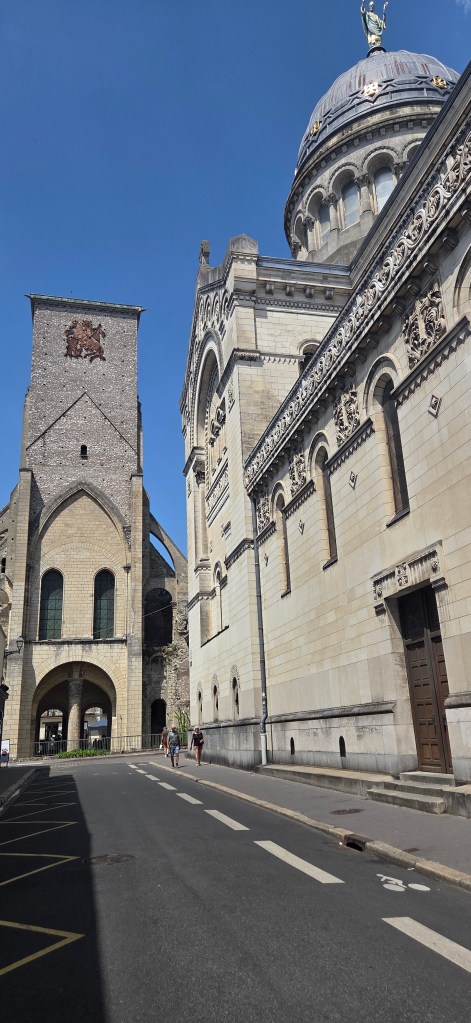
In medieval Tours, everything revolved around Saint Martin, the 4th-century Bishop of Tours famous for cutting his cloak in half to share it with a beggar. His tomb became one of the most important pilgrimage sites in medieval Europe, attracting travellers from across the continent. The original medieval church disappeared over the centuries, and today his tomb lies beneath the 19th-century Basilica of Saint Martin.
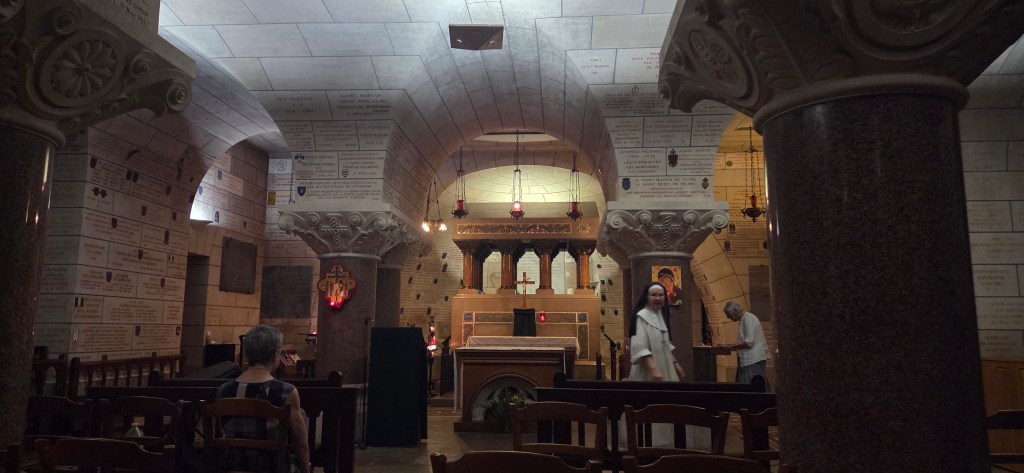
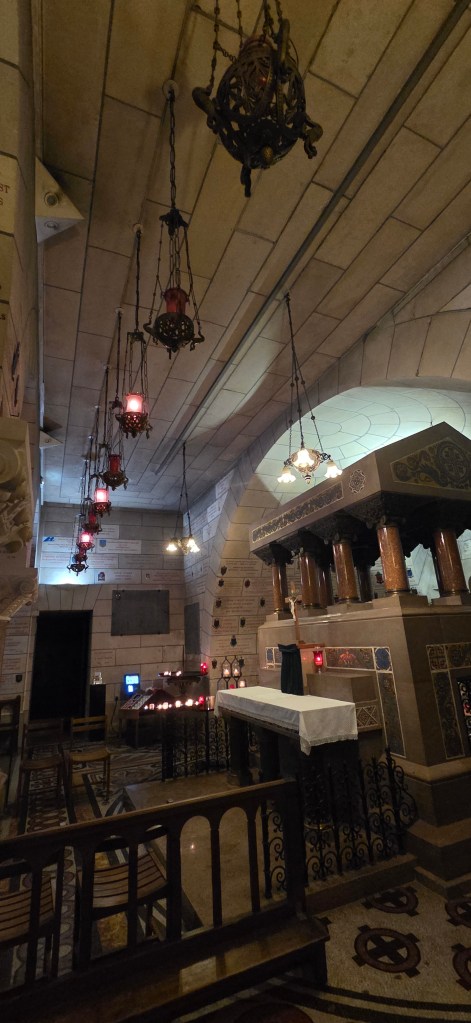
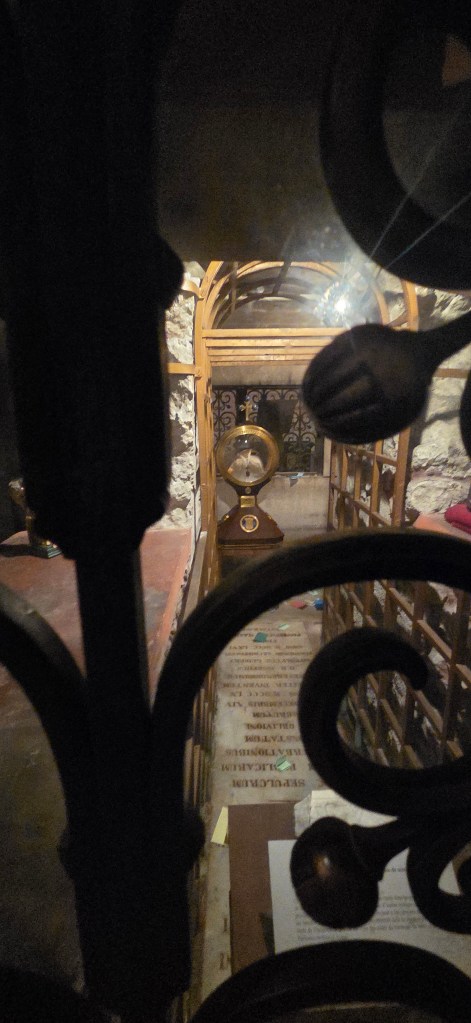
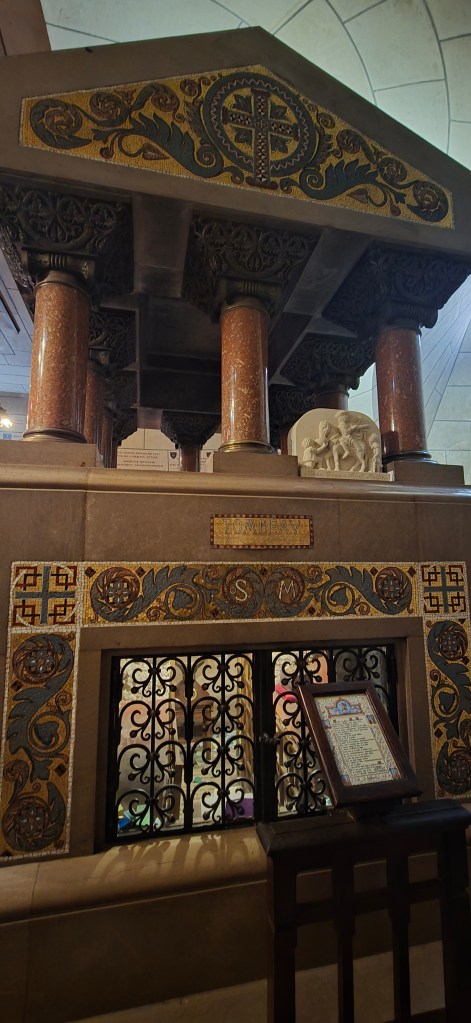
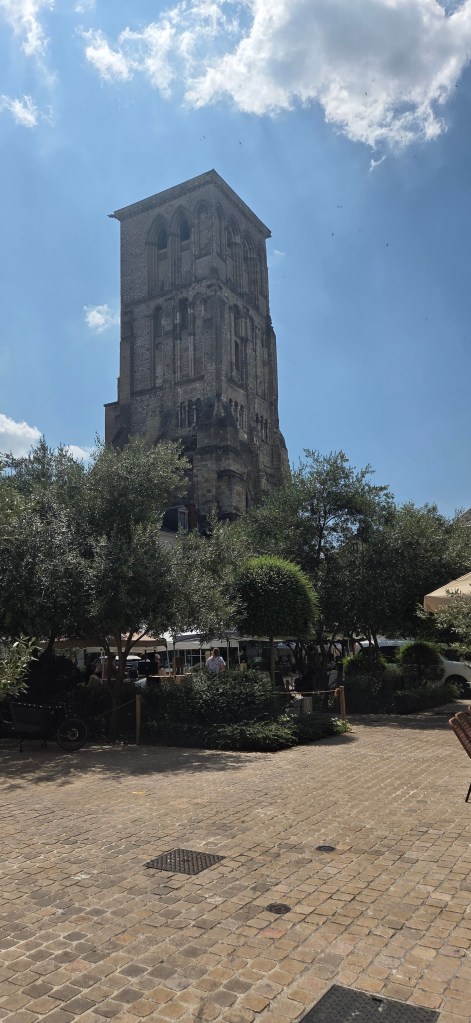
This is the Tour Charlemagne. It is one of only two major towers surviving from the enormous medieval Basilica of Saint Martin that once occupied this part of Tours. Charlemagne was deeply devoted to Saint Martin and visited his shrine in Tours in the year 800, shortly before travelling to Rome to be crowned emperor. His wife Luitgarde died in Tours during that visit and was buried at Saint Martin’s; tradition places her grave beneath or very close to the spot where the Tour Charlemagne was later built.
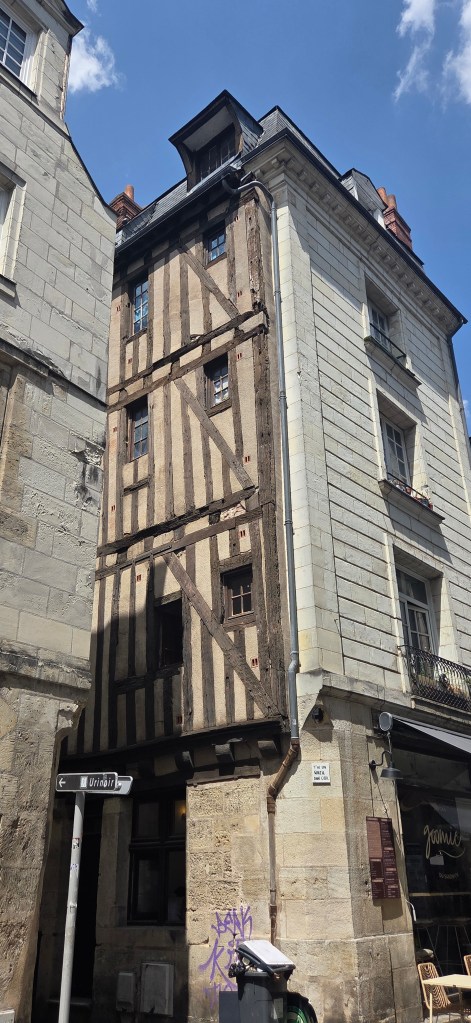
Further into the old town, timber-framed houses, narrow streets and small squares recall medieval Tours, while Renaissance mansions tell the story of the period when the Loire Valley was at the heart of the French royal court.
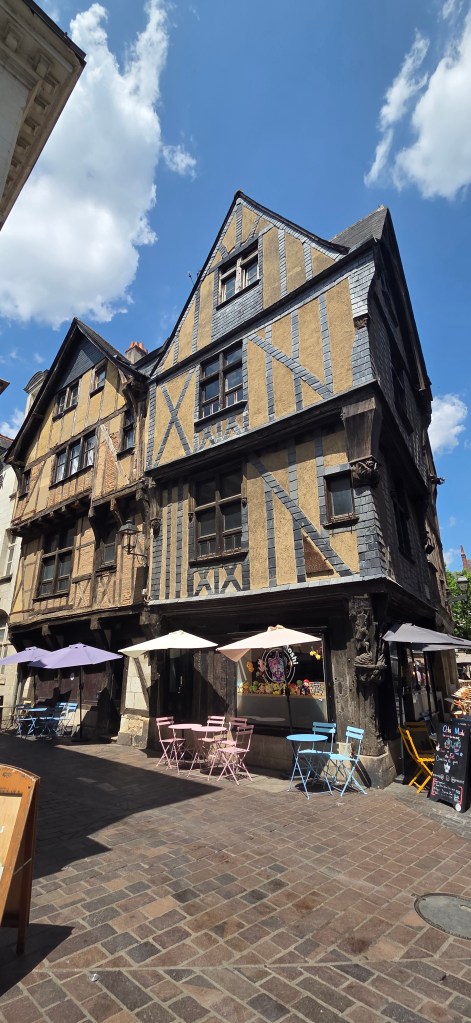
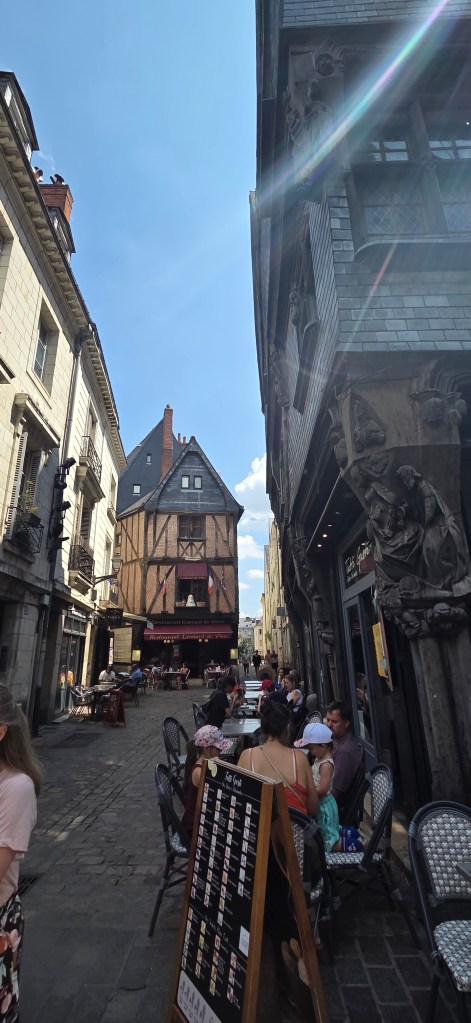
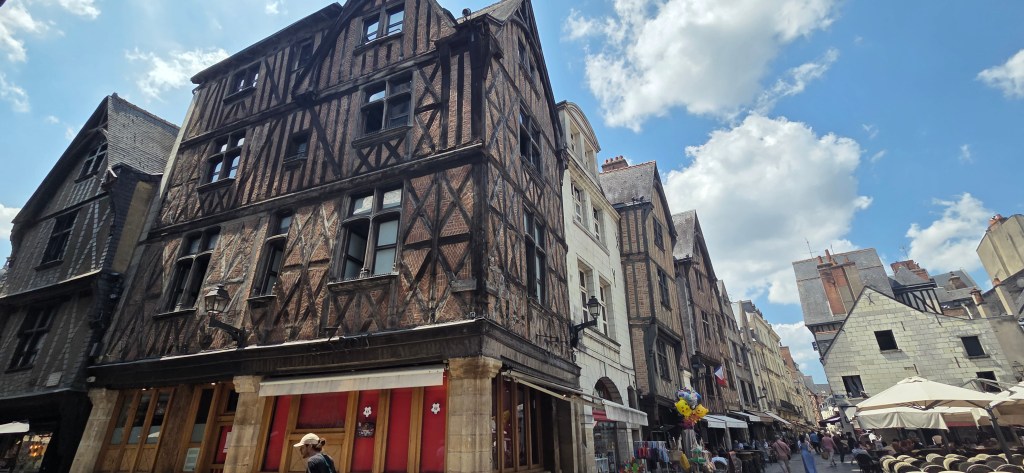
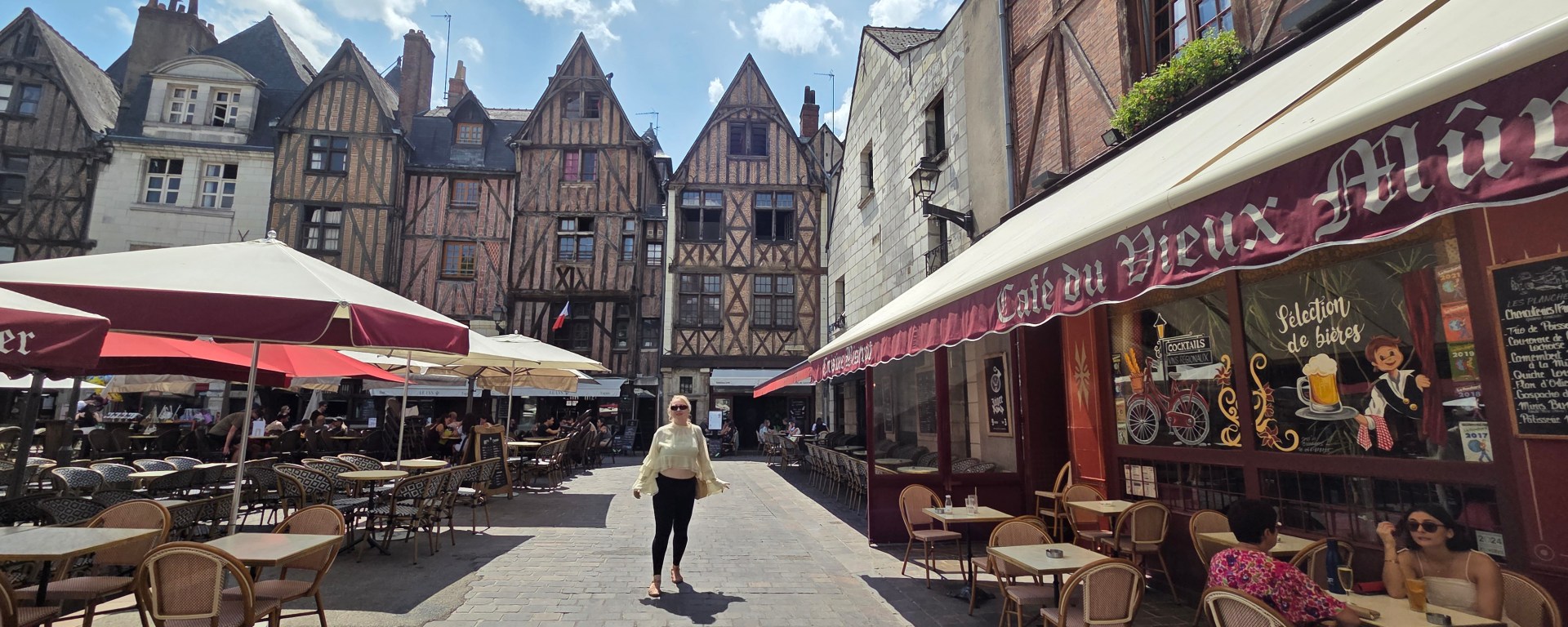
The heart of old Tours is Place Plumereau, a lively square surrounded by beautifully preserved medieval and Renaissance timber-framed houses. Once part of the medieval commercial quarter, today its terraces and cafés make it one of the best places to simply sit and enjoy the atmosphere of the city.
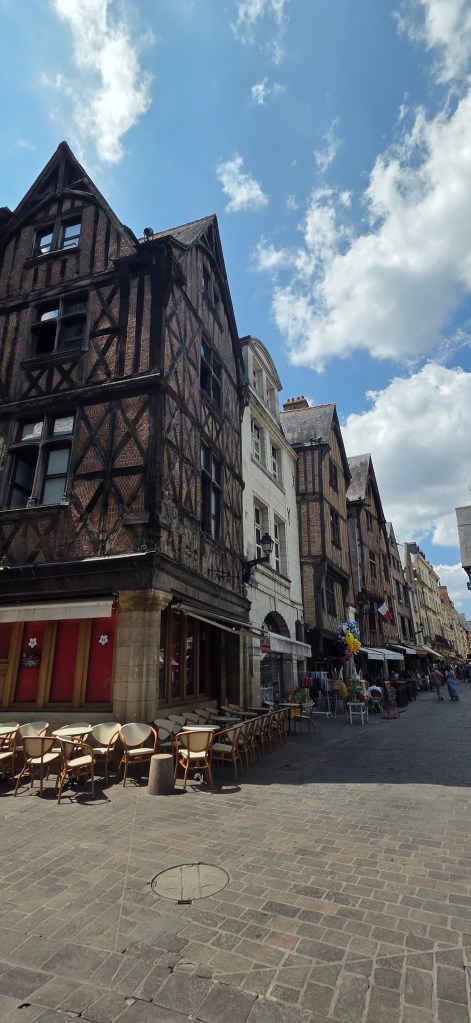
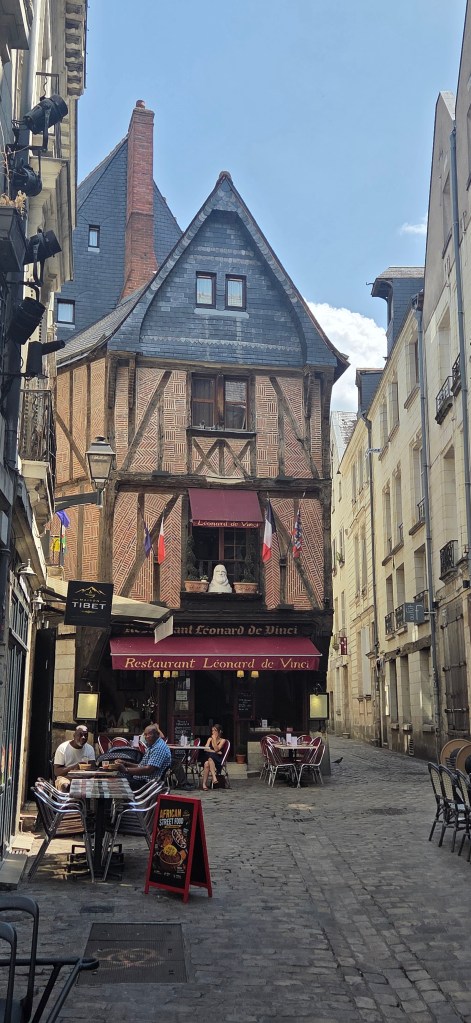
Medieval Tours was full of pilgrims, merchants and travellers; Rue du Change was literally the street of the money changers, where pilgrims arriving from different regions could exchange their currencies for the local livre tournois.
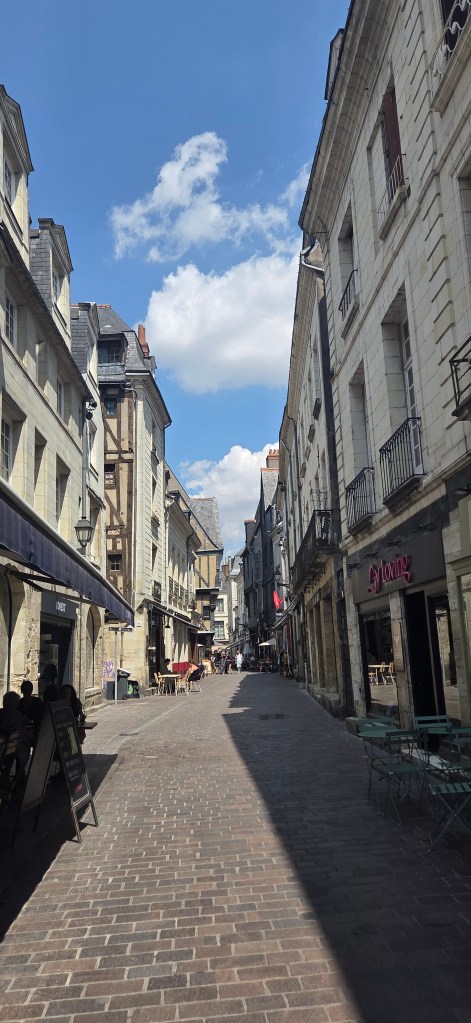
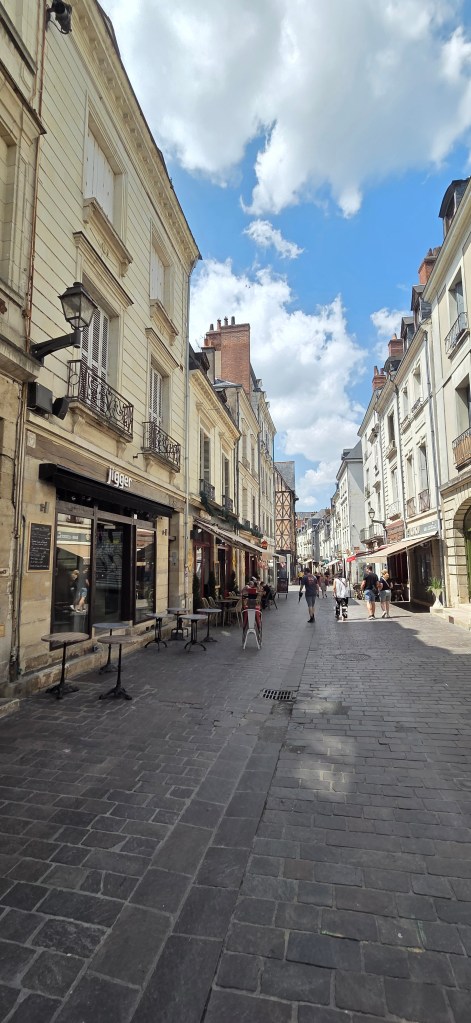
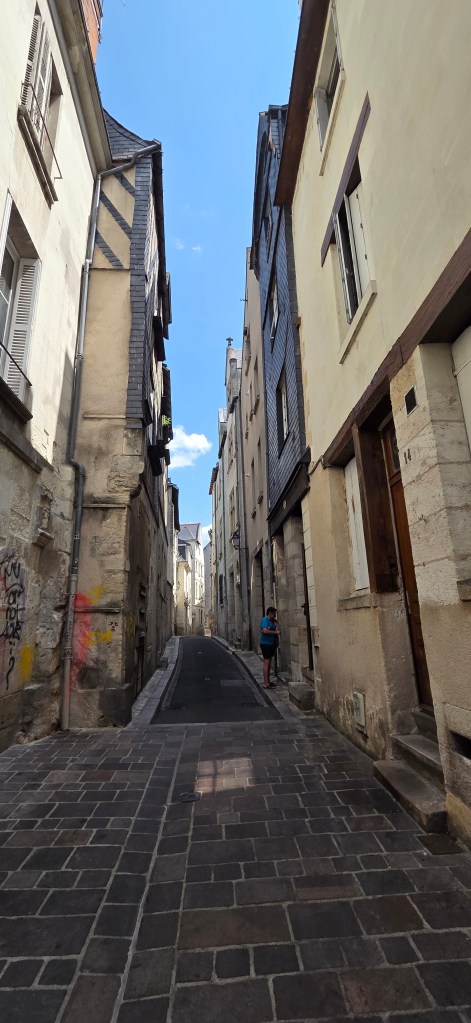
And there is a darker legend nearby: a late-15th-century house on Rue Briçonnet became associated with Tristan l’Hermite, the feared royal provost of Louis XI. Historians say the attribution is probably a romantic legend—the house actually belonged to merchant Pierre du Puy—but the story survived, which fits those tiny doors and shadowy medieval passages rather well (literature and legend exaggerated him into something close to Louis XI’s personal executioner)!
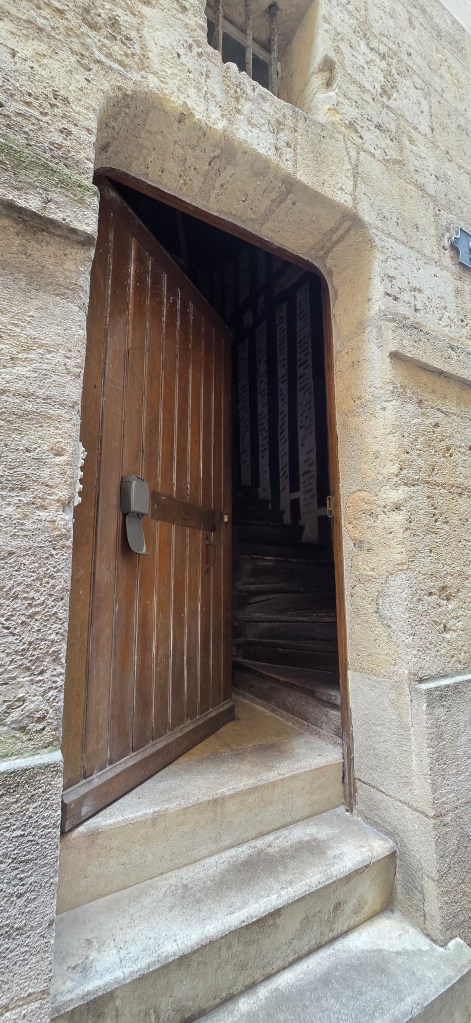
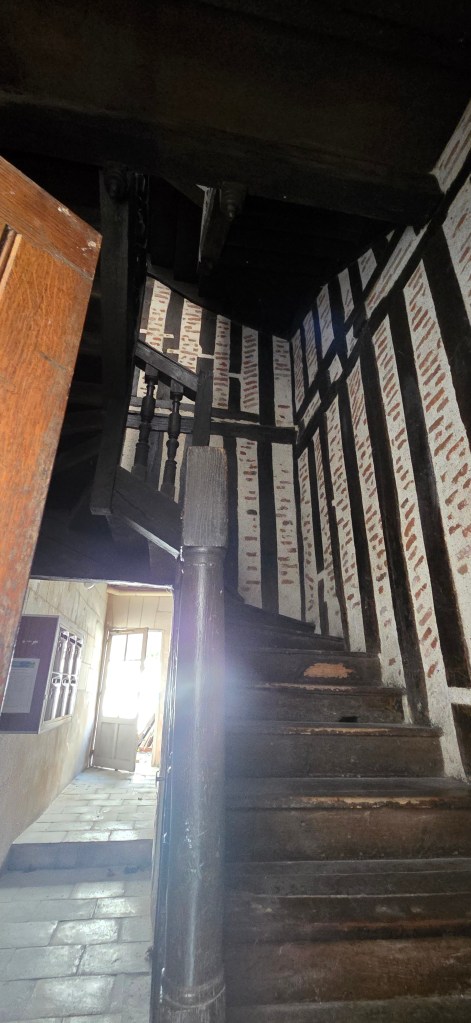
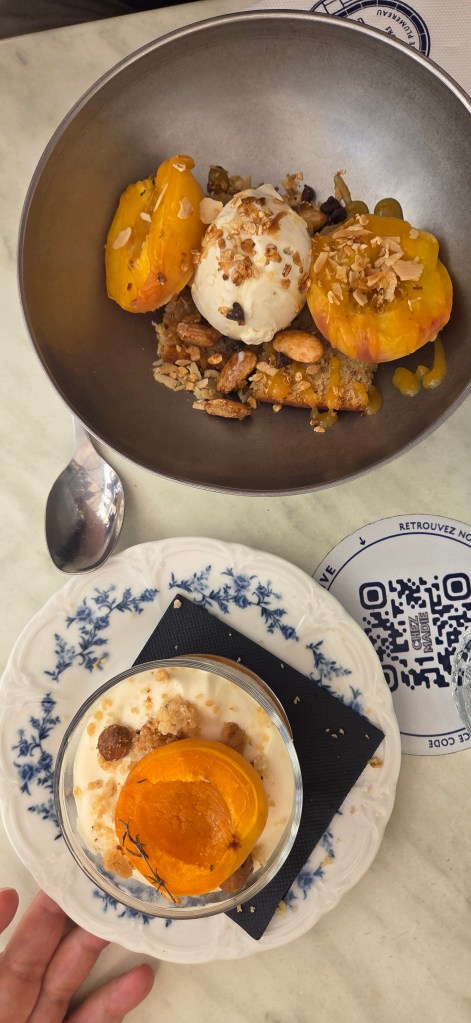
I got chills walking around and opening that door. I felt better sitting and having some wine tasting: Saumur!
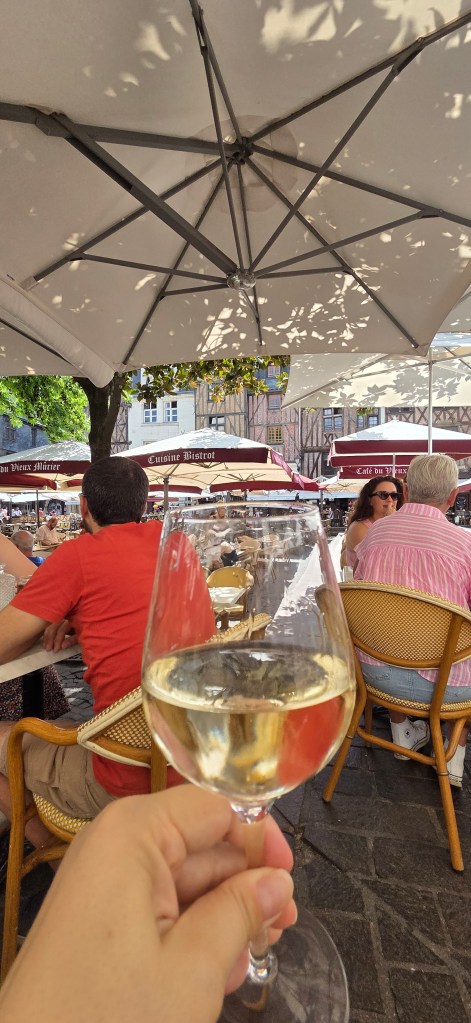
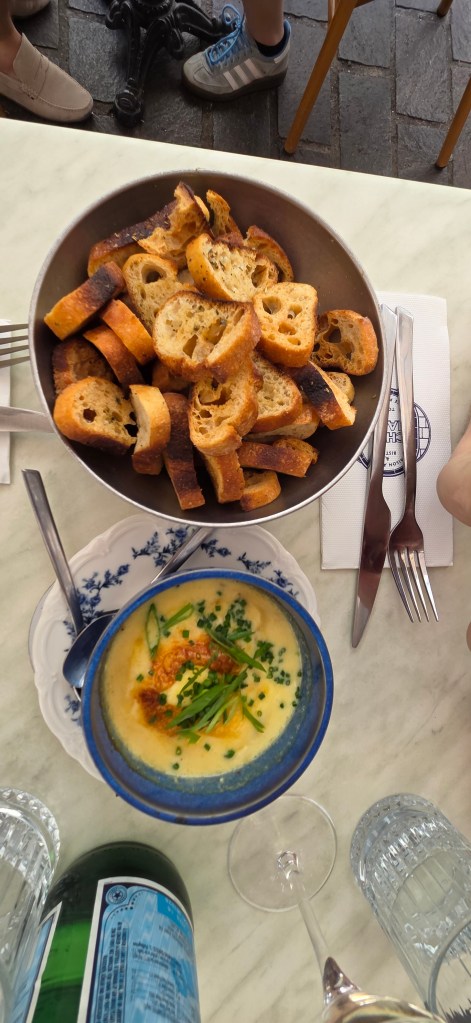
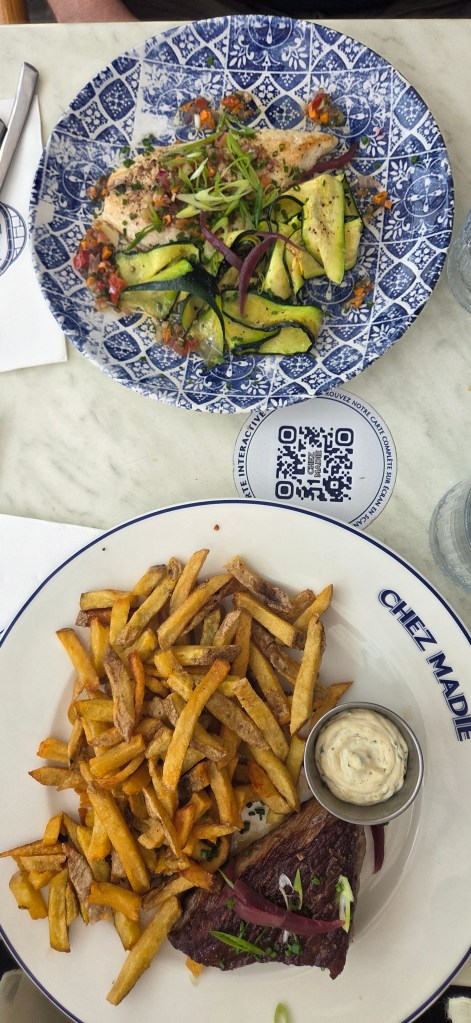
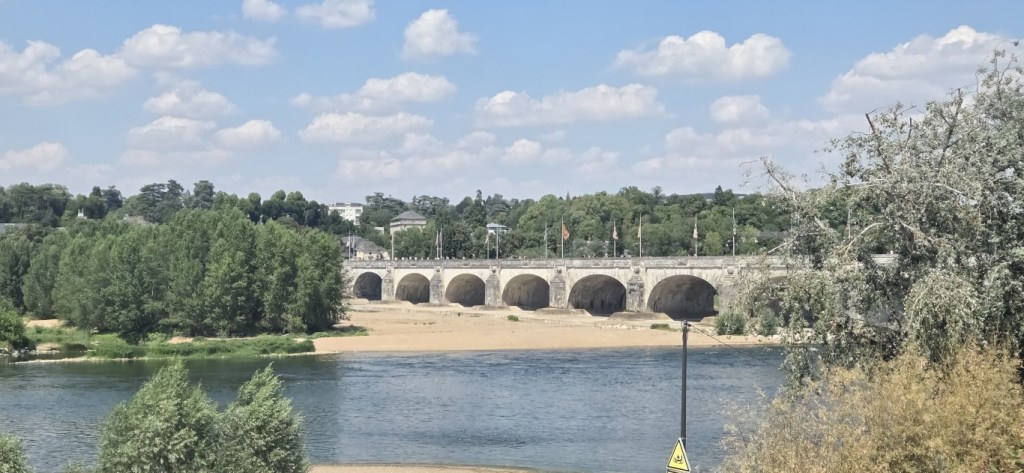
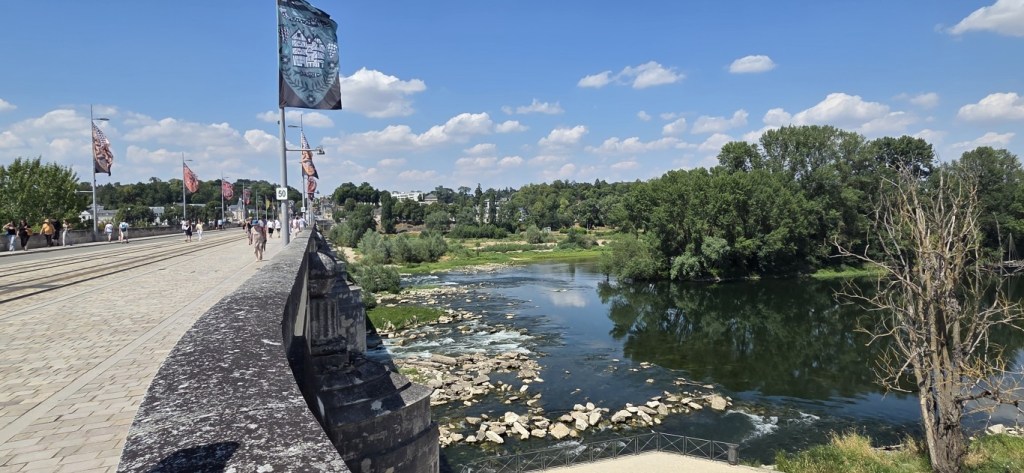
Further refreshments was quested towards the Loire river – but the hot summer produced drought. I crossed the elegant 18th-century Pont Wilson, named after Woodrow Wilson, the 28th President of the United States (1913–1921) in recognition of the American president and the U.S. role alongside France in the World War I.
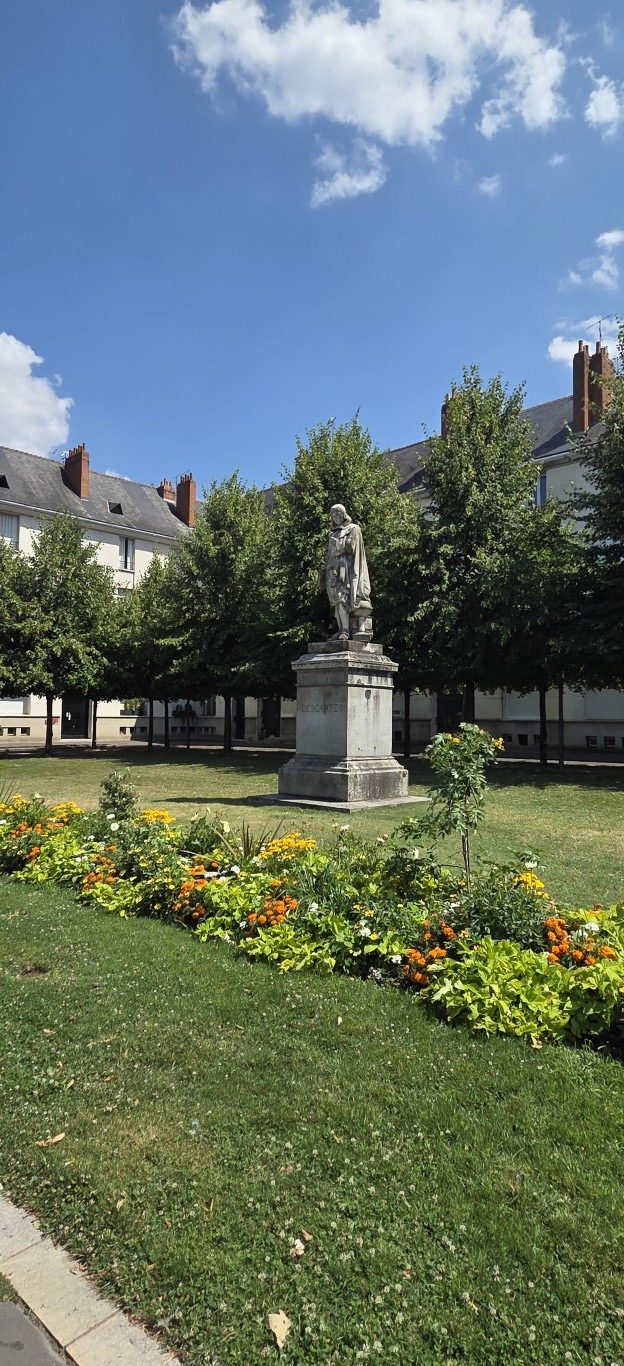
Another famous name connected to Tours is René Descartes, the philosopher and mathematician behind the famous “I think, therefore I am.”
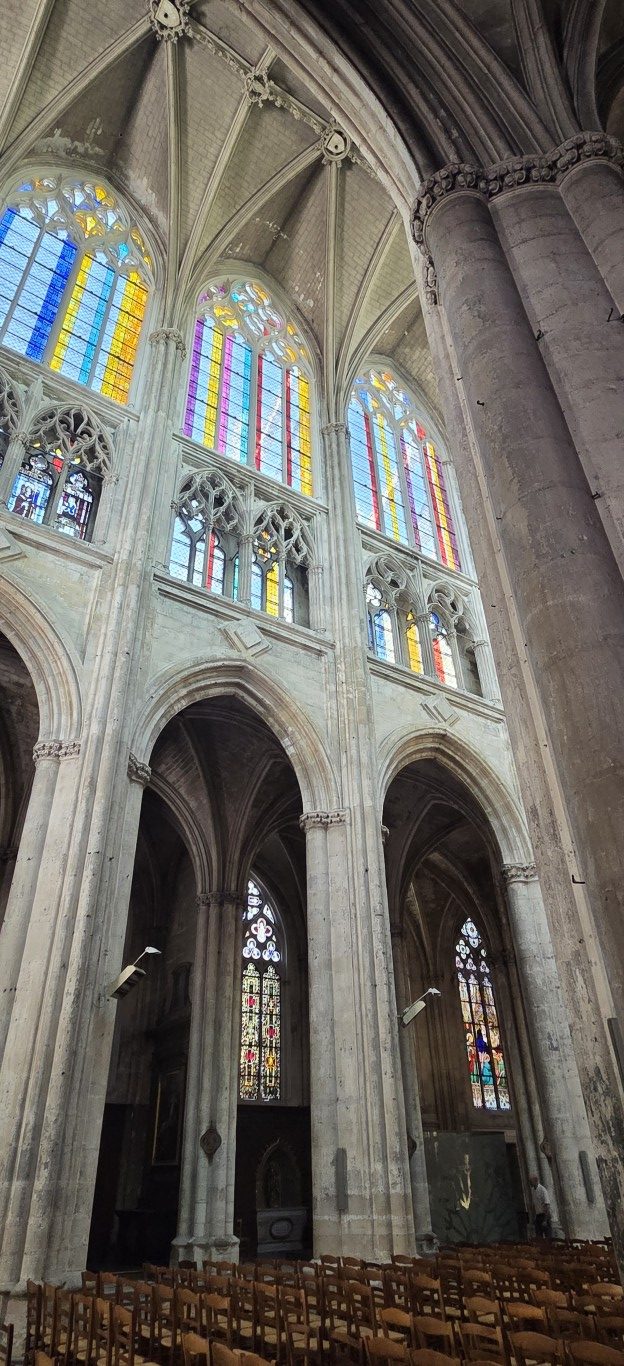
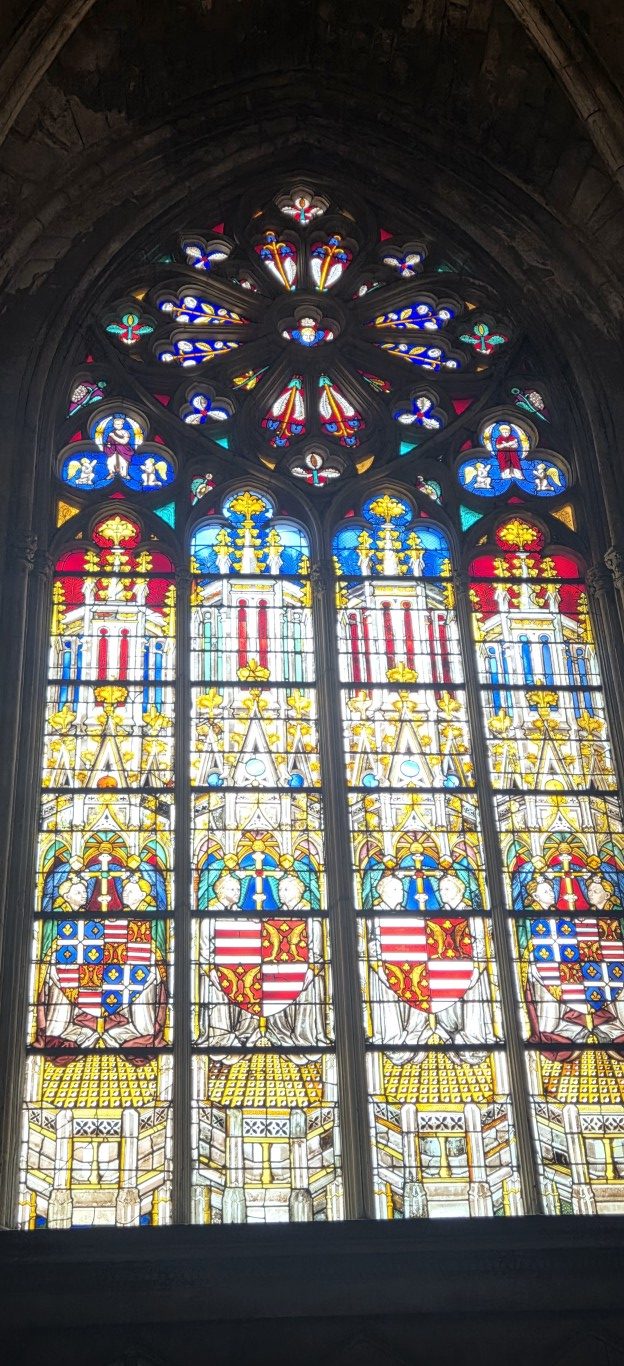
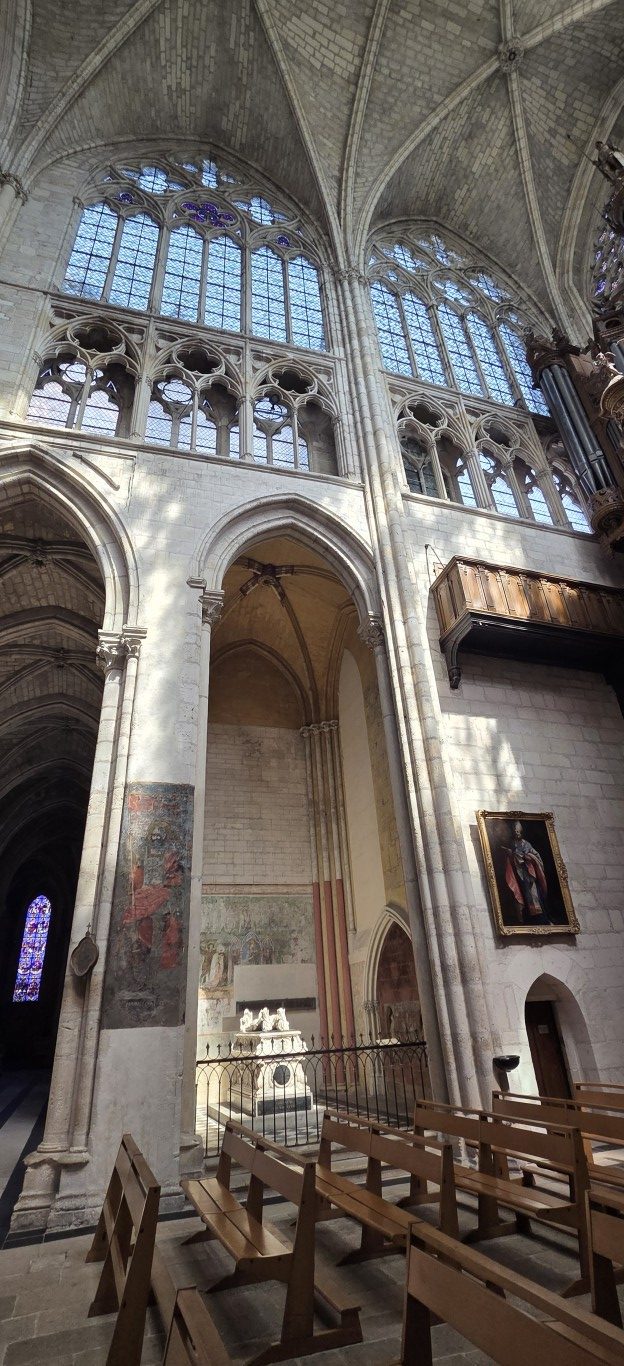
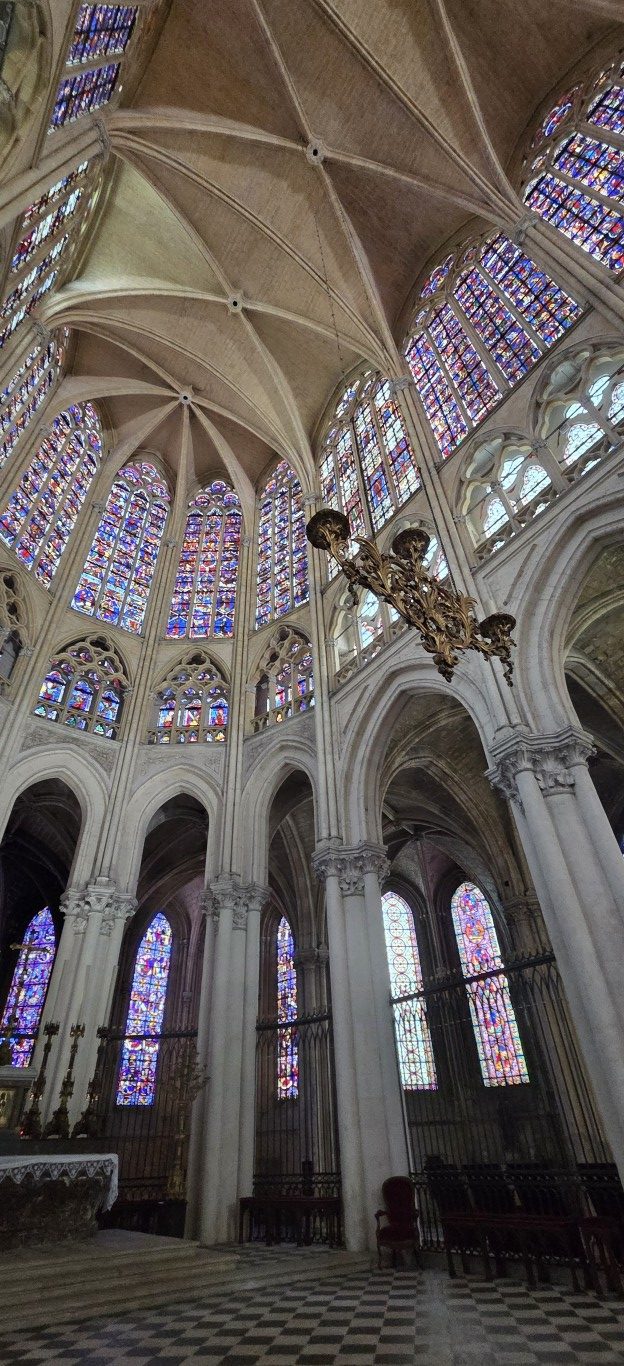
The Cathedral of Saint Gatien (Cathédrale Saint-Gatien) was built between the 13th and 16th centuries, which explains its mixture of Gothic and Renaissance elements.
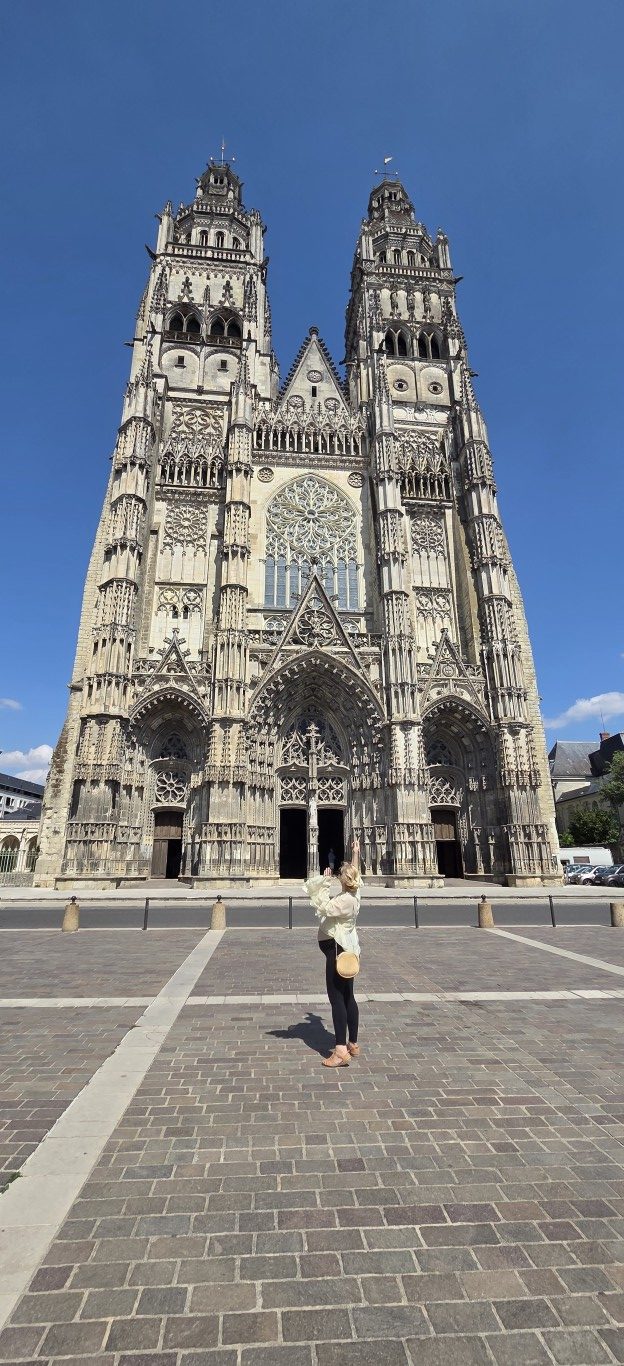
Inside are also the beautiful Renaissance tombs of the two young children of King Charles VIII and Anne of Brittany.
Charles VIII (15th century) was King of France, and Anne of Brittany was Duchess of Brittany and his queen. Their marriage in 1491 was politically crucial because it helped bring the powerful and previously independent Duchy of Brittany into increasingly close union with the French Crown.
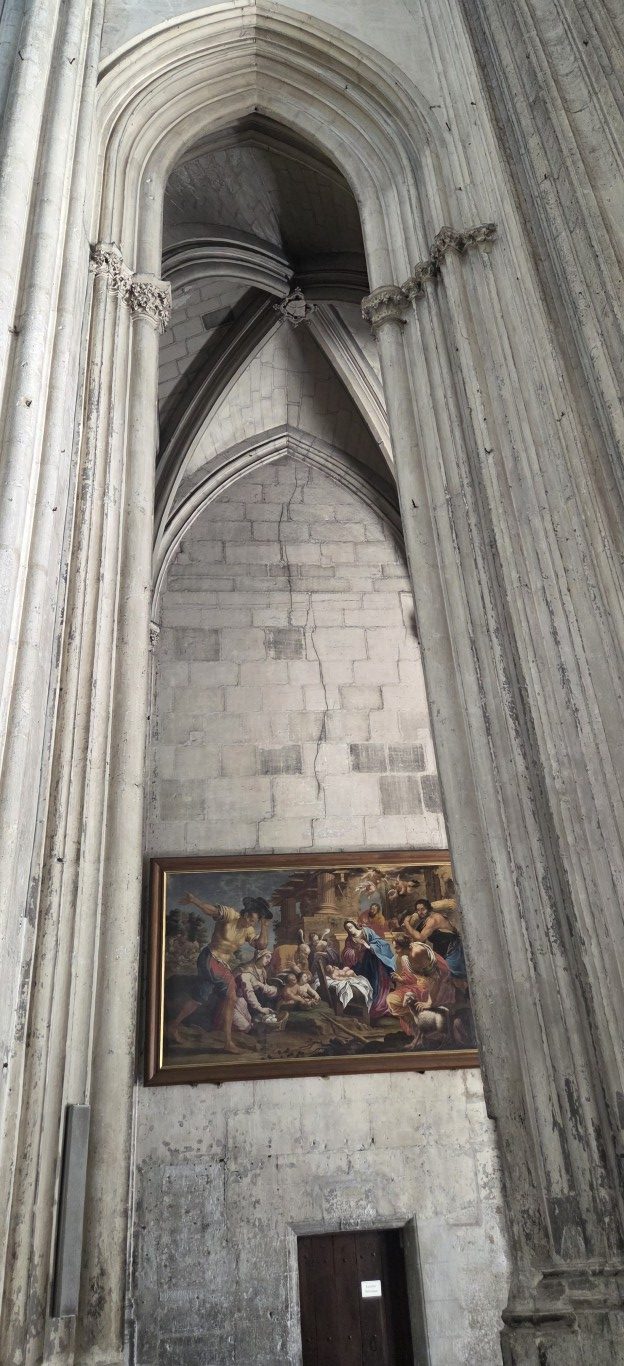
They had several children, but none survived childhood. Charles VIII himself died extraordinarily young at 27 after hitting his head on a low stone doorway at the Château d’Amboise and dying several hours later.
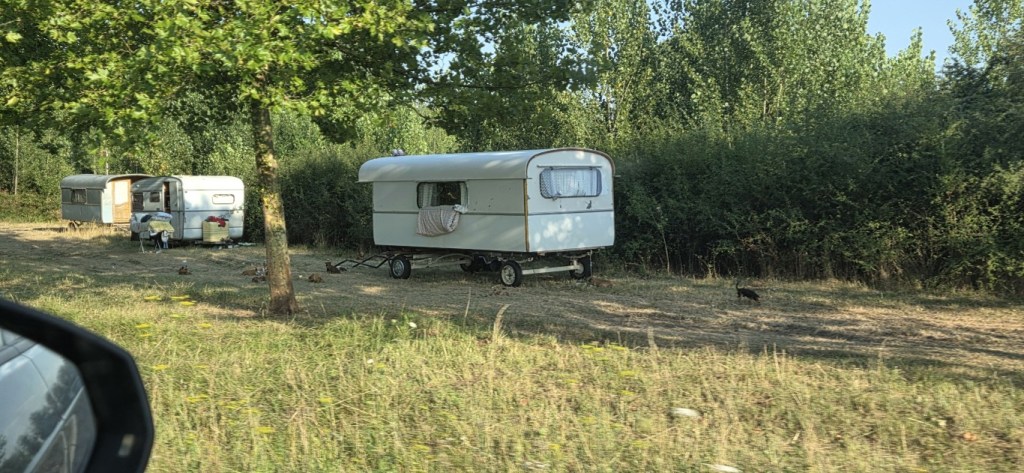
Driving further through the countryside, I noticed several Traveller caravans along the road. Everything looked surprisingly neat and peaceful, almost like the romantic images of gypsy travelling life from old books.
Loche
Our next stop was Loches, one of the best-preserved medieval towns in the Loire Valley. Its imposing fortress was an important royal stronghold, associated with powerful figures such as Fulk Nerra (the savage Counf of Anjou), Charles VII and Louis XI, and its massive 11th-century keep is among the oldest in Europe.
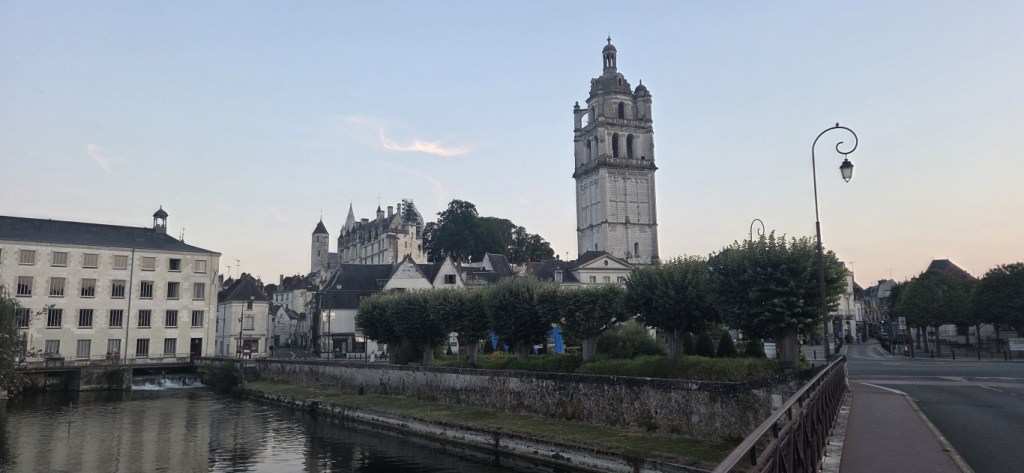
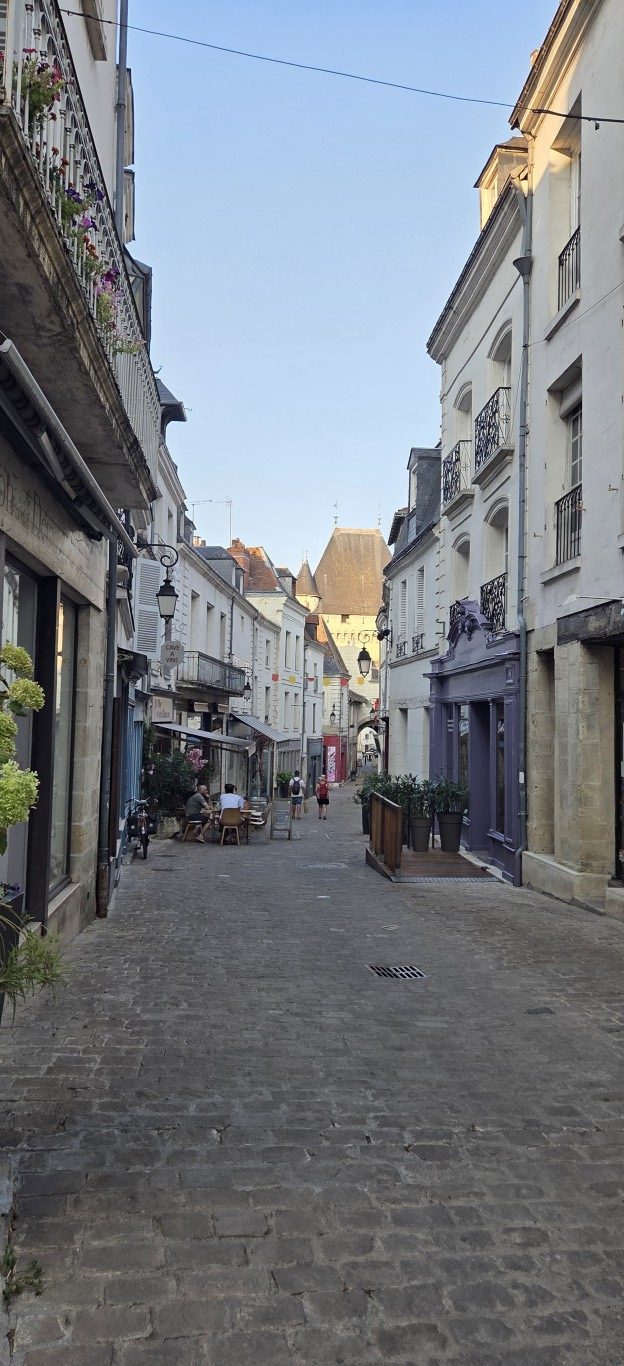
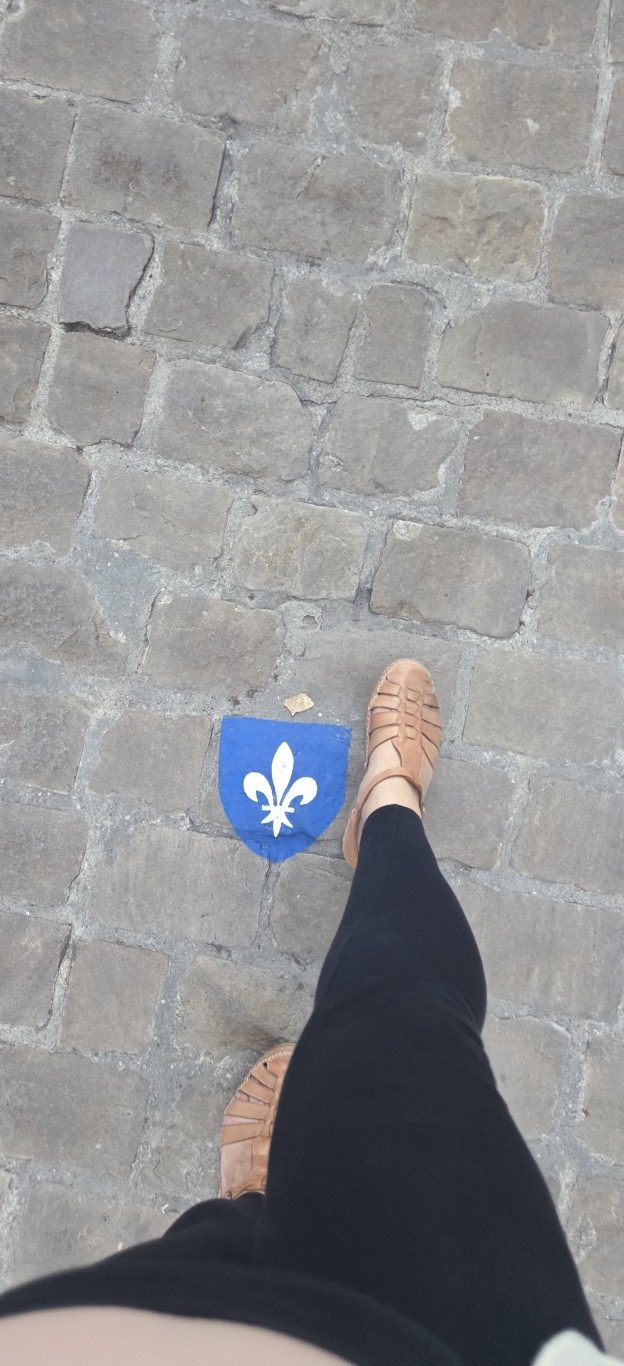
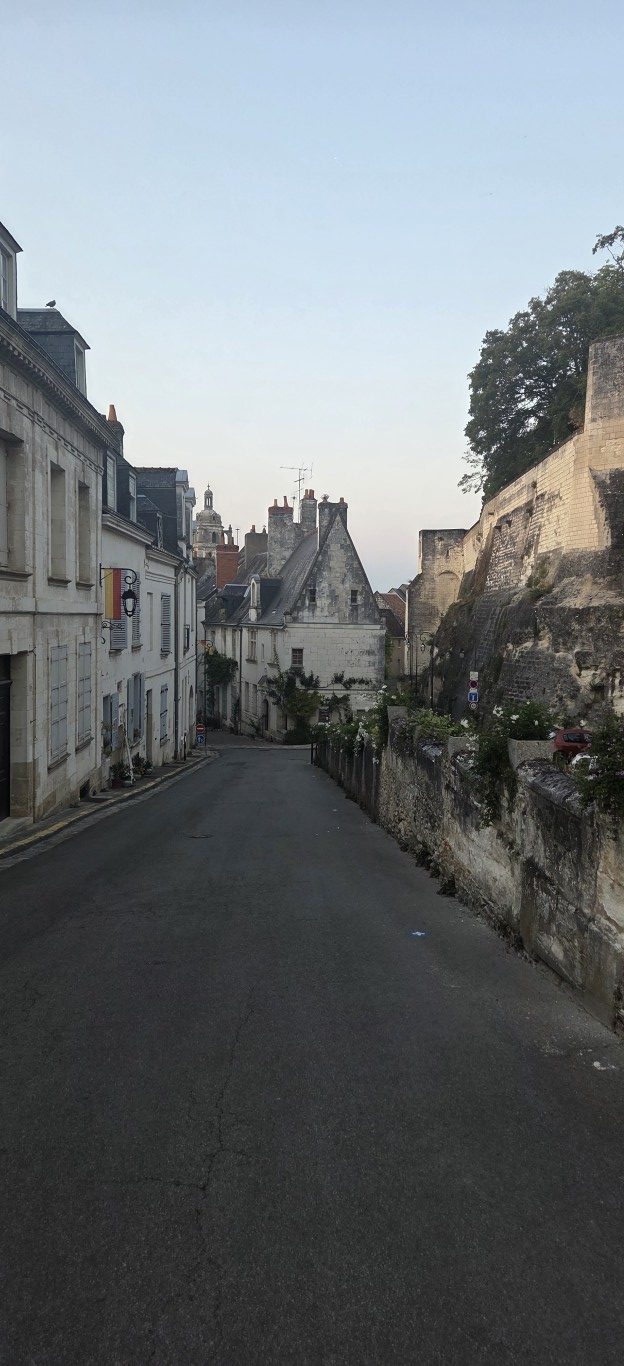
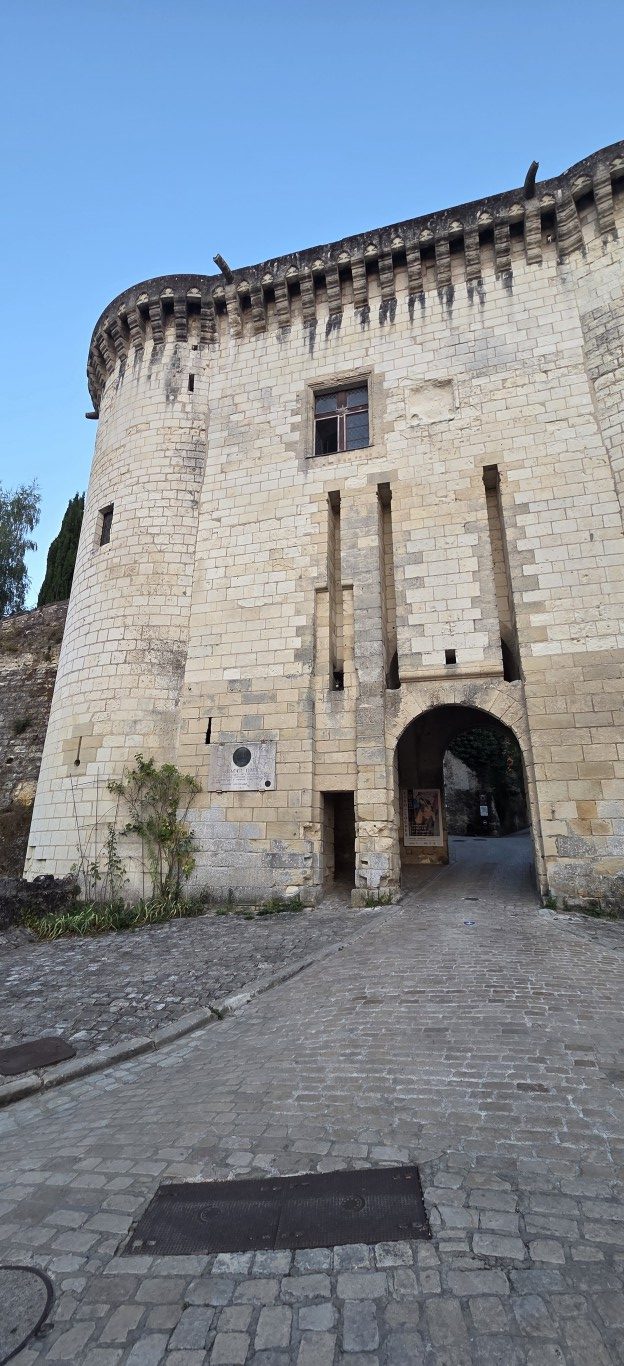
Loches also played its part in the story of Joan of Arc. In 1429, she came here to persuade Charles VII to go to Reims and claim his French crown — a journey that would help change the course of the Hundred Years’ War.
It is exactly here – these door that she entered, searched for the Future King of France – when the court set up her up the game to recognise Charles VII among the crowd.
There was a special serenity in sitting down to eat among the ancient walls and stones, surrounded by centuries of history. How can such a small city I never heard of, carry so much history and overturns?
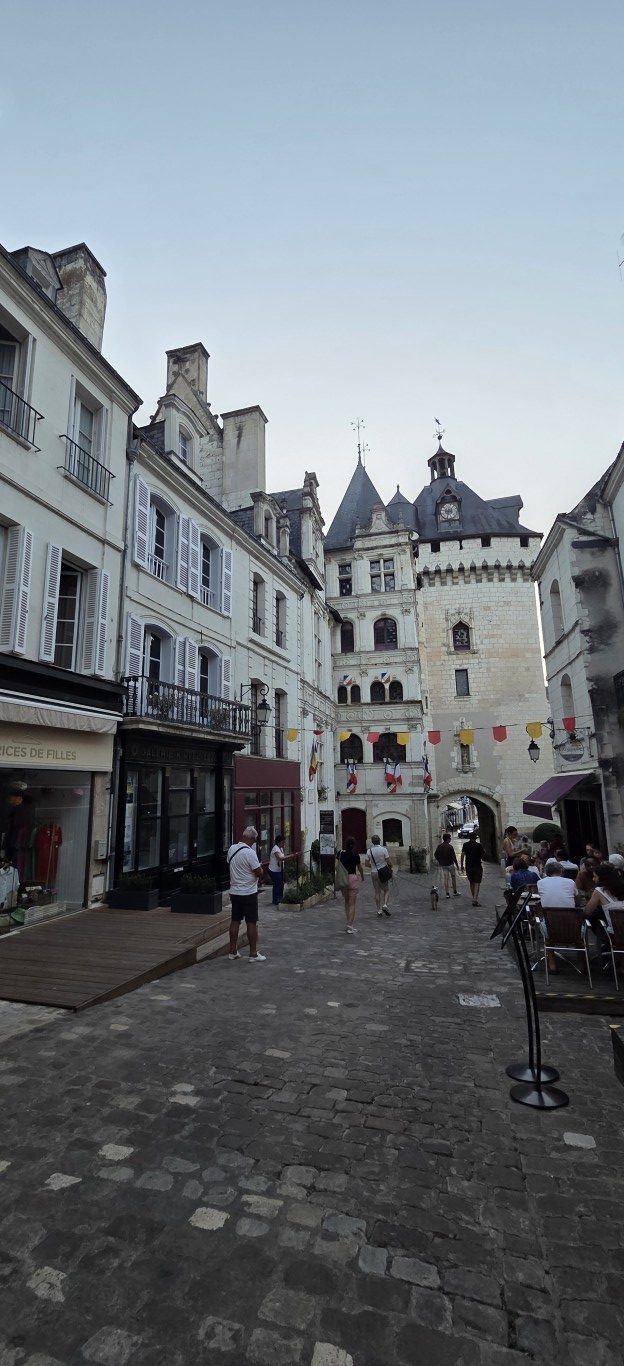
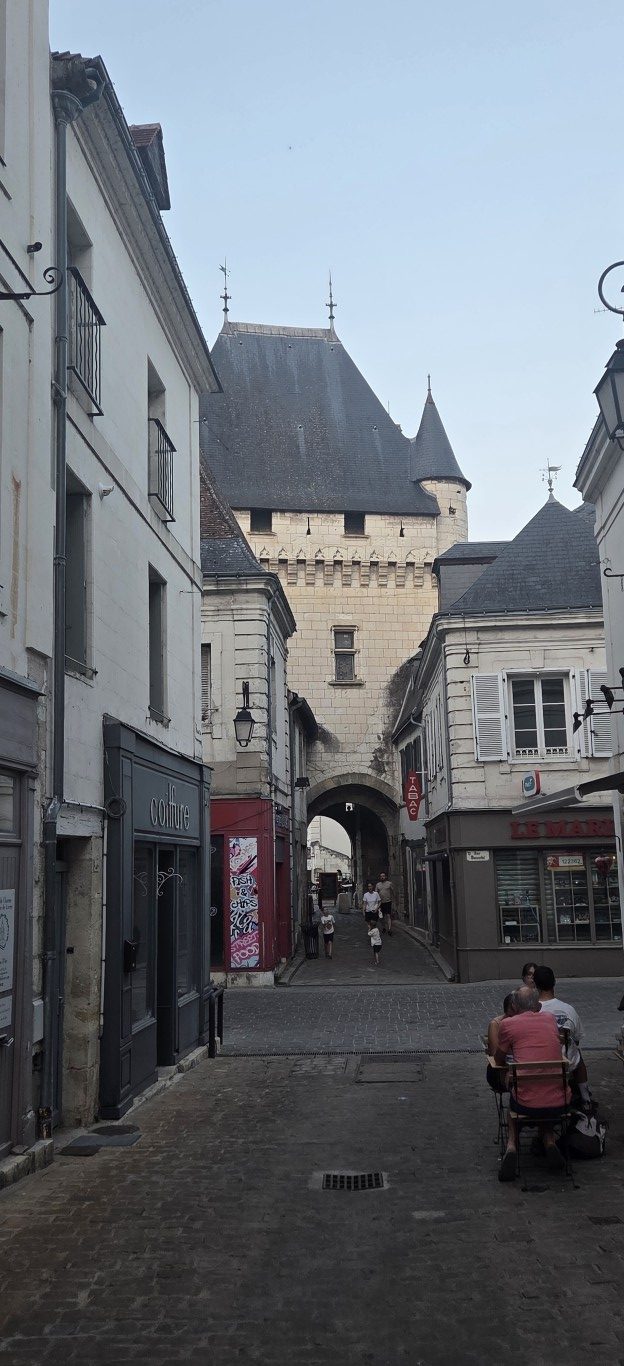
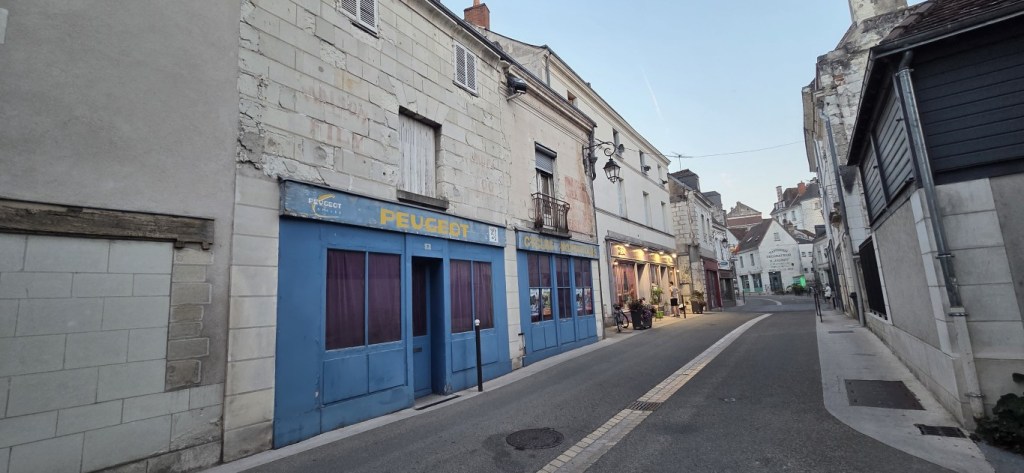
And here, a bit more modern details in my photo, but still quite a retro: the old peugeot garage 🙂 so French!
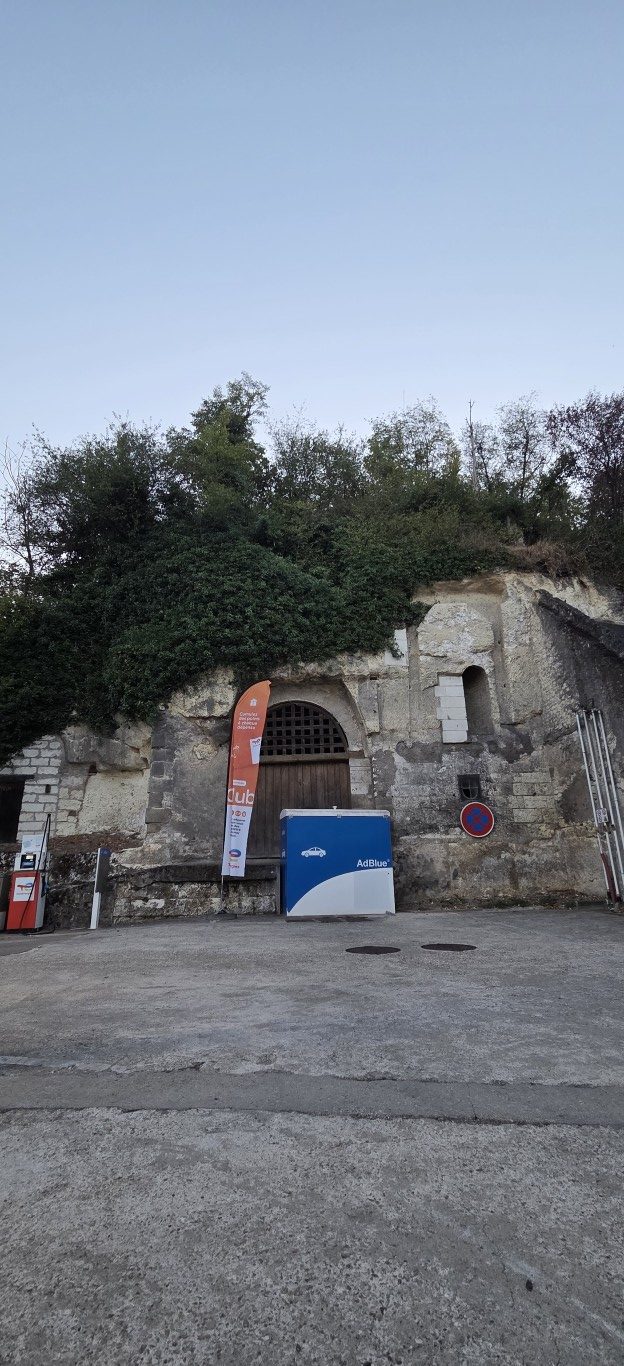
Around Loches and throughout the Loire Valley, the landscape is full of caves carved into soft limestone, known locally as tuffeau. For centuries, this stone was quarried to build the region’s castles, churches and houses, leaving behind vast underground galleries. Many were later turned into homes, cellars and wine caves, where the naturally cool, stable temperature was perfect for storing wine and food. And growing the champignon de Paris! 😉
Château de Chambord
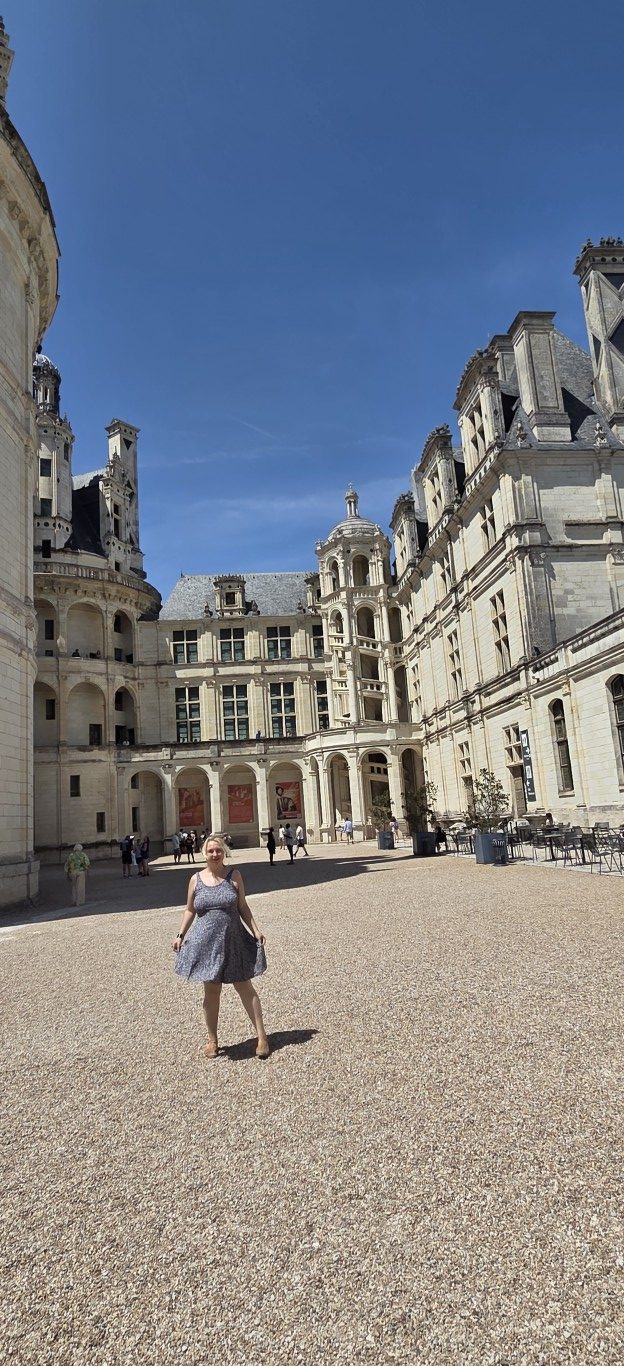
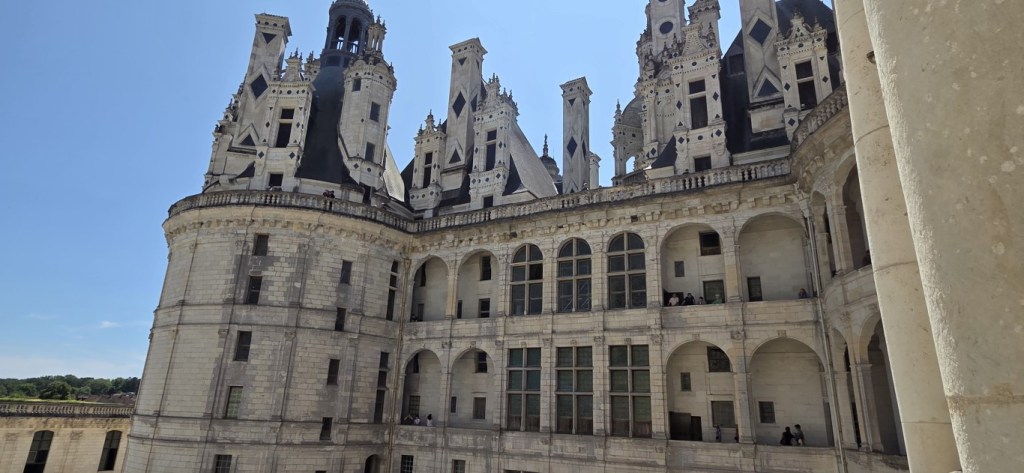
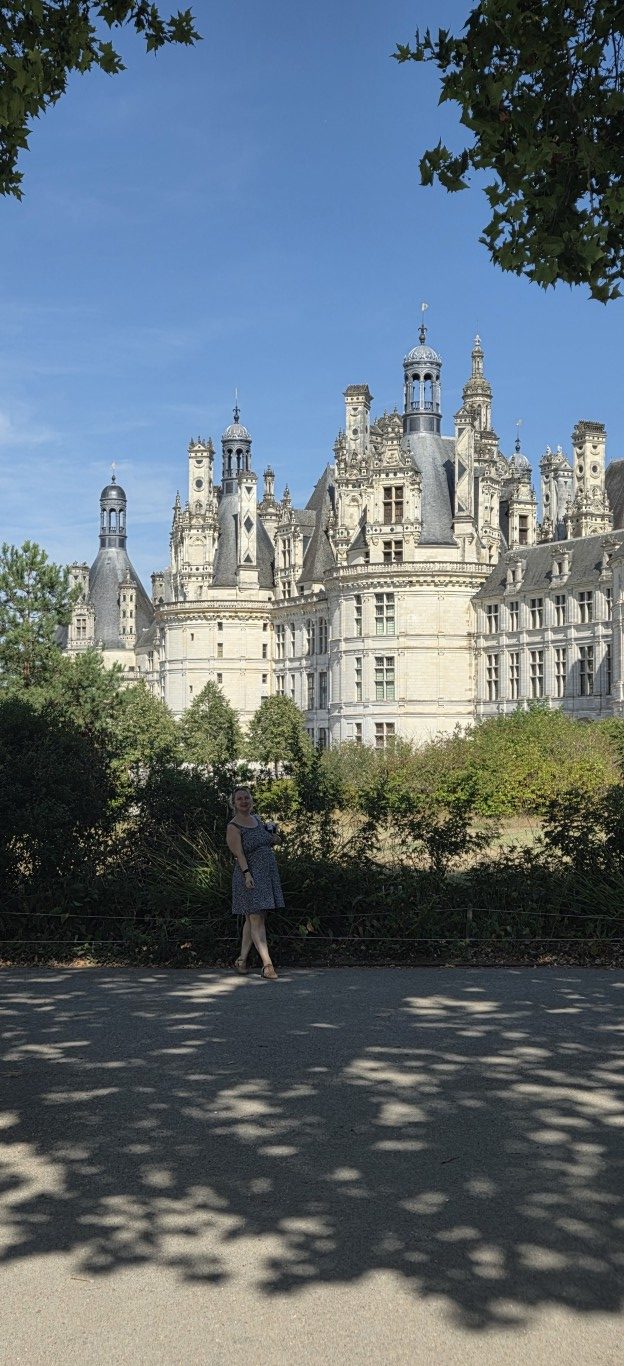
Our next stop was the magnificent Château de Chambord, the largest and most extravagant château in the Loire Valley. Built from 1519 for King Francis I, it was conceived less as a permanent home and more as a spectacular royal hunting lodge and demonstration of royal power. Its architecture blends a medieval castle silhouette with the new ideas of the Italian Renaissance.
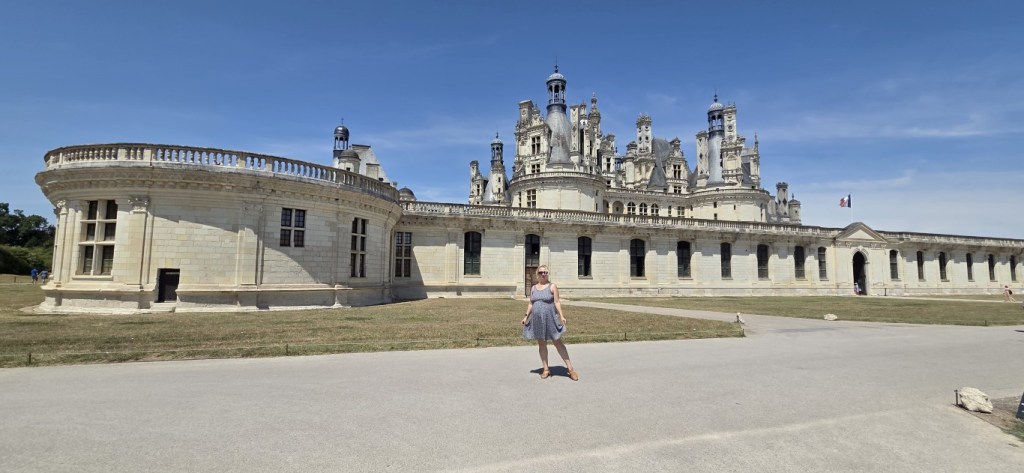
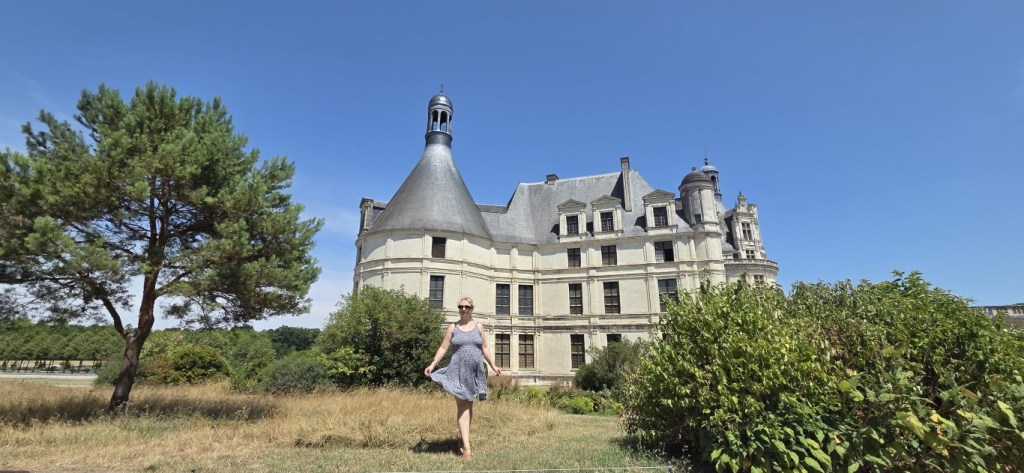
I loved the story of this castle so much! Reading my history novels about the Tudors in the Hundred Years’ War – I could see the French side too. And both sides, while in war tried to impress each other with tournaments and banquets. Just look at this painting at the entrance to the castle:
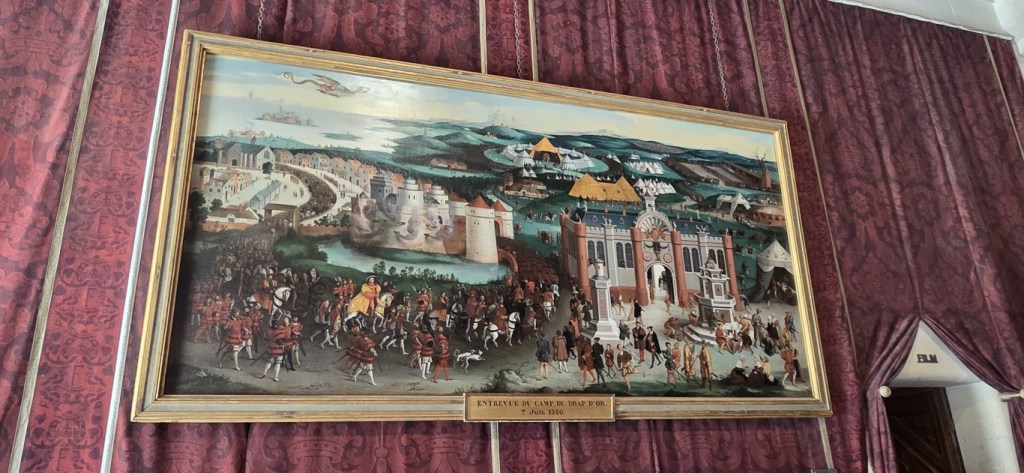
This painting depicts the Field of the Cloth of Gold (Camp du Drap d’Or), the spectacular meeting between Francis I of France and Henry VIII of England in June 1520. For almost three weeks near Calais, both kings competed to impress each other with extravagant tents, banquets, tournaments, clothes and displays of wealth — essentially Renaissance diplomacy turned into a gigantic royal spectacle.
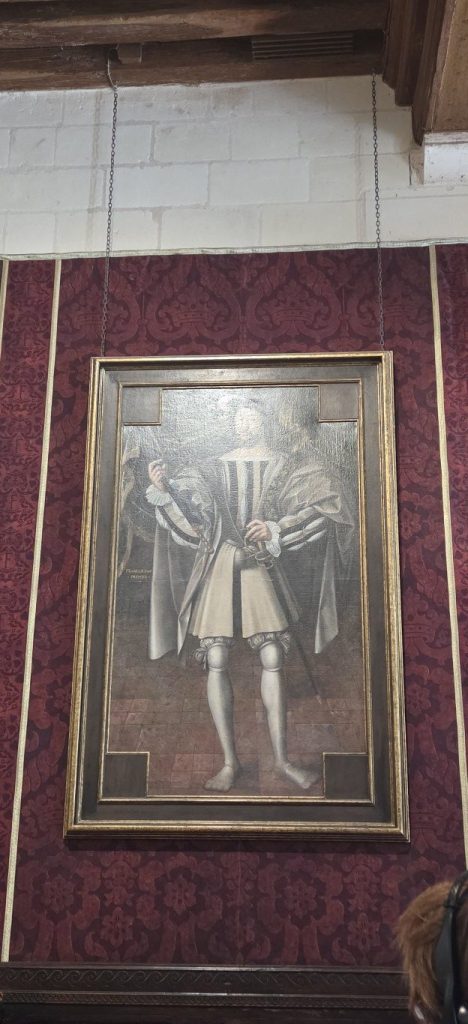
The painting is Francis I Killing a Boar. It represents an episode said to have happened at Amboise in 1515, when the French court had gathered for the wedding of the Duke of Lorraine and Renée de Bourbon.
According to the story, a wild boar brought into the château for entertainment escaped into the courtyard, creating panic among the assembled guests. Francis I confronted it himself and killed it with a single sword stroke.
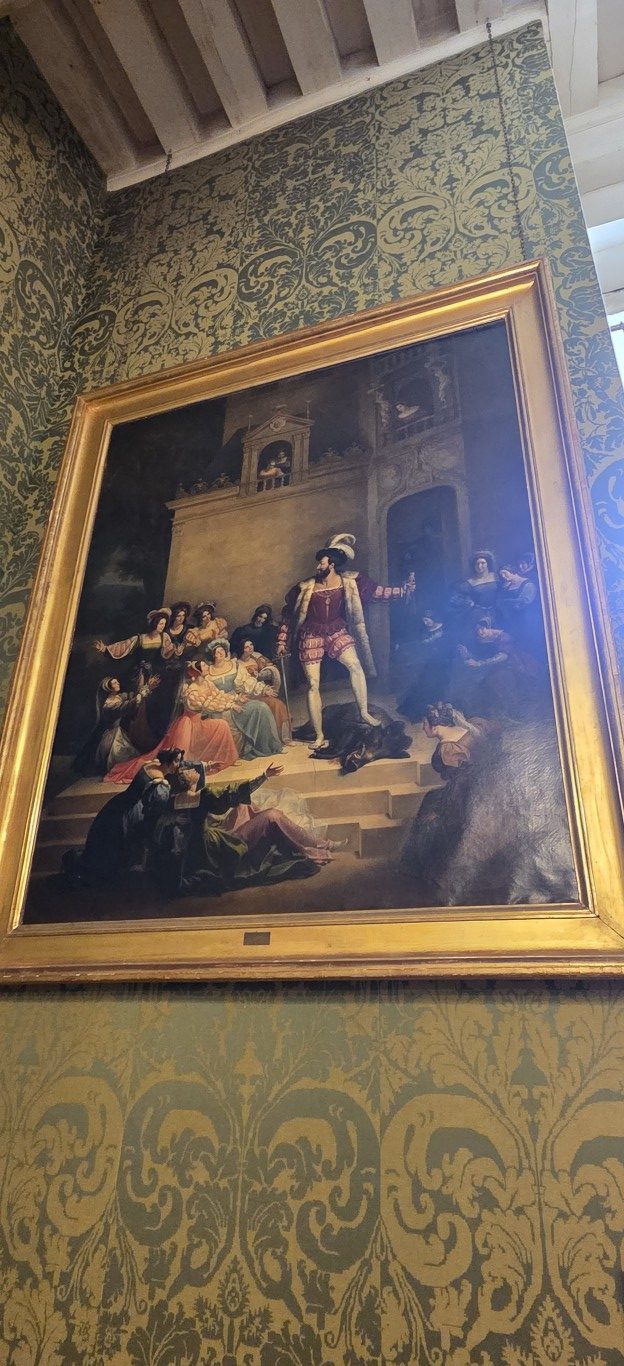
Francis I was a passionate hunter, and hunting was central to royal life at his court. This is precisely why Chambord was built in the middle of a vast game-rich forest: not primarily as a comfortable palace, but as an extraordinary royal hunting lodge where the king could hunt deer and wild boar and entertain his court. For Francis, hunting was also a display of strength, courage and royal prestige — which makes the story of him personally killing the escaped boar particularly fitting.
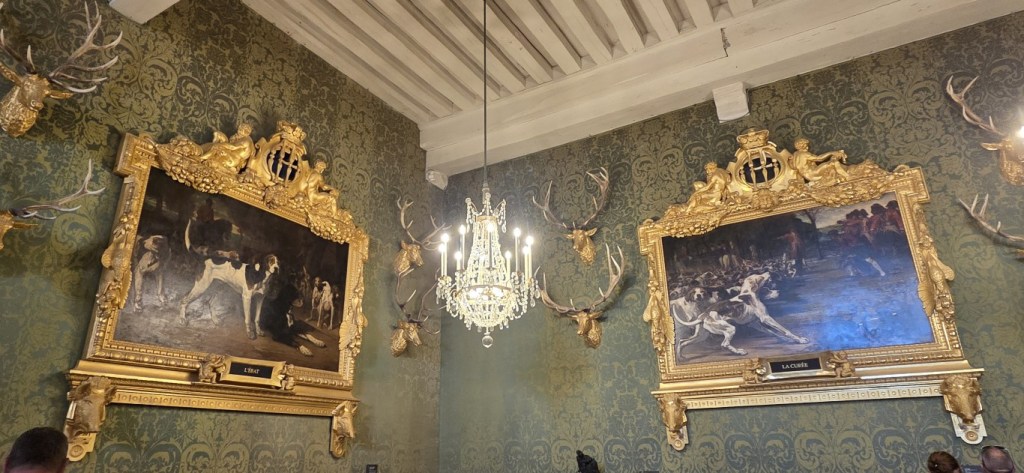
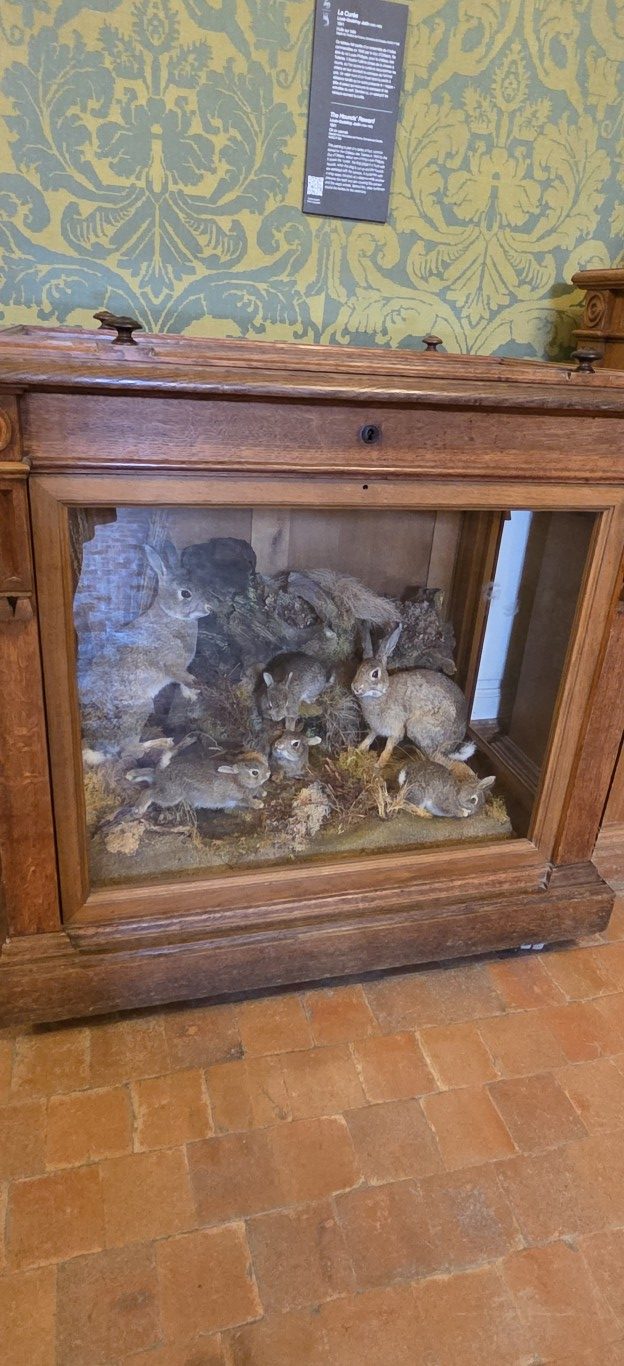
François I was the great Renaissance king of France — warrior, passionate hunter, lover of women and the arts, and a ruler with a taste for grandeur.
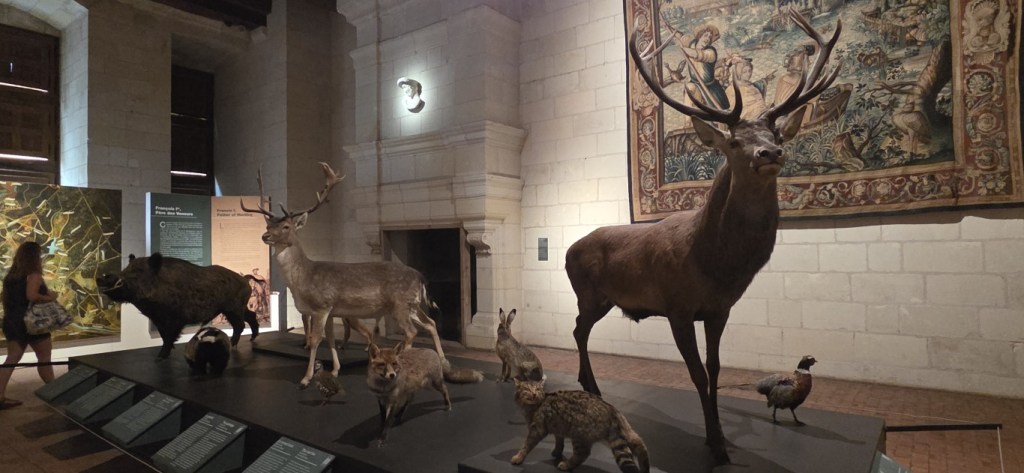
He brought Italian Renaissance culture into the French court, invited Leonardo da Vinci to France as his “first painter, architect and engineer,” and used architecture and art as expressions of royal power. Chambord was perhaps his greatest statement: enormous, innovative and spectacular, even though he actually spent only around 50 days there during his entire reign.
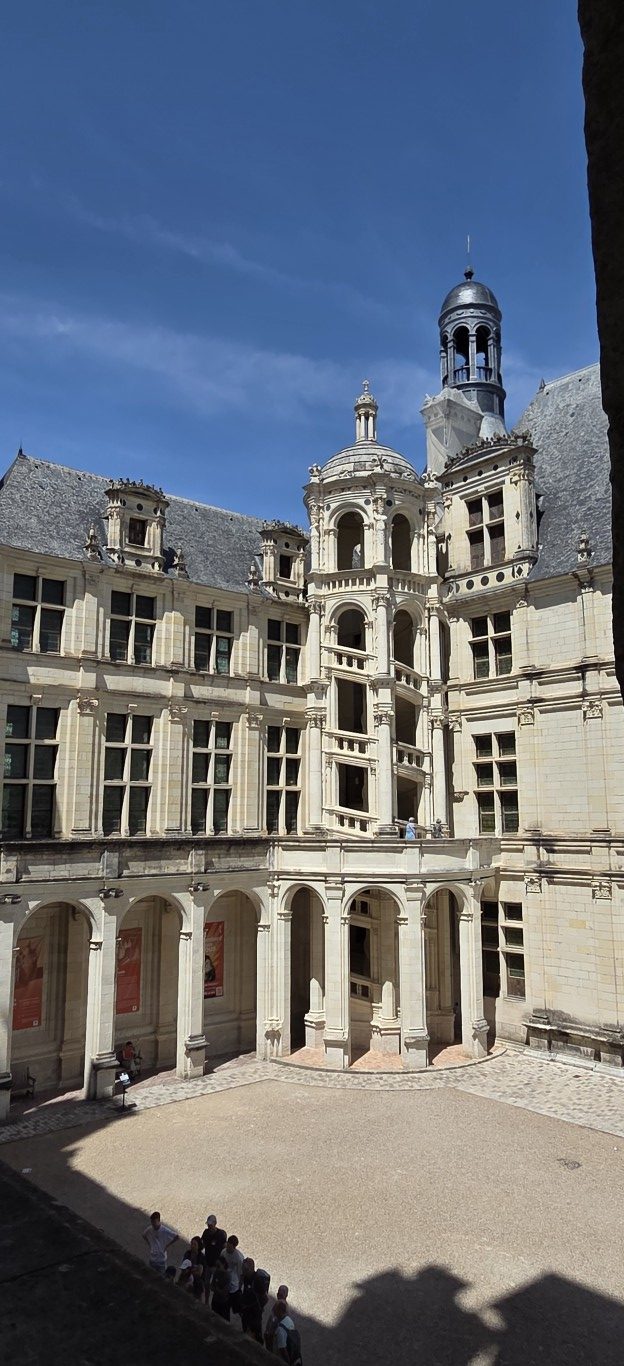
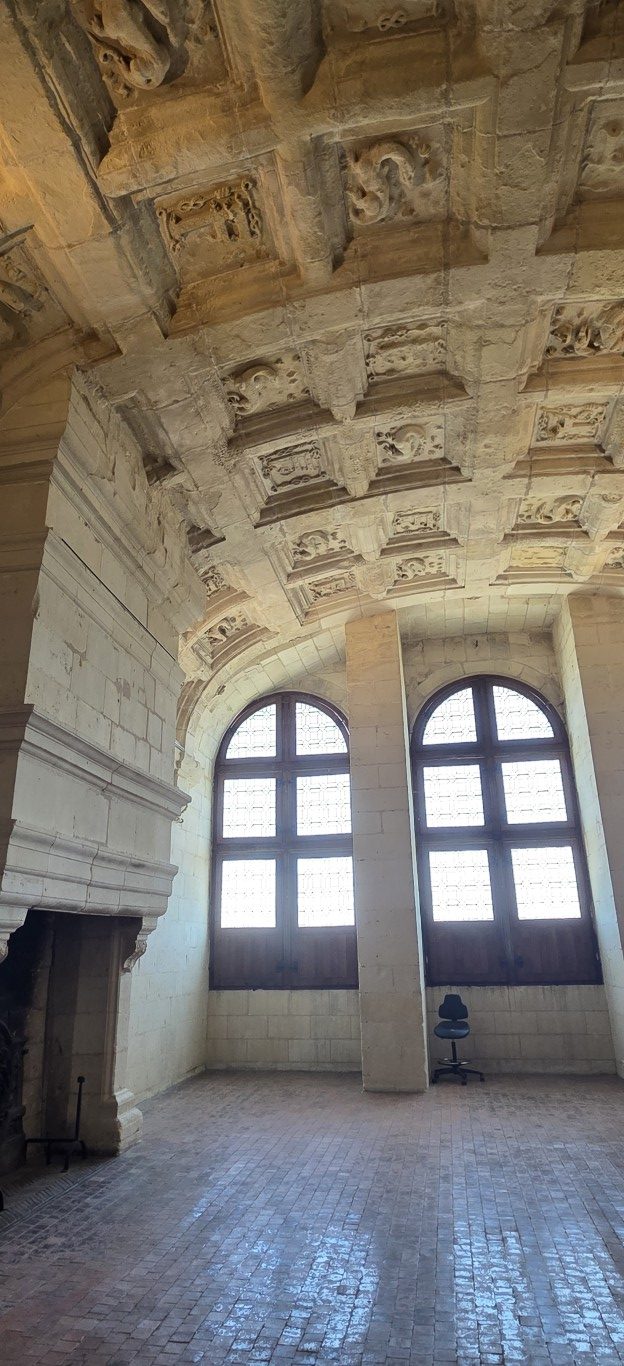
Renaissance is about new discoveries and engineering. This is perhaps Chambord’s most famous architectural feature: the double-spiral staircase. Two separate staircases wind around the same hollow central core, meaning two people can climb or descend simultaneously, seeing each other through the openings but never actually crossing paths.
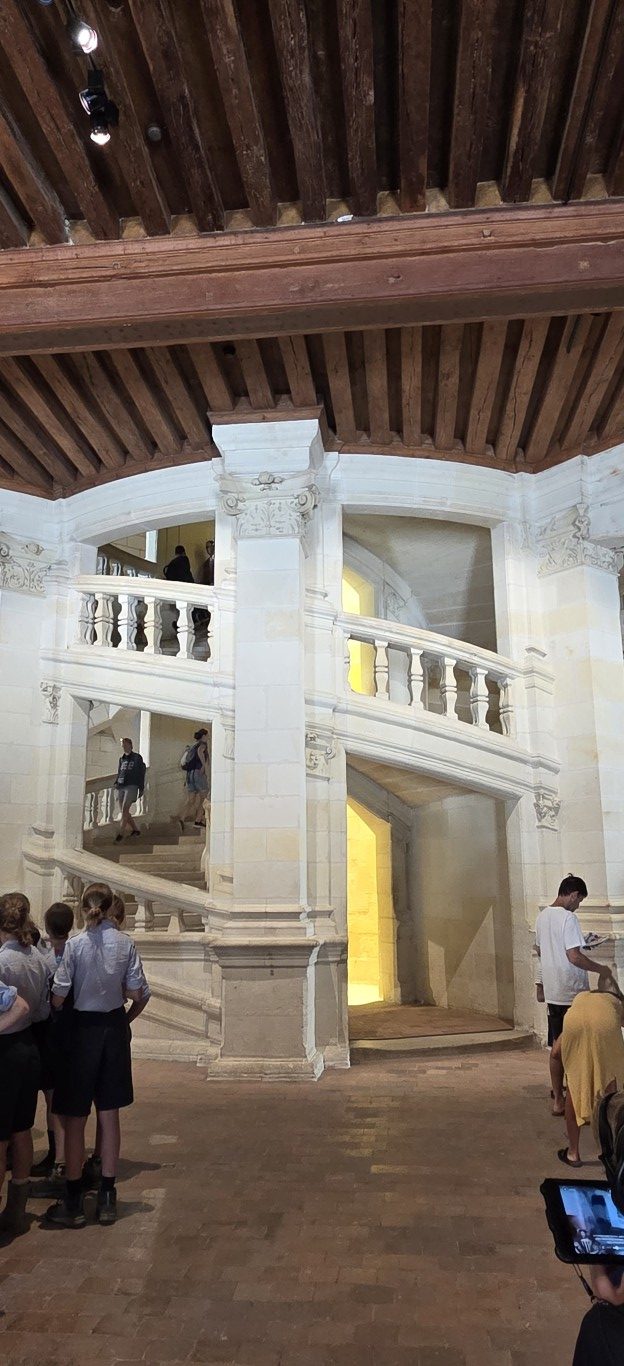
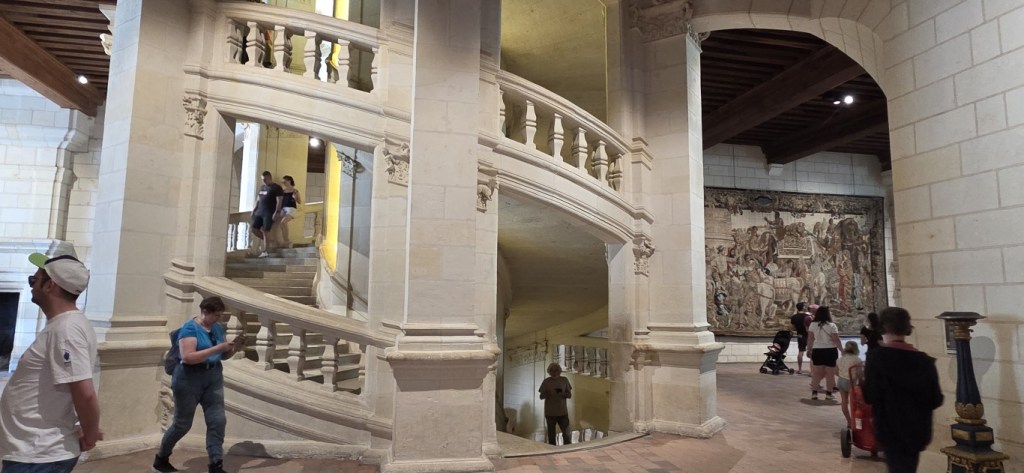
Its authorship is not proven, but the design strongly suggests the influence of Leonardo da Vinci, whom Francis I brought to France in 1516 and who spent his final years nearby at Amboise. Leonardo repeatedly explored spiral staircases and geometric designs in his notebooks, making his involvement in Chambord a compelling possibility.
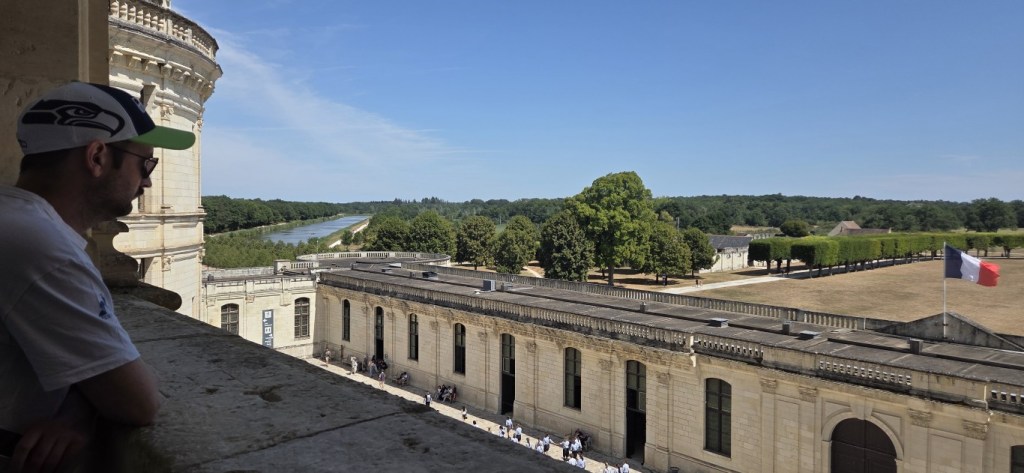
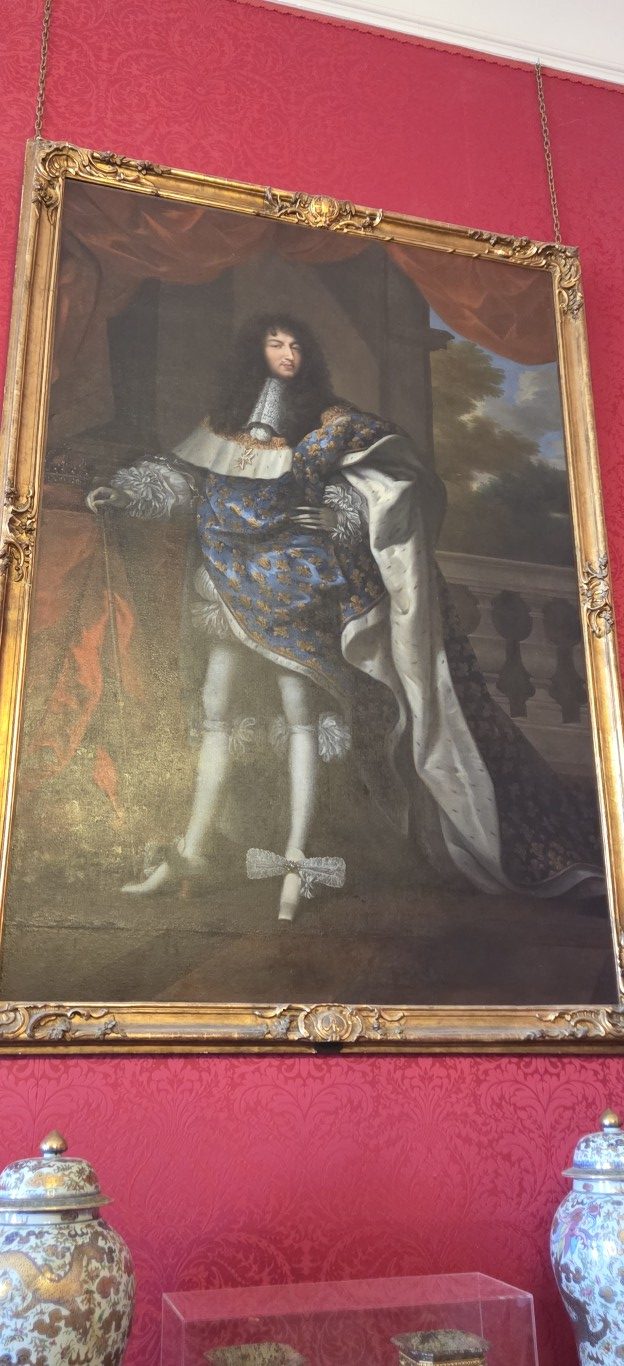
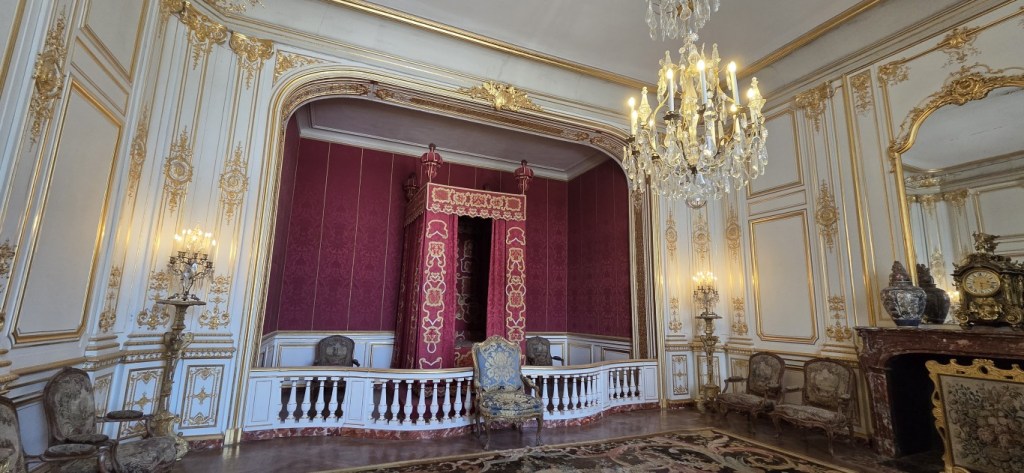
More than a century after François I, Chambord welcomed another king with an even greater taste for grandeur: Louis XIV. The Sun King stayed here with his court, hunted in the surrounding forests and transformed Chambord once again into a stage for royal life and entertainment.
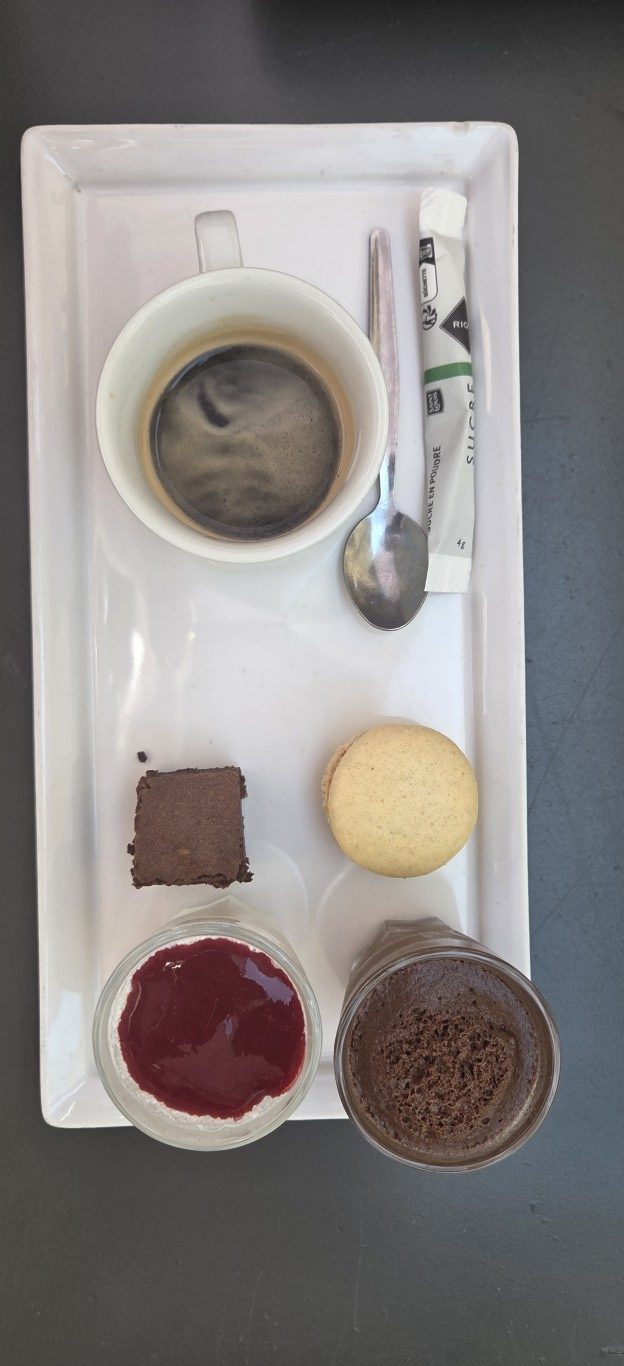
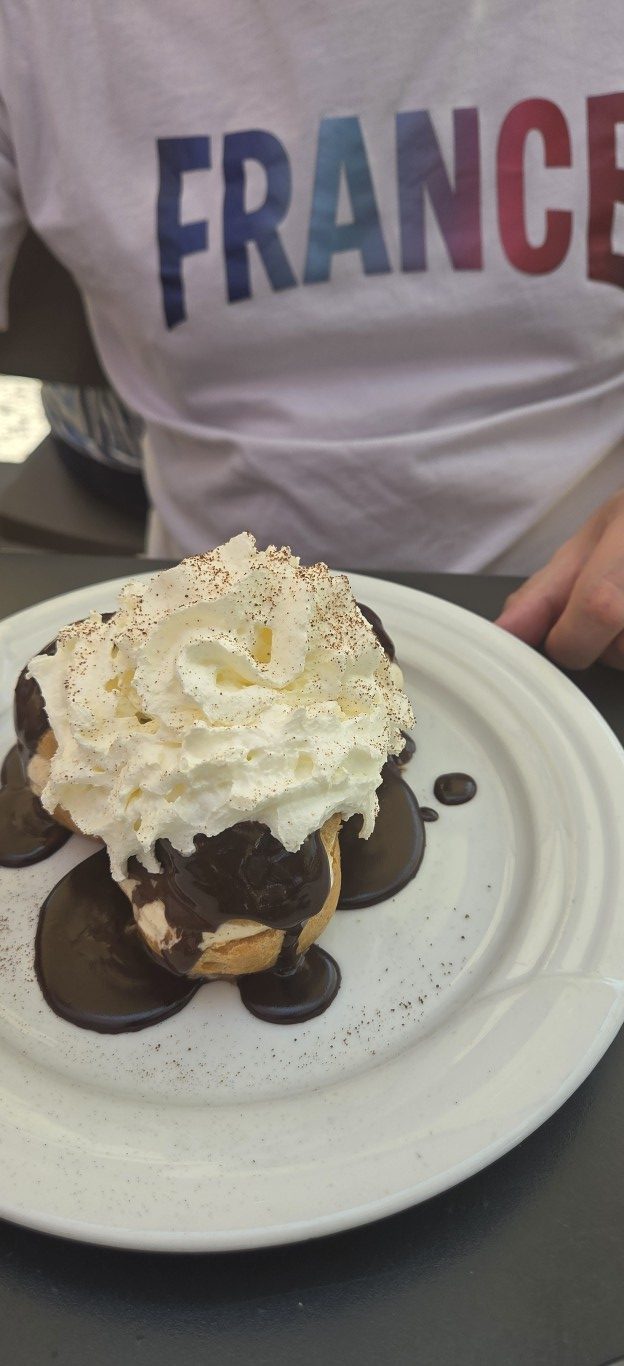
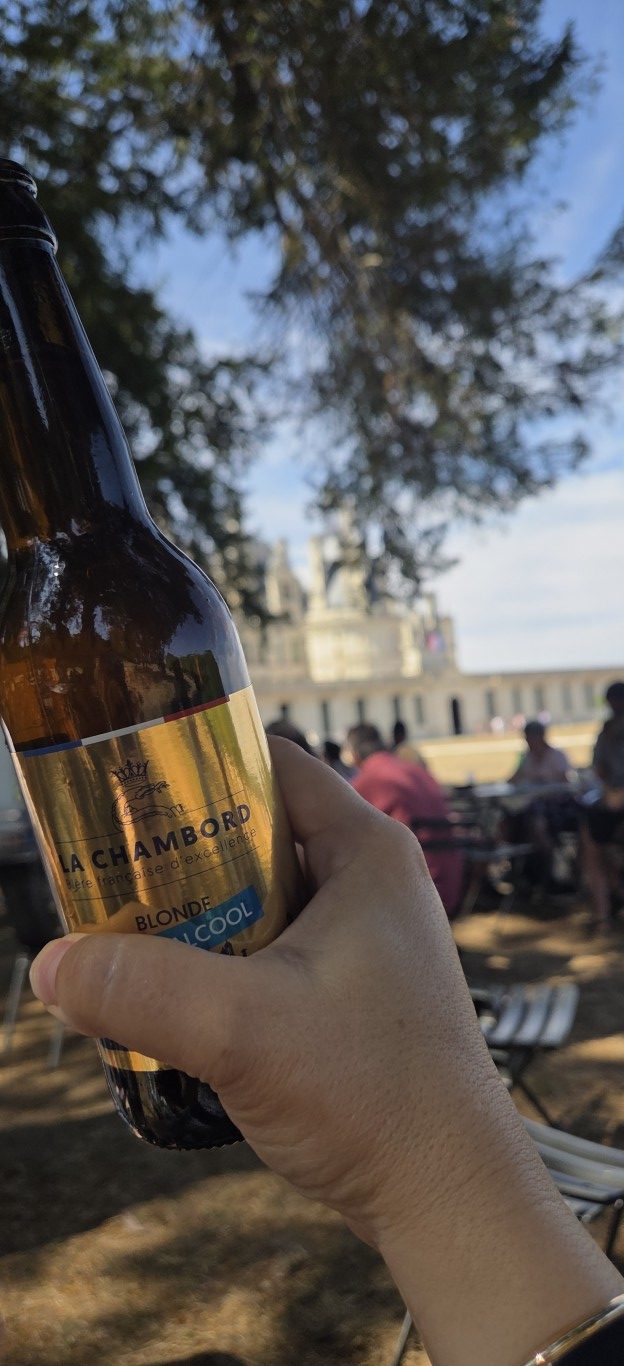
After all that royal grandeur, history and walking, it was finally time for lunch. And in the Loire Valley, discovering the region also means discovering what grows, cooks and ends up on the plate.

Château de Chenonceau
Tis is the small Église Saint-Jean-Baptiste, just a short walk from the Château de Chenonceau. The church has medieval origins and was later altered and restored, which explains its very simple, almost austere interior compared with the grandeur of the château nearby.
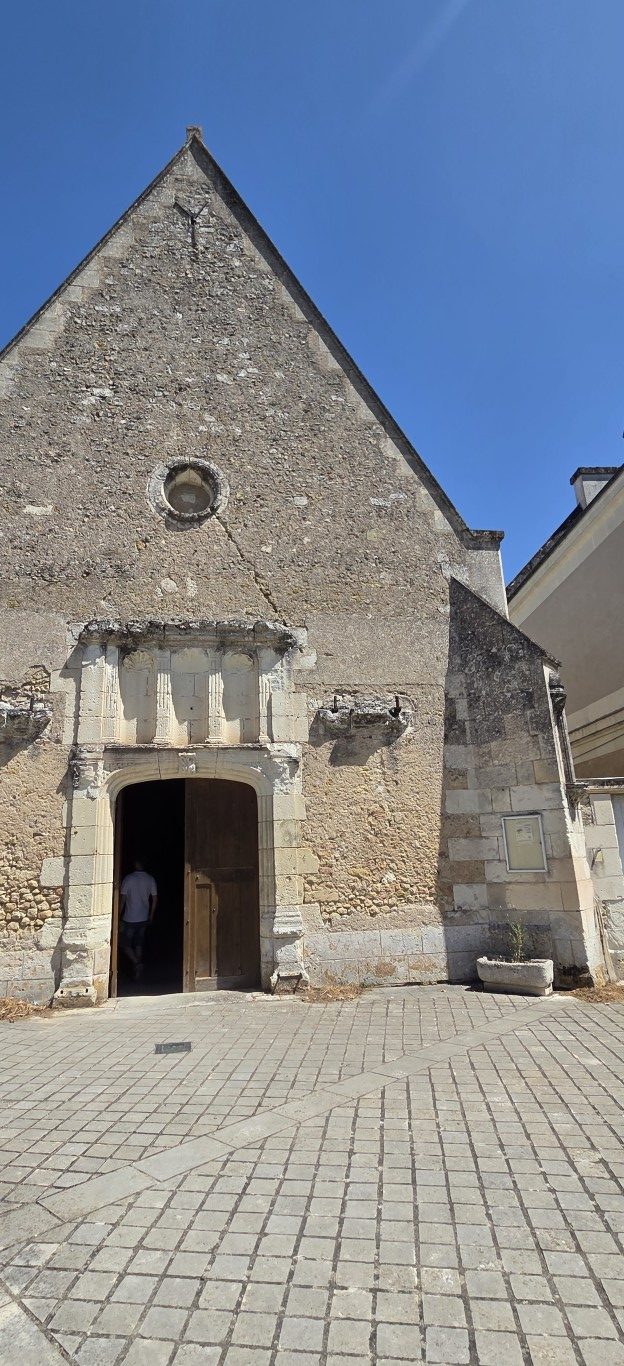
The church dates mainly from the 12th century, but its nave was rebuilt in 1515, probably at the request of Thomas Bohier and Katherine Briçonnet, the couple responsible for creating the Renaissance Château de Chenonceau. Its 16th-century baptismal font was donated by Catherine de’ Medici, who later became mistress of Chenonceau; her coat of arms was apparently chiselled away during the French Revolution.
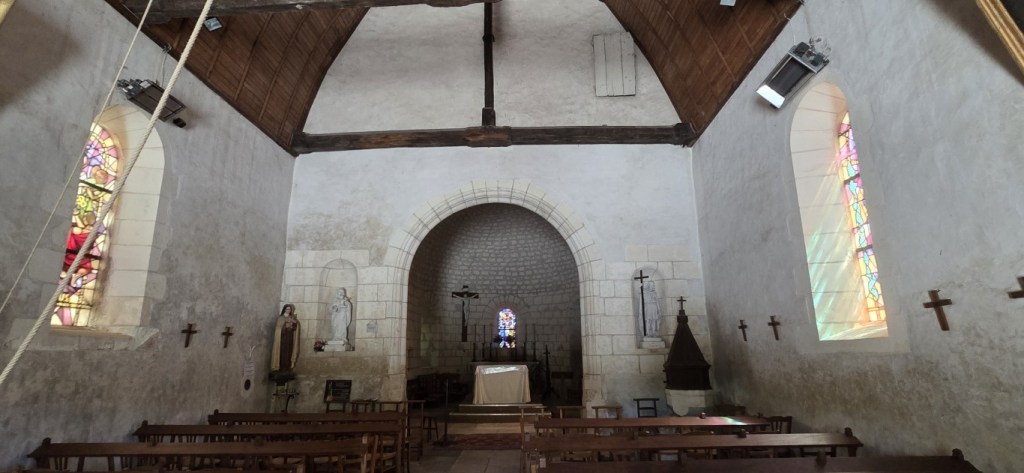
Chenonceaux is a tiny historic village on the Cher River, whose identity has been intertwined with the château for centuries. Unlike Tours or Loches, there is no grand urban centre here: old stone houses, the little church of Saint-Jean-Baptiste and quiet streets surround what became one of the most extraordinary royal residences of the Loire Valley.
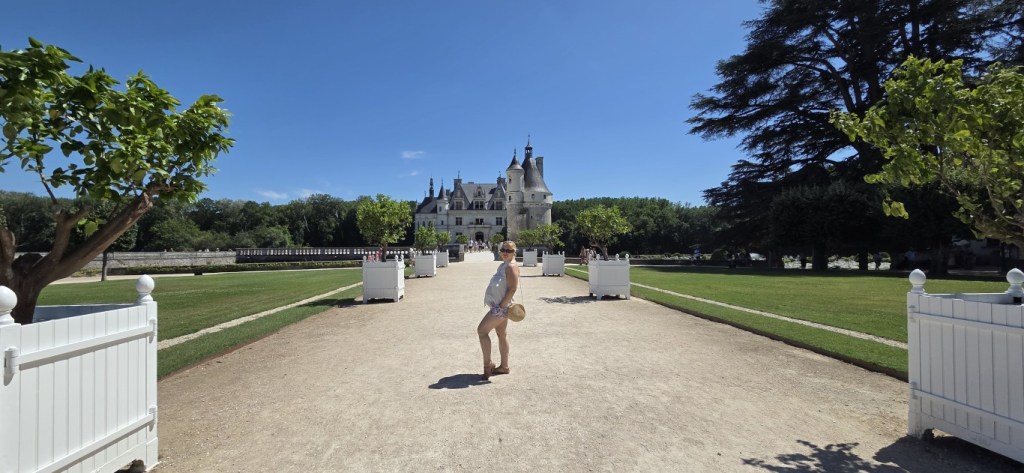
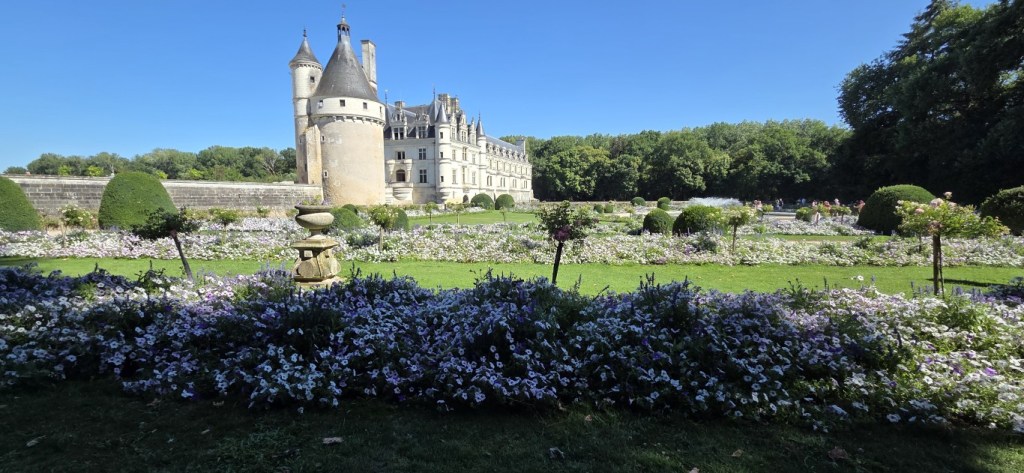
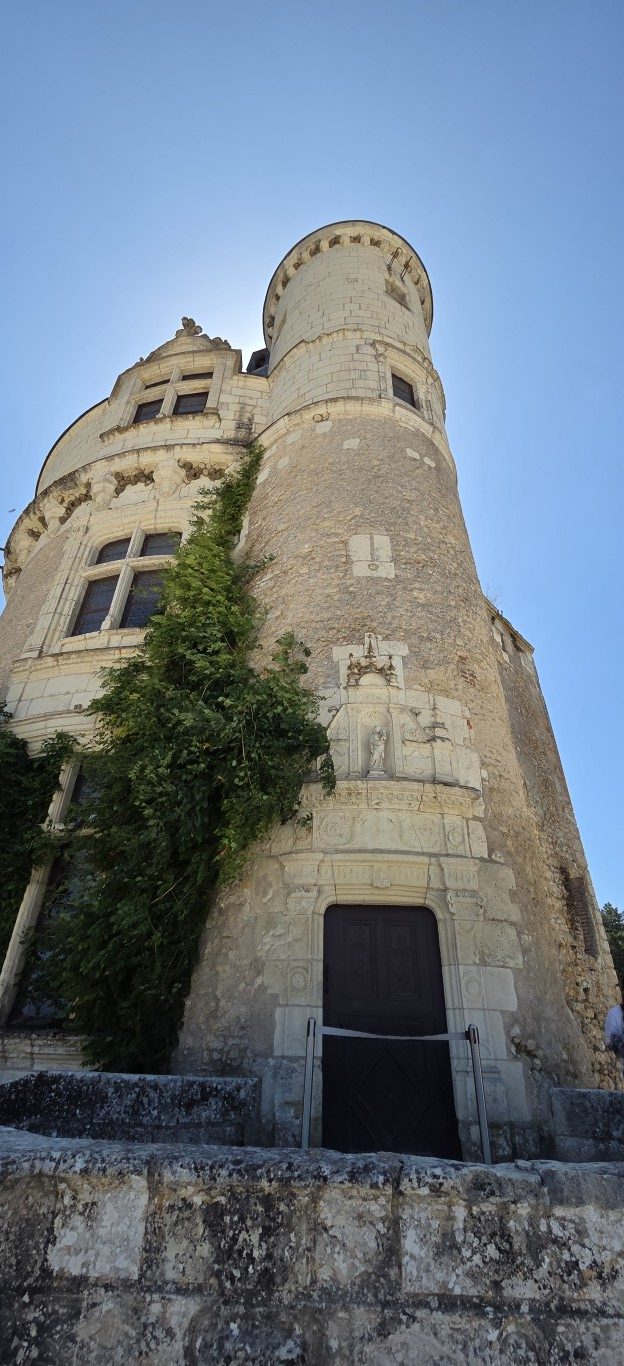
Approaching the castle, you need to pass the bridge and the tower. The tower is particularly interesting because it is older than Chenonceau as we know it today. There was already a medieval fortified castle here, belonging to the Marques family. When Thomas Bohier and Katherine Briçonnet created the Renaissance château in the early 1500s, they demolished the old fortress but deliberately kept its keep — the Tour des Marques — and remodelled it in Renaissance style.
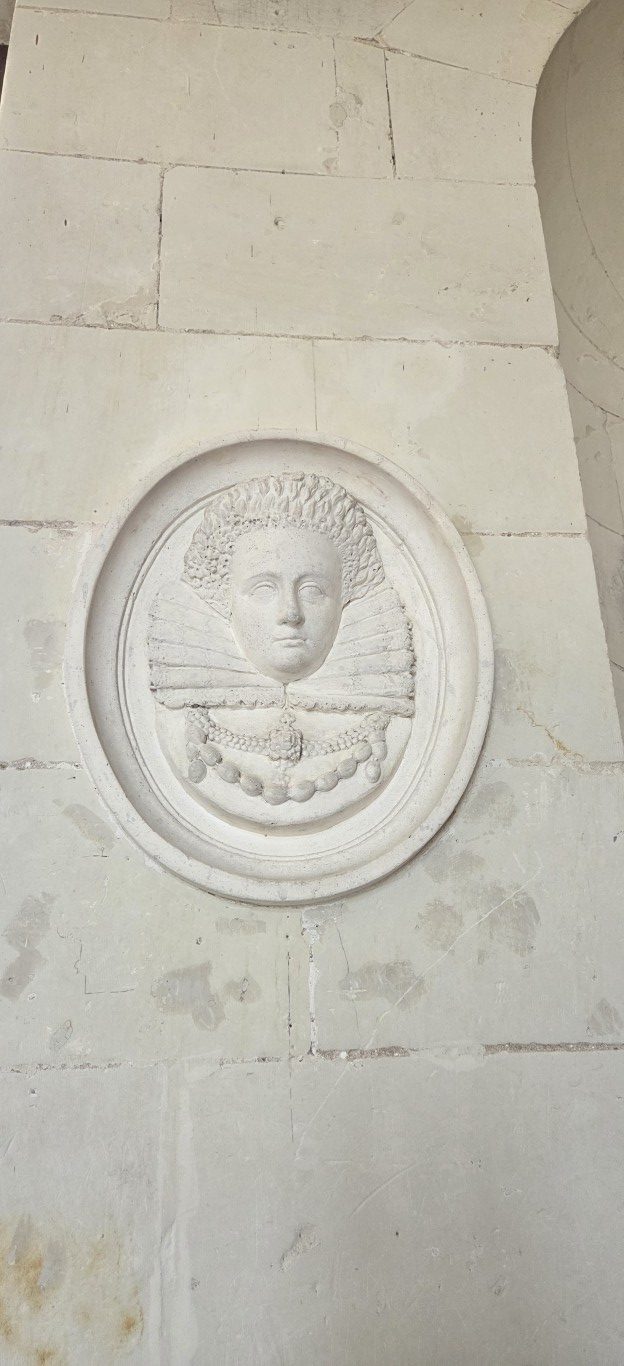
Below is a portrait medallion of Catherine de’ Medici at Chenonceau. The distinctive high ruff and jewellery place her in the fashion of the later 16th century.
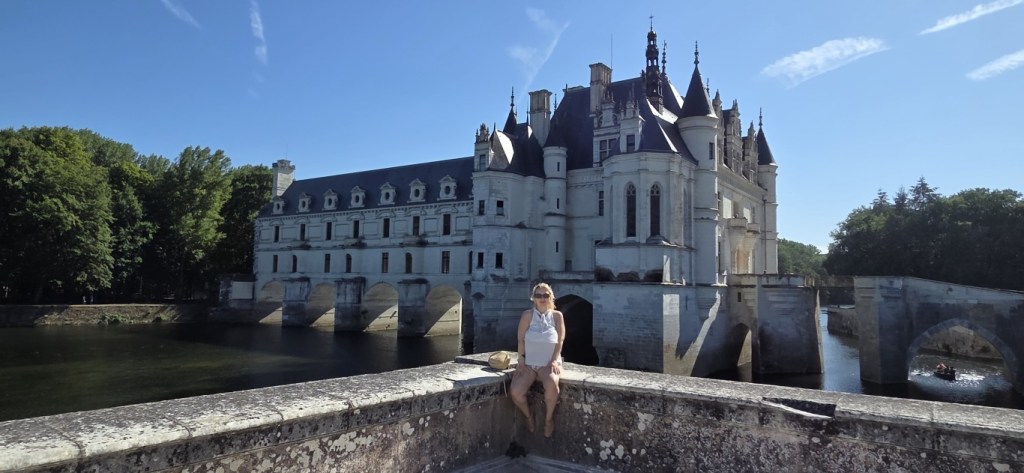
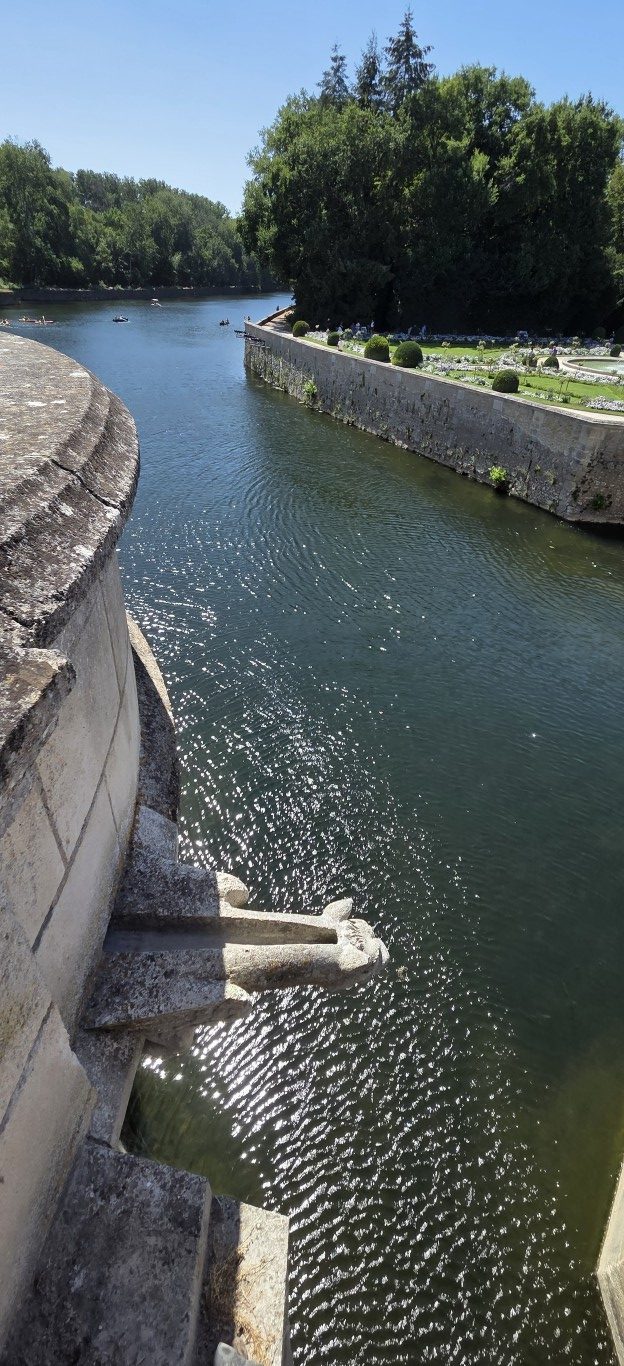
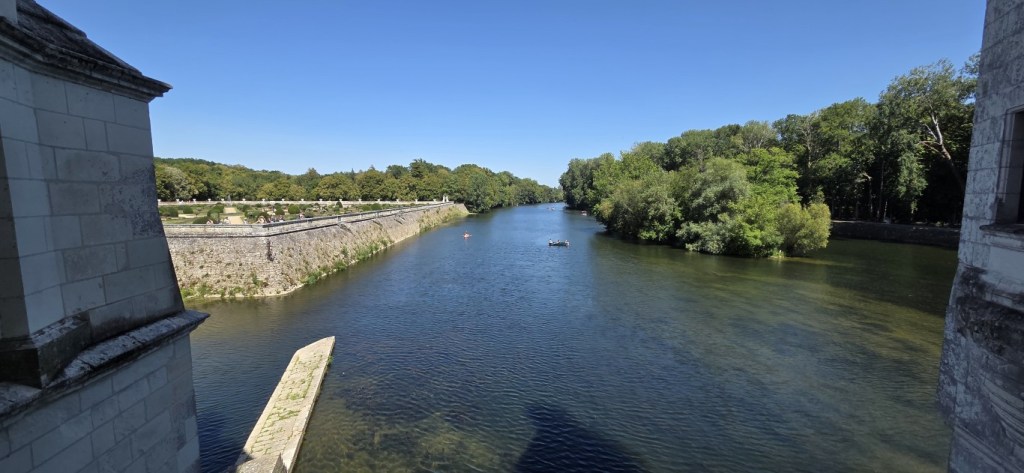
She is one of the most important figures in Chenonceau’s history. After the death of her husband, King Henry II, in 1559, Catherine forced his mistress Diane de Poitiers to give up Chenonceau. Catherine then made the château her own, created new gardens and, most importantly, had the famous two-storey galleries built over Diane’s bridge across the Cher — producing the extraordinary silhouette we recognise today.
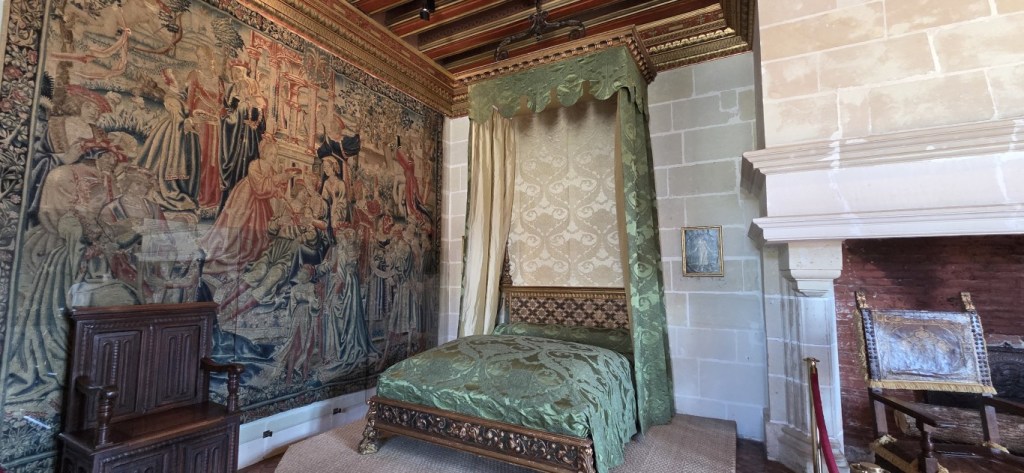
This is her bedroom at Chenonceau. The room preserves a strongly Renaissance character: the remarkable Flemish tapestries depicting episodes from the biblical Life of Samson, while the decorated ceiling carries the Medici arms and the intertwined initials C and H — Catherine and Henri II.
Furthermore, this is one of the richly decorated rooms of Chenonceau, and the fireplace itself is worth noticing. You can see Renaissance motifs carved into the stone, including the salamander, the personal emblem of King François I, together with the inscription “Nutrisco et extinguo” — commonly interpreted as “I nourish [the good fire] and extinguish [the bad].”
The painting in the photo is The Three Graces (Les Trois Grâces) displayed in the François I room at Chenonceau.
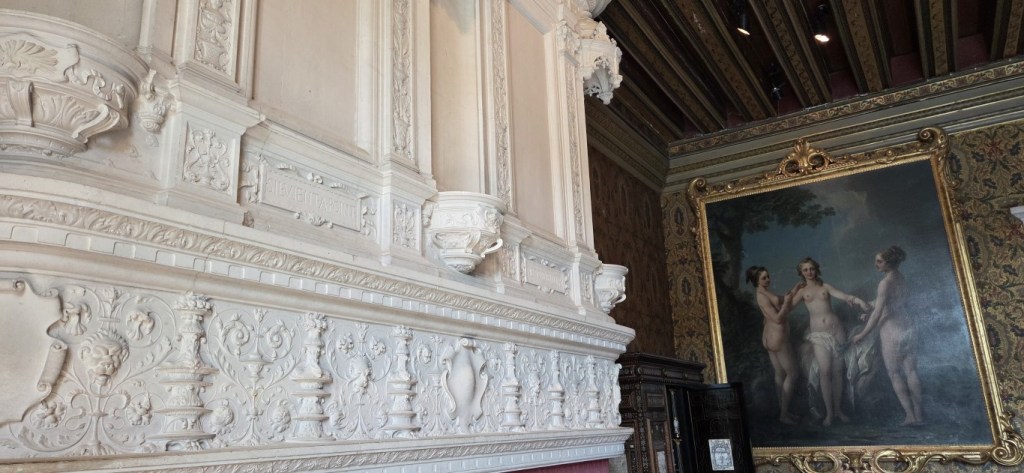
Traditionally, the three women were identified as three of the Nesle sisters — Madame de Mailly, Madame de Vintimille and Madame de Châteauroux — who successively became favourites/mistresses of King Louis XV.
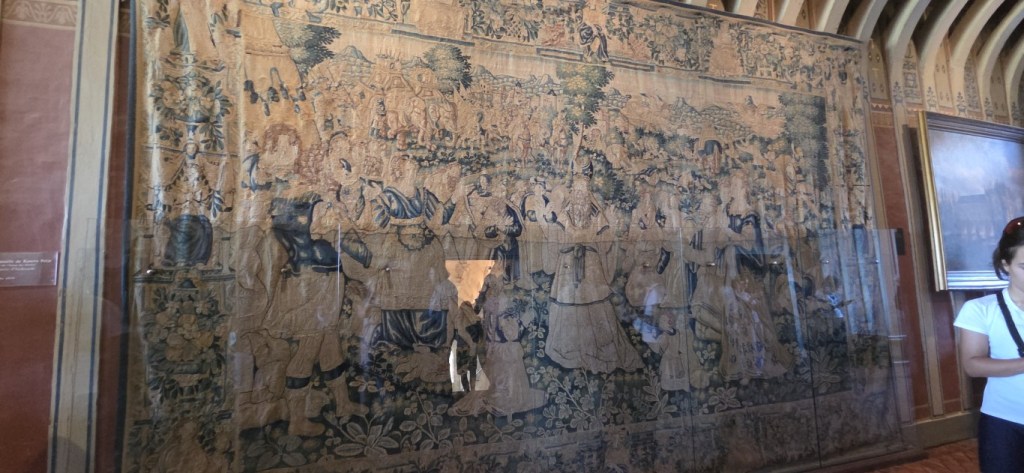
And then, completely unexpectedly, the Balkans appeared in the middle of the Loire Valley. Hanging in Chenonceau is an enormous 16th-century Flemish tapestry depicting the Battle of Kosovo Polje of 1389 — the legendary confrontation between the Balkan Christian forces and the Ottoman Empire. Of all the things I expected to find inside a French Renaissance château, a piece of medieval Balkan history certainly wasn’t one of them.
Chenonceau is really the story of several remarkable women written into architecture. Katherine Briçonnet created the original Renaissance château; Diane de Poitiers added the bridge across the Cher and designed the great formal garden; Catherine de’ Medici then built the two-storey gallery over Diane’s bridge and created her own, more intimate garden. This succession of powerful women is why Chenonceau became known as Le Château des Dames — the Ladies’ Château.