
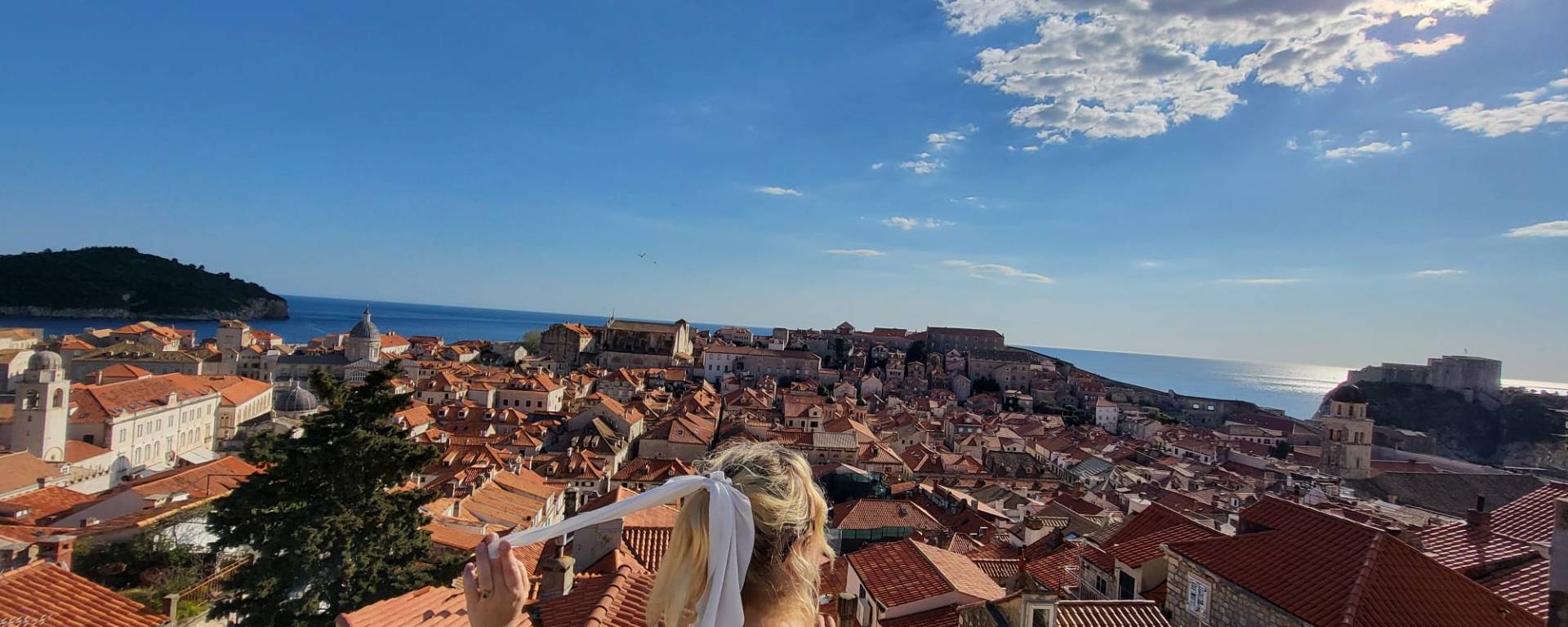
We arrived in Dubrovnik on a midnight flight from cold, grey Brussels and went straight to sleep, still carrying the weight of the northern winter with us. The next morning, we woke into soft Mediterranean, bright stone, and that unmistakable Dalmatian light that makes everything feel slower and gentler. What followed were two days of pure Dalmatian bliss, where sea air, sun, and the rhythm of Dubrovnik seemed to reset us completely.
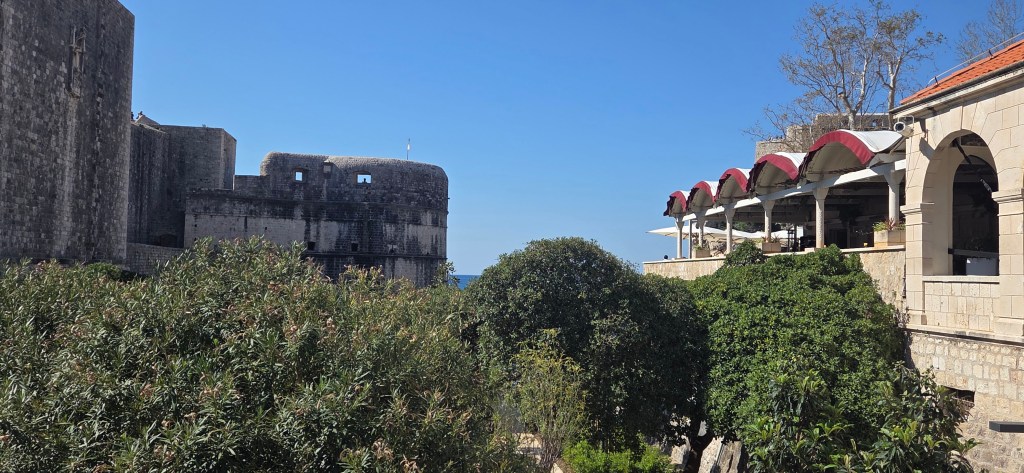
One thing I knew I had to do was walk the sea walls again. The first time I saw them, I was 13, and I still remembered how enormous they felt and how deeply they impressed me. Returning now, seeing those magnificent walls wrap in a full 360 around the city, with the Adriatic opening on one side and Dubrovnik’s stone heart on the other, felt just as awe-inspiring as it did the first time.
Revisiting Dubrovnik also brought to mind its extraordinary Golden age, when the city was far more than a beautiful maritime fortress.
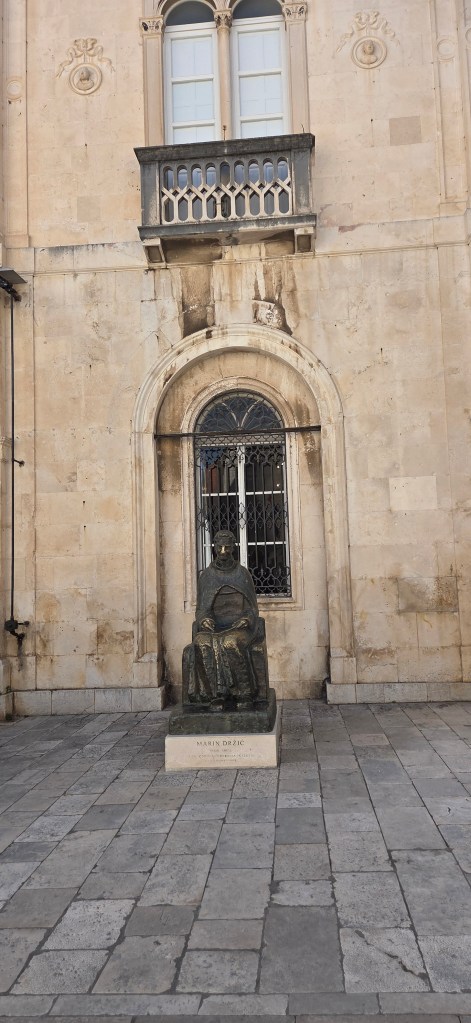
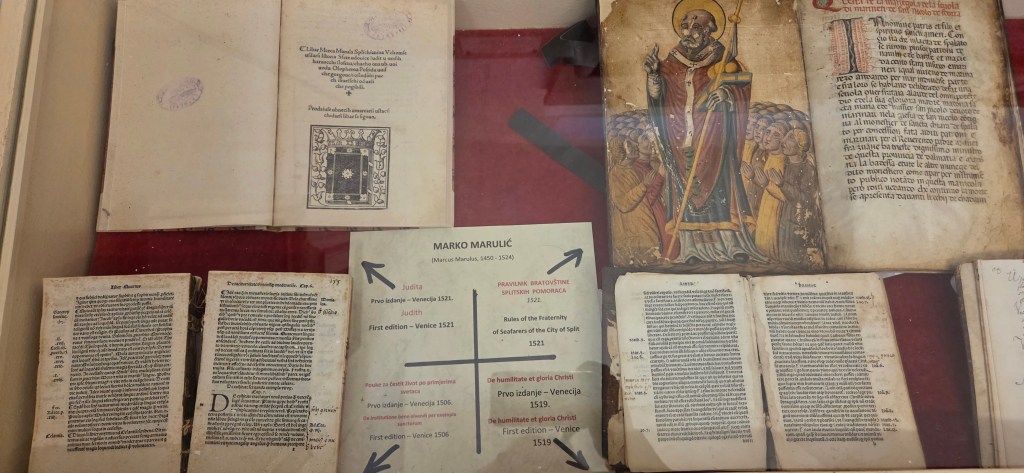
As a Republic of skilled traders, diplomats, and bankers, Dubrovnik transformed wealth from commerce into a flourishing of art, culture, and intellectual life that helped shape the Croatian Renaissance, alongside the wider awakening already visible in nearby Dalmatian and Istrian cities. This prosperity gave rise to remarkable literary figures, like Ivan Gundulić’s Dubravka, Judita (which is now part of the Bible) and The Tears of the Prodigal Son, Marin Držić’s Dundo Maroje… And the scientific figures like Ruđer Bošković and Faust Vrancić.
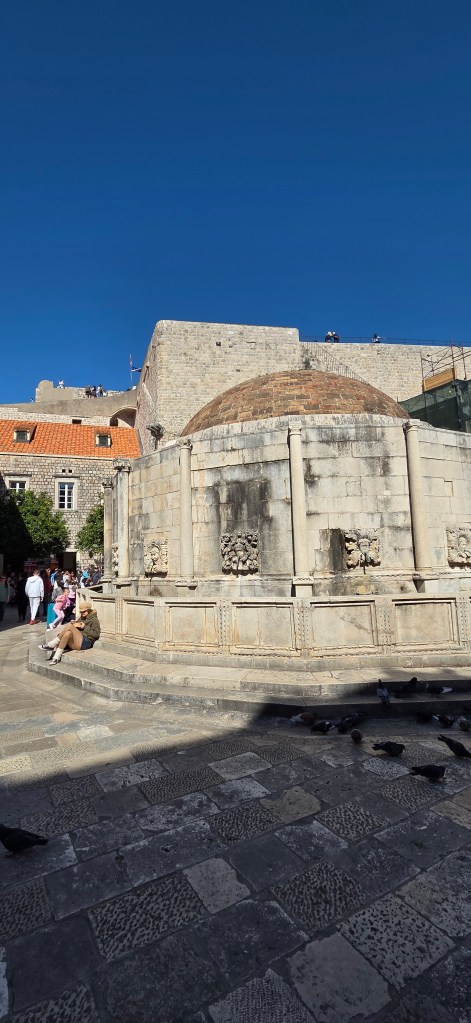
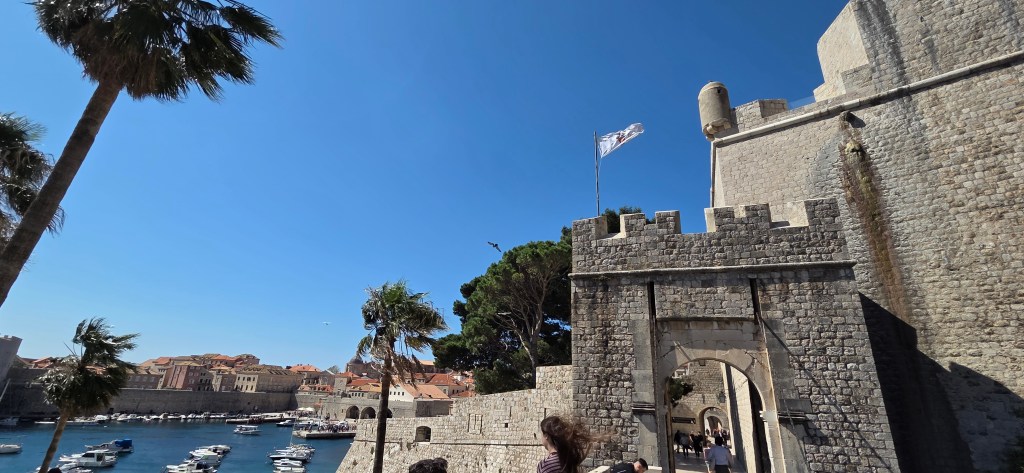
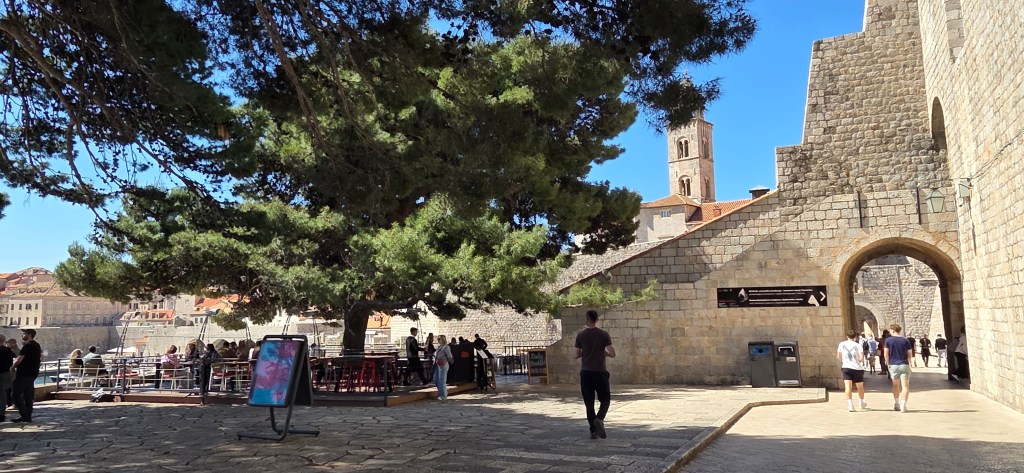
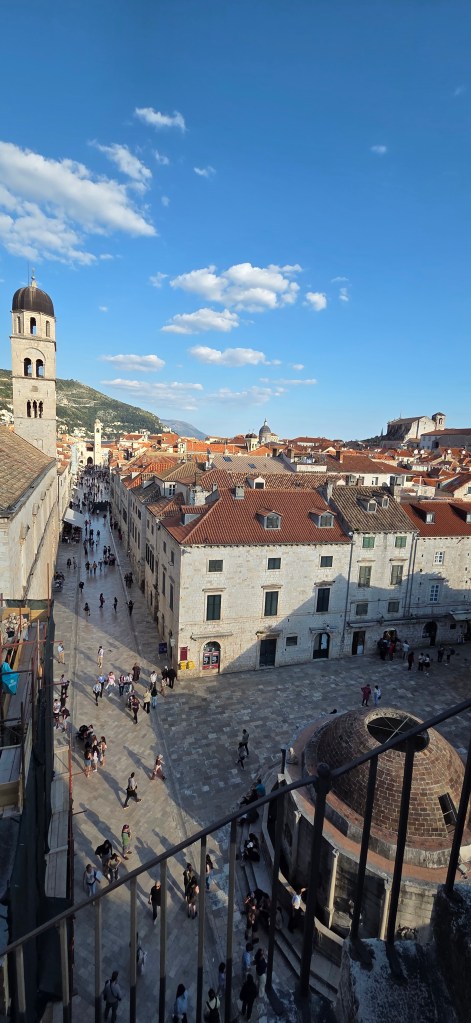
The architectural story of Dubrovnik begins the moment you enter through Pile Gate. The first thing that welcomed us was the large Onofrio Fountain, designed by the Italian architect Onofrio della Cava, who was paid by the Republic to create the city’s water system. It immediately showed how Dubrovnik’s golden age was built not only through trade, but also through smart architecture and urban planning.
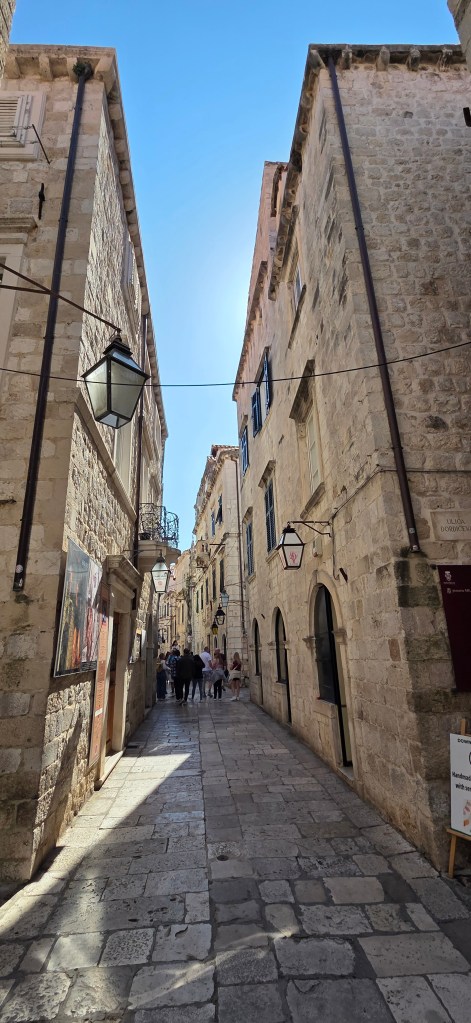
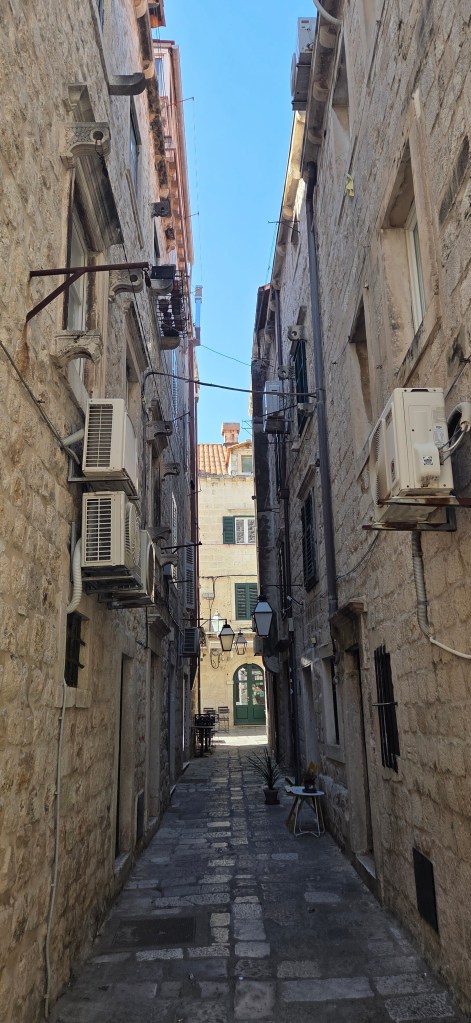
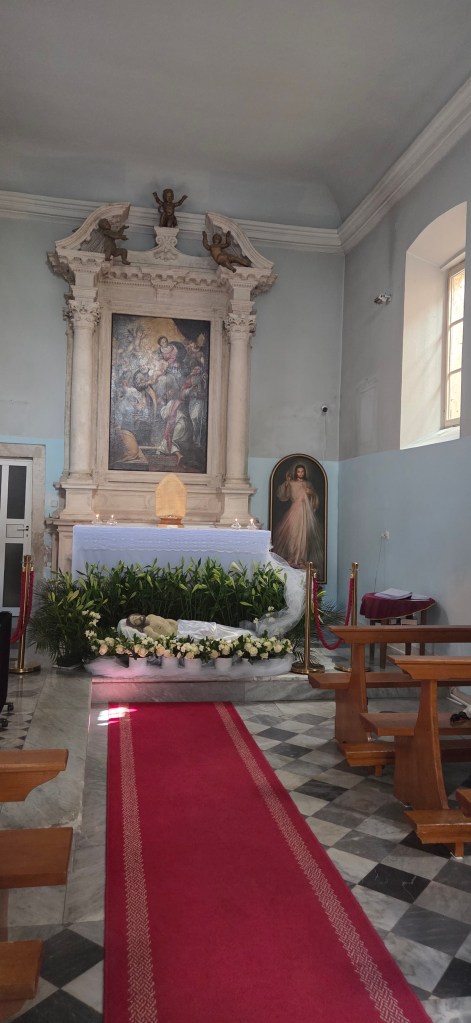
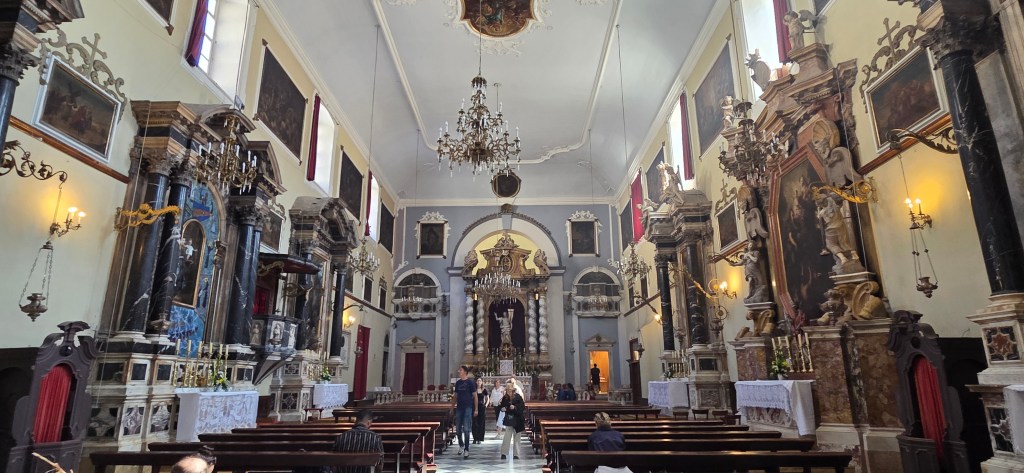
We wandered through the small medieval streets and stepped into the Church of the Sacred Heart of Jesus. As it was Holy Saturday for us Catholics, the tomb of Jesus was on display, a quiet and powerful reminder of His Passion. In that moment, Dubrovnik felt not only historic, but deeply spiritual too.
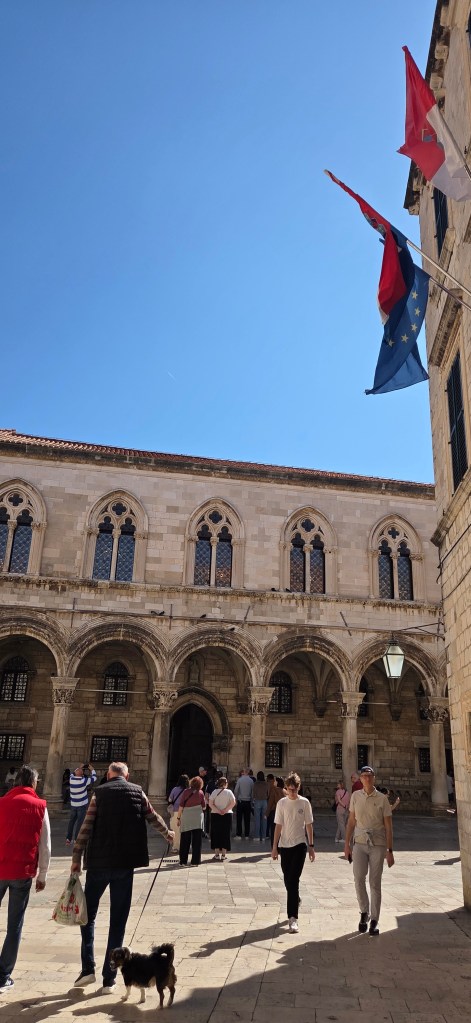
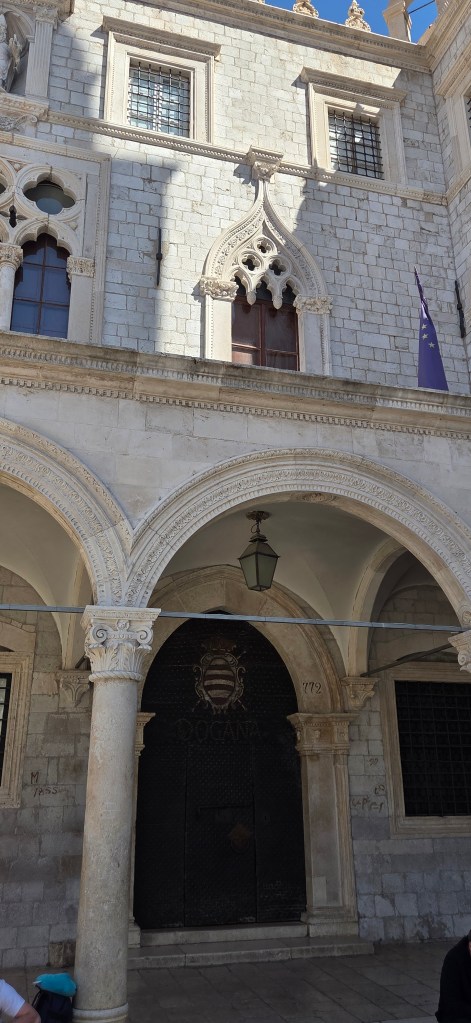
The Rector’s Palace gave us one of the most fascinating glimpses into the political genius of the old Republic of Ragusa, where power was carefully designed to never remain in one person’s hands for too long. The Rector served for only one month, lived inside the palace during that time, and was constantly reminded by the famous inscription to leave private matters behind and focus only on the affairs of the state. I loved the detail that during periods of strong jugo—the warm southern wind said to bring heavy pressure and cloud the mind—even important decisions were often postponed, as if Dubrovnik understood long before modern science how atmosphere can shape judgment.
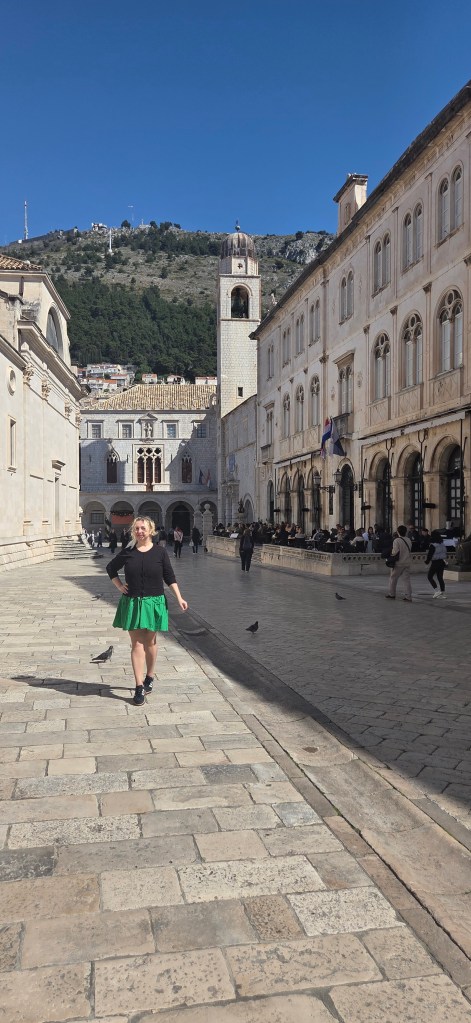
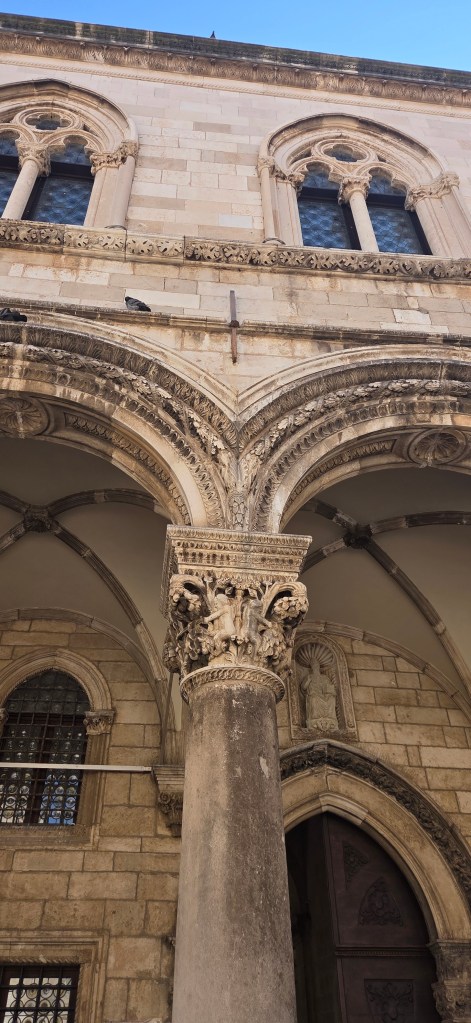
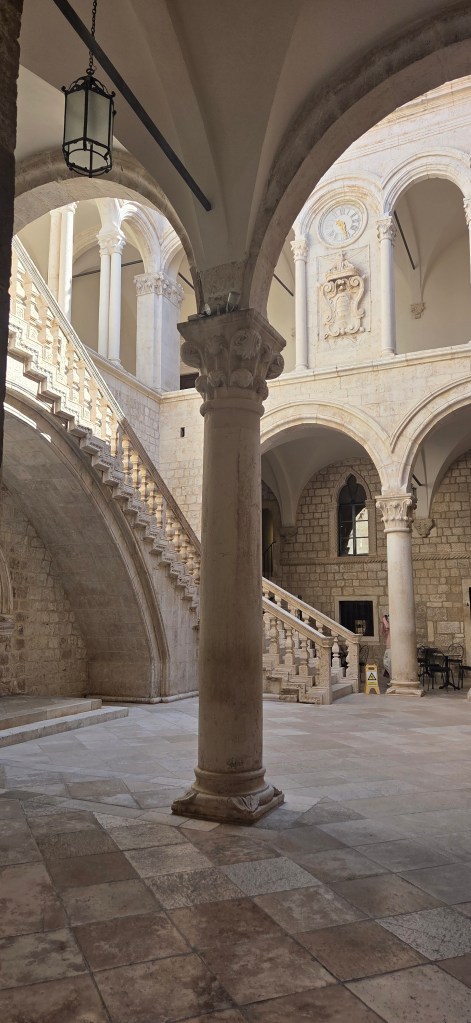
The old customs house, whose name comes from the word douane. It was here that Dubrovnik’s merchants once declared and taxed goods arriving from across the Mediterranean, bringing e silk, spices, and silver, which once passed through its halls before spreading into the life and wealth of the Republic.
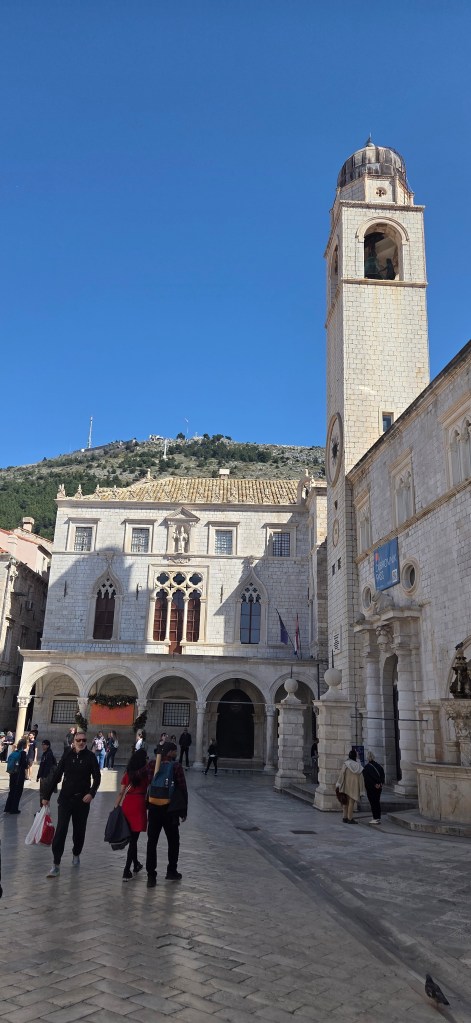
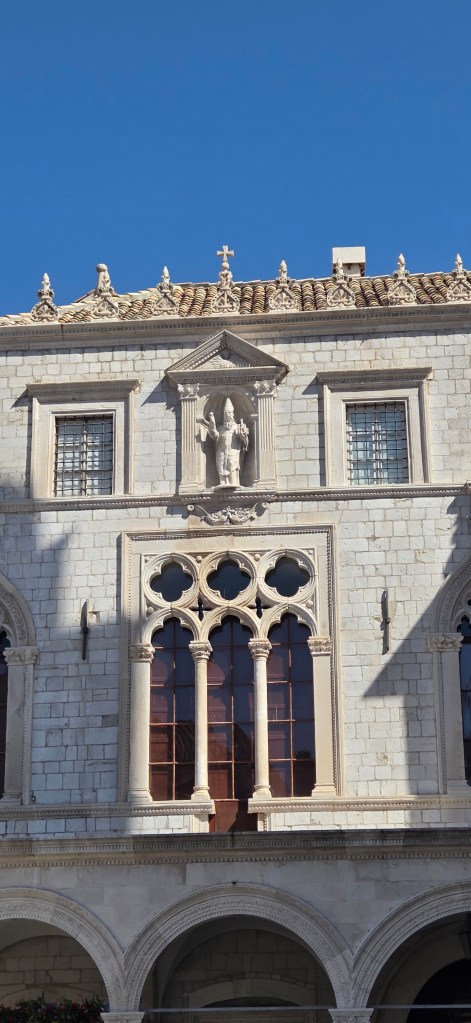
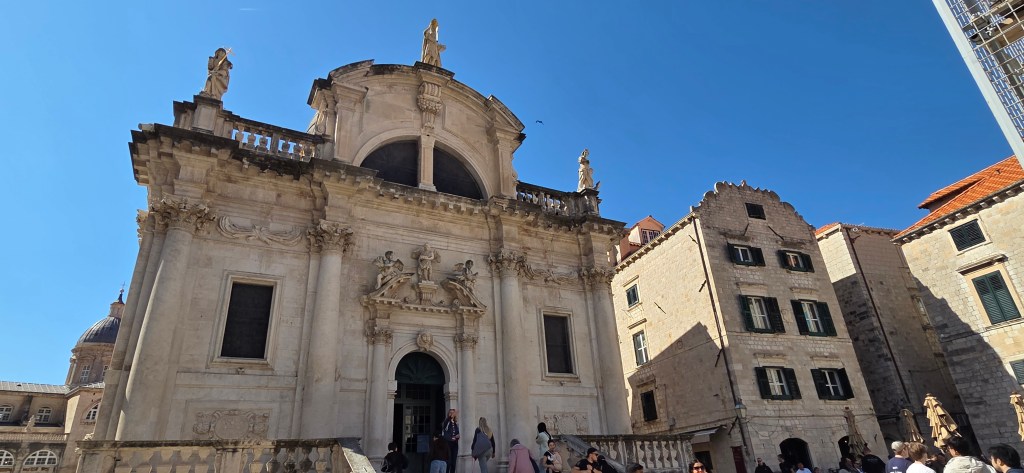
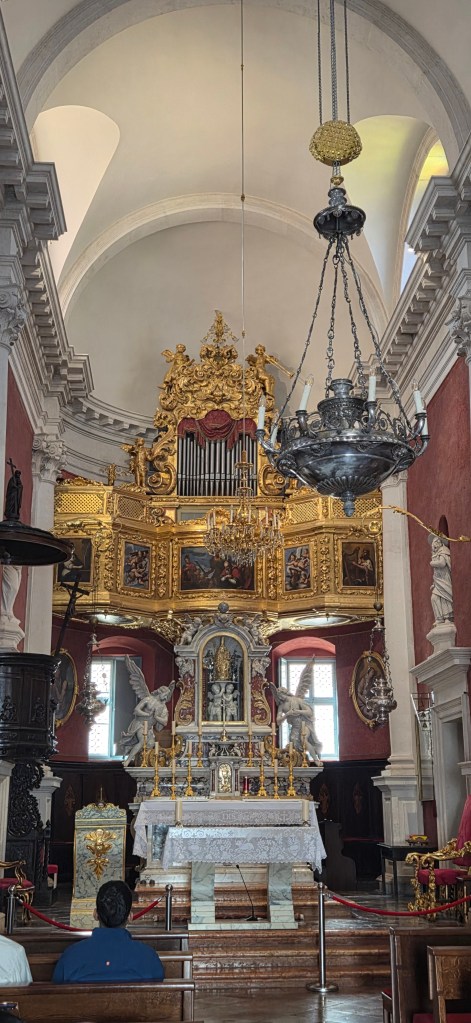
Magnificent Church of St. Blaise, one of the city’s most elegant Baroque landmarks. Saint Blaise, or Sveti Vlaho, became Dubrovnik’s patron after, according to legend, he appeared in a vision in the 10th century and warned the city about a Venetian attack.
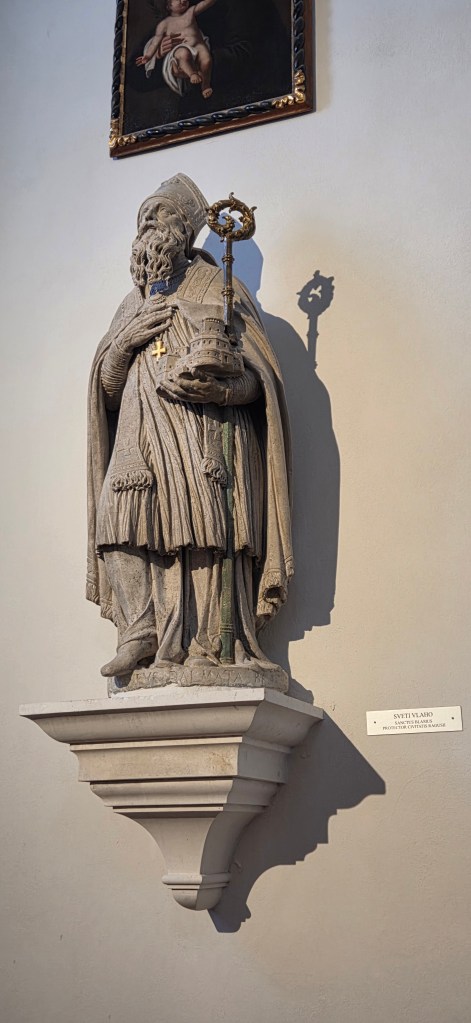
Saint Blaise is usually portrayed as a man holding the model of the city of Dubrovnik.
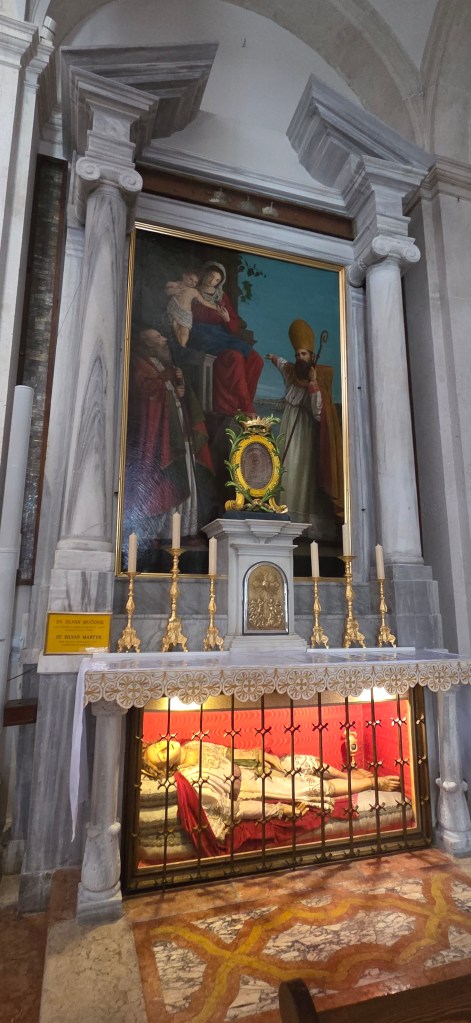
Dubrovnik protected itself less through war and more through diplomacy. The Republic of Ragusa survived the centuries through carefully balanced relations: trade links with Venice, tribute payments to the Ottomans to secure non-aggression, and political understandings with powers such as Hungary and later Russia, all designed to preserve its independence; even the role of the konzul was first created in Dubrovnik. The first Kozsuls were merchants across foreign ports, eventually mastering the art of negotiation, neutrality, and commerce.
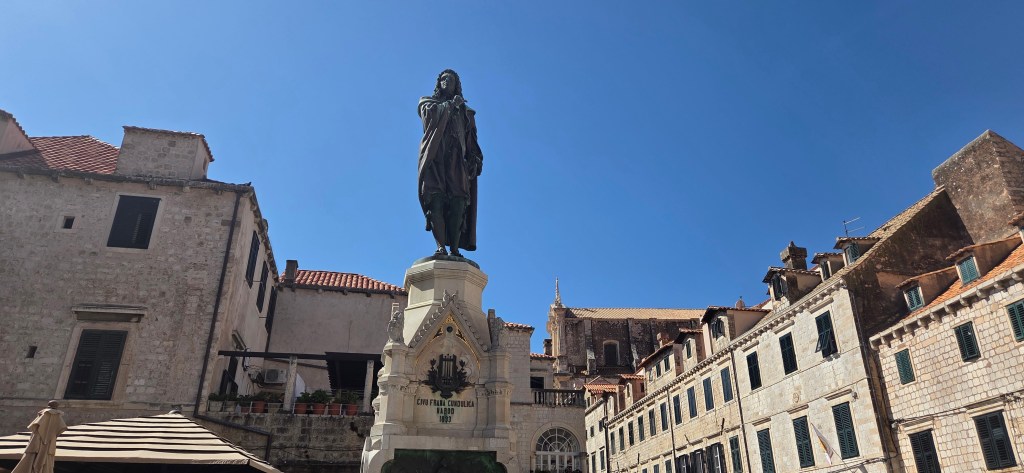
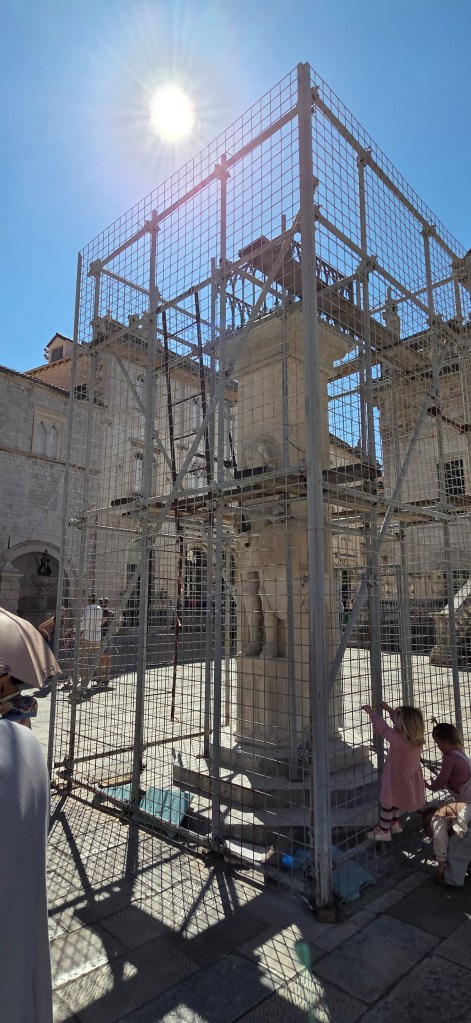
The story of Orlando comes from the medieval knight Roland, known in Italian as Orlando, a legendary hero of Charlemagne who later became a symbol of freedom and civic justice across Europe. Dubrovnik adopted his figure in 1418, linking him to the local legend that he helped defend the city from attackers near island of Lokrum, and over time he became a symbol of the Republic’s liberty, public law, and merchant fairness. That is why the column was not just decorative—it was the place for proclamations, justice, the city flag, and even the official measure for trade, making Orlando a perfect symbol of Dubrovnik’s independent spirit.
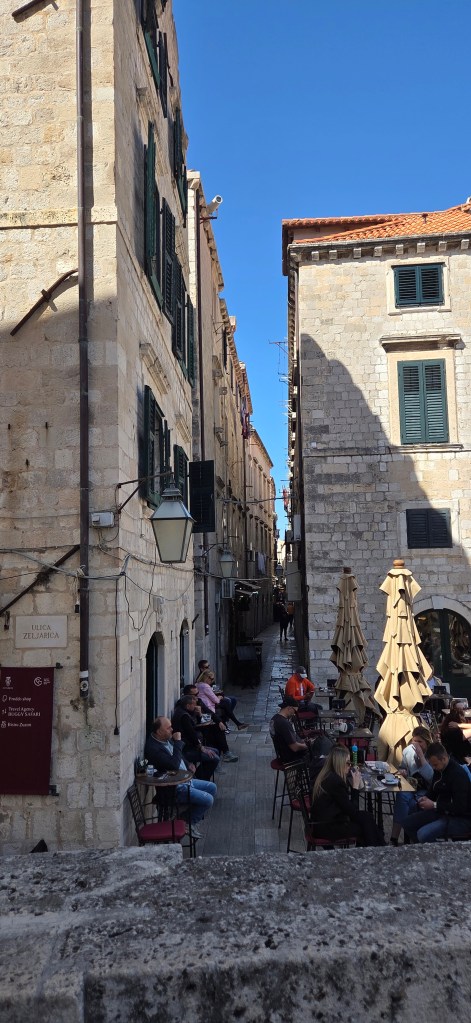
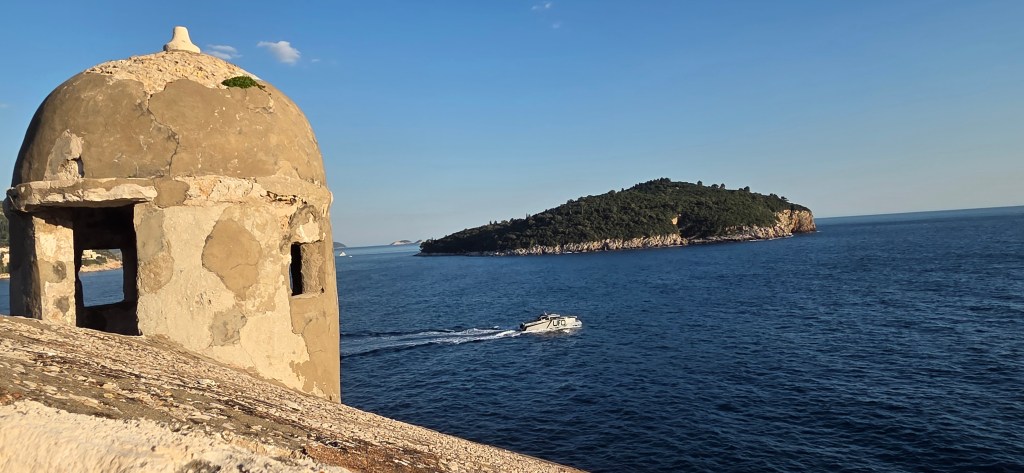
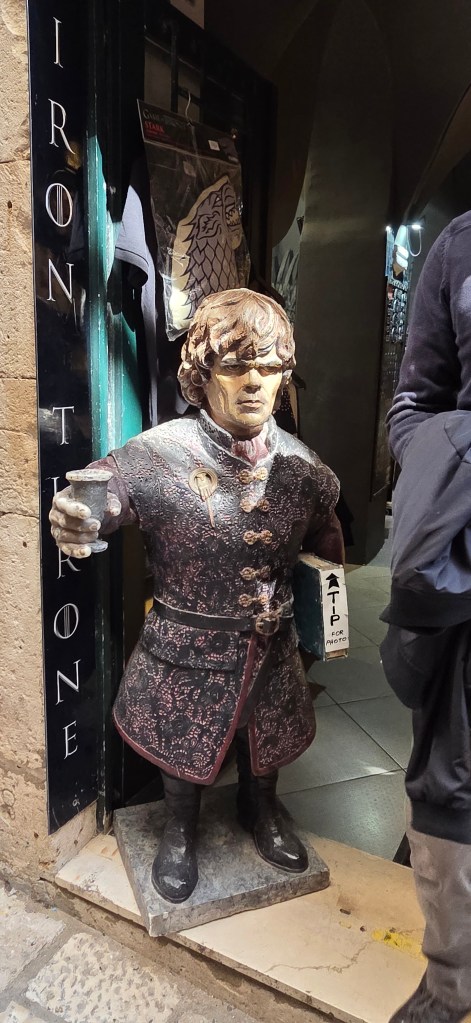
For us Croatians, Dubrovnik is the pearl of the Adriatic—the most beautiful city, where every stone carries centuries of memory, pride, and brilliance. It is always fascinating to watch visitors arrive in awe, but I often hope they look beyond the Game of Thrones image and step deeper into the real story: the golden age of Dubrovnik, its diplomacy, trade, literature, science, and the extraordinary republic it once was. That deeper history, to me, is what makes the city far more magical than fiction ever could.
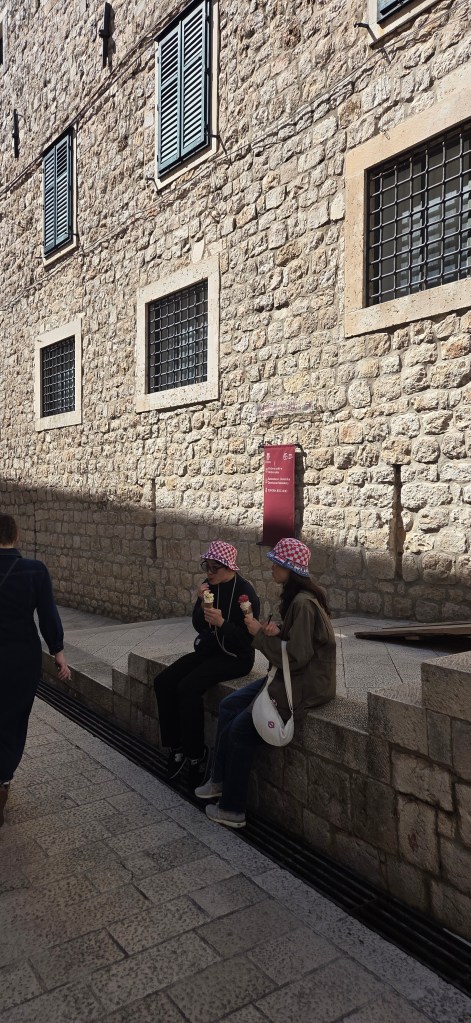
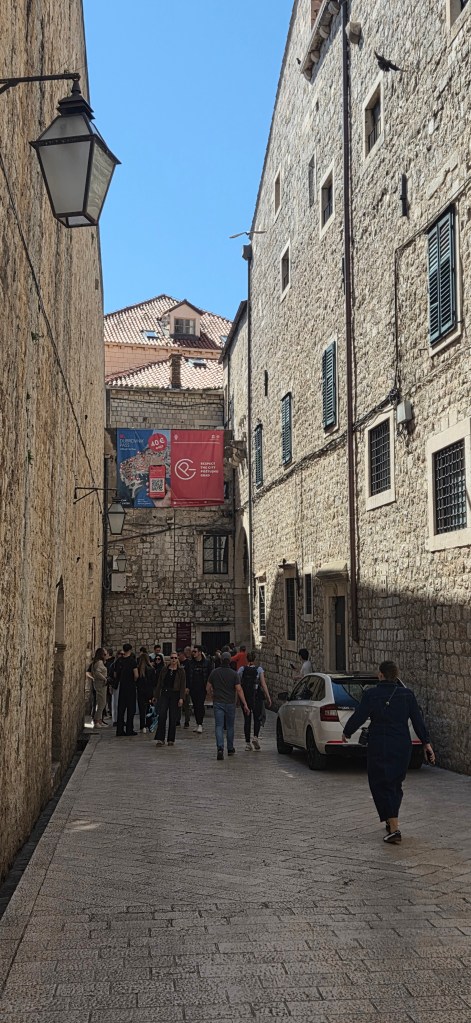
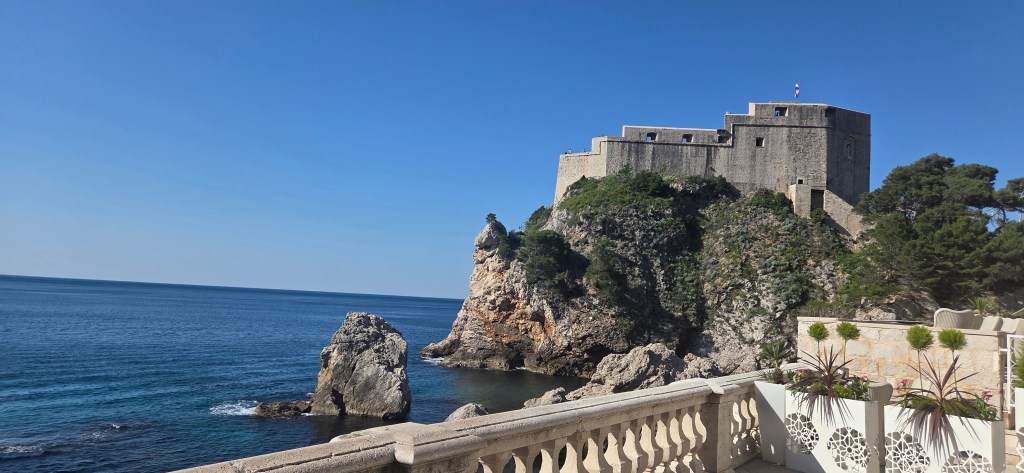
Dubrovnik’s old port felt incredibly peaceful, with the sea gently moving beneath the walls of Fort St. John, once the guardian of the harbour and the goods arriving from faraway seas. The great stone halls that once stored merchandise now open into beautiful restaurants with views over the port, the sea, and the church of Saint Blaise rising nearby—a perfect blend of commerce, history, and architectural beauty.
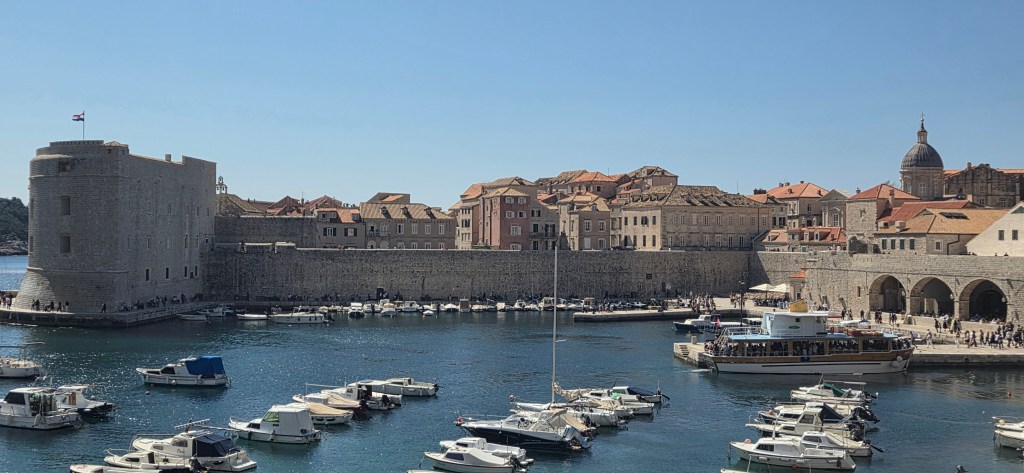
Through its far-reaching diplomacy and merchant networks, Dubrovnik even extended its presence as far as Goa in India, where Ragusan traders established a small colony named São Braz after Saint Blaise, carrying the spirit of the Republic deep into the Indian Ocean.
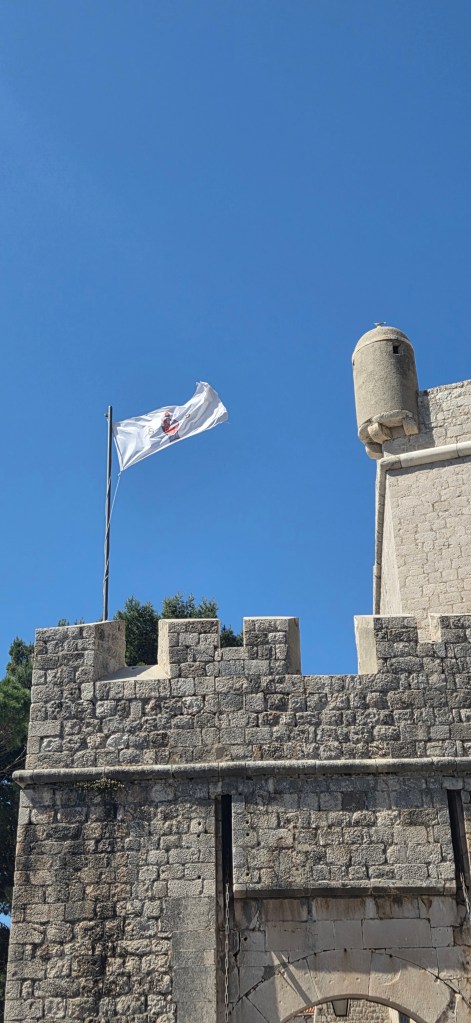
Here the Revelin fort – one of Dubrovnik’s most elegant nightlife spots—a classy fortress club where Hollywood names, the young, wealthy, and luxury travellers come to party beneath stone vaults and world-famous DJs. Yet its glamour sits inside a 16th-century fortress originally built to defend the eastern entrance of the Republic and protect the city from Venetian and Ottoman threats. That contrast between old military power and modern luxury nightlife is exactly what makes Revelin such a unique part of Dubrovnik.
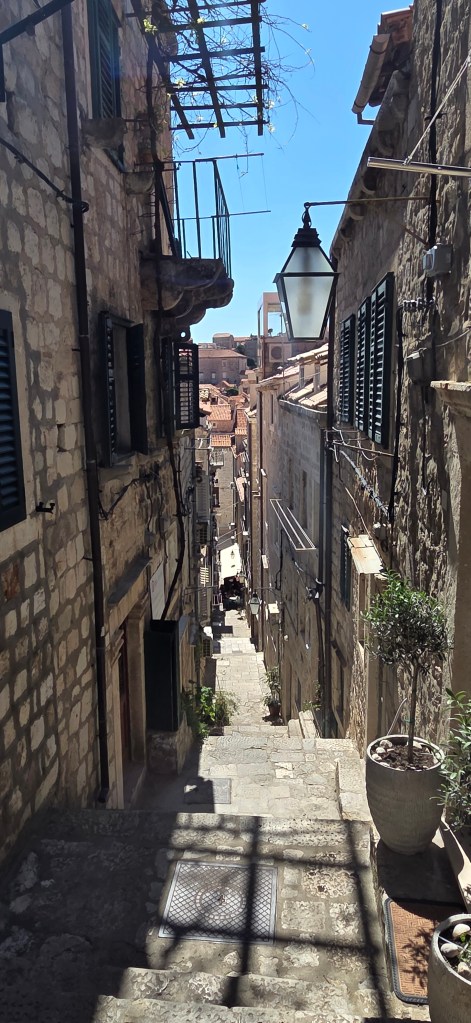
Then we climbed higher and higher, taking the endless stone stairs that led us to one of the highest points above Dubrovnik.
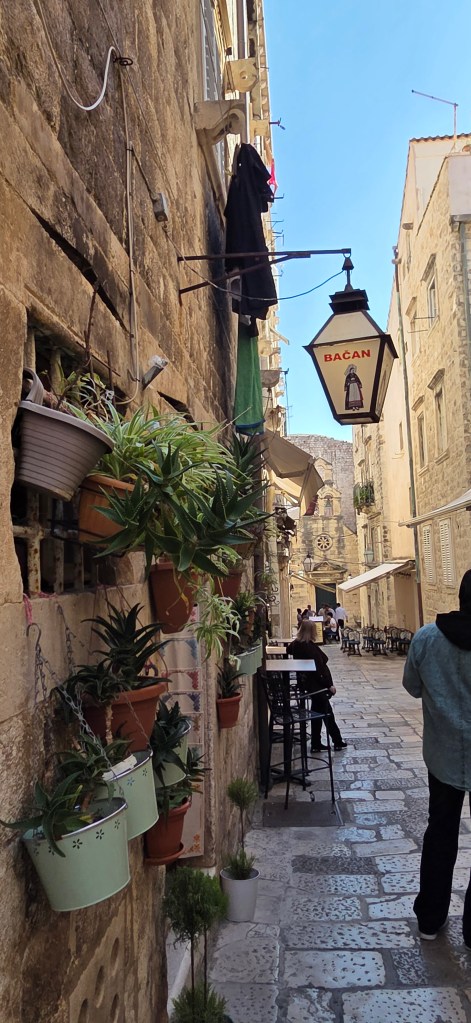
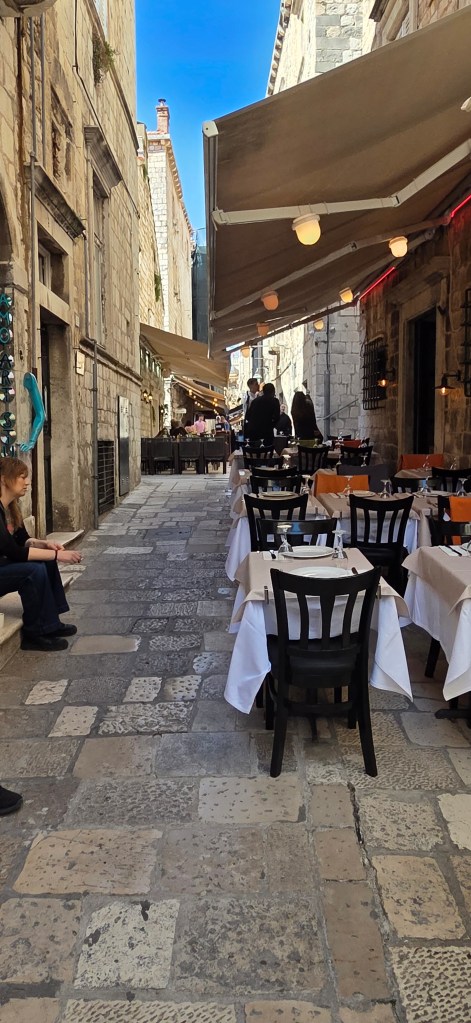
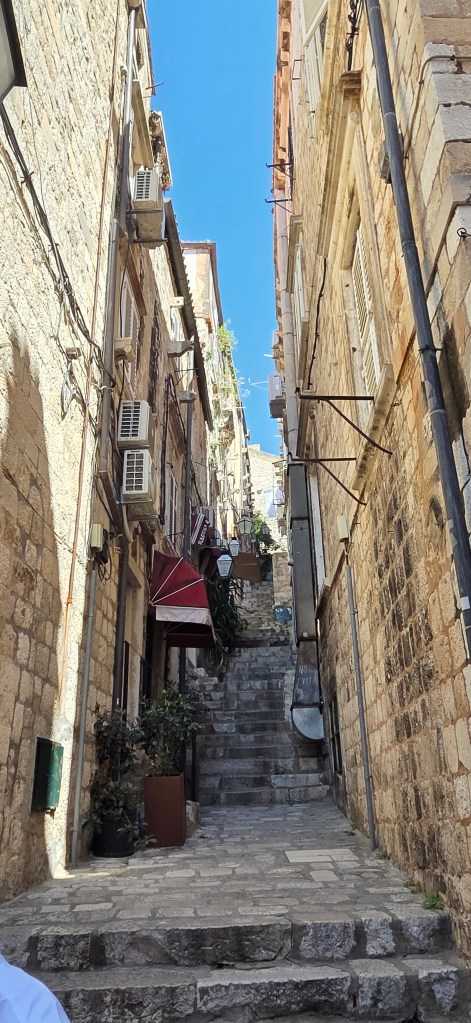
At the top, we stopped at a small restaurant-konoba with a stunning view over the city roofs and the open sea, the kind of place where time slows down. The many stairs are simply part of the charm of any true medieval city—beauty always comes with a climb.
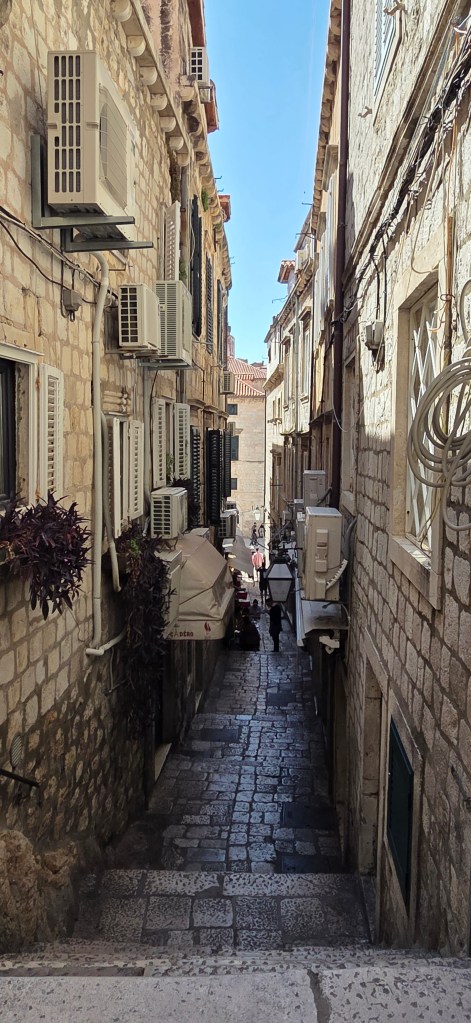
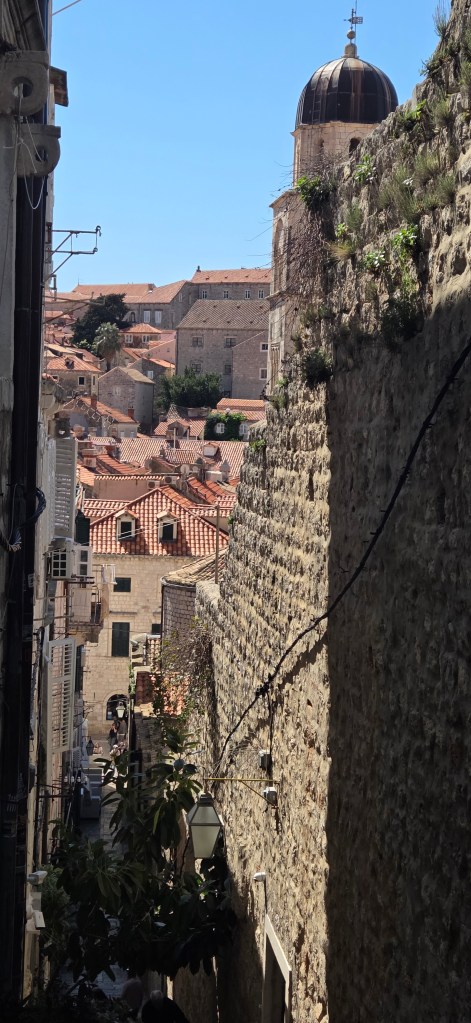
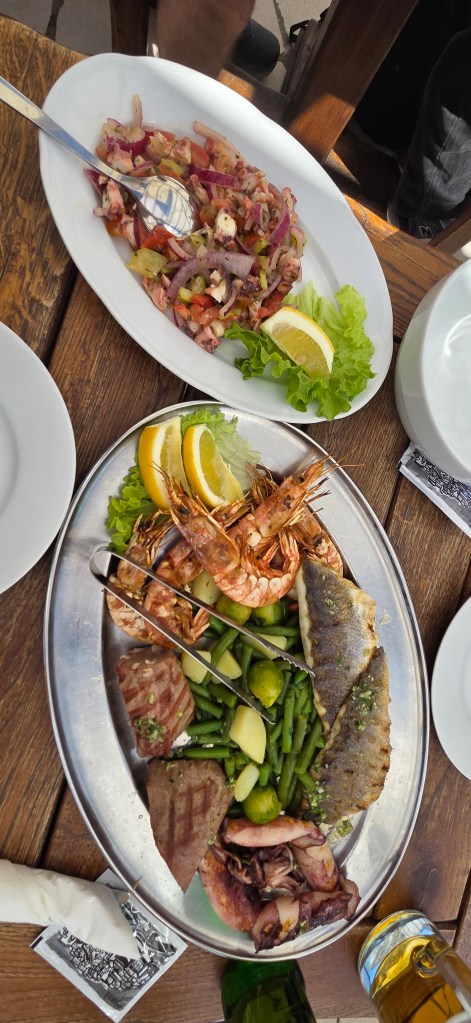
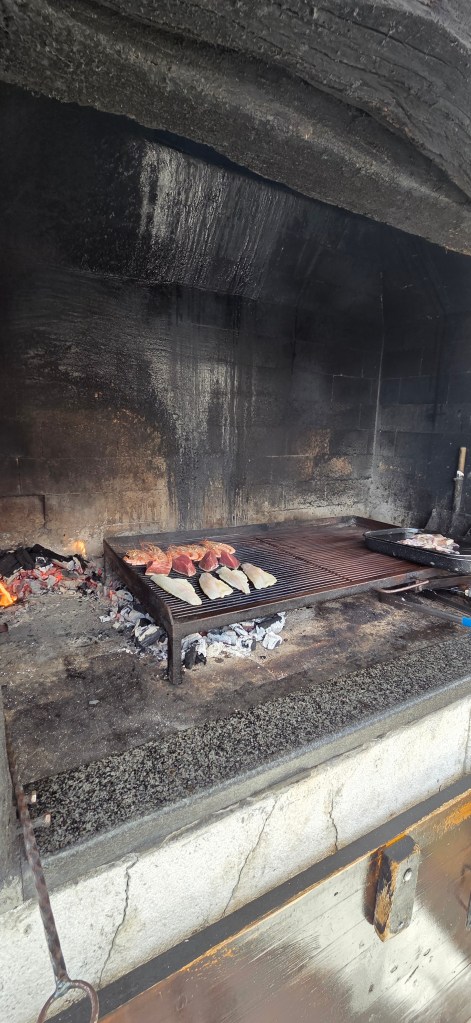
There we enjoyed typical Mediterranean Dalmatian food, simple and full of flavour. We started with the famous Dalmatian octopus salad, fresh and perfectly dressed, followed by grilled fish finished with the rich local olive oil that gives Dalmatian cuisine its unmistakable taste.
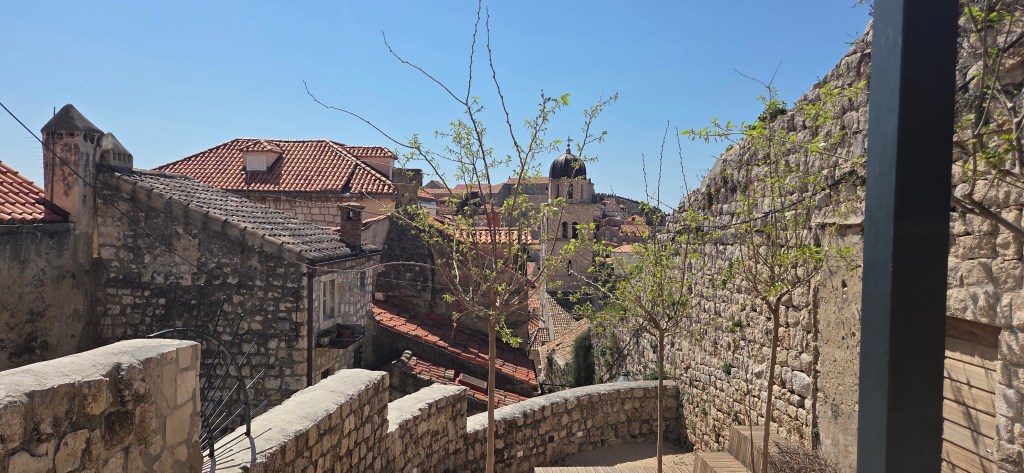
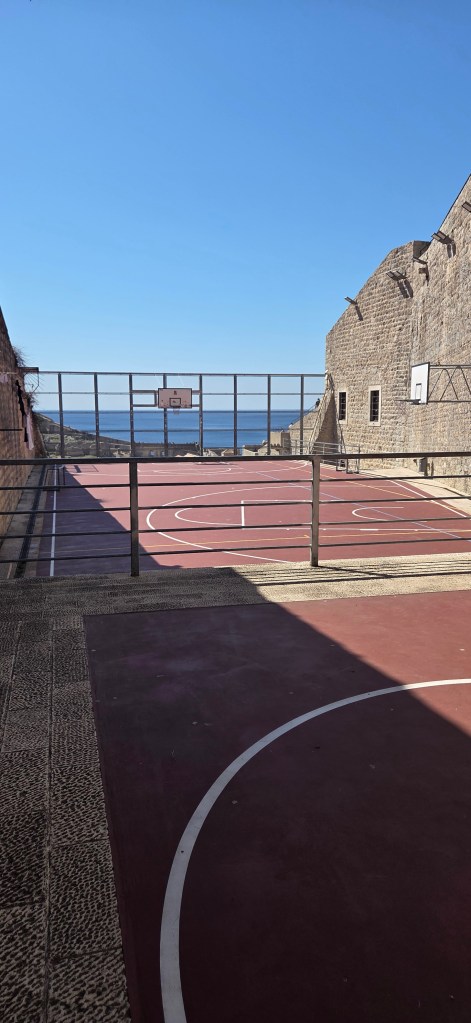
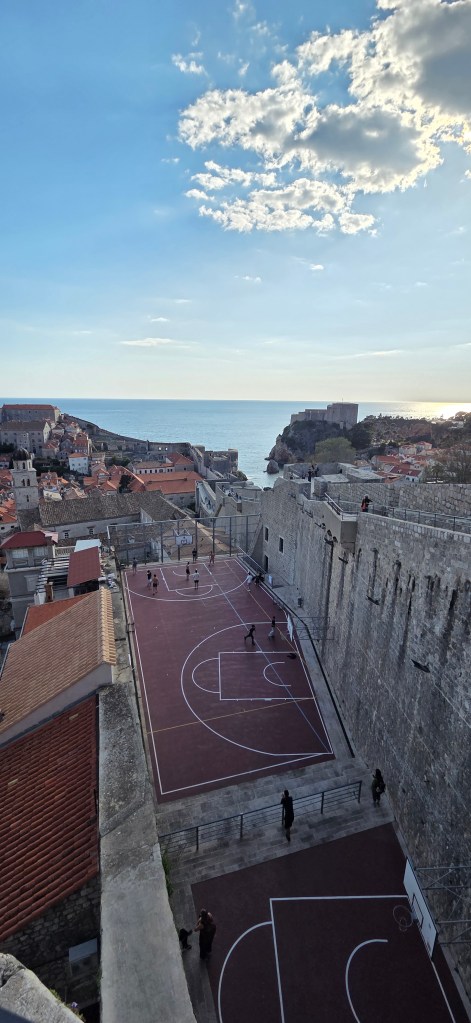
What fascinated me was discovering a basketball playground squeezed into the middle of the old city, surrounded by walls, houses, and church towers, yet somehow still opening to the sea. It felt like such a perfect Dubrovnik contrast: medieval stone everywhere, and then suddenly a court full of modern city life. If the ball escapes, though, someone definitely has a long climb down to rescue it.
After lunch, we burned a few more calories the Dubrovnik way—through shopping and wandering. One shop was full of ducks in every possible shape, but the funniest one had to be the duck version of Luka Modrić, which I immediately renamed Luka Kvakić. It was one of those playful little travel moments that makes a city stay with you.


What we see today is only part of Dubrovnik’s original story, because the devastating earthquake of 1667 destroyed much of the medieval city and reshaped its appearance forever. Yet one thing we do know is that the city was once divided by a small channel or marsh-like river, which was later filled in and transformed into Stradun, the main promenade and the most important strolling street of Dubrovnik, its name coming from the Italian strada—street.
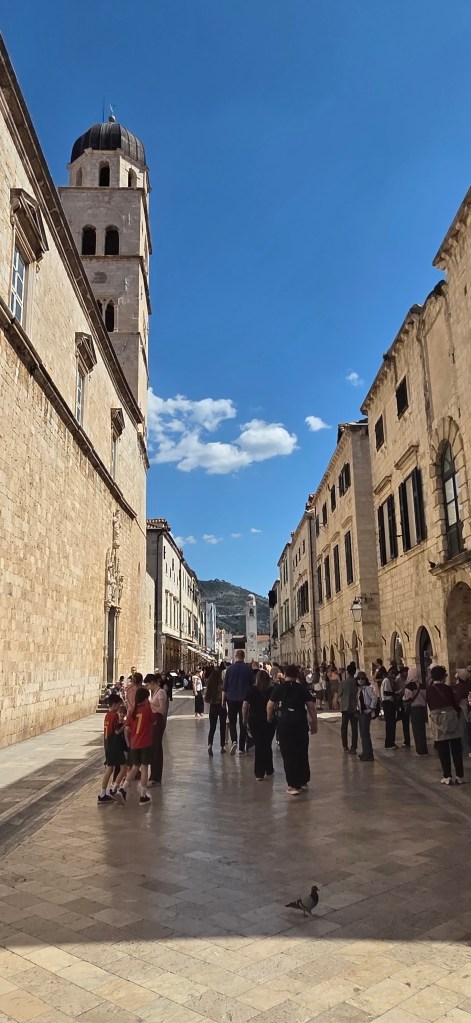
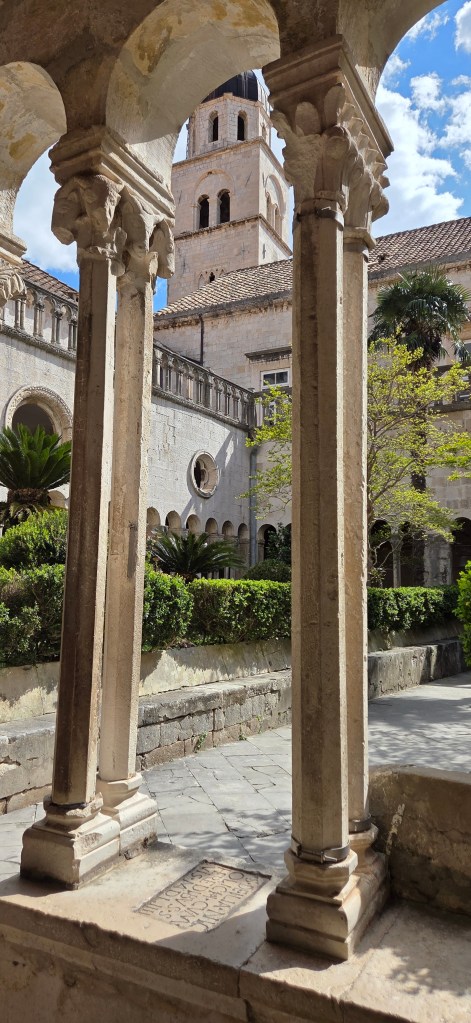
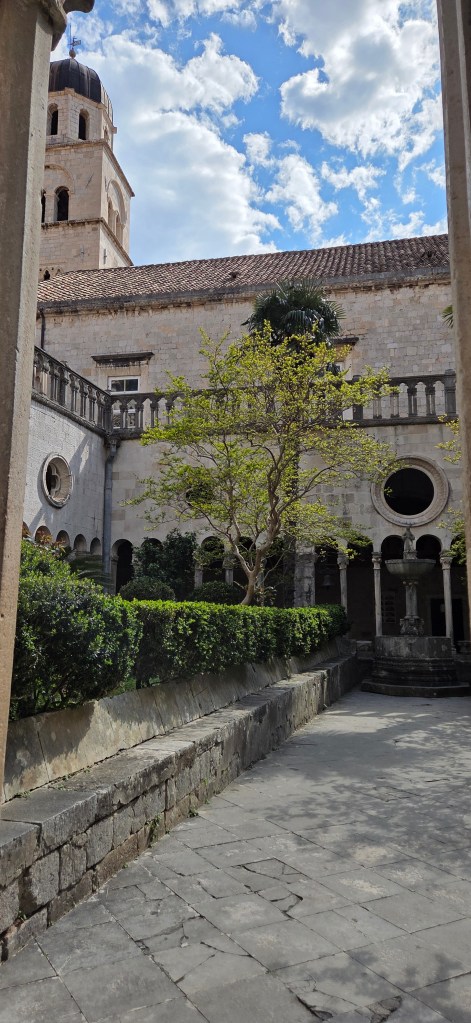
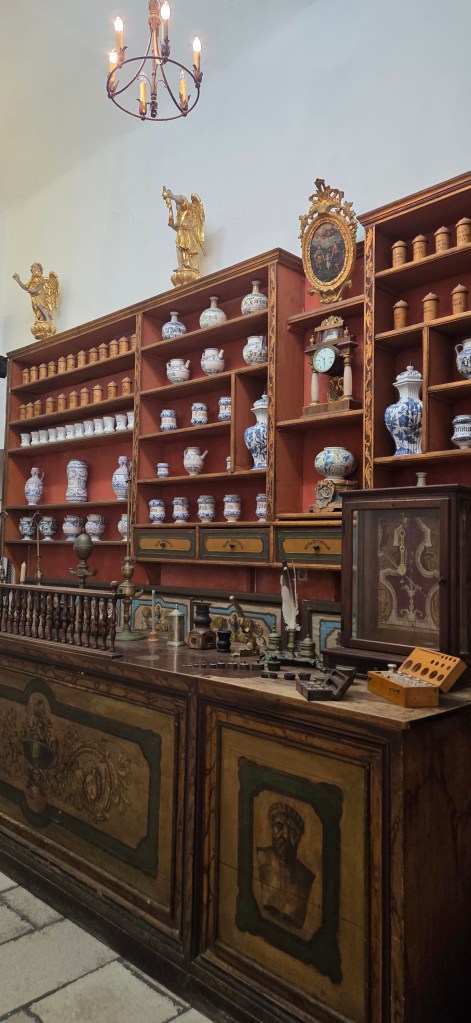
At the entrance of the old town stands the Franciscan Monastery, one of Dubrovnik’s oldest and most important monastic complexes. Inside it is the famous pharmacy, founded in 1317 and considered one of the oldest still operating pharmacies in Europe. It is another reminder that Dubrovnik’s golden age was not only about trade and diplomacy, but also about science, medicine, and care for the community.
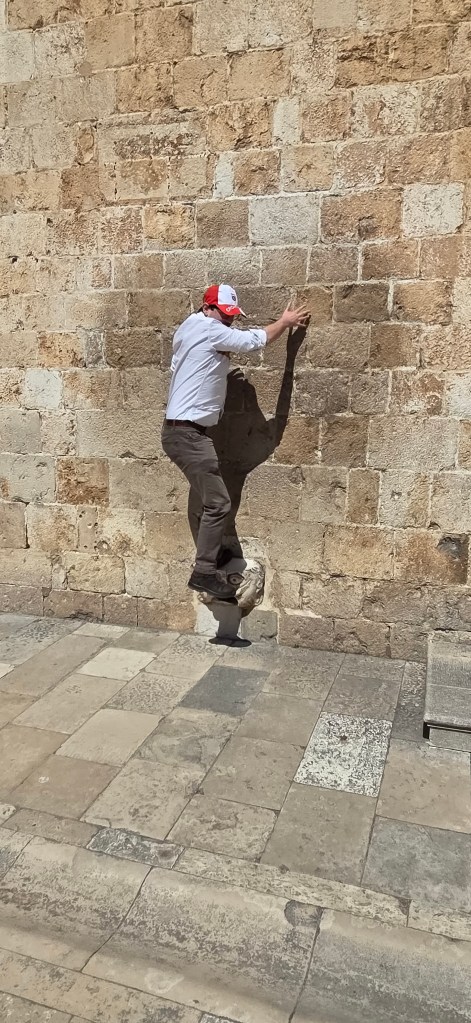
Just nearby is one of Dubrovnik’s funniest little traditions—the famous maskeron stone jutting out from the wall above the street. The challenge is to climb onto the narrow stone, press yourself flat against the wall with your face forward, carefully turn around, and jump back down without losing balance; legend says that if you manage it, love or marriage awaits you.
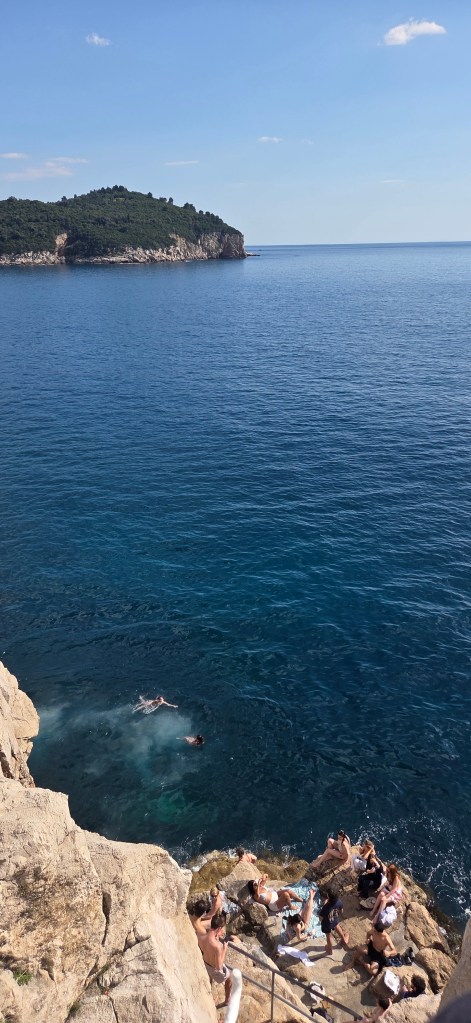
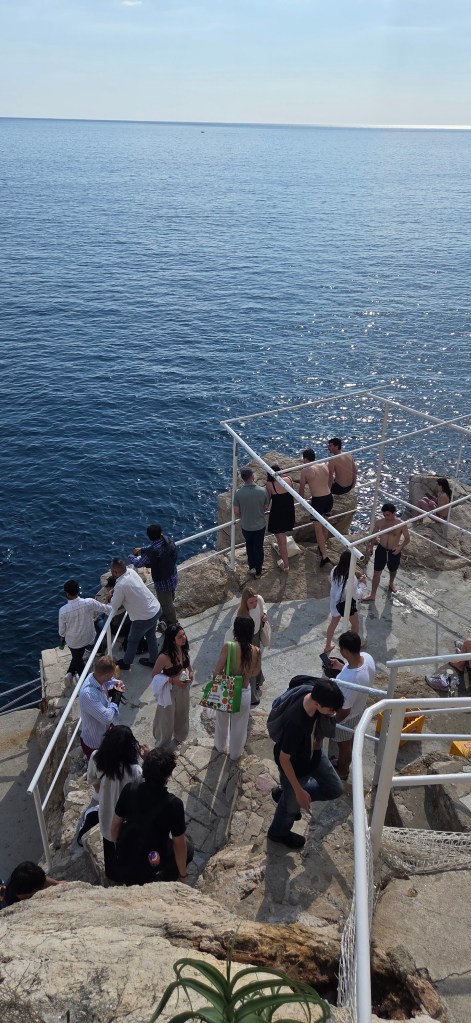
Then came one of Dubrovnik’s most Instagram-worthy moments: Buža Bar, perched on the cliffs with the sea stretching endlessly below. With the wind in your hair, a drink in hand, and the sound of young people laughing as they jump from the rocks into the Adriatic, it feels like pure summer freedom. Watching that fearless energy from the side, there is always that fleeting thought—how wonderful it would be to borrow their youth for just one jump. I only I weren’t pregnant!
Towards the quieter side of Dubrovnik, we reached another beautiful church façade rising calmly against the sky, almost glowing in the late afternoon light. This was the Jesuit Church of St. Ignatius (Crkva sv. Ignacija). Inside, it is known for beautiful frescoes and for representing the more scholarly, spiritual side of Dubrovnik’s later Baroque period.
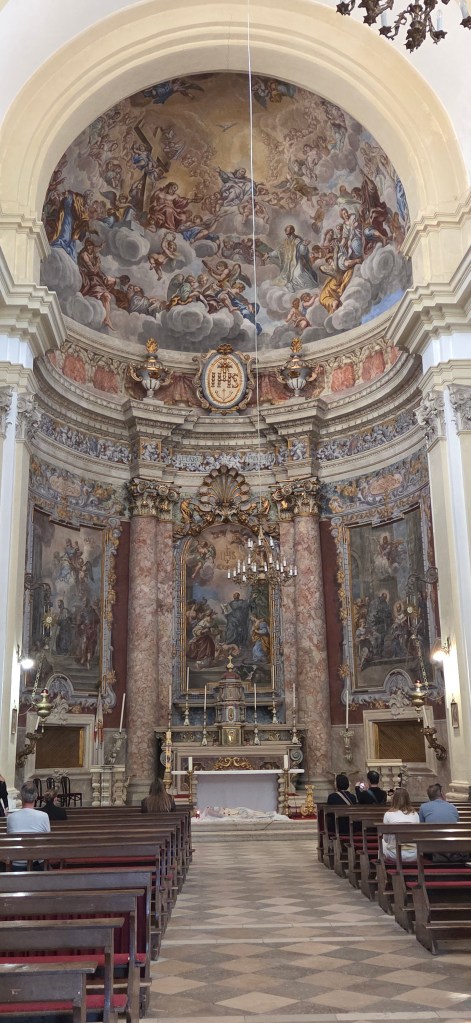
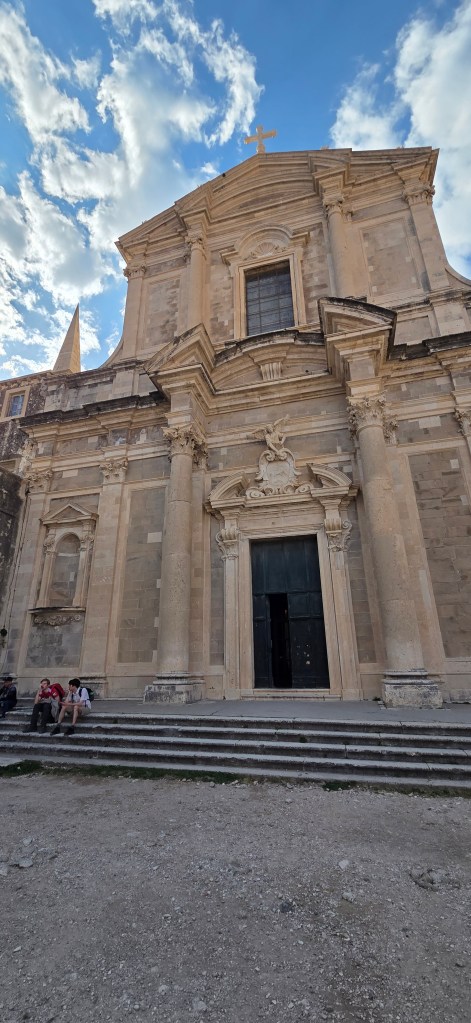
Its Baroque façade is one of the most elegant in the city, inspired by Roman Jesuit architecture, and it is closely linked to the famous Jesuit staircase that many visitors recognise from Game of Thrones.
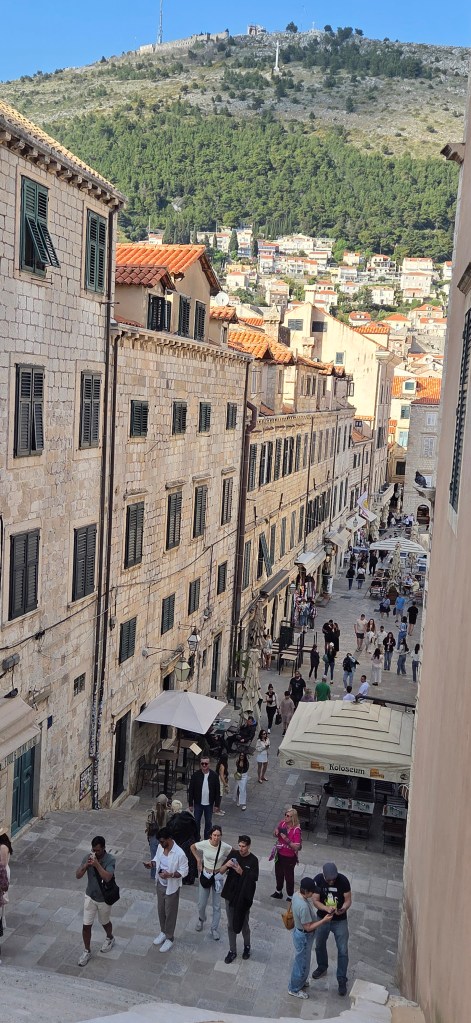
Then came the walk along Dubrovnik’s city walls, a full two-hour journey that felt like moving through the city’s history from above. We were lucky to have a gentle breeze, which made the climb far more pleasant, and every turn opened another stunning view over terracotta roofs, the sea, and the forts.
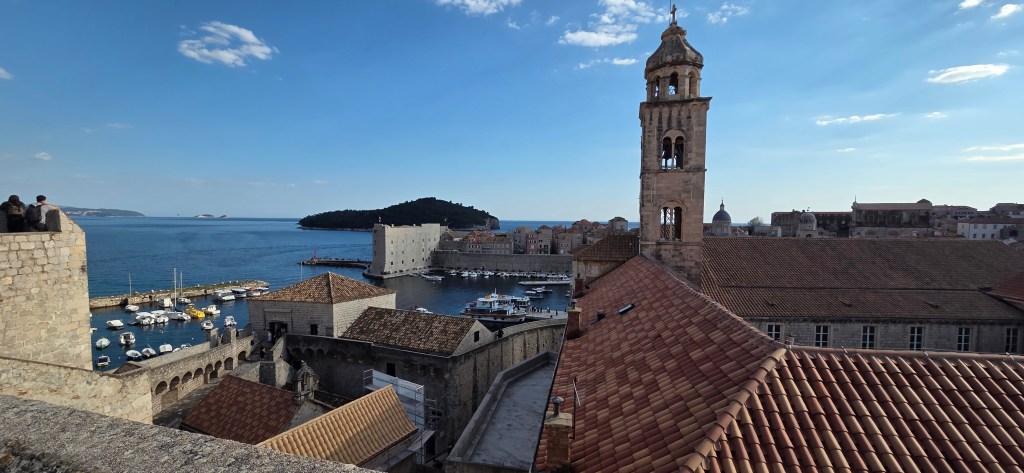
It is definitely pricey, but then again Dubrovnik is a luxury, polished, and beautifully maintained place, with everything spotless—from the toilets to the little refreshment stops where you can pause for a drink with one of the most breathtaking views in Europe.
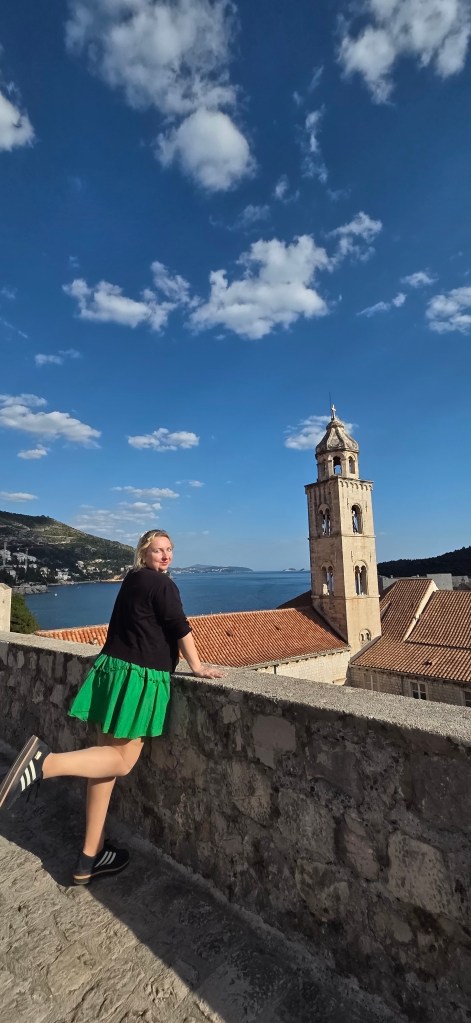
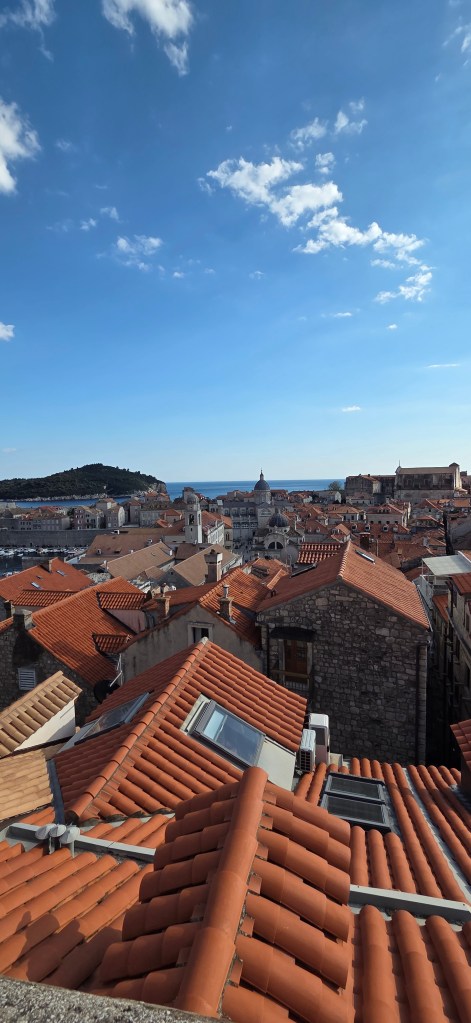
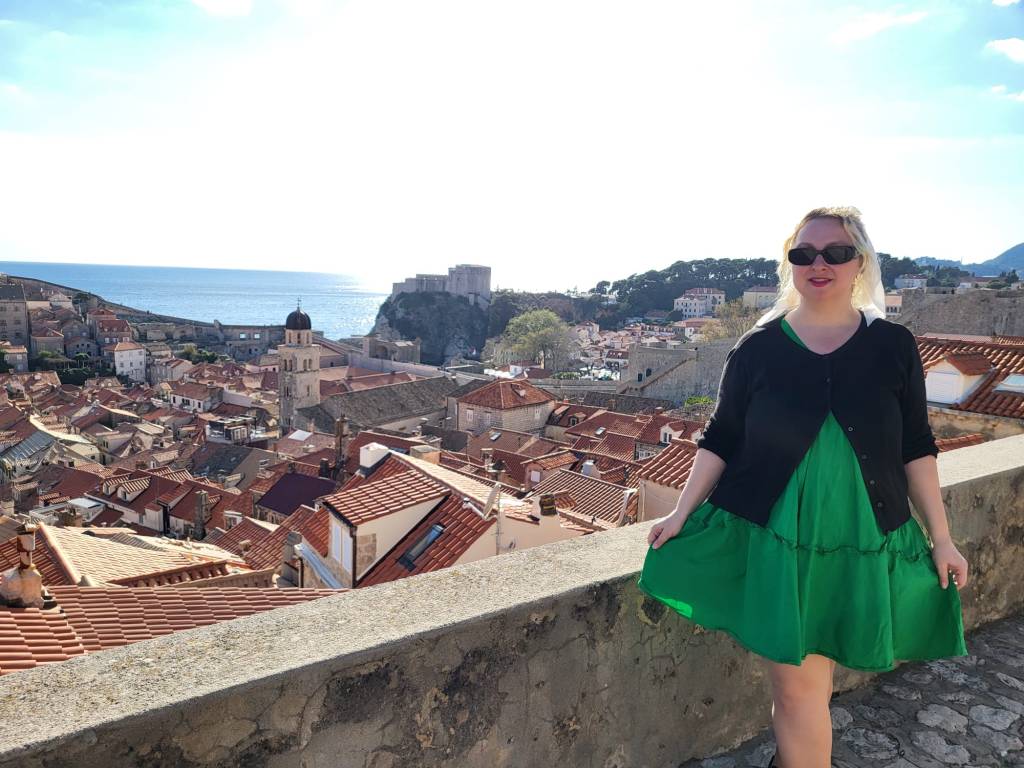
Dubrovnik was brilliantly designed for defence. The walls, forts, towers, and carefully placed lookout points created a complete military system that allowed the Republic to monitor both sea and land approaches, slow attackers, and protect the harbour, gates, and political centre of the city.
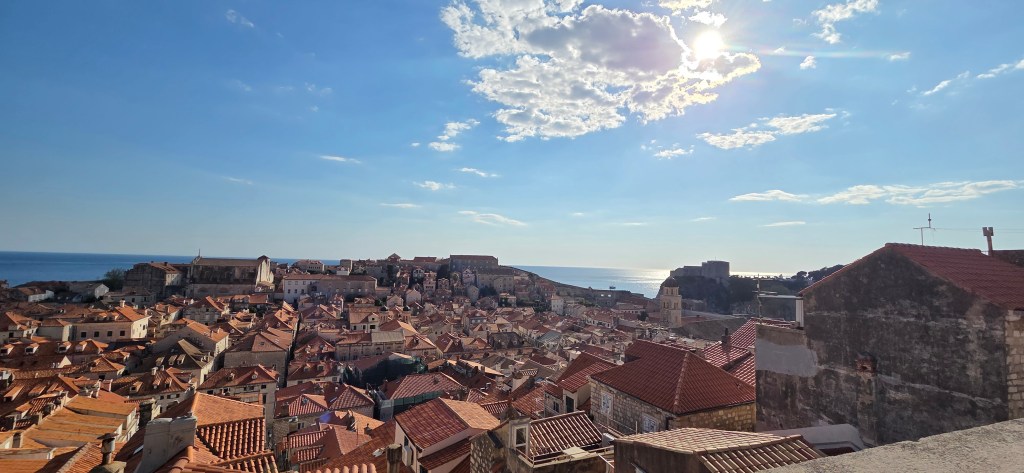
Every angle, height, and fortified corner served a strategic purpose, proving that Dubrovnik’s survival depended not only on diplomacy, but on one of the most sophisticated defensive architectures in the Mediterranean.
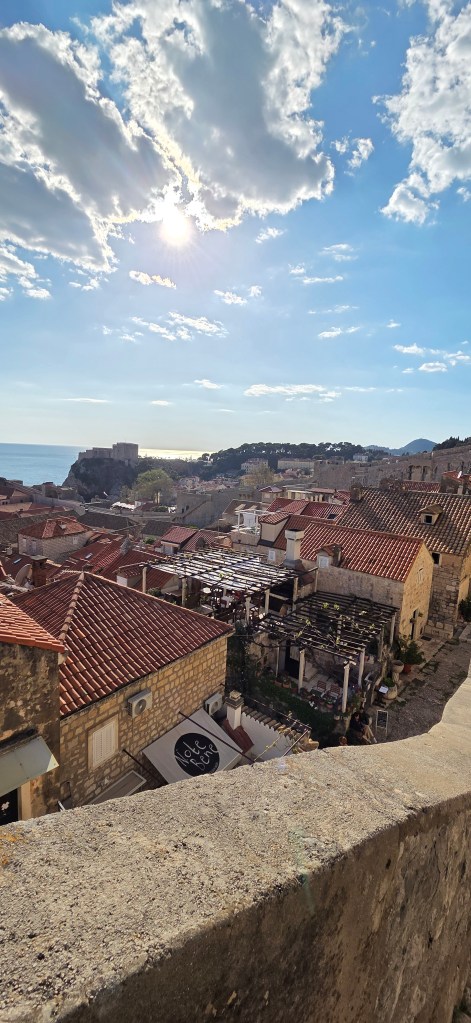
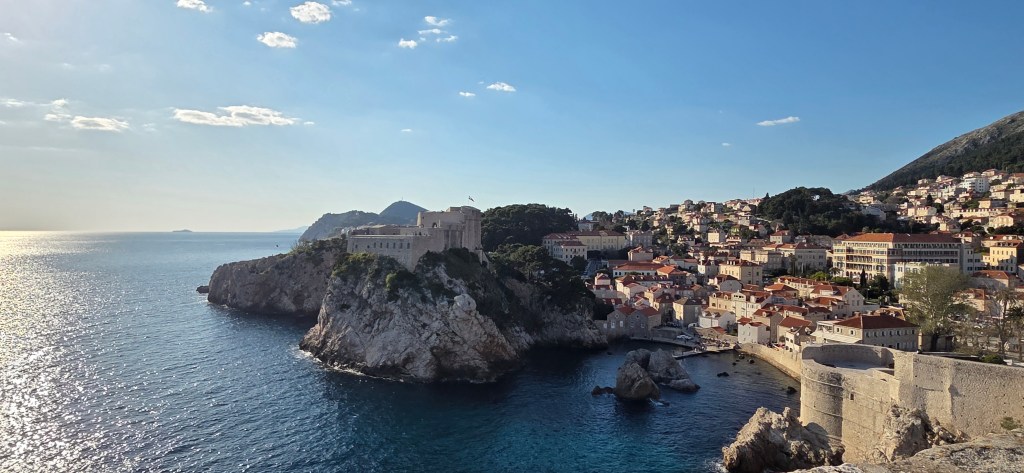
The highest and most imposing point of the walls is Minčeta Tower, the crown of Dubrovnik’s land defences. It was built shortly after the fall of Constantinople in 1453, when the Republic understood that Ottoman expansion had changed warfare and urgently strengthened its fortifications for artillery defence. From there, the city could watch every land approach, which is why Minčeta became the ultimate symbol of Dubrovnik as the “unconquerable city.”
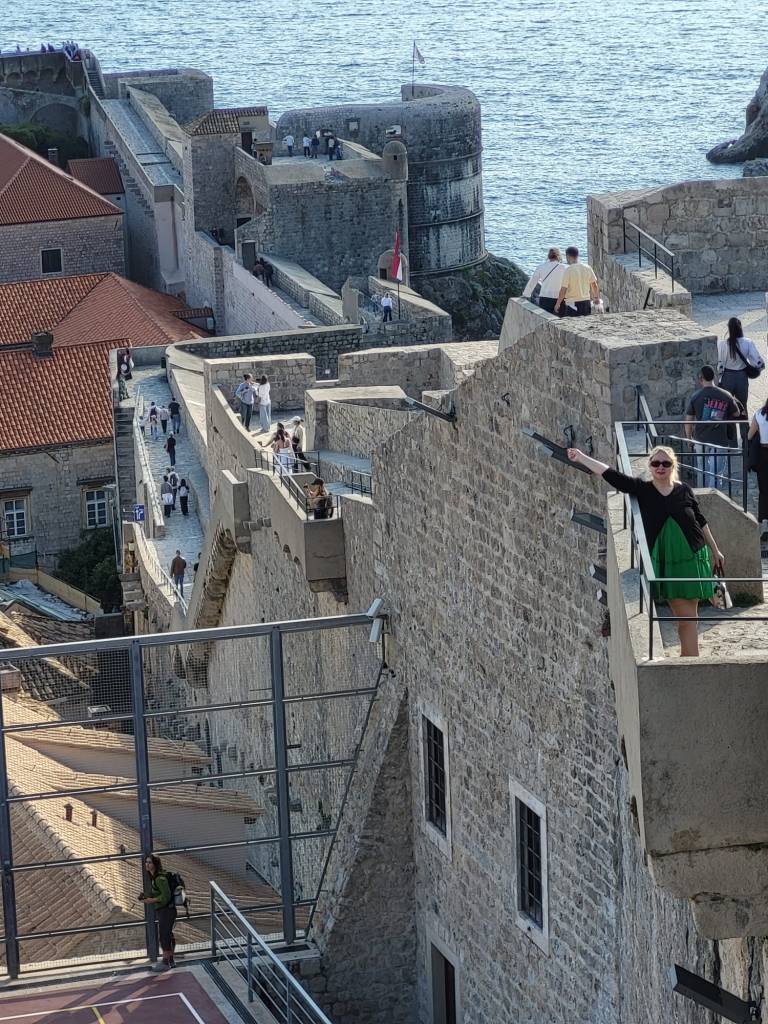
It was also funny to see how local life and tourism exist side by side within the same stone walls. Behind one corner there is a family hanging laundry, and just a few steps later there are visitors taking photos of the same medieval streets in awe.
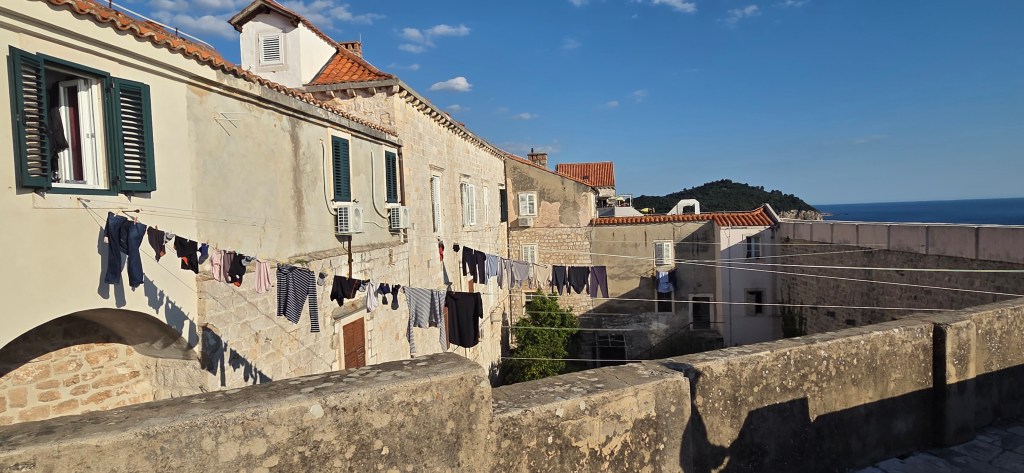
A drink to stop for a while and enjoy this golden hour, this beauty. What am I doing in Brussels?
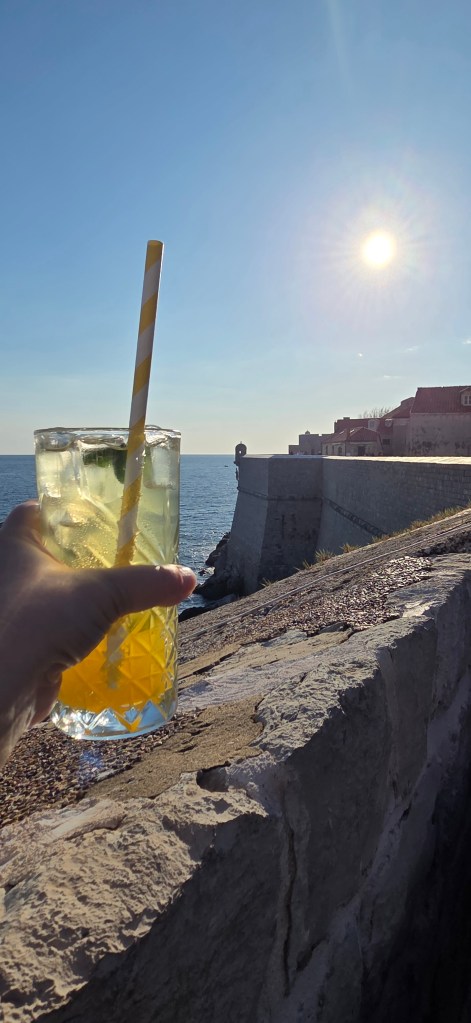
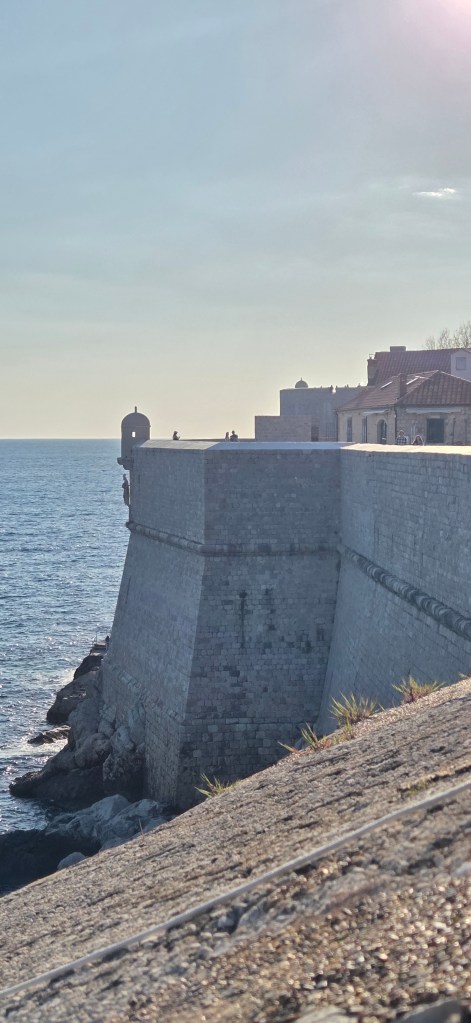
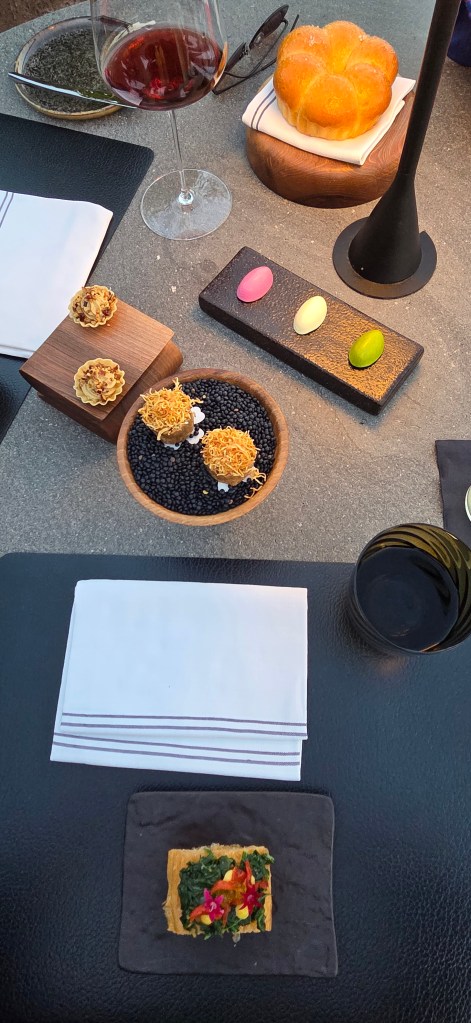
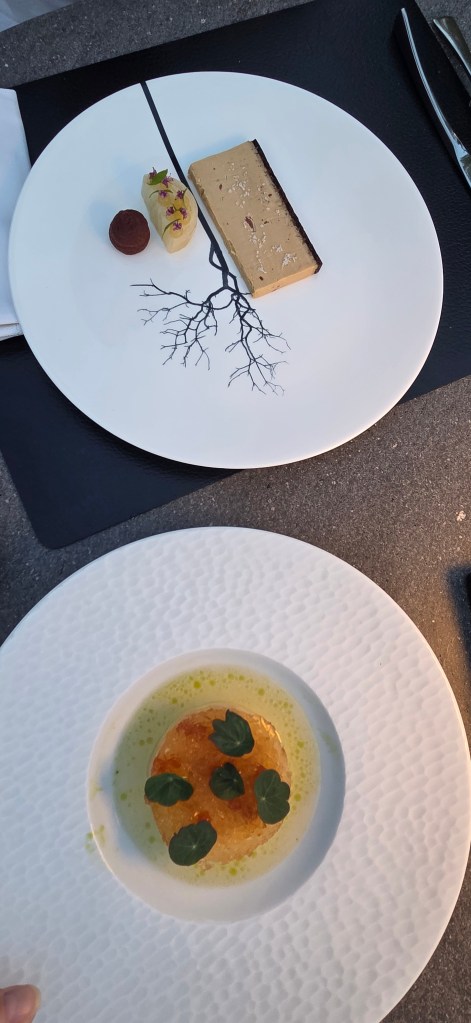
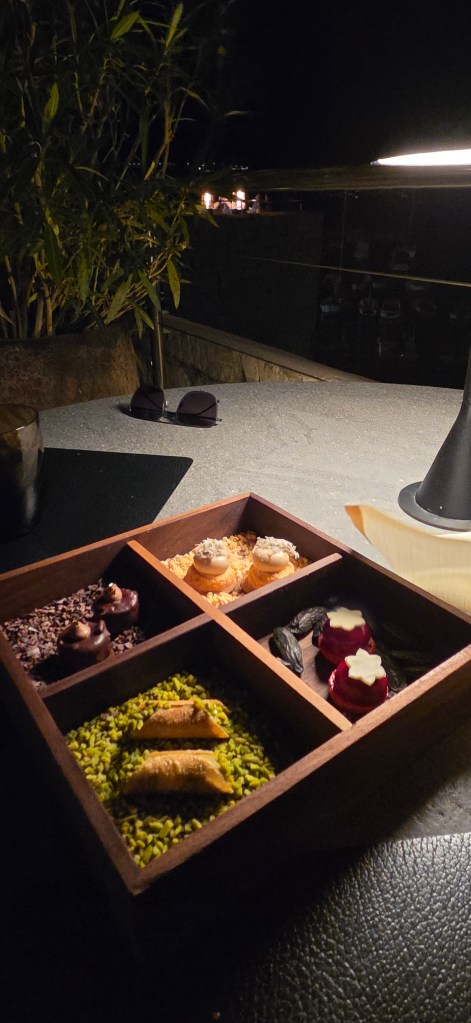
For dinner, we treated ourselves to Restaurant 360, Dubrovnik’s Michelin one-star fine dining landmark, perfectly set above the old port with the medieval walls and Fort St. John in front of us. We began with local Croatian wines, and the sommelier introduced one bottle as a rare selection with only around 1,000 bottles produced, explaining that many top restaurants try to secure allocations from the same label. Whether it was true rarity, expert storytelling, or a touch of fine-dining theatre, it fitted the mood of 360 perfectly—luxurious, slightly mysterious, and beautifully in tune with Dubrovnik’s polished, exclusive charm.
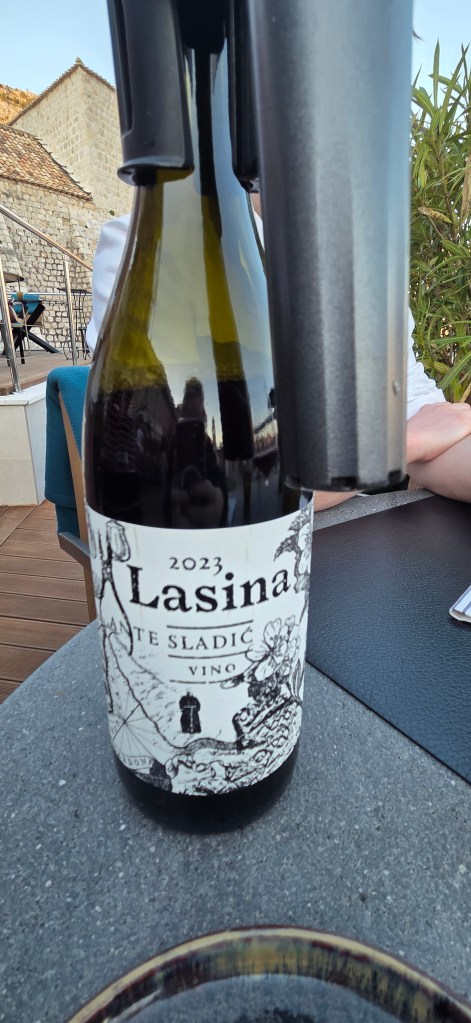
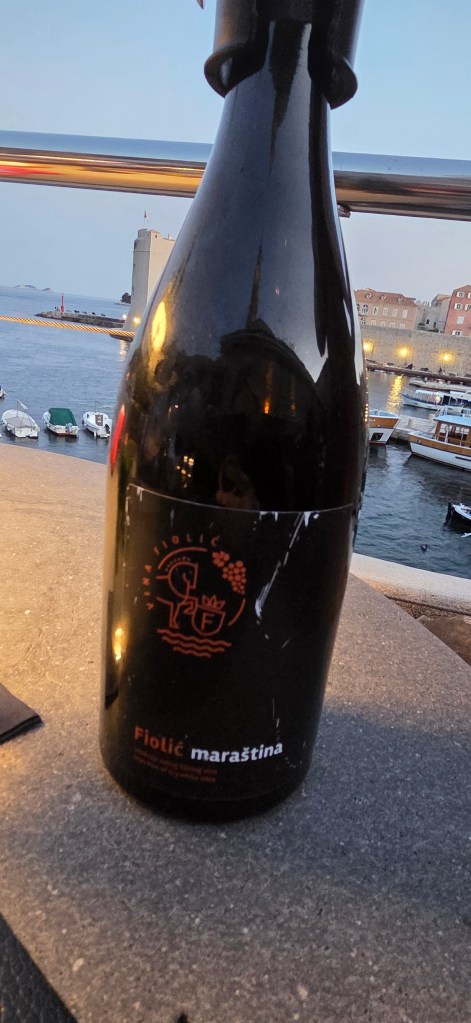
Some of the meals impressed me, some less so, but the view absolutely did. As the evening deepened over the port, Dubrovnik slowly began to reveal another side of itself—the night lights coming alive, the stone glowing softer, and the whole city shifting from historic splendour into something almost cinematic.
From the restaurant terrace, we had a view toward the church bells, and at the right moment, Maro and Baro rang those bells, striking the famous clock tower bells above the city.
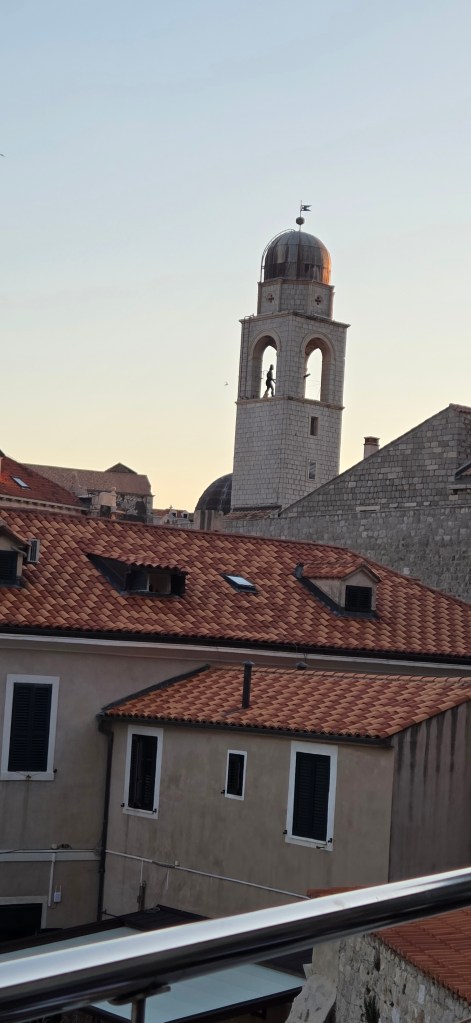
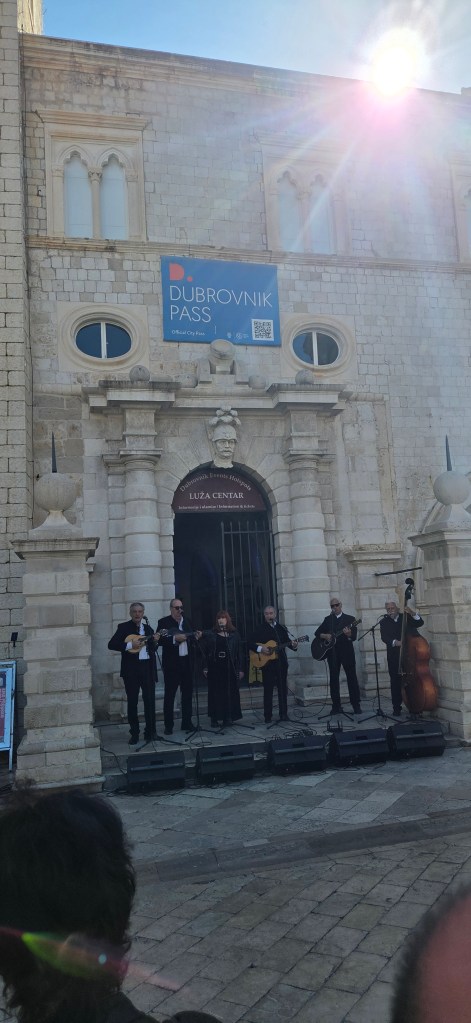
The next morning was Eastern. The festivity was in the air, the Holy Spirit among us. People were out in the street, music everywhere, church bells ringing.
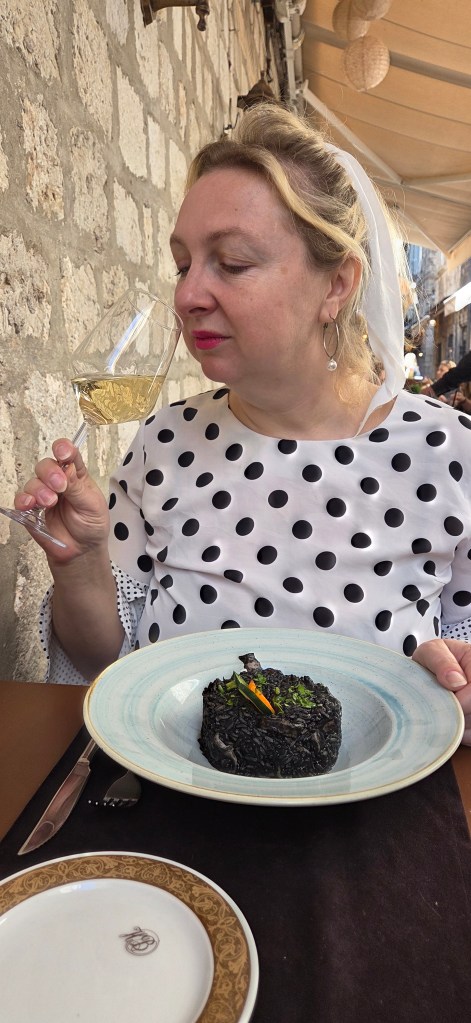
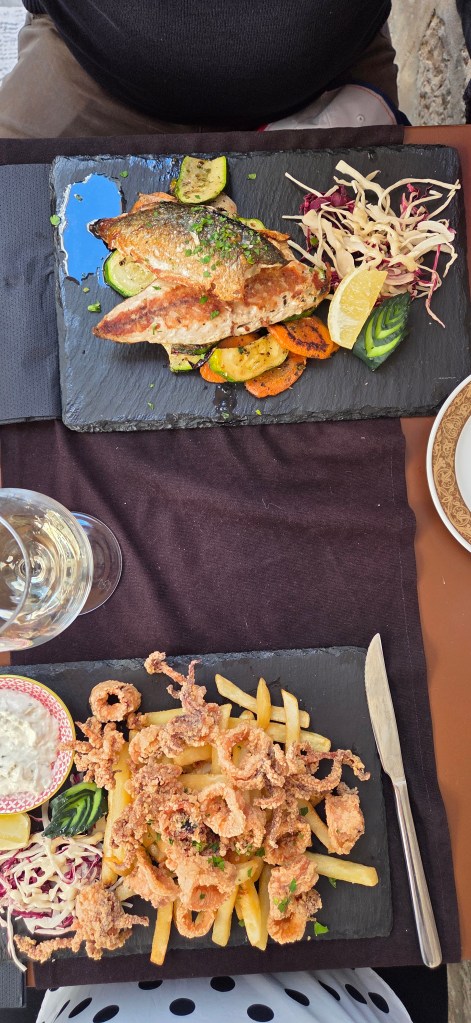
I chose my last supper. Dalmatian style. I had a plane to catch, returning to Belgium. The grey sky was coming closer!
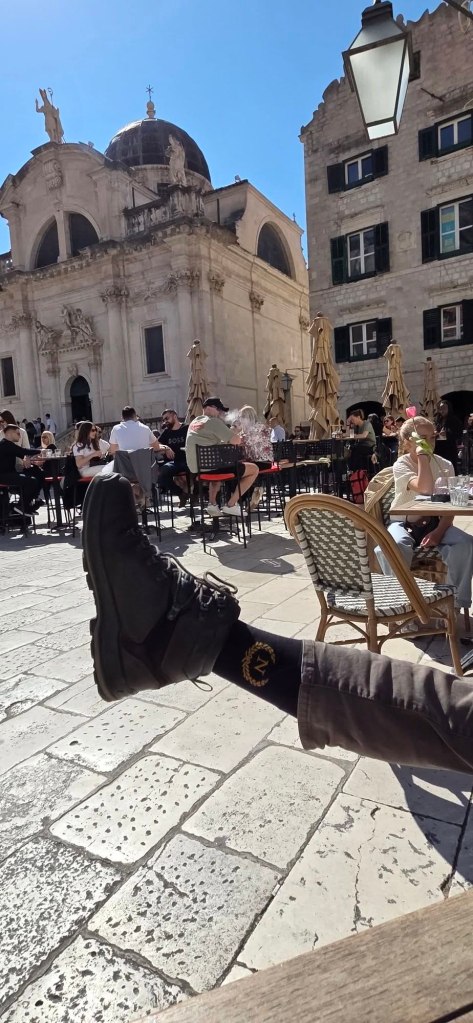
And in the end, there was something almost poetic in remembering that this proud Republic—after nearly 600 years of independence, diplomacy, and freedom—came to an end when Napoleon’s forces entered Dubrovnik through the Pile Gate, with the Republic formally abolished in 1808. From that moment on, Dubrovnik would never again return as an independent state, which makes every stone of the city feel even more precious today. Somehow it felt fitting, and a little ironic, that my French husband walked those same streets in his Napoleon socks, as if history had found its own quiet way of closing the story.
 RED RIDING HOOD