
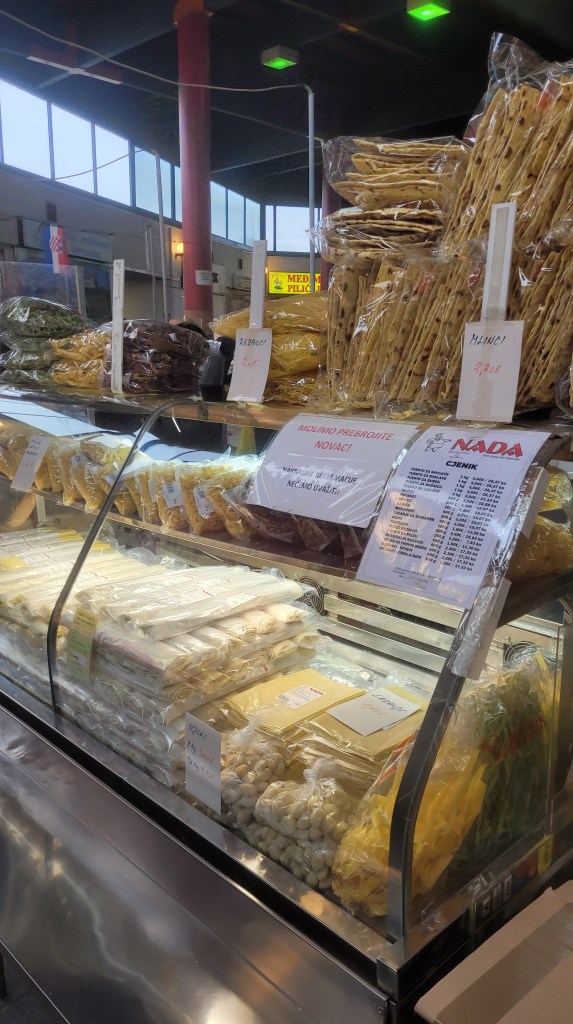
The head item is from the Dolac market, famous in Zagreb.
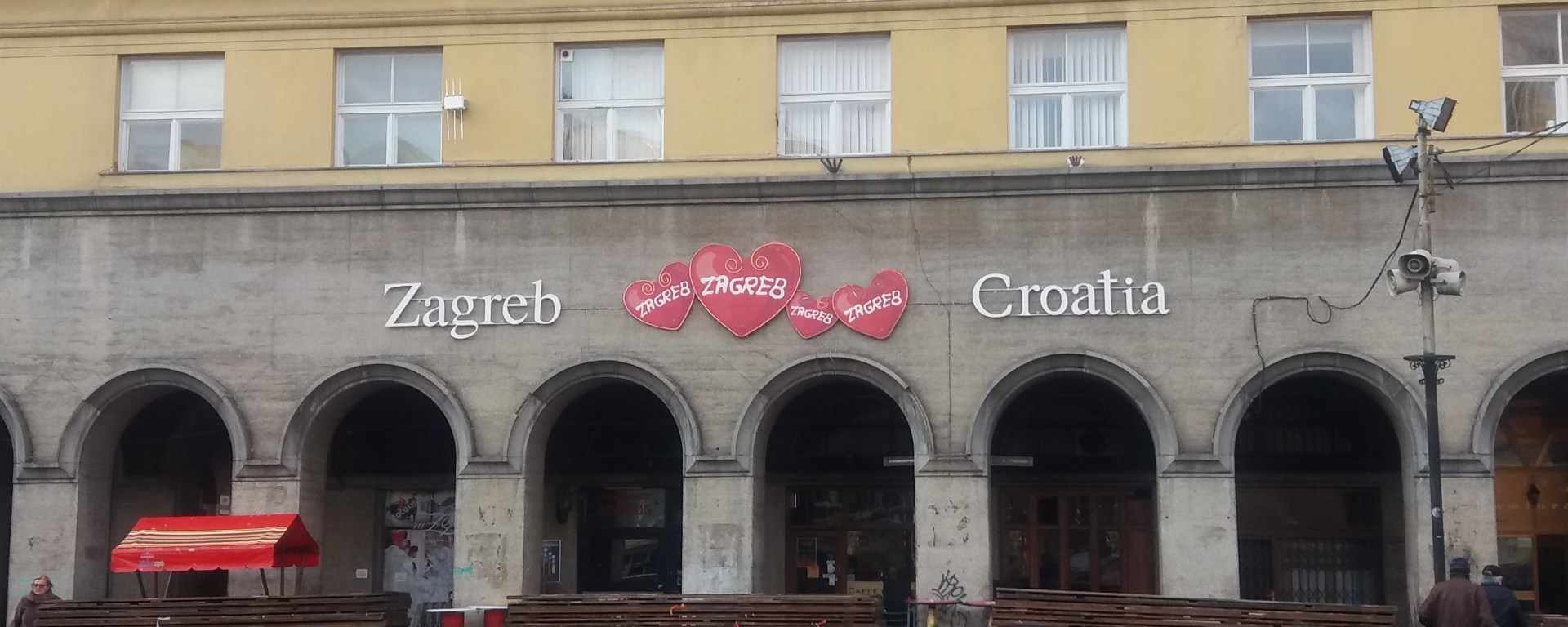
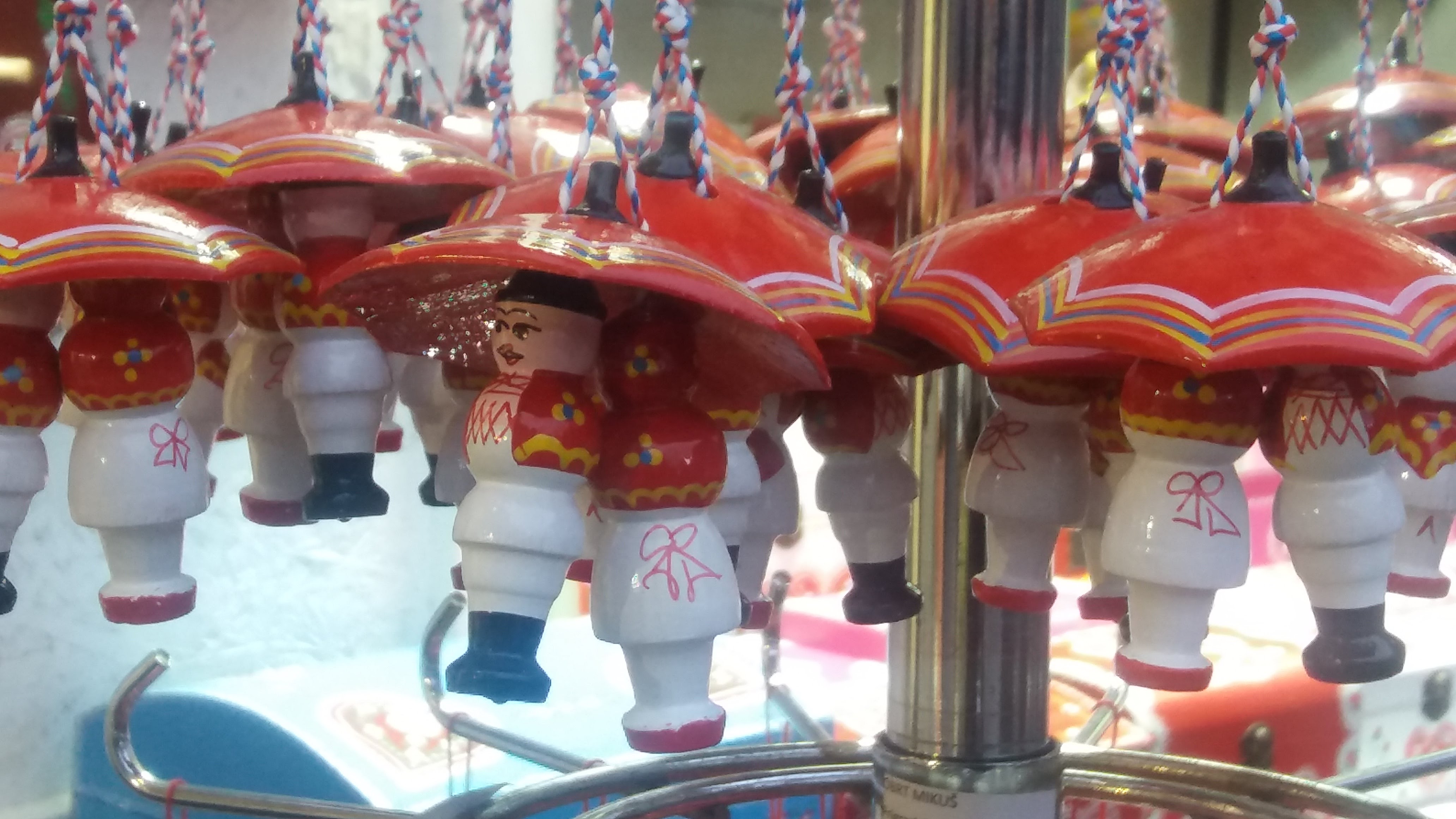
The hearts are licitar hearts traditionally given by girls to their chosen young men for future marriage, after Sunday mass ceremony.
The reason why I started with this typical souvenir pattern of the city of Zagreb is because it appears as a theme in the Advent in Zagreb – the best Europe Christmas destination 2016 and 2017. If you don’t trust me, check here.
Just to mention that I was born in Zagreb and lived there for 4 years during my studies, so I am traditionally a purger girl (from German der Bürger, meaning the citizen, nowadays dialect in Zagreb as it used to be part of Habsburg Empire) and might be a bit attached here.
Anyhow, let us start!
In 2024
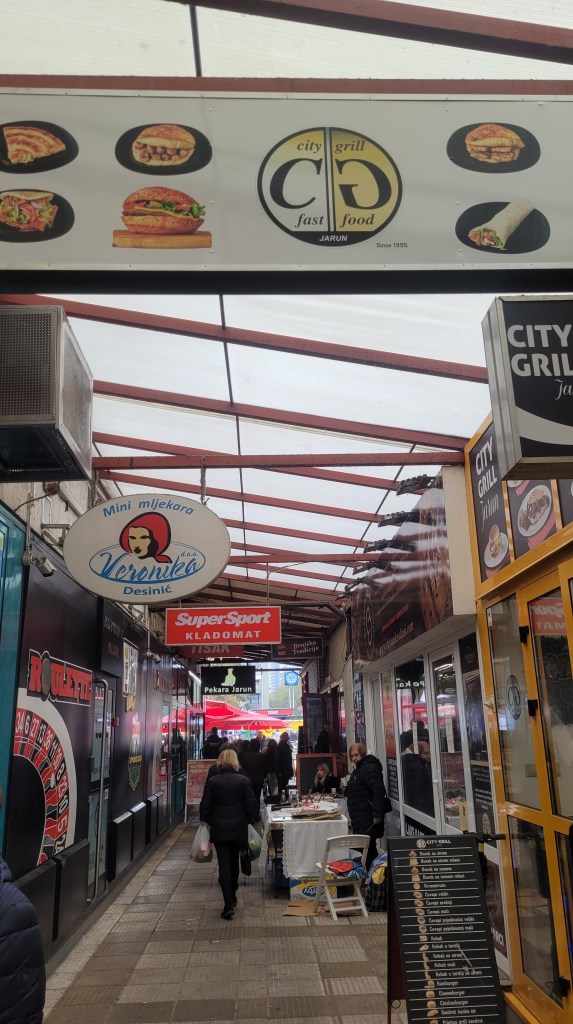
This time the focus was the southern part of Zagreb. I visited the Jarun market and bought the best vegetables possible. On the highest price possible.

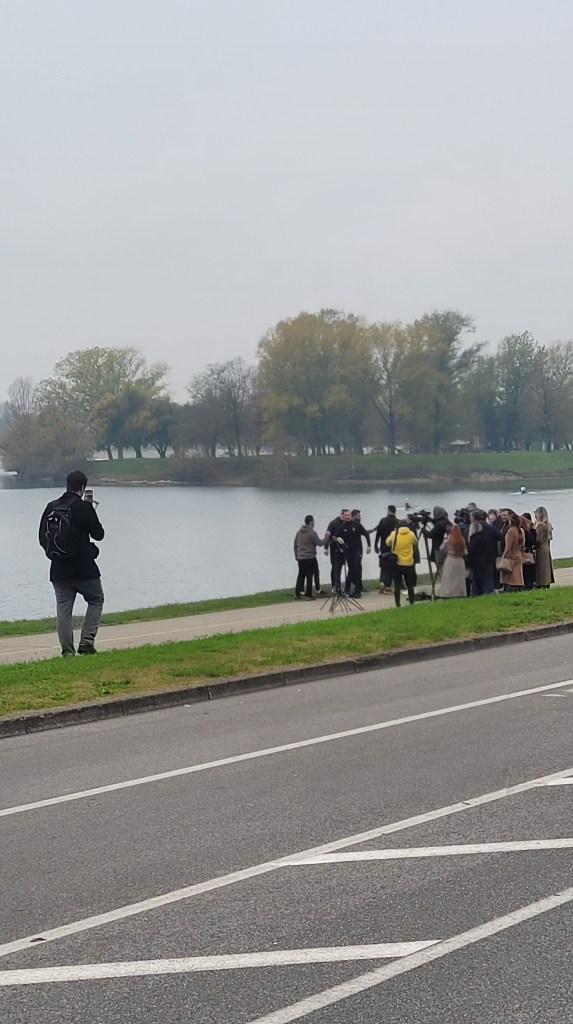
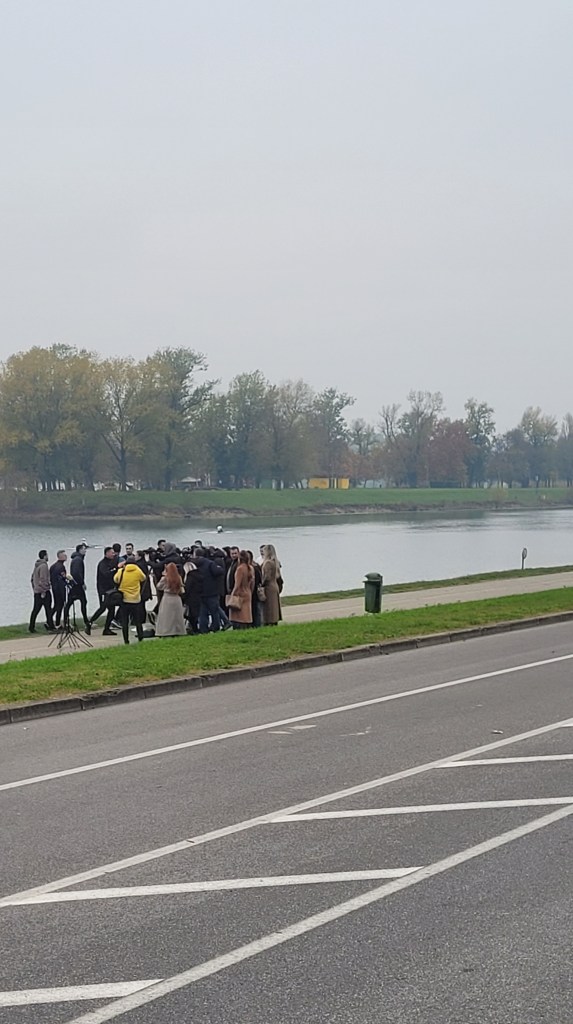
Nearby you can find the Jarun lake. The lake was formed by the Sava River. Today is the location of the Jarun sports and leisure center. We met the candidate for the presidential elections jogging towards the journalists to express his strength.
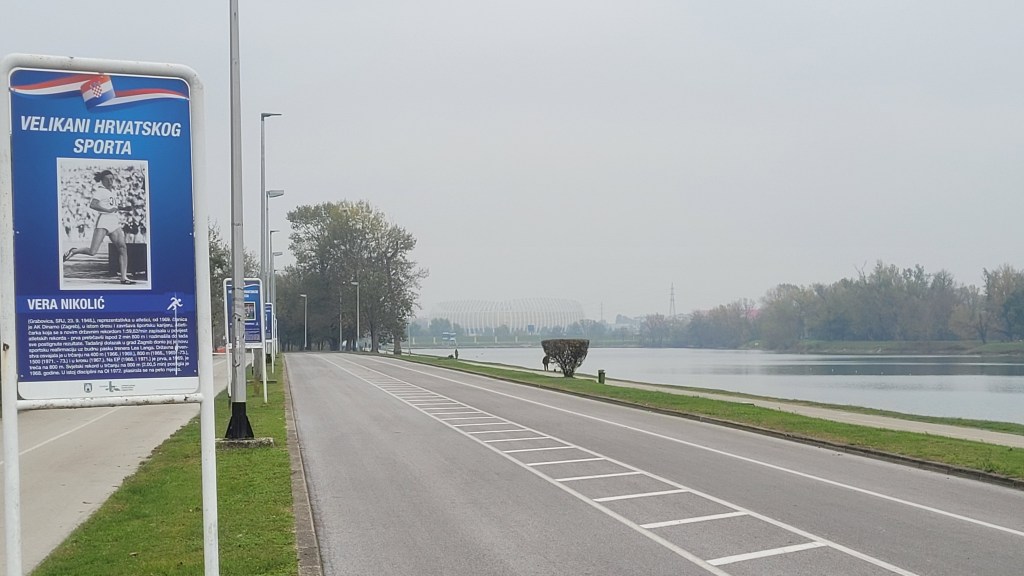
lso, around the lake Jarun there is a “Walk of fame” with the pictures and biography information of great athletes of Croatian sport. That crown that peaks behind, emerging from the fog is the Arena Zagreb – famous concert place.
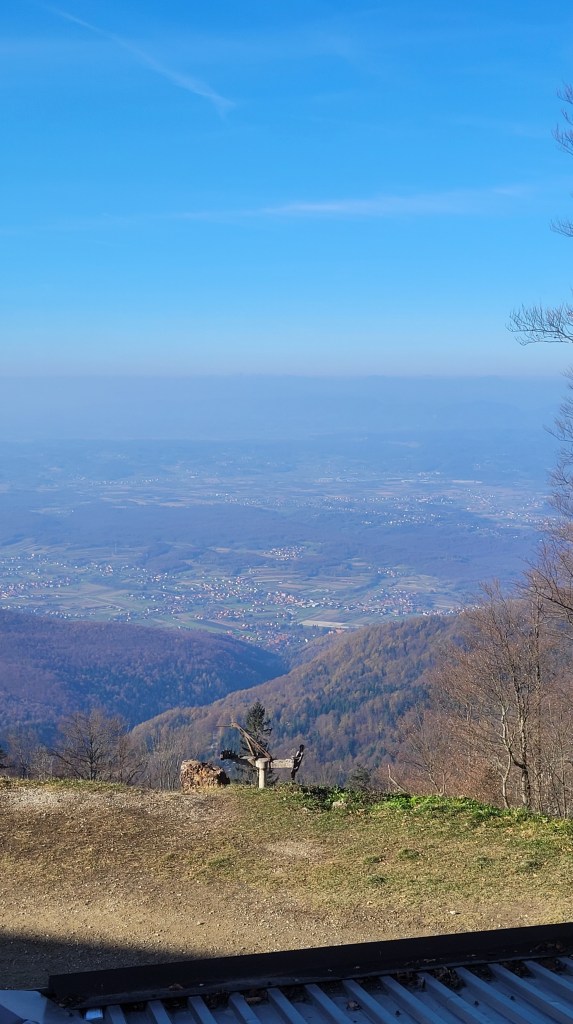
A bit of the deviation to the north: Sljeme. This is a mountain peak of the Mountain Medvednica. It is the highest peak, at 1,035 m and marks the border with Zagorje. In short, this is my part of the world where I was born and grew up. On the photo below you can see the view on Zagorje. If you look carefully further in the photo you can see the Alps.
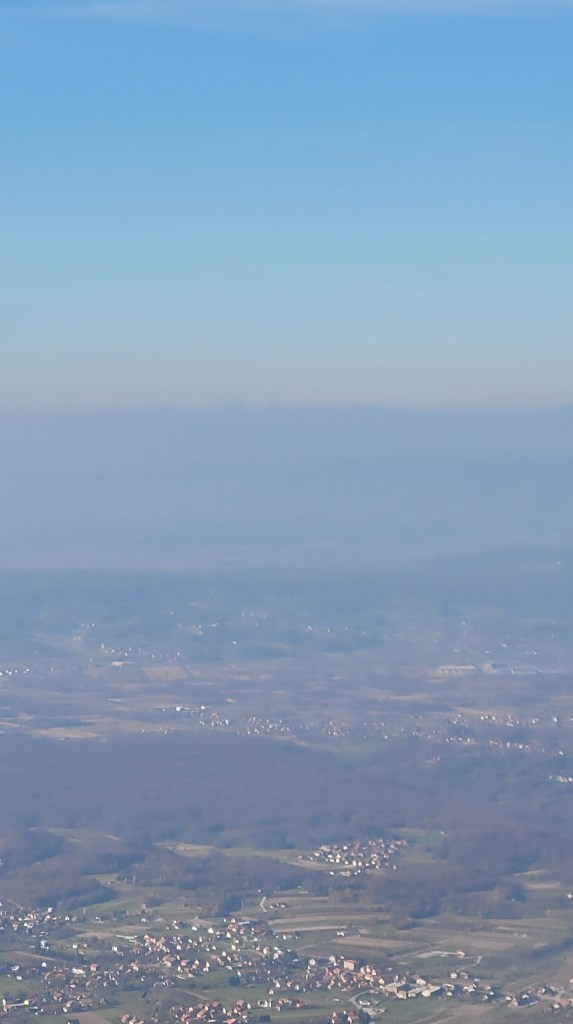
Most of the area of Medvednica is a nature park. People hike from all sides to enjoy the air. We say that Medvednica are the lungs of Zagreb. You can take the famous cable car if you do not feel like walking all the time. 🙂 Just be careful not to hit the famous Tower Sljeme.
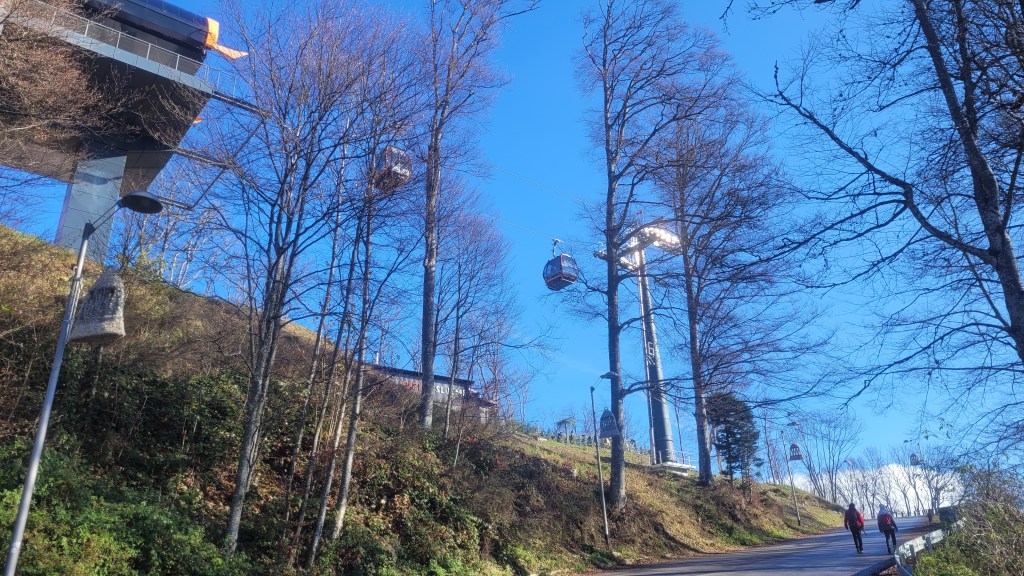
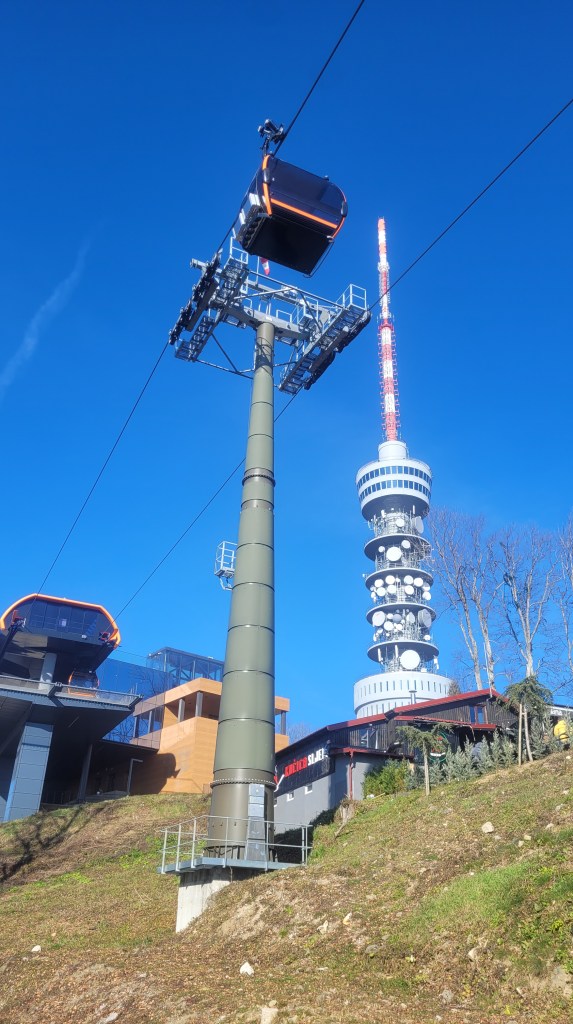
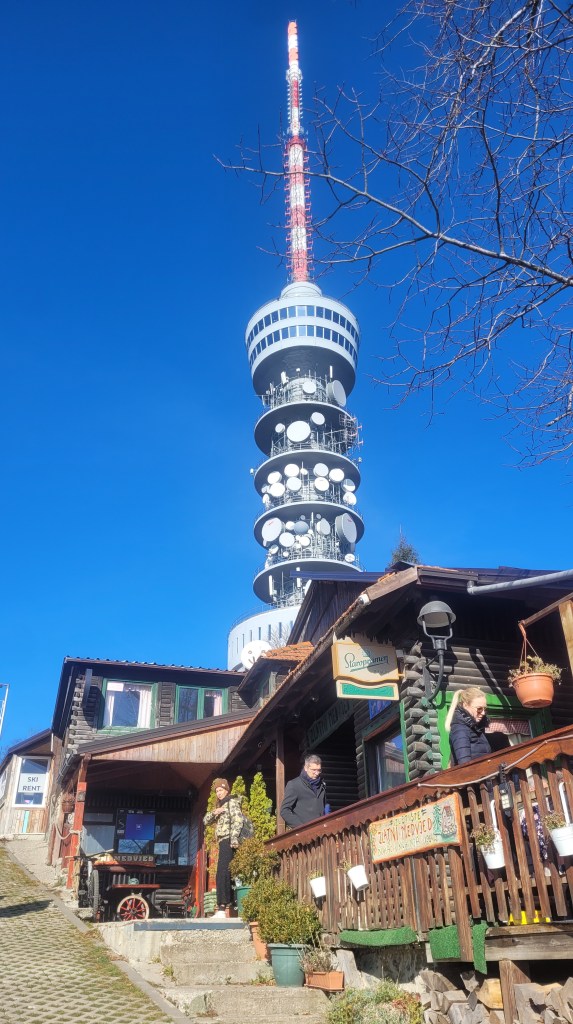
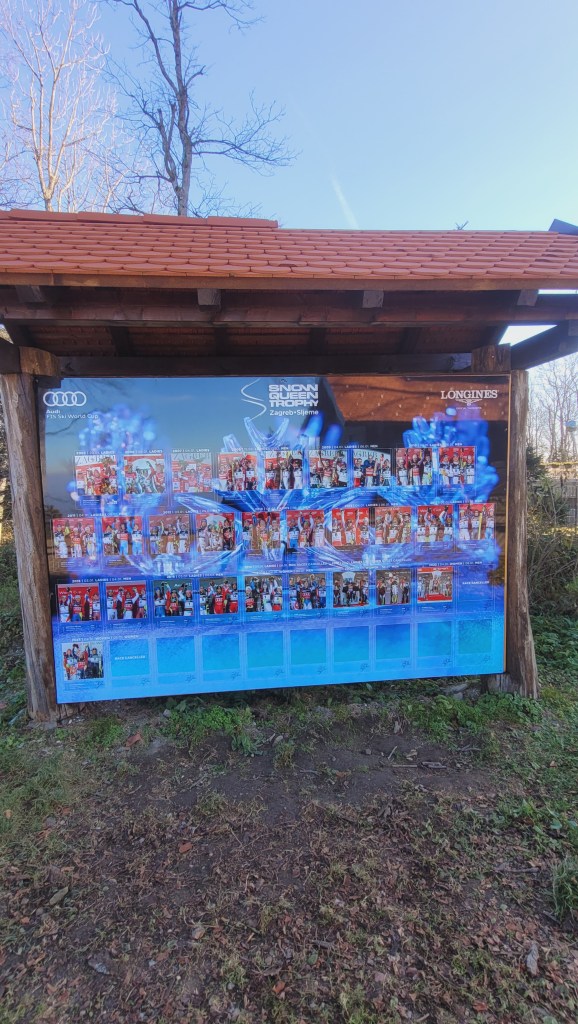
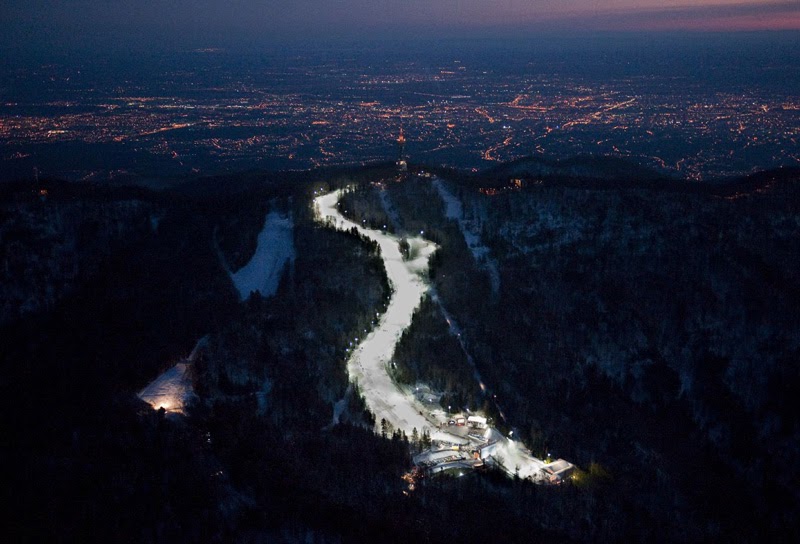
The winter sports center is based on the northern slopes towards Sljeme. The center has hosted several FIS World cup slalom skiing races, known as the Snow Queen Trophy. Those were the days! I went, together with my grandfather and my brother, almost religiously up to see our famous Janica and Ivica Kostelic winning the races.
Going further down on the souther side, towards Zagreb, you can see the ruins of the castle Medvedgrad. This is a medieval fortified town that holds many legends. I grew up on those legends. The name Medvedgrad in Croatian is a compound word consisting of Kajkavian dialectal and it translates into the Bear City.
he most famous story from Medvedgrad is related to Barbara Celjska, the Black Queen from the 15th century. ccording to legends, she was always dressed in black clothes, engaged in politics, astrology and alchemy. Her pet was a black raven and true pets were numerous lovers with whom she enjoyed in Medvedgrad. According to another legend, the Black Queen created the Plitvice Lakes with her supernatural powers. Barbara was buried alive in Veliki Tabor in Hrvatsko Zagorje, where legend says that her cries can still be heard.
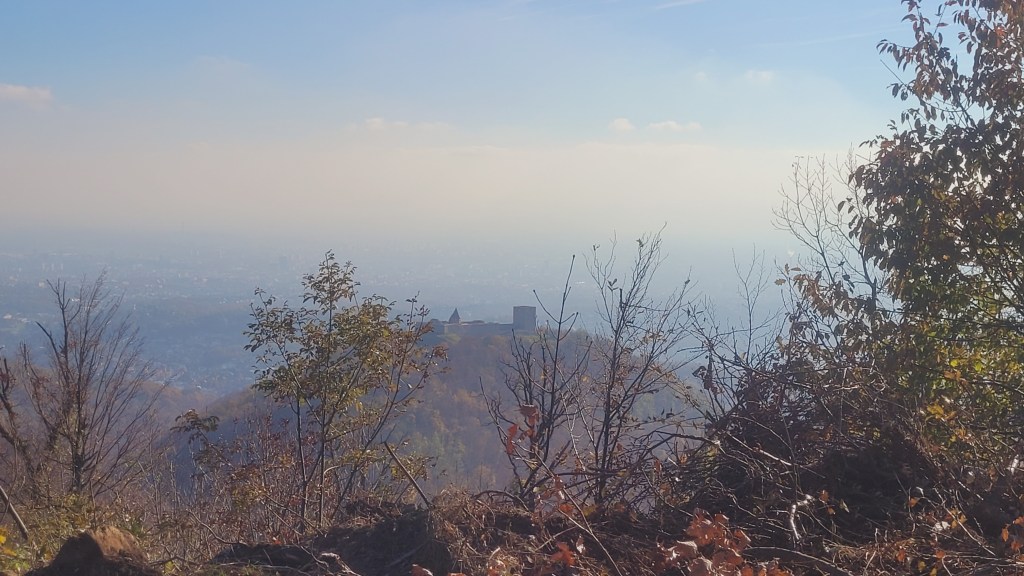
To isolate a bit from all that treachery, let’s go a bit more down where we find a little church, a Chapel of Saint Rok. Unfortunately it was closed and not in the best shape when peaking inside.

My brother and I felt hunger. We knew that nearby is restaurant called Šestinski lagvić with a long tradition situated under the Sljeme mountain. The village around is called Šestine and lagvić is a small barrel. Our grandfather used to talk us about this cult place in Sljeme. The hommage had to be paid!
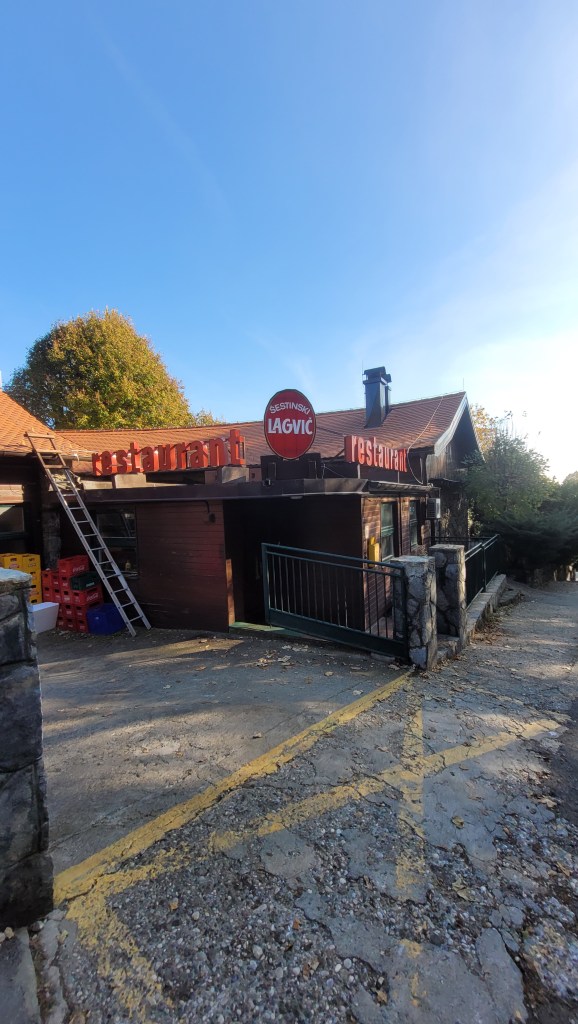
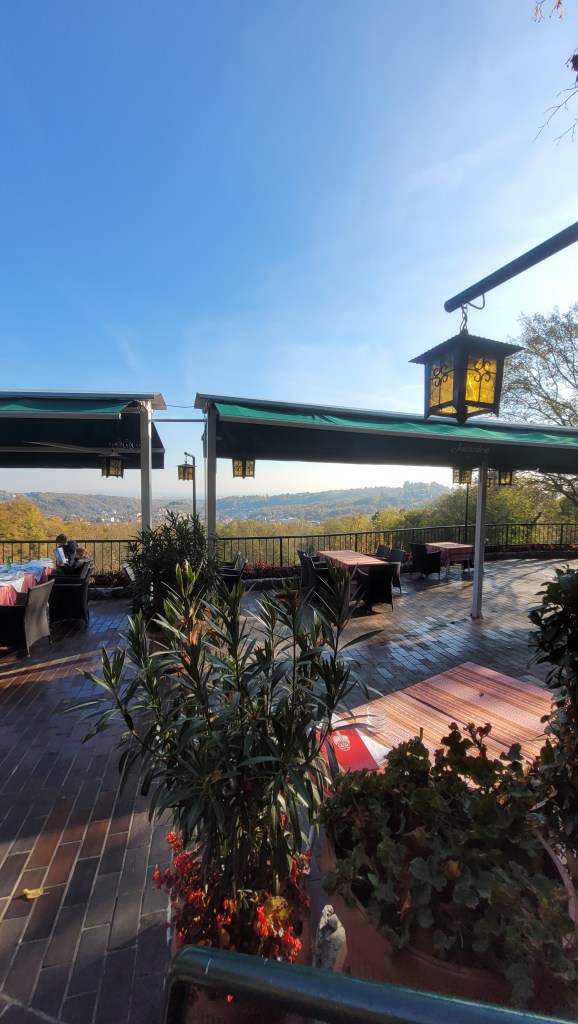

We had a nice portion of the local cuisine: turkey with mlinci, grilled vegetables and local wine. The waiters were true professionals dressed in old traditional waiters suits.


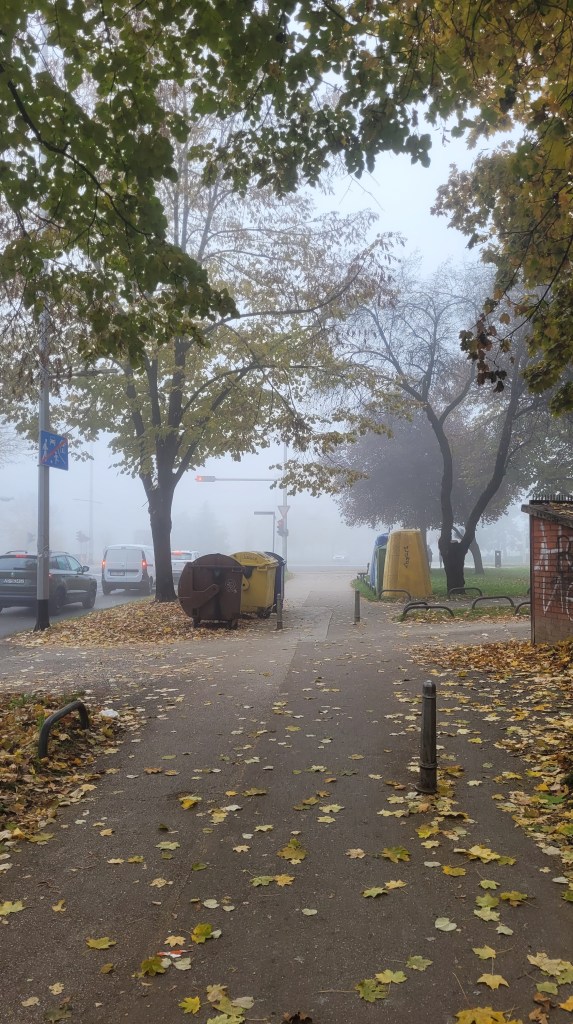
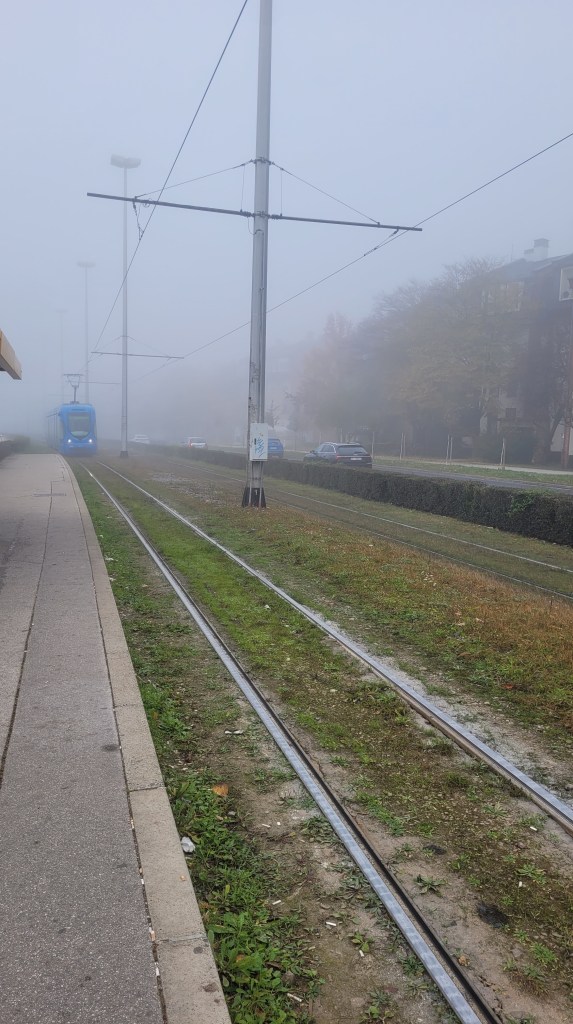
The next day started in fog. Zagreb is in a valley so no wonder the fog is often but once the sun appears through clouds you will have a bright crispy winter day. 🙂 We used it to the maximum.
Do you know what is Zagreb Interliber? it’s a traditional, very famous book fair. You can fins super cheap books from antiquity to recent publicity. It happens every year in November, and it’s a must. It is held at location of Zagreb Fair in 4 pavilions!
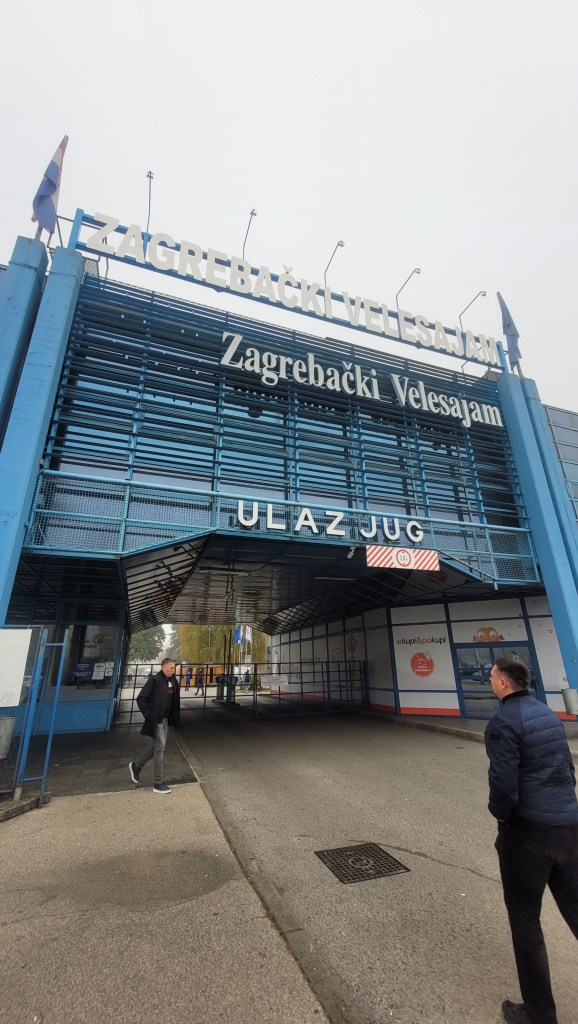
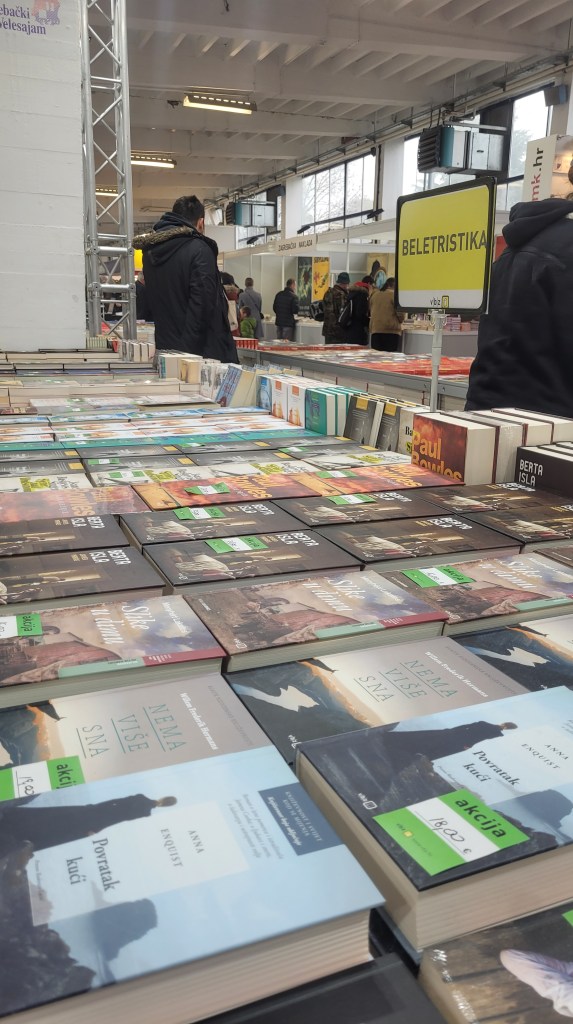
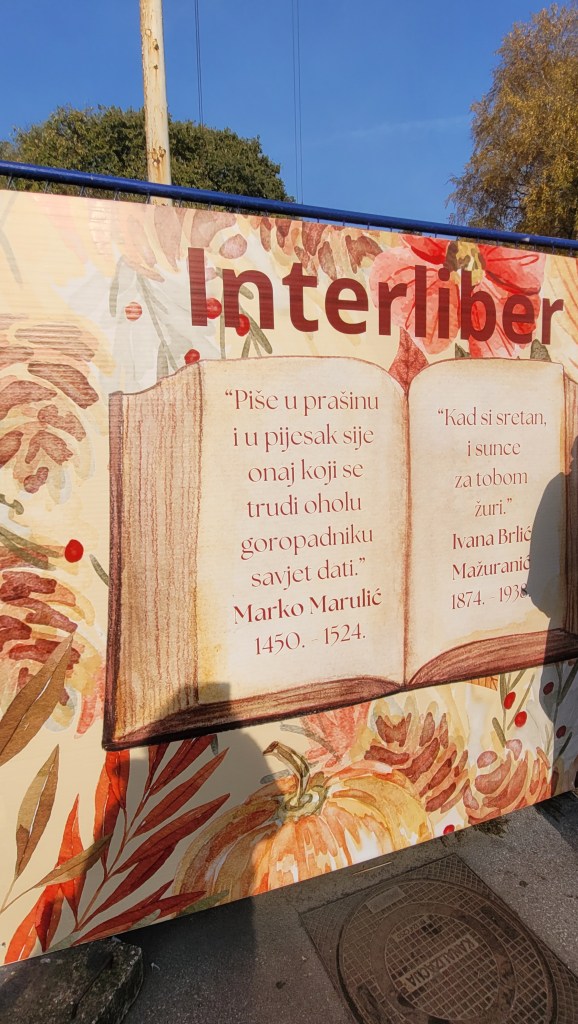
We spent entire day wandering around and buying books. Once done, we felt hungry as two little wolfs. To the center again! Let’s hop on the typical blue tram of Zagreb. Because blue is the colour here!
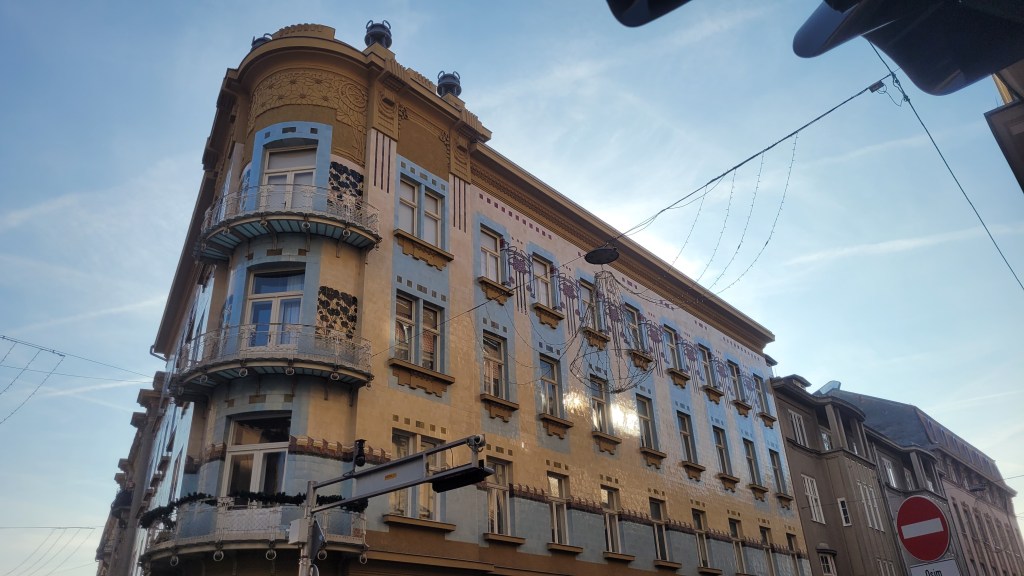
We passed by Kallina House. One of the most beautiful facades in Zagreb. I noticed it has been renovated and stands now as a jewel in Masarykova street. In Zagreb, we didn’t have the typical art nouveau but its Habsburg version – the secession.
The house was built between 1903 and 1904 for the wealthy industrialist Josip Kallina. The house is entirely covered in decorative ceramic tiles as Kallina had the ceramics company (all the tiles used for the house were produced by his factory).
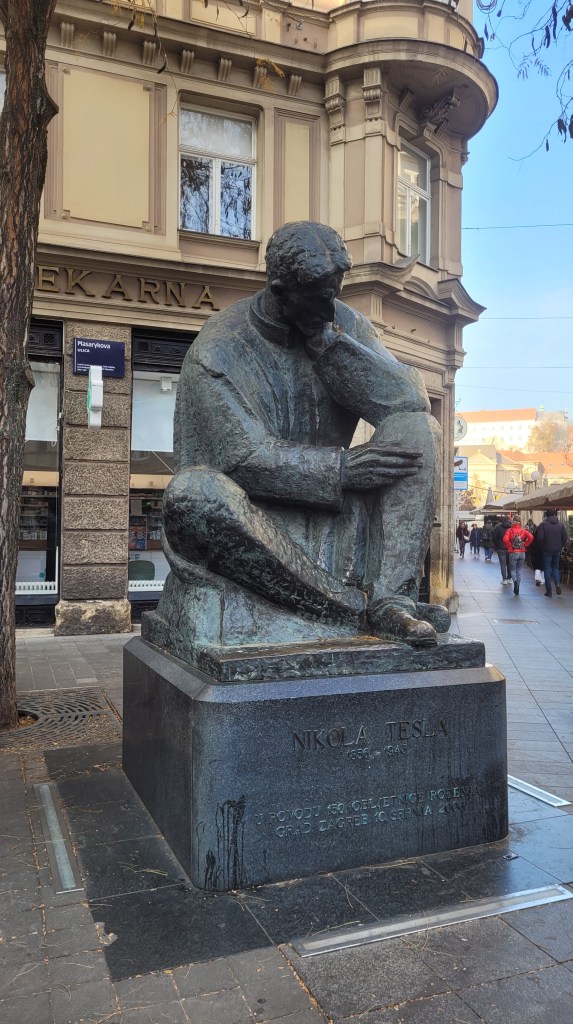
Walking further you can find the statue of Nikola Tesla. Poor guy deserved a better place but let it be – there is already enough controversy around him.
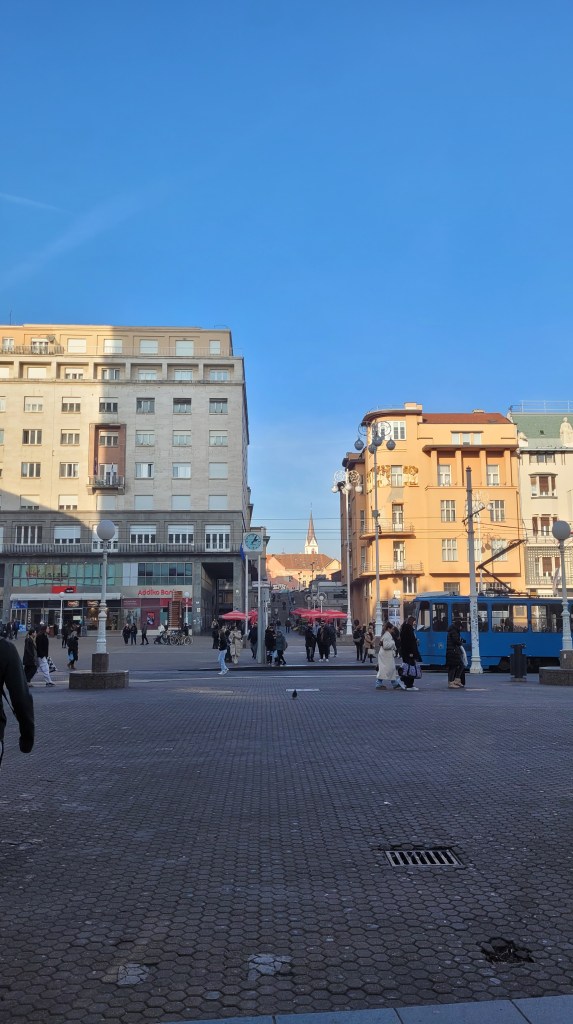
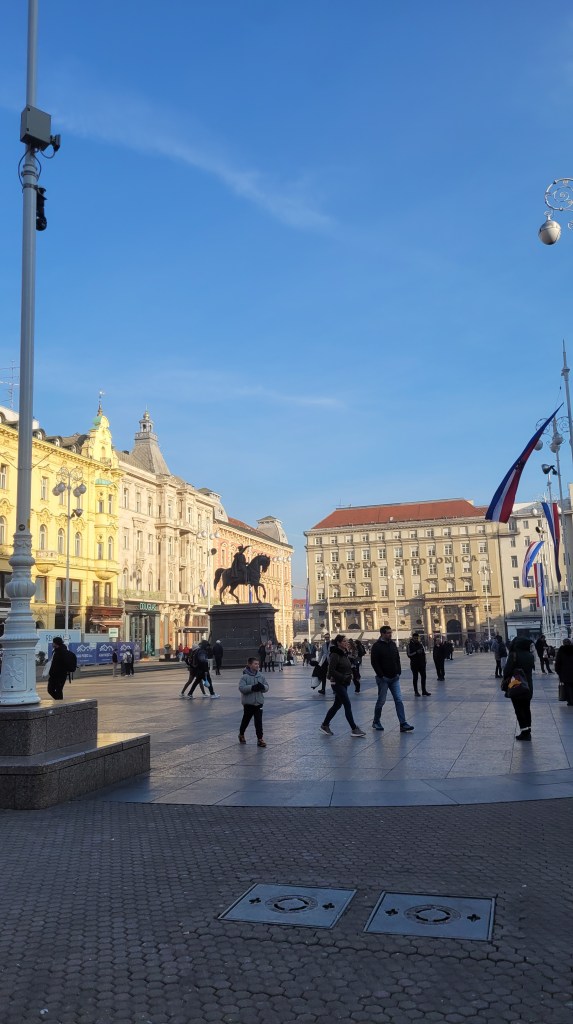
And finally we arrive to the main square: Ban Josip Jelacic square. I will not describe much about it as I have already mentioned about Josip Jelacic in the blocks below. But I was happy to be here. To renew the memories.
I know I said that we were hungry at some point, but we got lost the track as there was so many places to hit. We continued towards the Upper part of the city called Kaptol. We knew that if we hit the Tkalca street we will find something local. 🙂
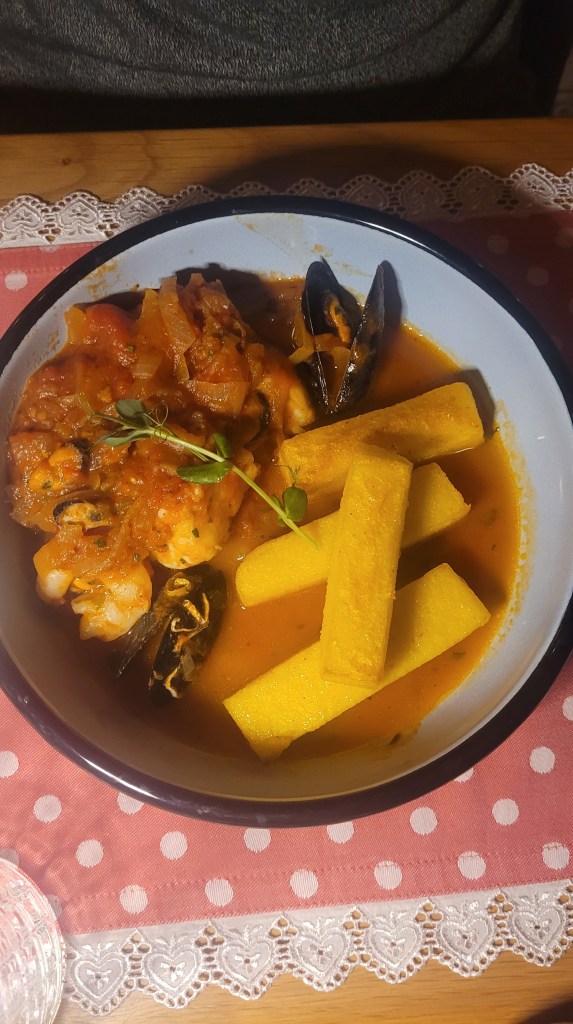

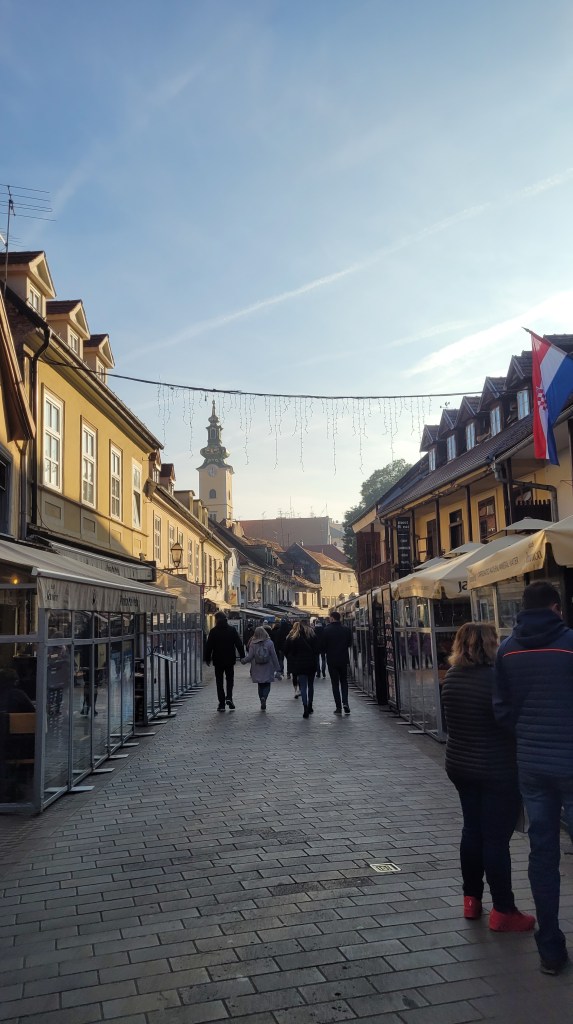
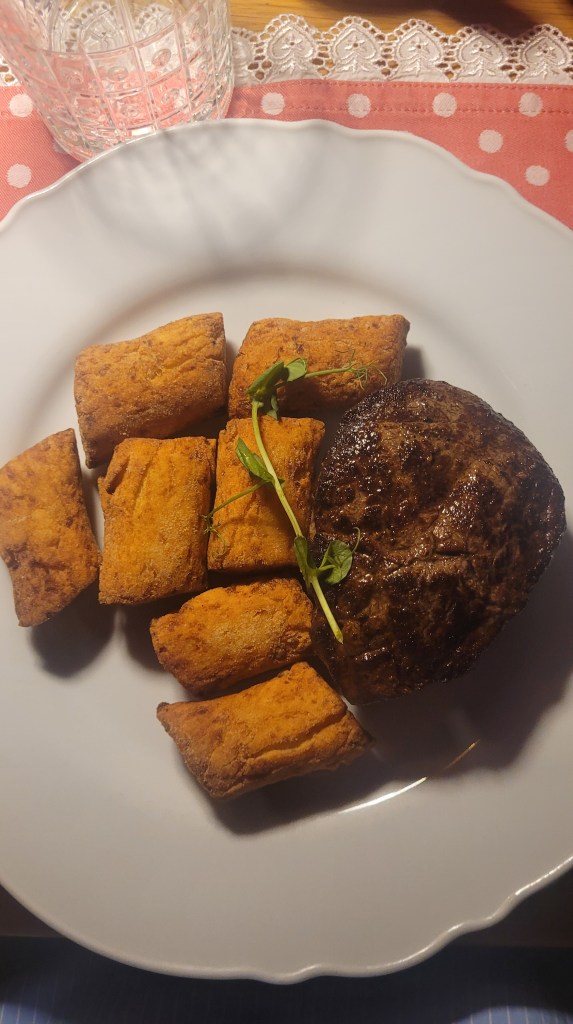

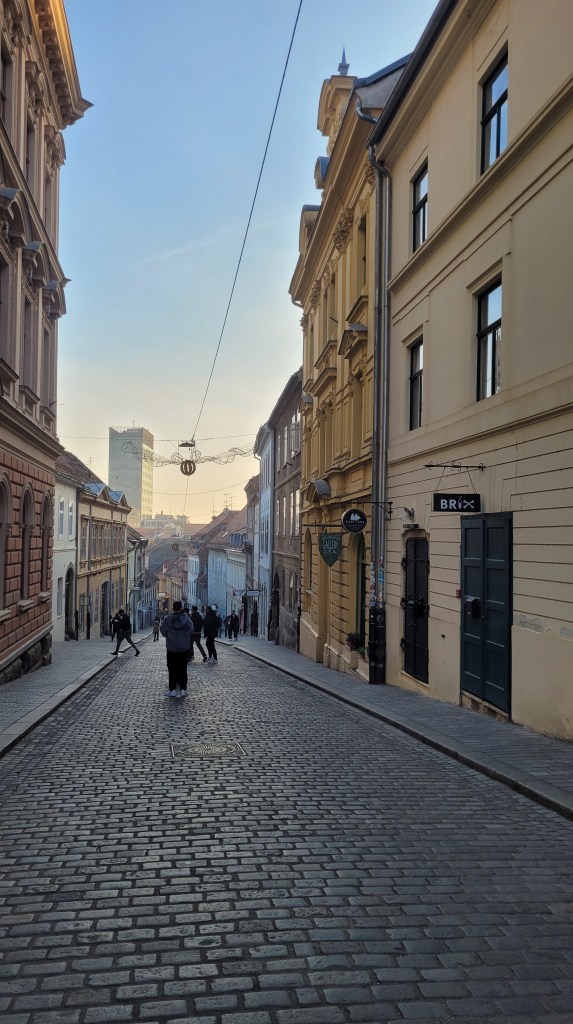
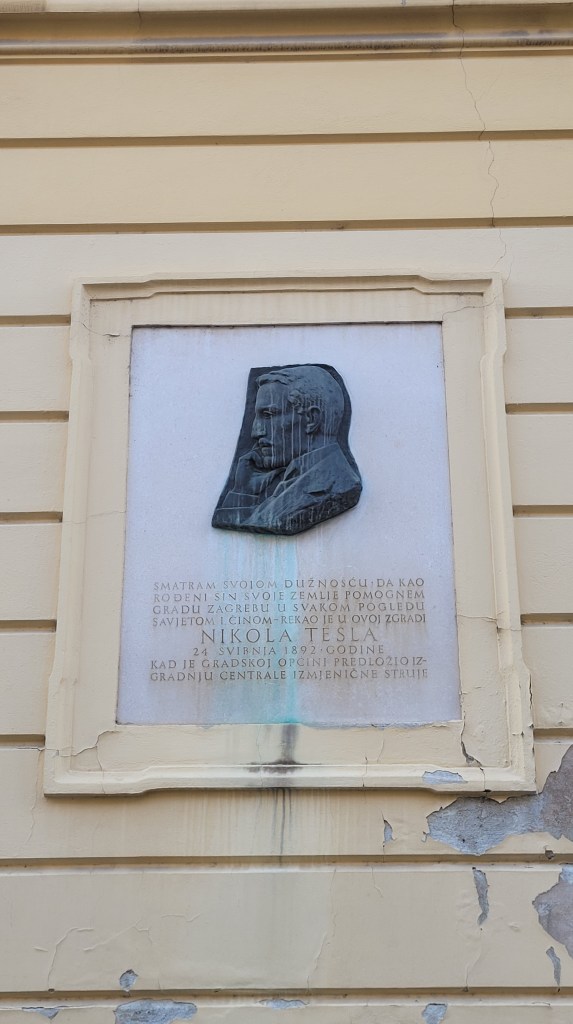
The Church of St. Mark is one of the oldest architectural monuments in Zagreb.The Romanesque window found in its south facade is the best evidence that the church must have been built as early as the 13th century. Next to it is the quote of Nikola Tesla that says: I find it my obligation that as a born son of my country I help the city of Zagreb in every aspect to help and advice. The quote was made while he was suggesting to Zagreb to build the alternating current power plant. I hope people won’t fight in my comments below.


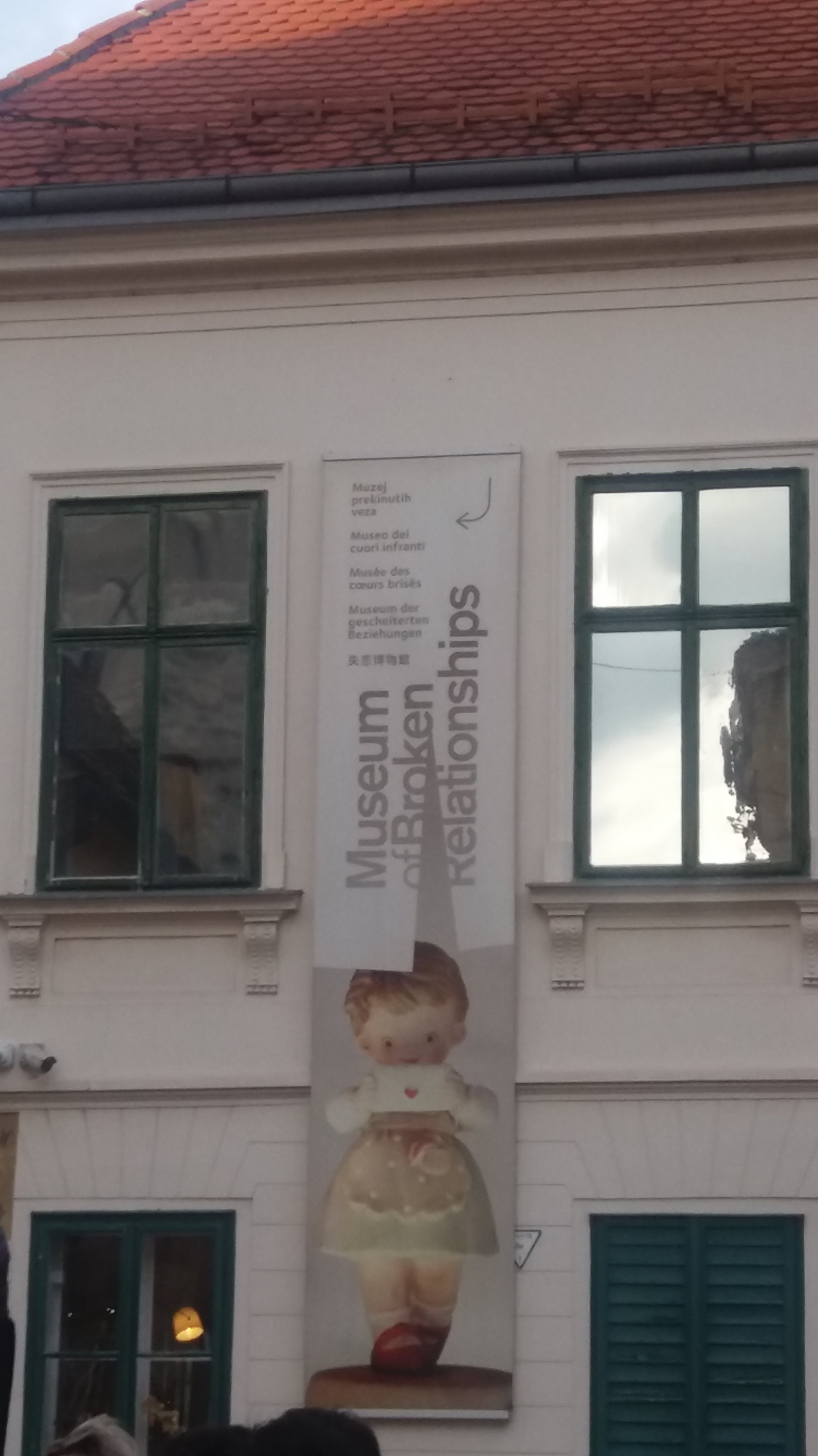
Ah yes, the Museum of Broken Relationships. Somehow this place became hipsterish location of sadness and eternal melancholy. Luckily the entrance fee is only 7 EUR and the tour takes 45 min. Now I got depressed.


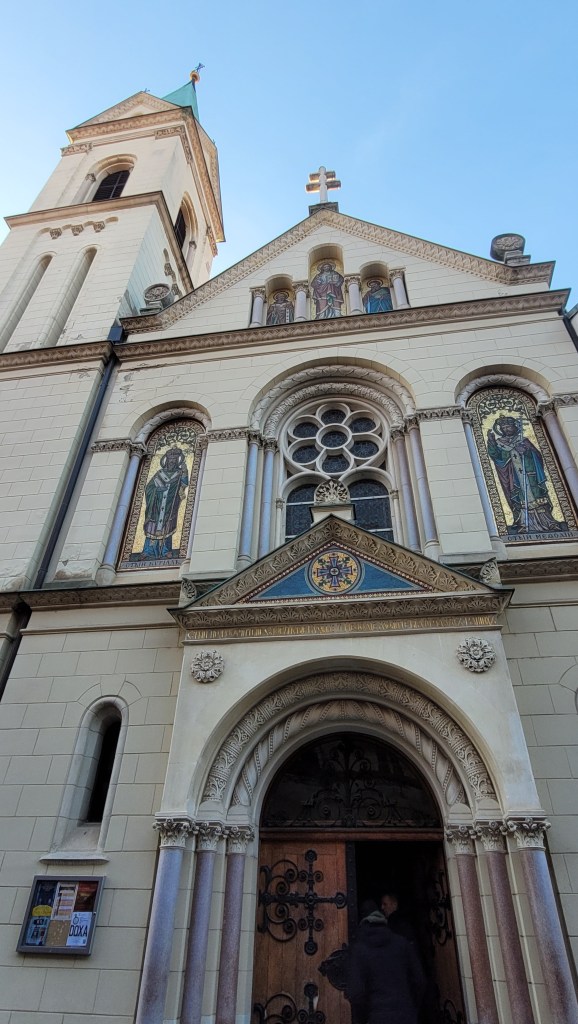
Have a look at this greek orthodox church! It is actually Greek Catholic Co-cathedral of St. Cyril and Methodius. The two saints were important for Croatian people as they were spreading the knowledge of reading and writing. Even though Croatians do not use Cyrillic letters anymore, it is important part of our history. The church was built in 16th century mostly for Greek Catholic believers the so called Uskoks. The Uskoks were irregular soldiers in Habsburg Croatia that inhabited areas on the eastern Adriatic coast and surrounding territories during the Ottoman wars in Europe. Bands of Uskoks fought a guerrilla war against the Ottomans.
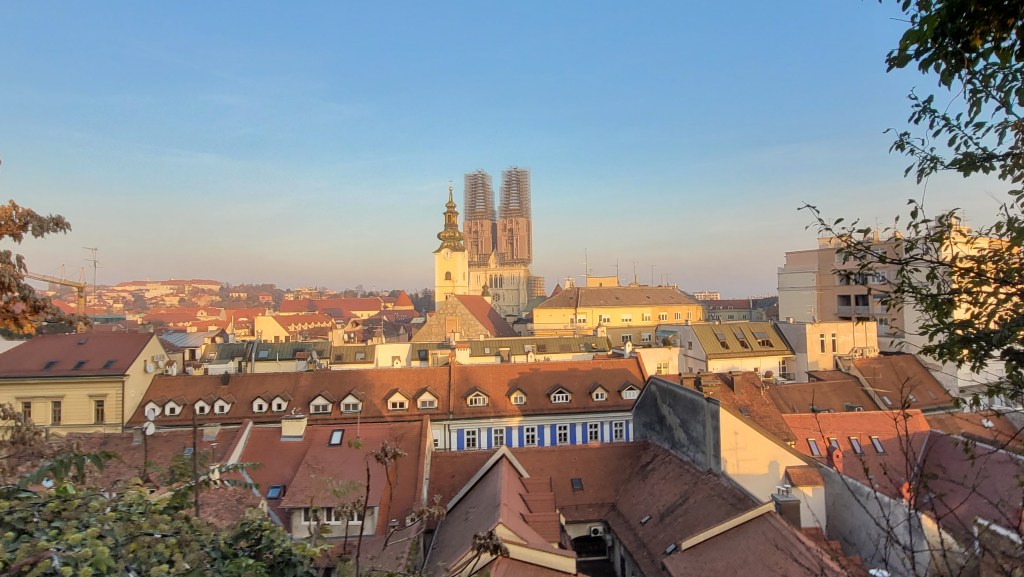
And that was the day. I had a one last look of the city. The glimpse that scratched my heart. It is hard to leave it there. Behind me. But somehow I am glad I got the chance to live in many other places. It can be dwelling.
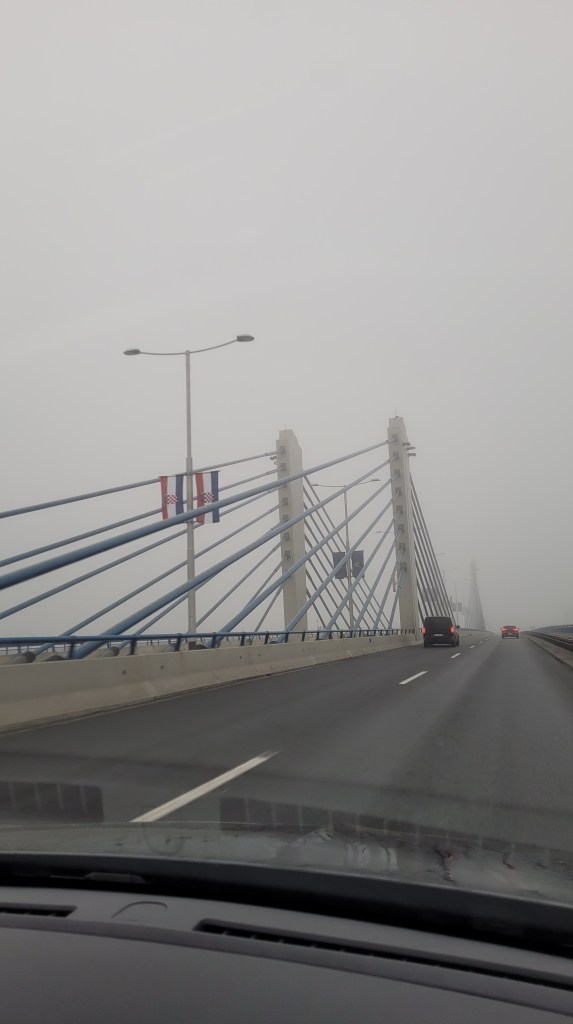
The next day I took the road towards the airport. My brother was giving me a lift. As he was driving over the Liberty Bridge, I noticed it was foggy again, but I knew it will be a sunny day afterwards. It has to be! Goodbye my blue city.
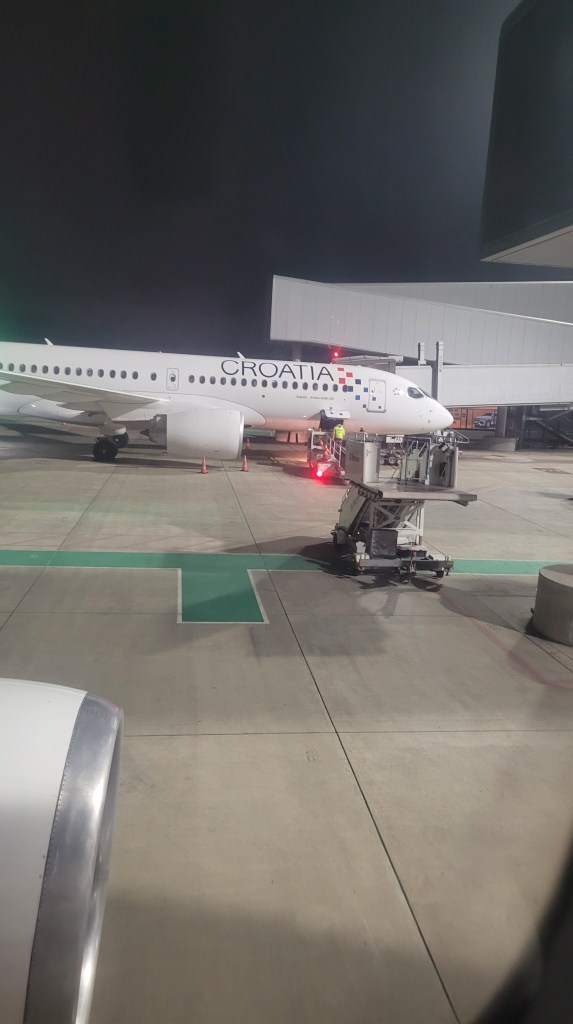
In 2019
Flying home for Christmas from christmasy Brussels to Krapina, small city nearby, I decided with my mom and brother to visit this best Christmas destination. Plus, I haven’t been to the center of Zagreb for more than 2 years, and I missed it.
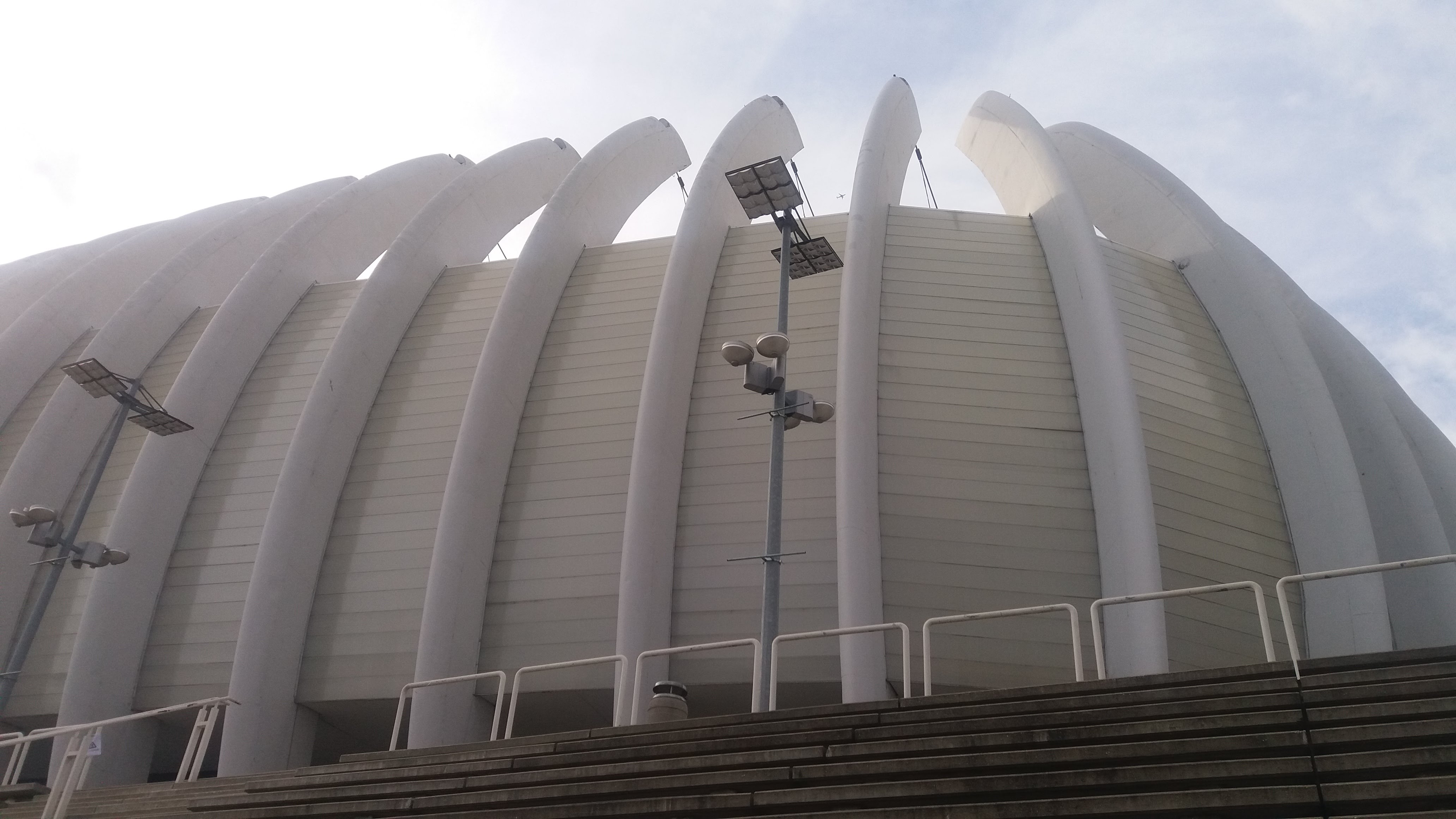
We left the car at Arena Zagreb – a multi-purpose sports hall located in the southwestern part of the city and took the bus to the main train station: Kolodvor Zagreb, the main hub of the Croatian Railways network. In 19th century, Royal Hungarian Government (as that part of Croatia in that time was part of the Austro Hungarian Empire) authorised the building of the main station and maintenance shop in Zagreb. This beautiful building is typical Vienna secession style building of the Habsburgs, as many other buildings in Zagreb, Budapest, Prague or wherever Habsburgs spread their Empire.
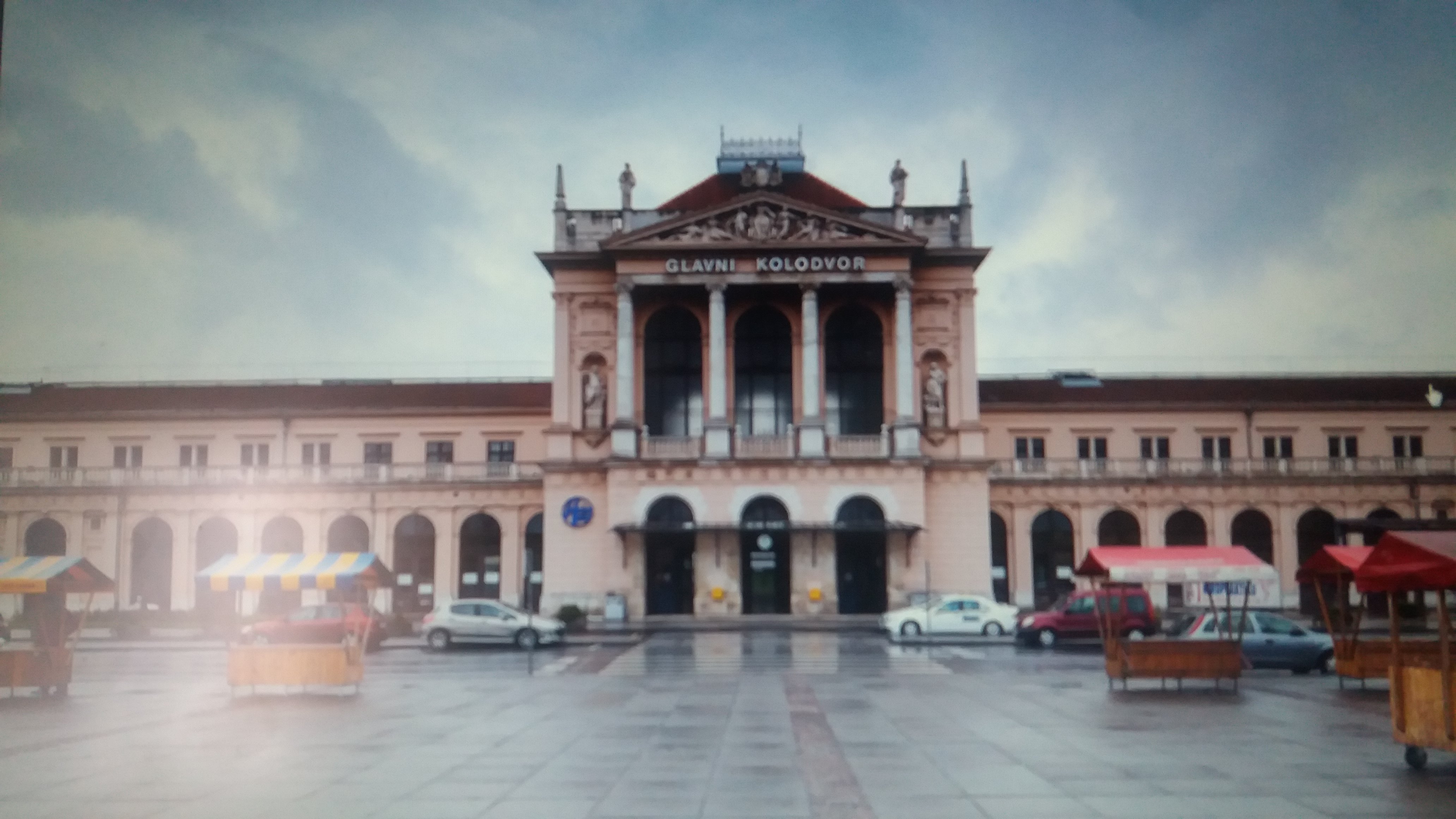
From there everything starts! Historically and Christmasly.
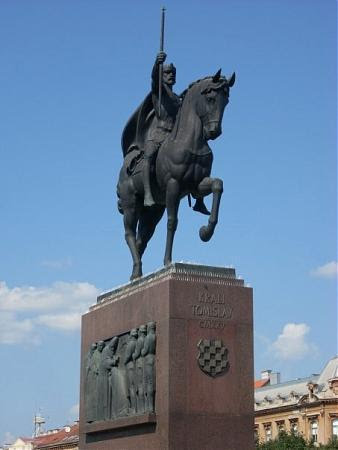
The first Croatian King Tomislav, 10th century stands there welcoming tourists, located ahead park Zrinjevac.
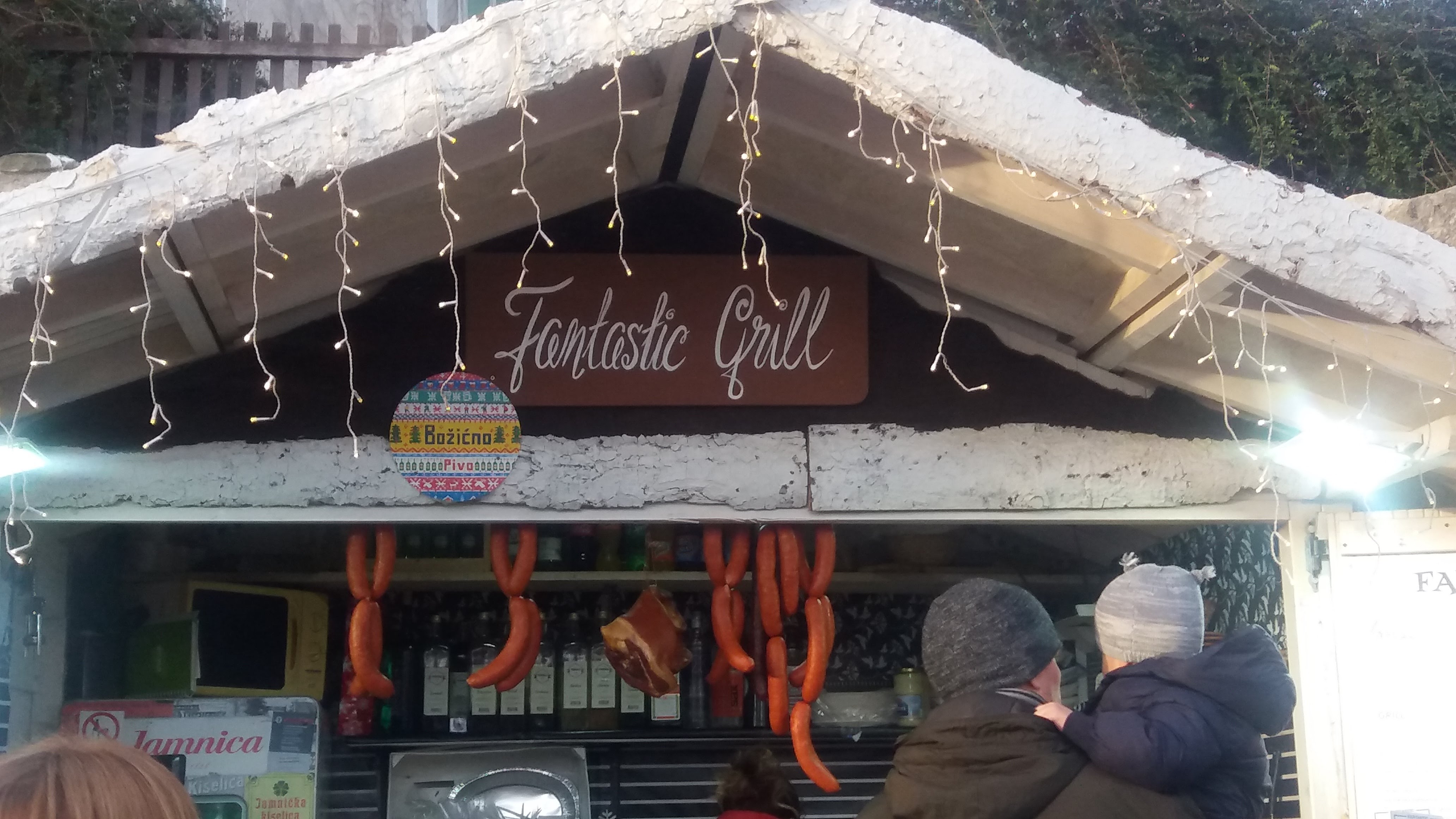
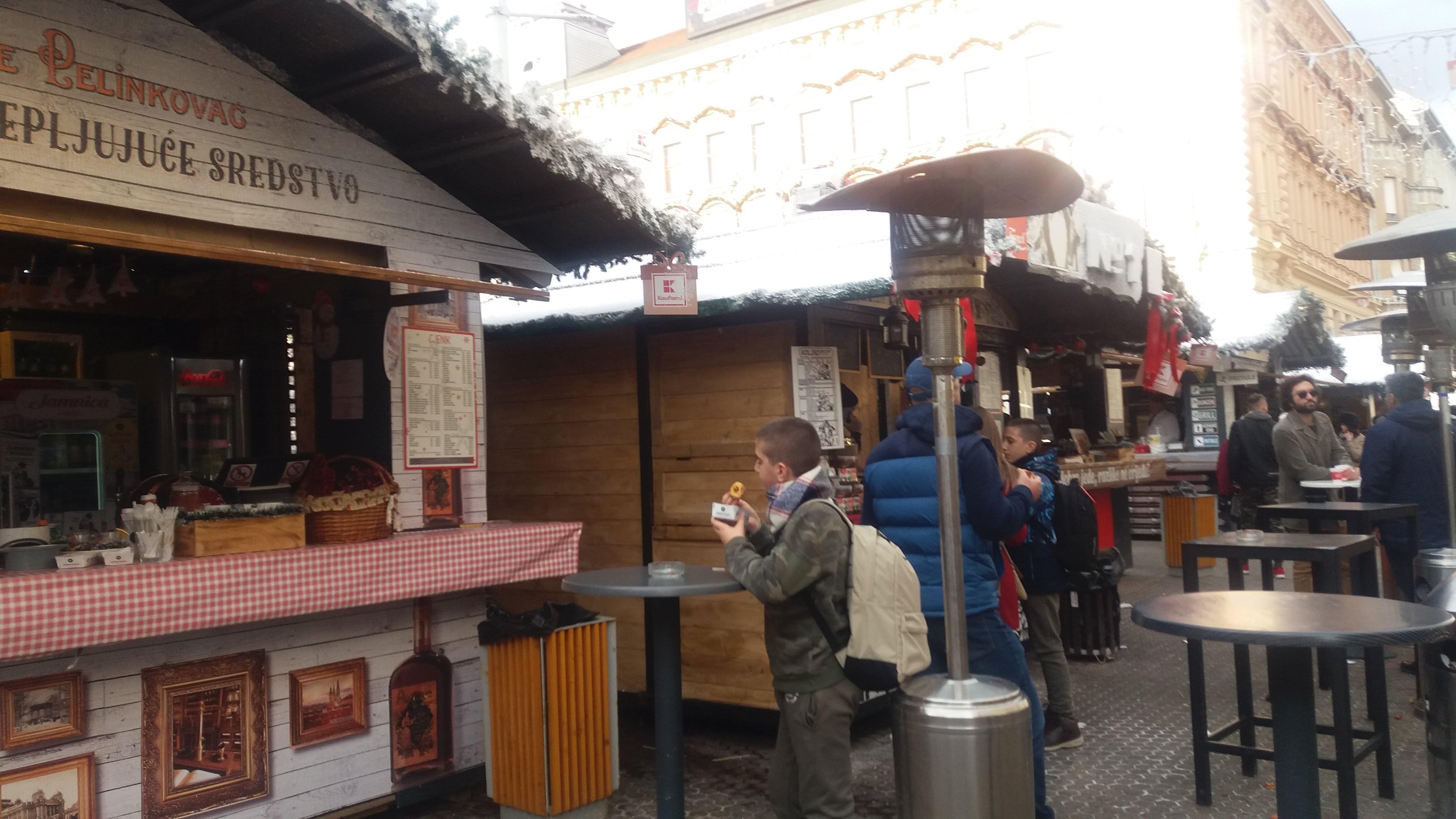
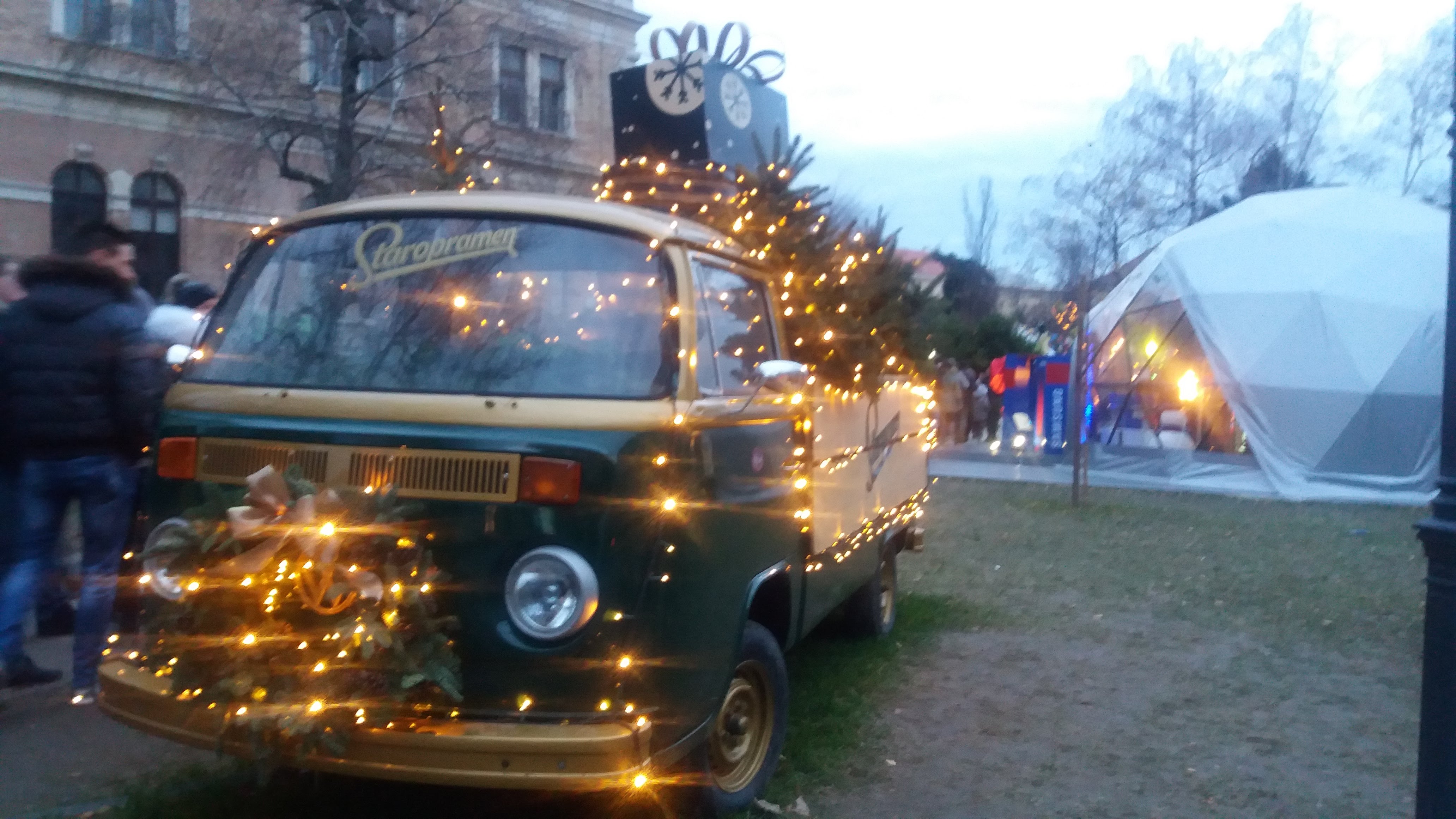
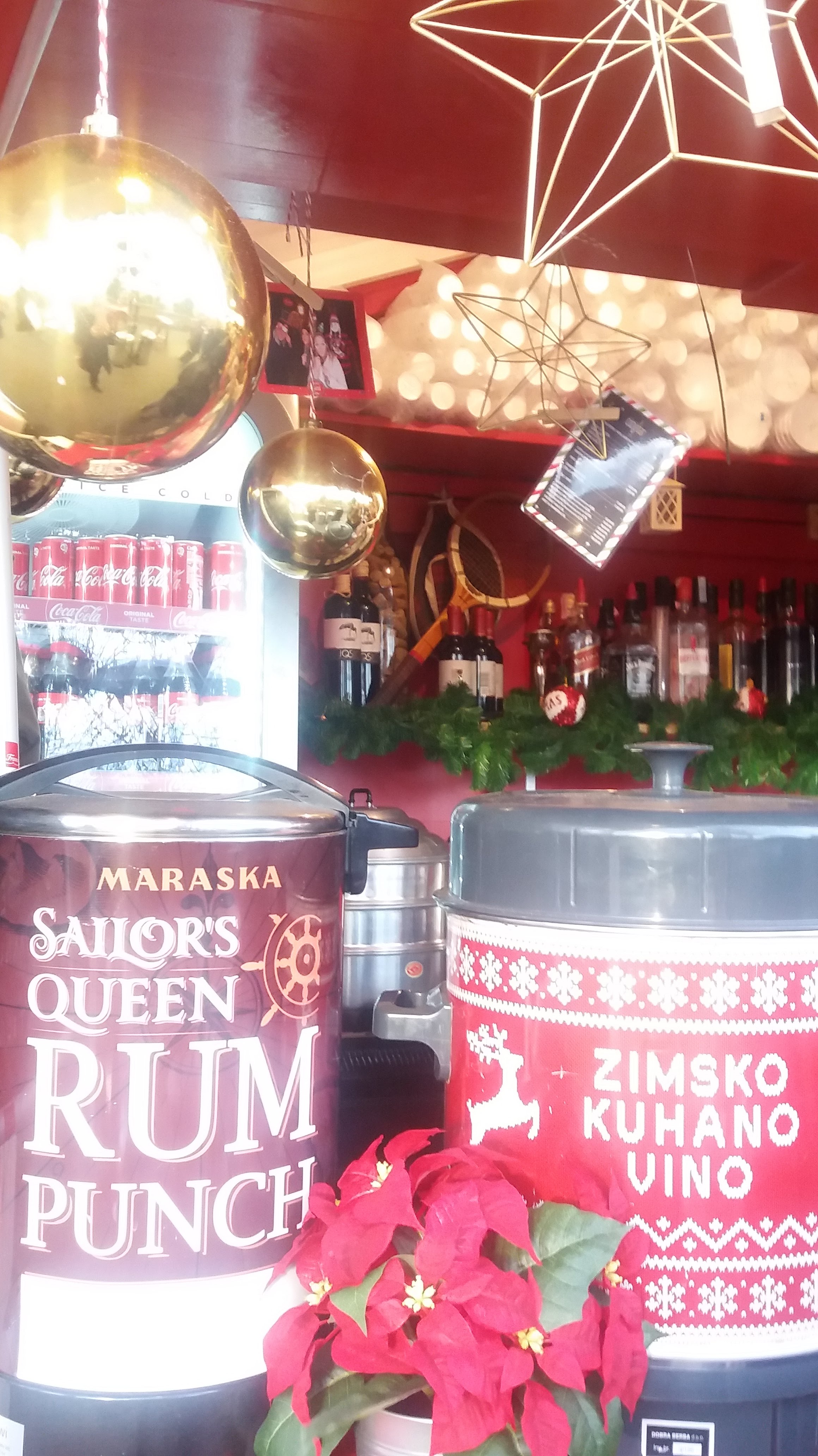
In park Zrinjevac is located ice skating, with many small wooden houses around it and bars to drink kuhano vino (Croatian mulled vine) 🙂 and typical food to eat.

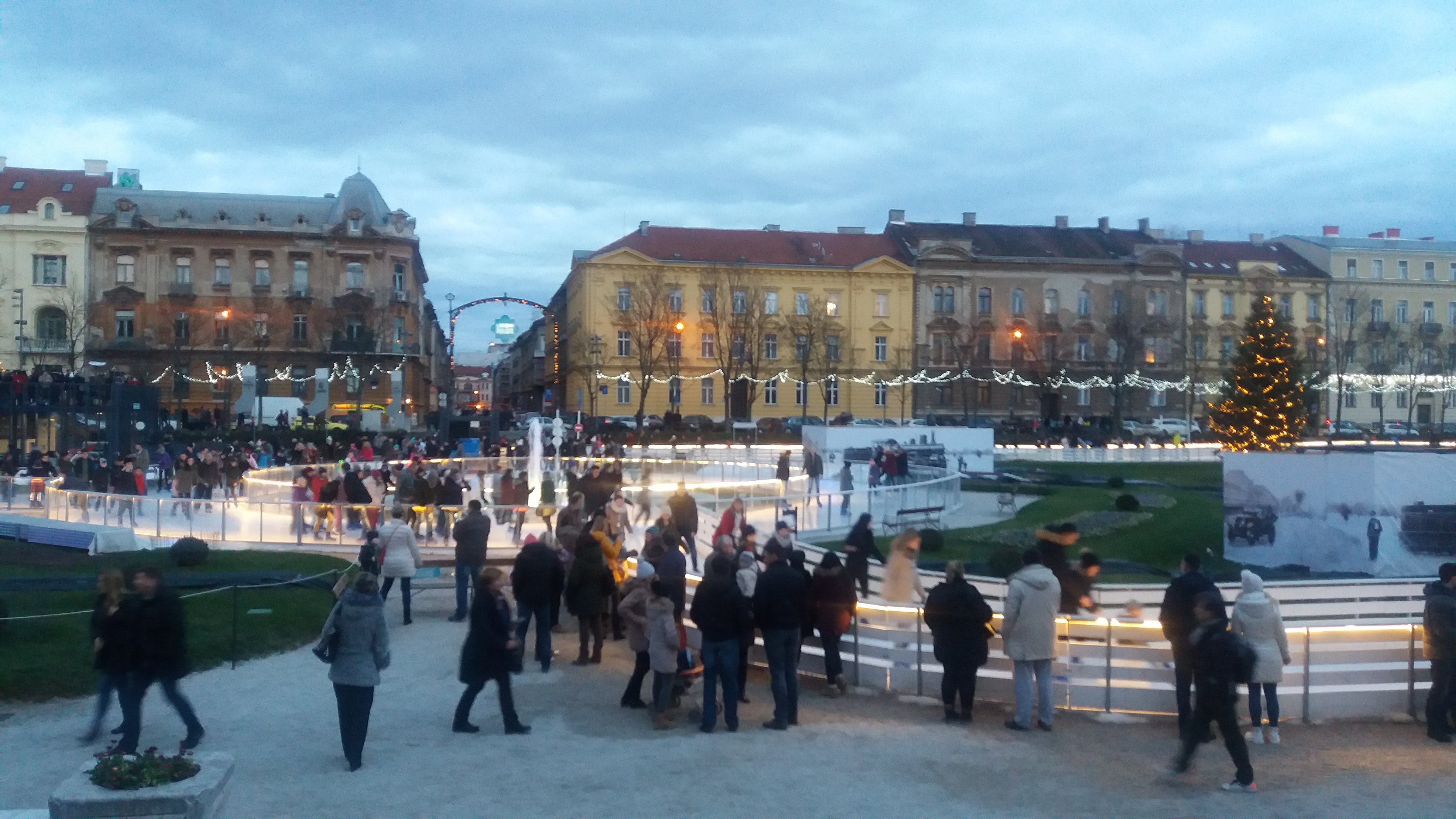
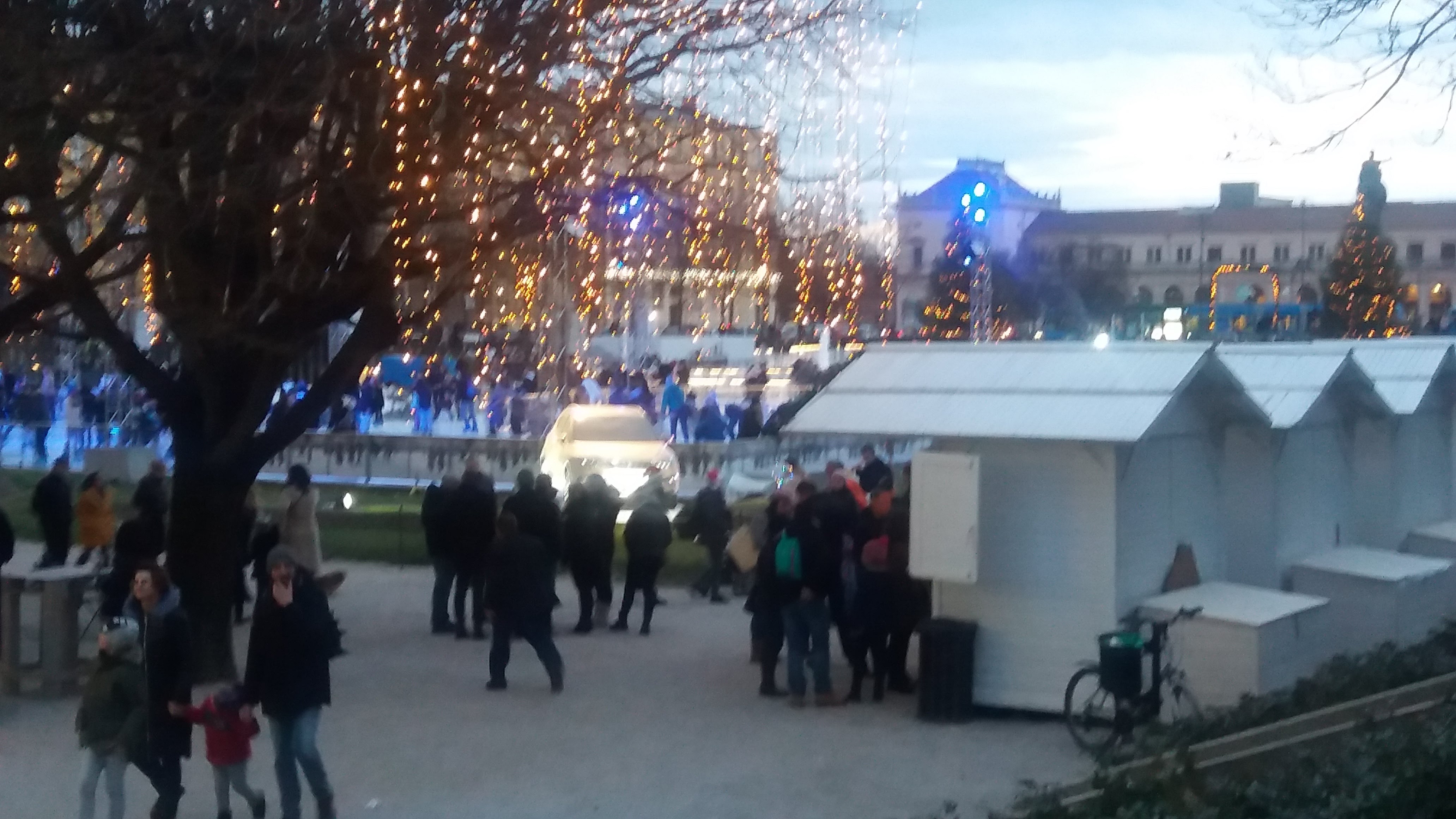
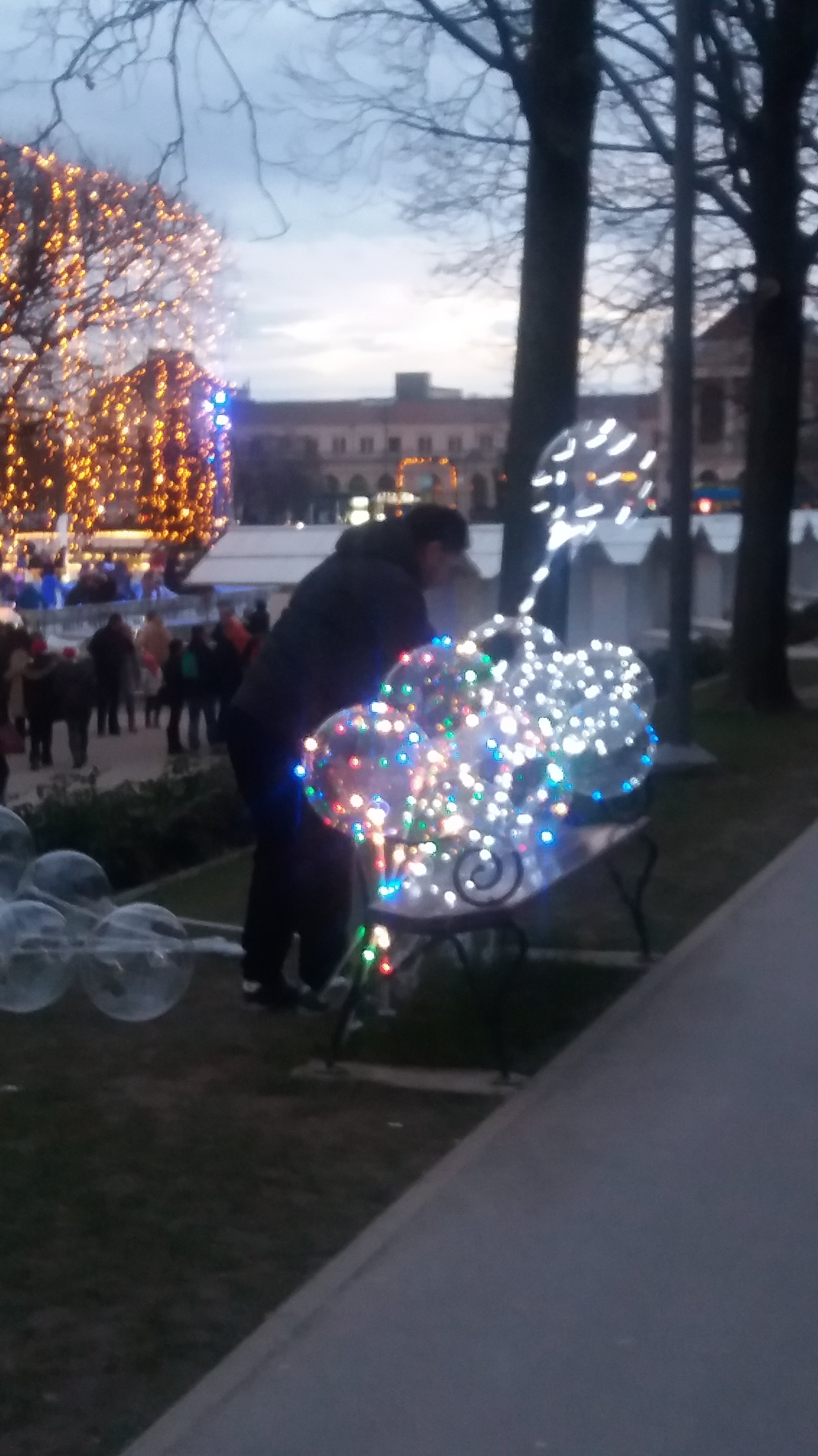
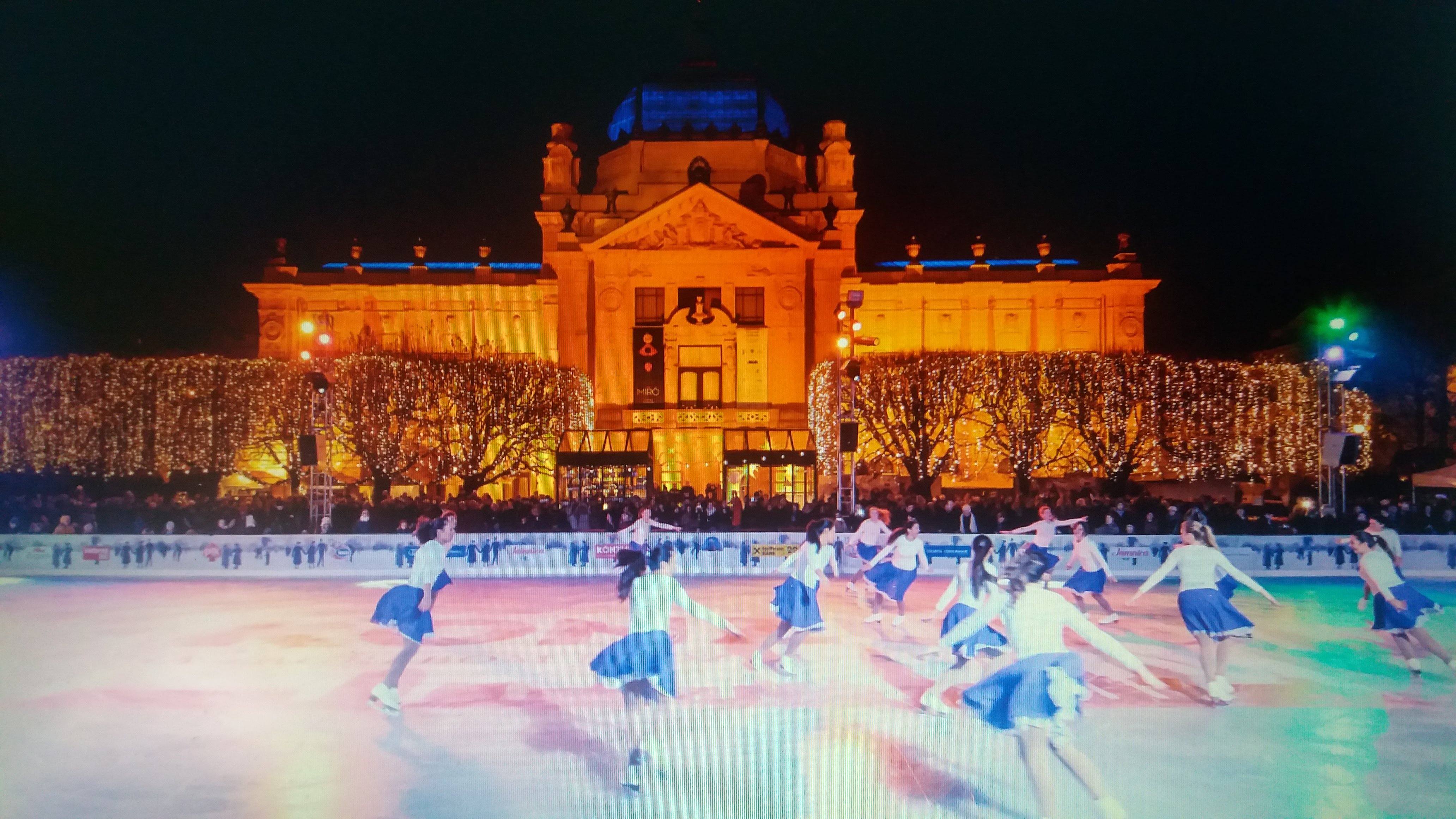
As already said, typical yellow secession buildings as of 19th century since the Austro Hungarian Empire is this Art Pavillon at park Zrinjevac:
Typical food for Zagrebiensis are sausages, medenjaki (honey cookies), paprenjaci (biscuit cookies made of unique mix of honey and black pepper), etc.
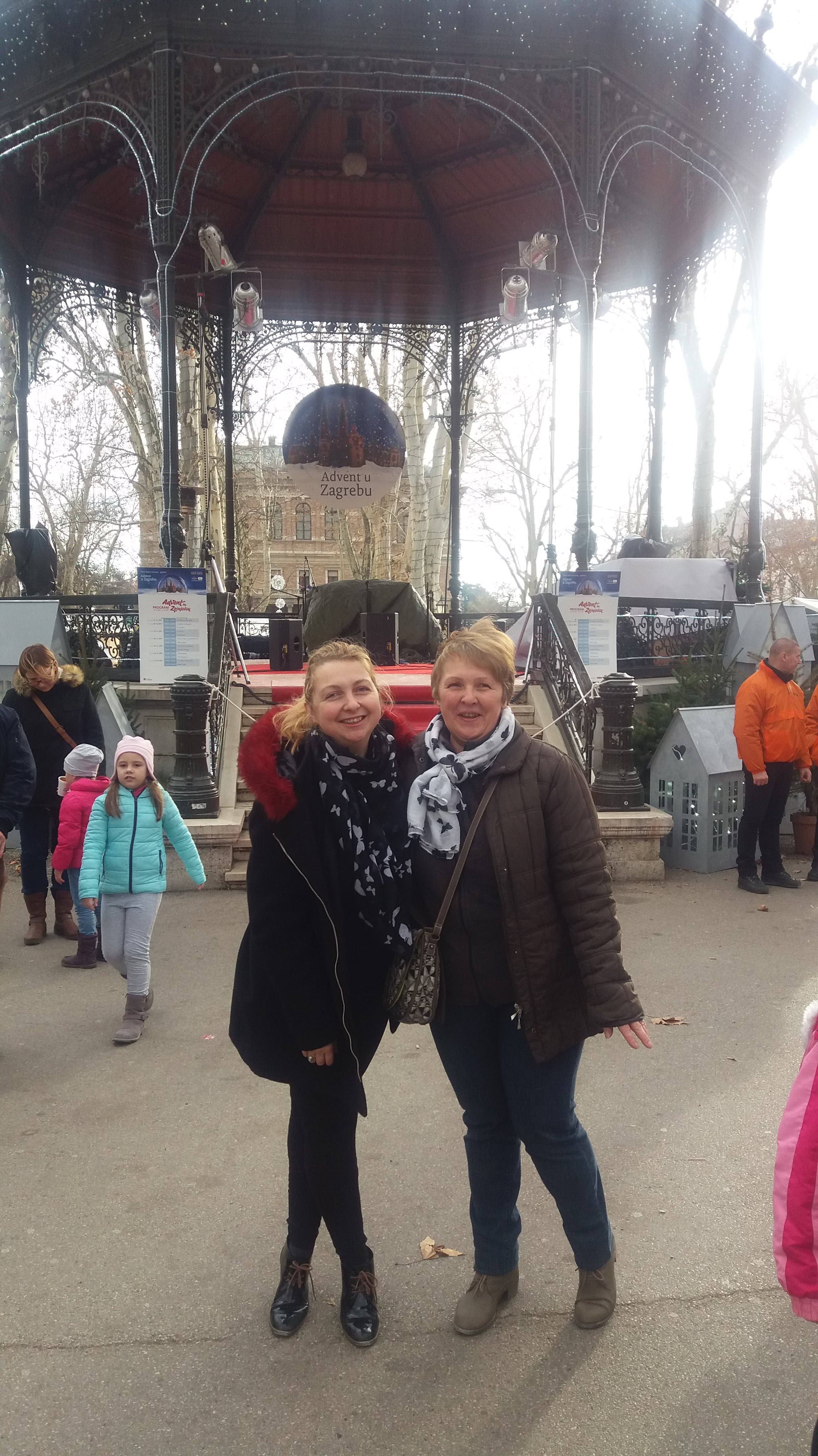
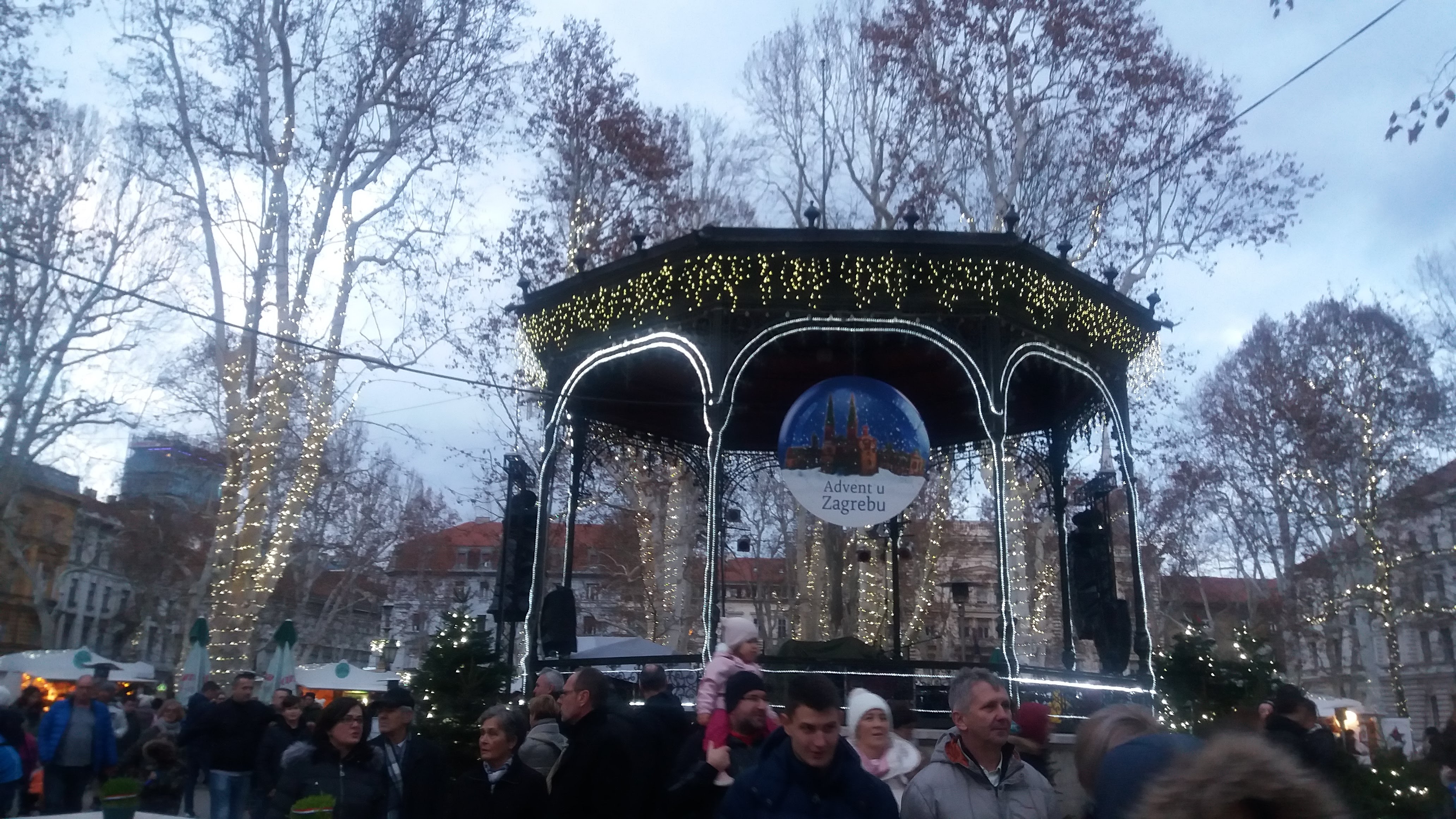
From there we continued towards the Fooliranje part of Zrinjevac (engl. fooling around). The rounded open pavillon was hosting some local band tries around had a special glitter due to Christmas lights.
In the very first photo I am with my mother. 🙂 We even have the same patterned scarf we bought in Brussels.

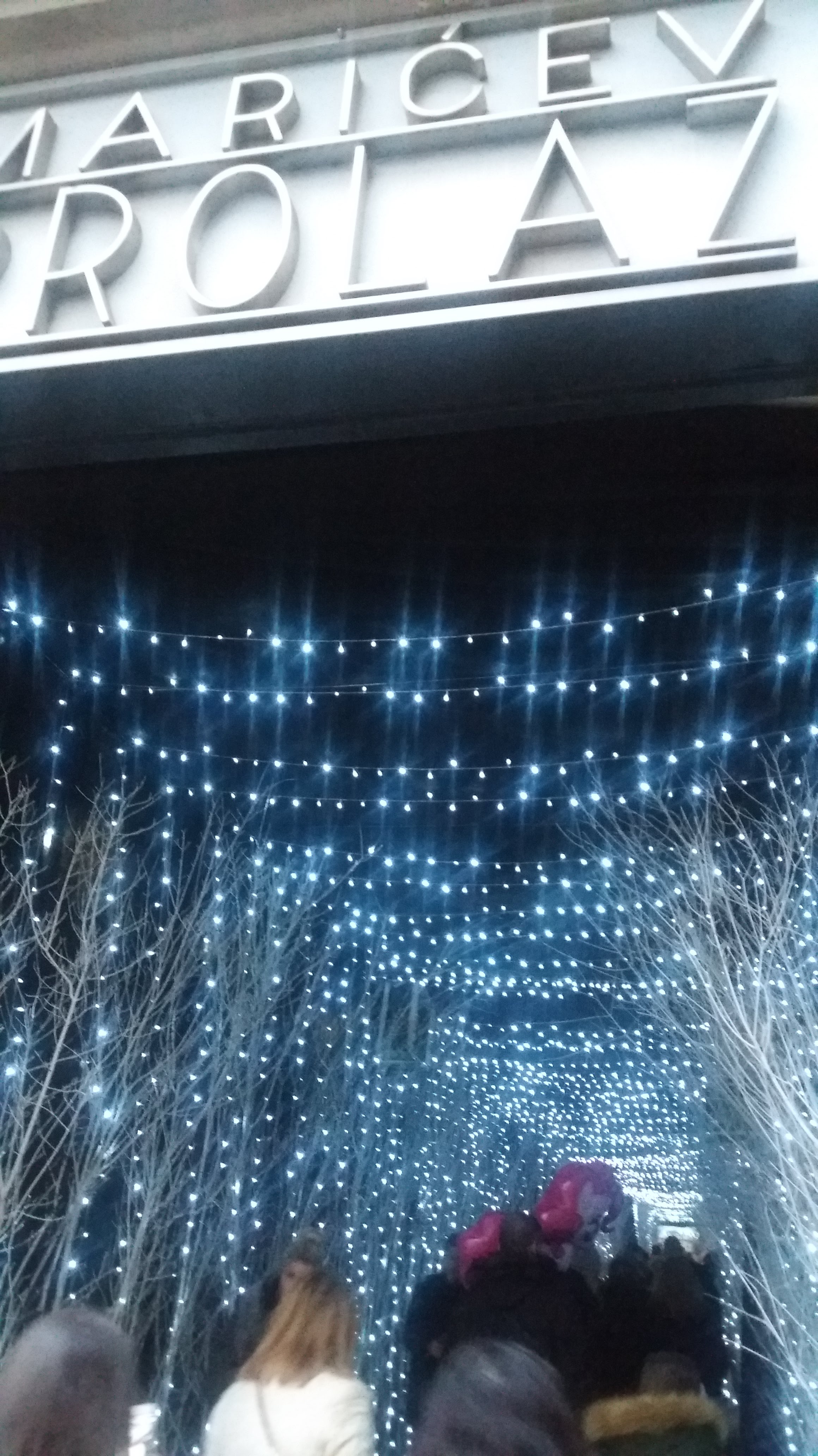
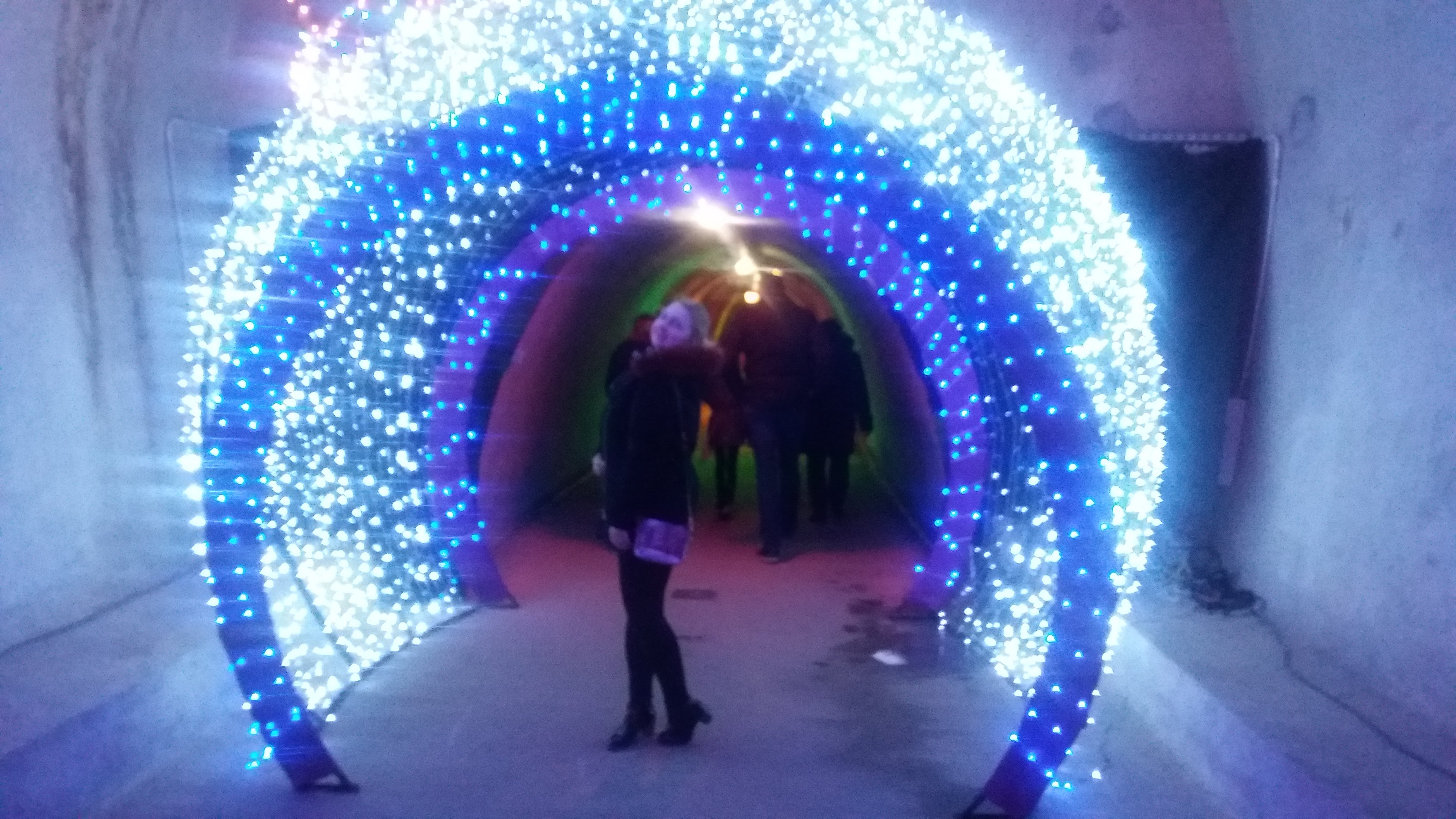
 Continuing towards the main square, there was another wonder – Maric passage. The passage is completely covered with blue Christmas lights and branches of trees so it seems like you stepped into some magic wonderland.
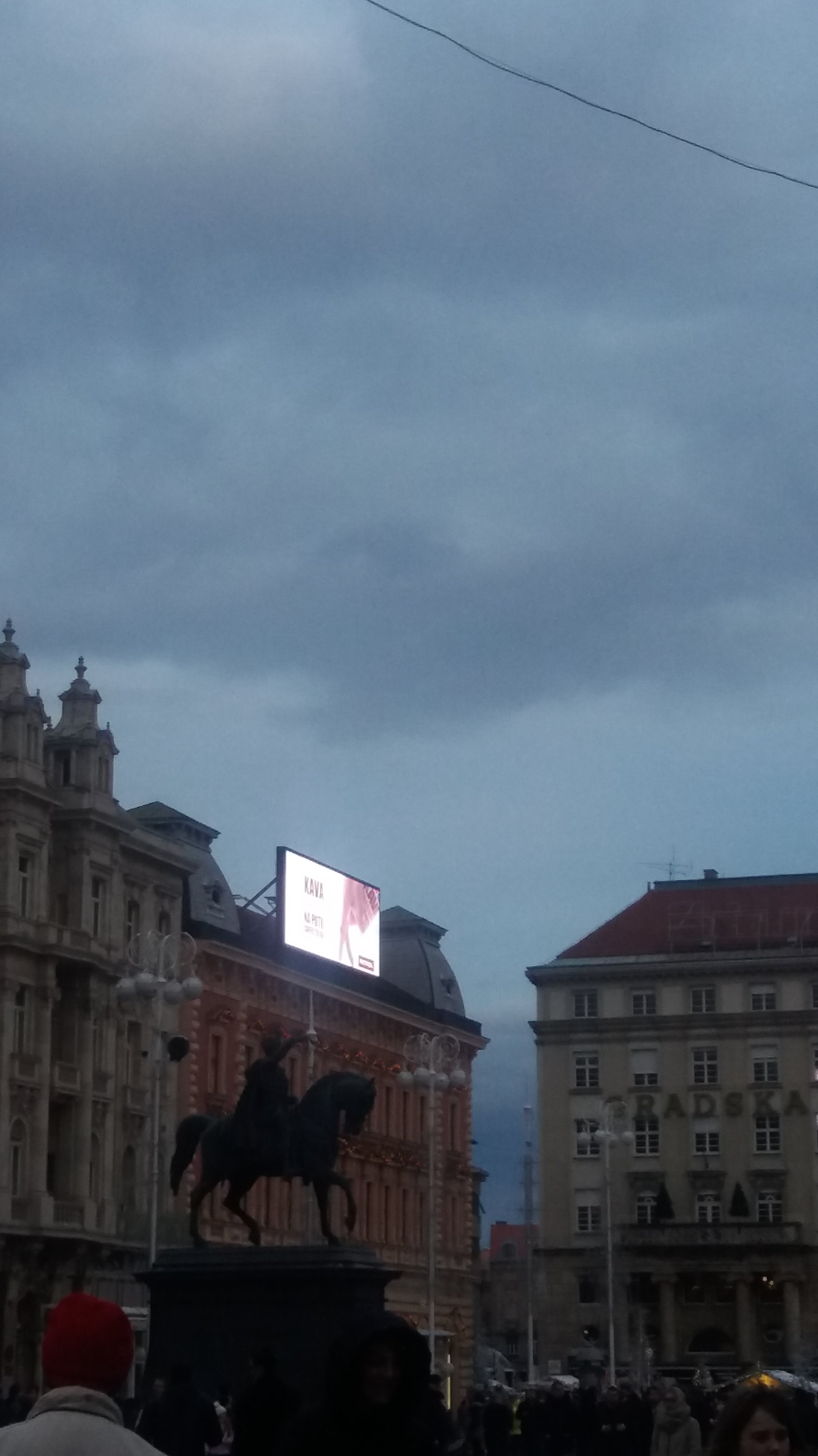
Finally we came to the main square named after very important Croatian national hero Josip Jelacic who fought against hungarian oppression in 19th century during the Austro-Hungarian Empire, and the hungarisation of Croatian language. He also liberated croatian poor people from serfdom in 1848.
You can see his statue at the main square, currently turned towards the south but it used to be towards northeast, facing the Hungarians.
There is the famous clock where all people that live in Zagreb usually meet. When I was studying in Zagreb, all the coffee meetings started ‘meet you under the clock.‘

Furthermore, I took a photo of the famous blue tram coming from Ilica – the longest street in the city.
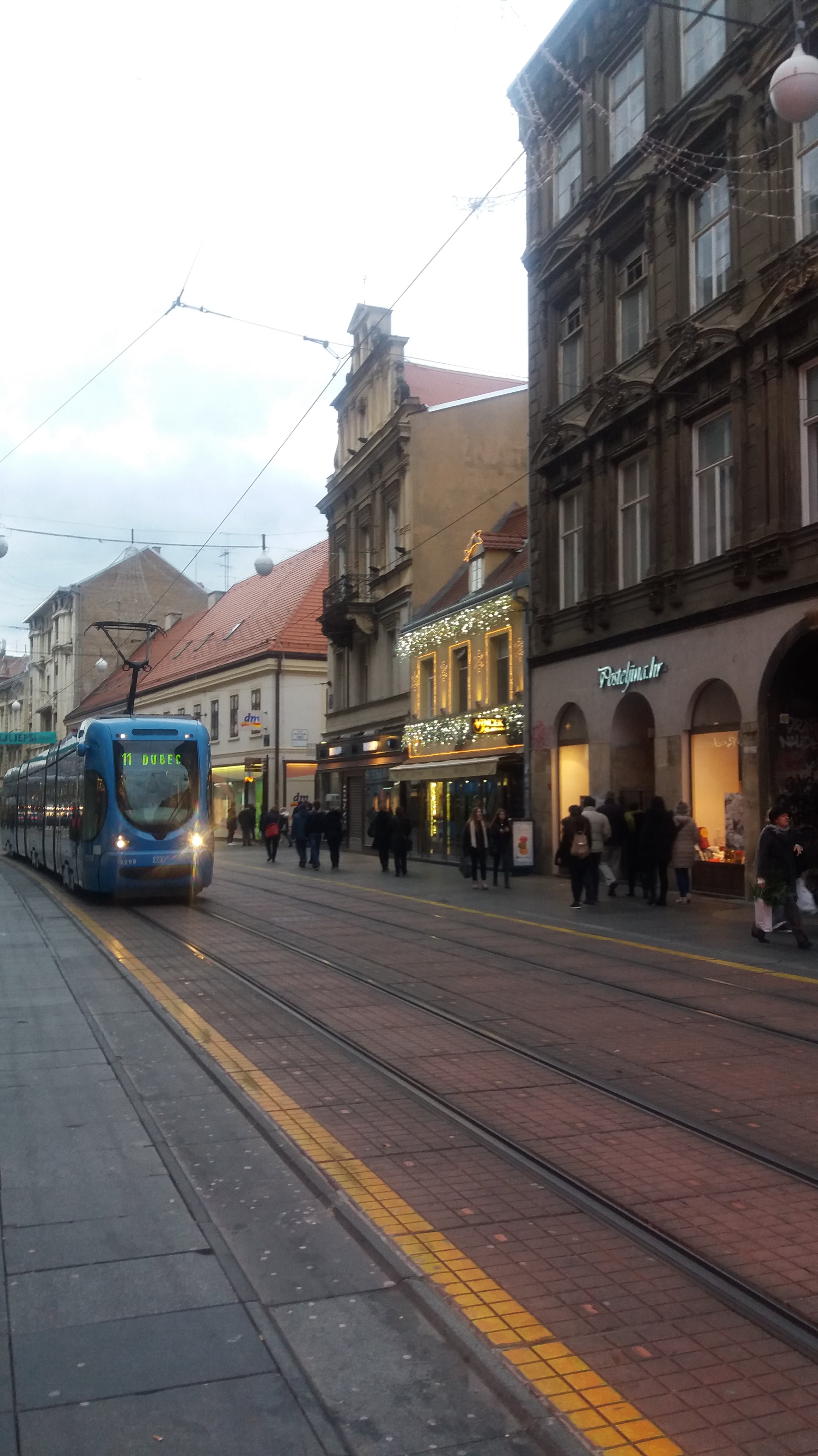
The colour of Zagreb is blue, even though all the traditional souvenirs are red from Sestine. Like already mentioned licitar heart of sestine umbrella. My grandpa used to have these hanging of the mirror in his car.
We moved very soon towards the European square where is the Representation of European Commission to Croatia. There you can find the traditional food from the entire country – north, south, east and west, as the country is hit by two different climates (mediterranean and continental), hence the food and culture and history were/ are different.
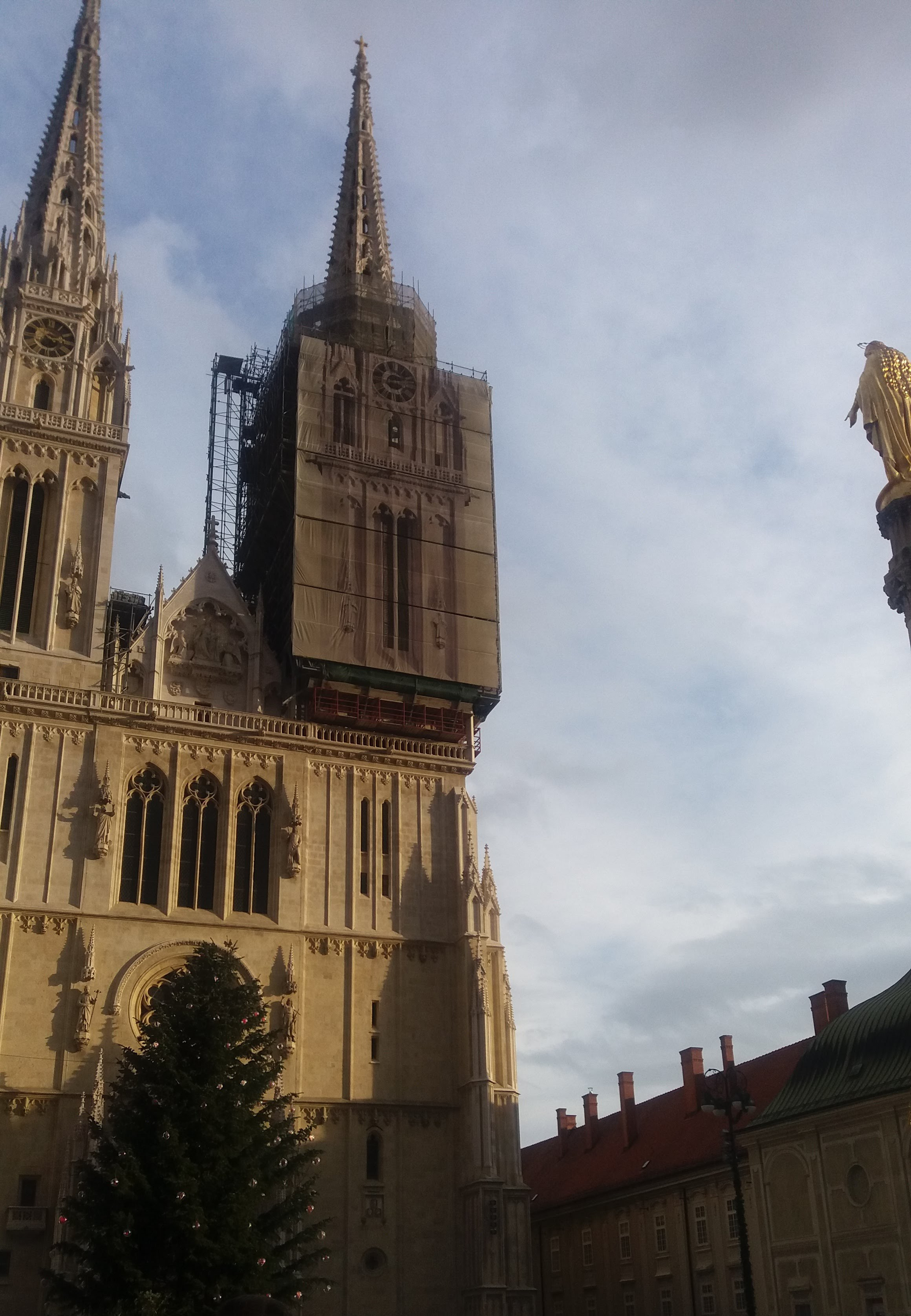
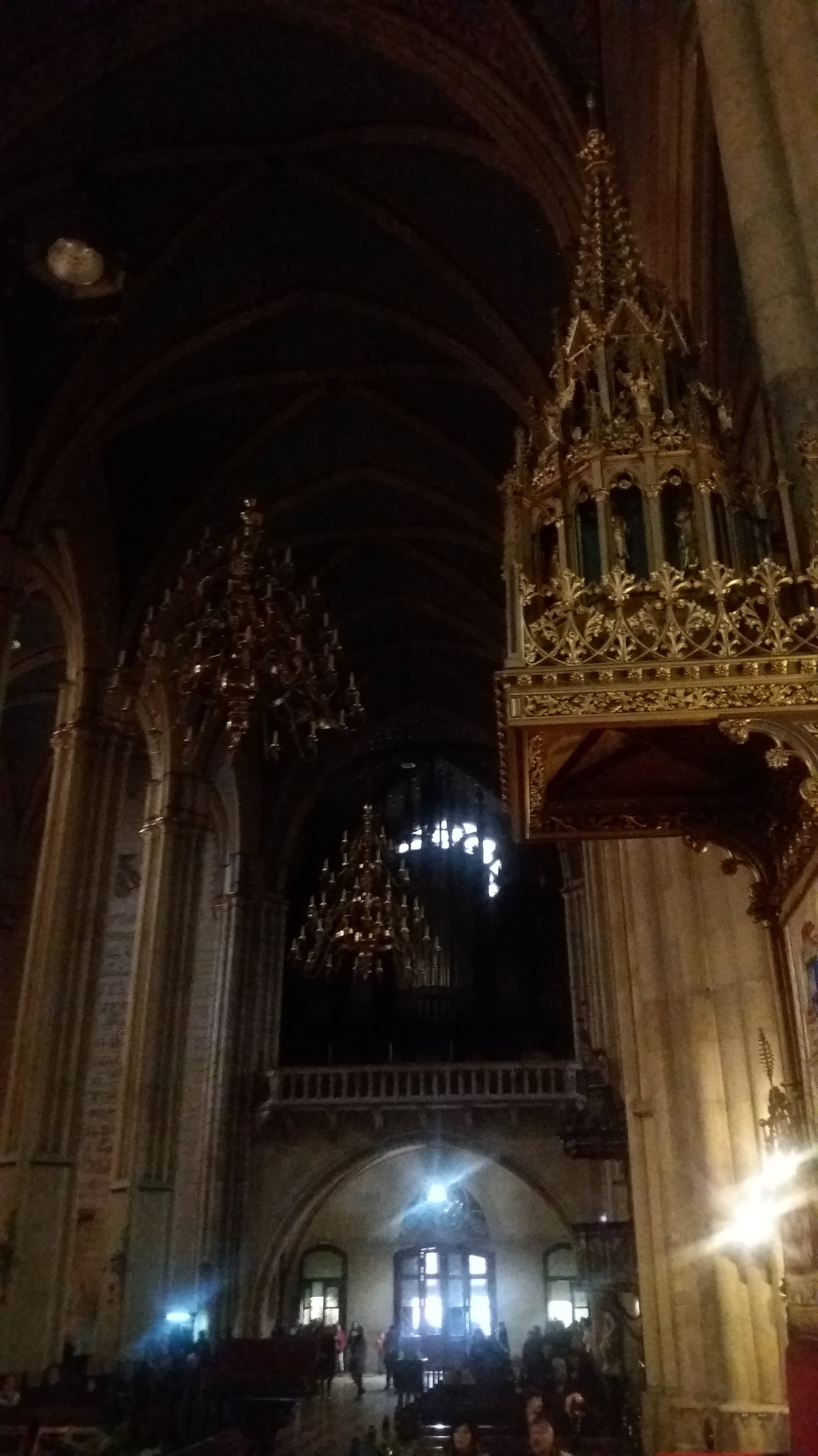
The Zagreb Cathedral is the tallest building in Croatia, but also the most monumental sacral building in Gothic style southeast of the Alps. It is dedicated to the Assumption of Mary and to kings Saint Stephen and Saint Ladislaus. who started building the cathedral in 11th century.
As you can see on the photo below, the Cathedral used to be surrounded with walls because of the Ottomans arrival during the 15th and 16th century.
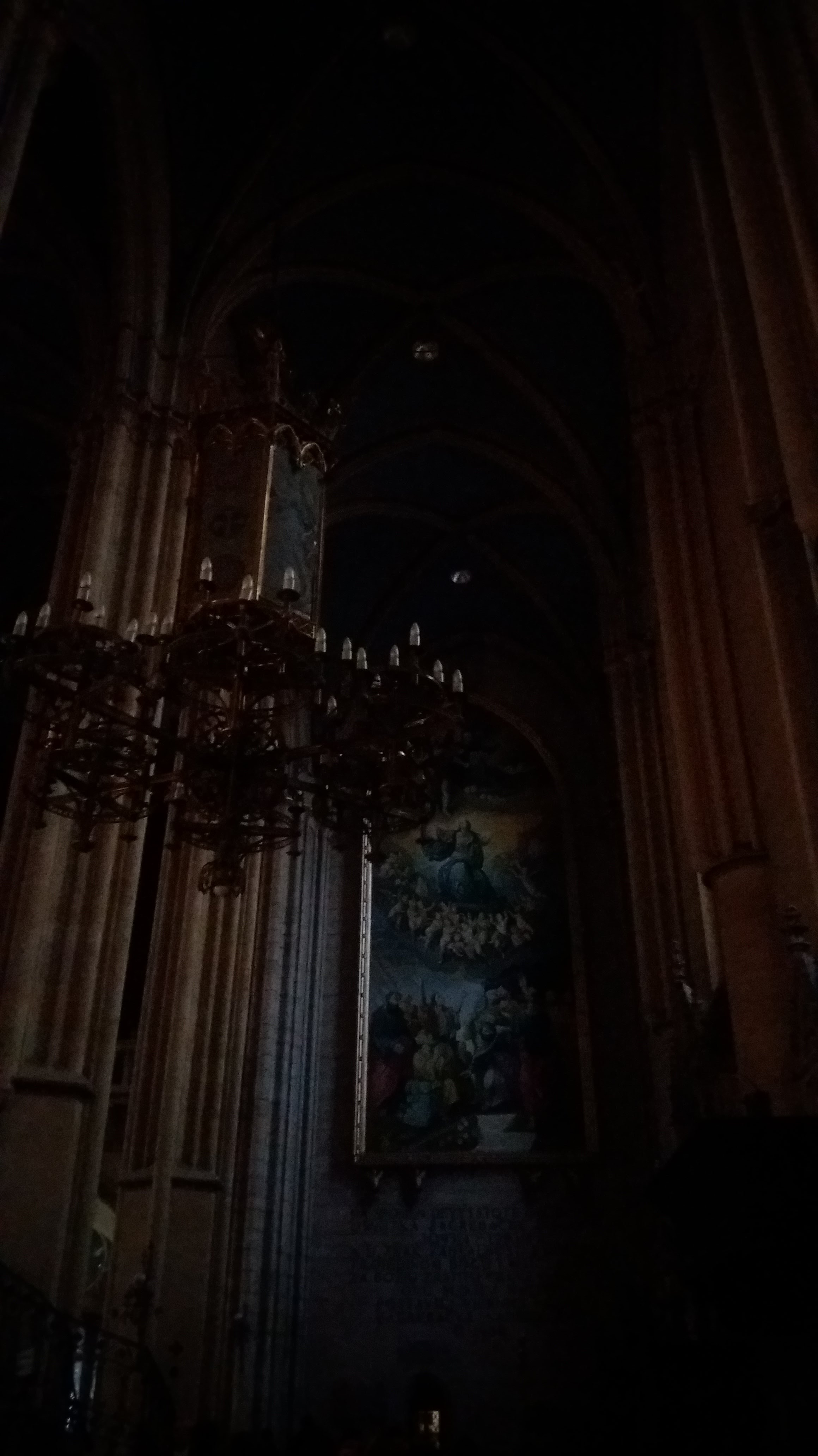
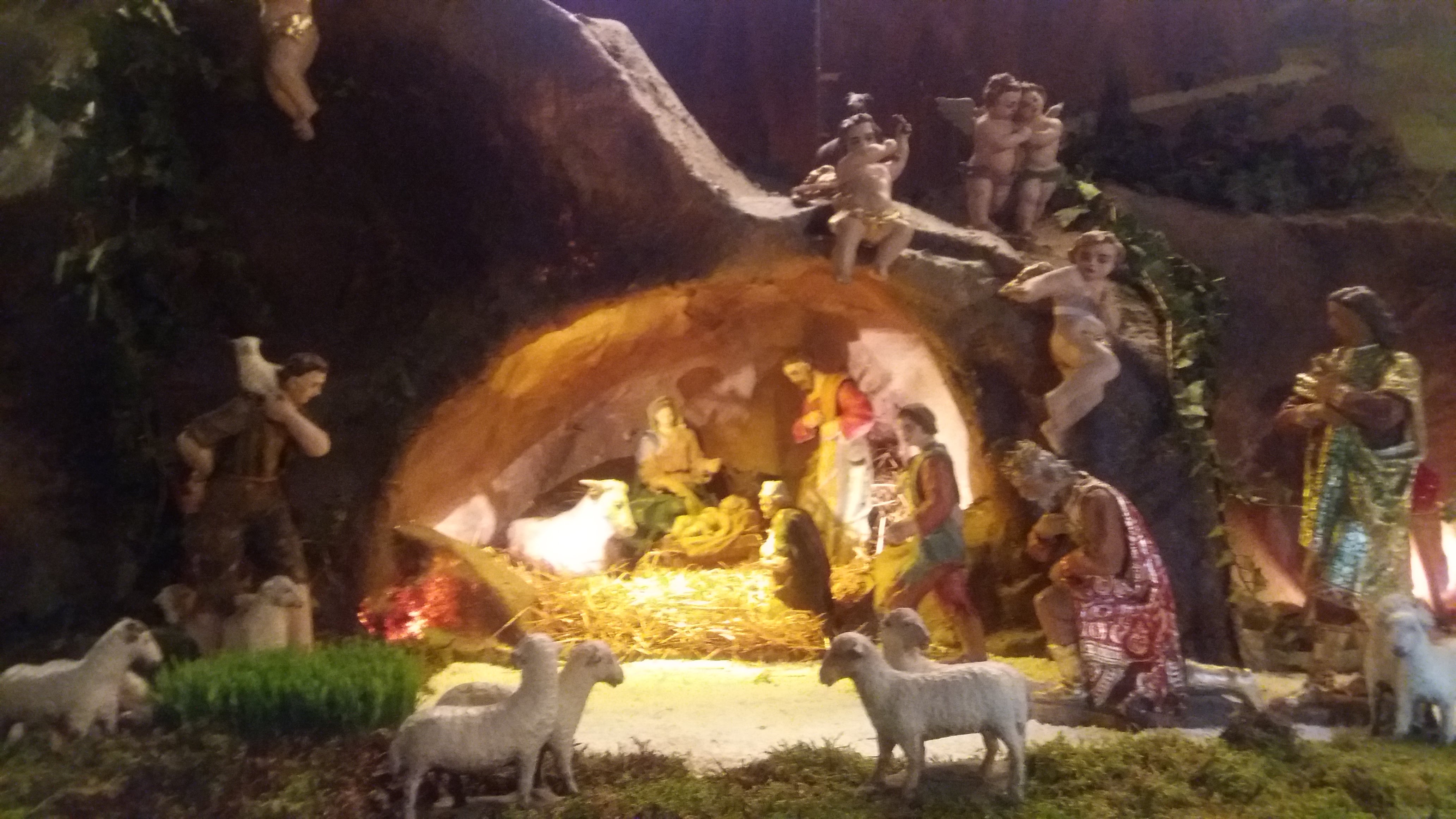
Inside the Cathedral, we visited the nativity scene and made the walk around.
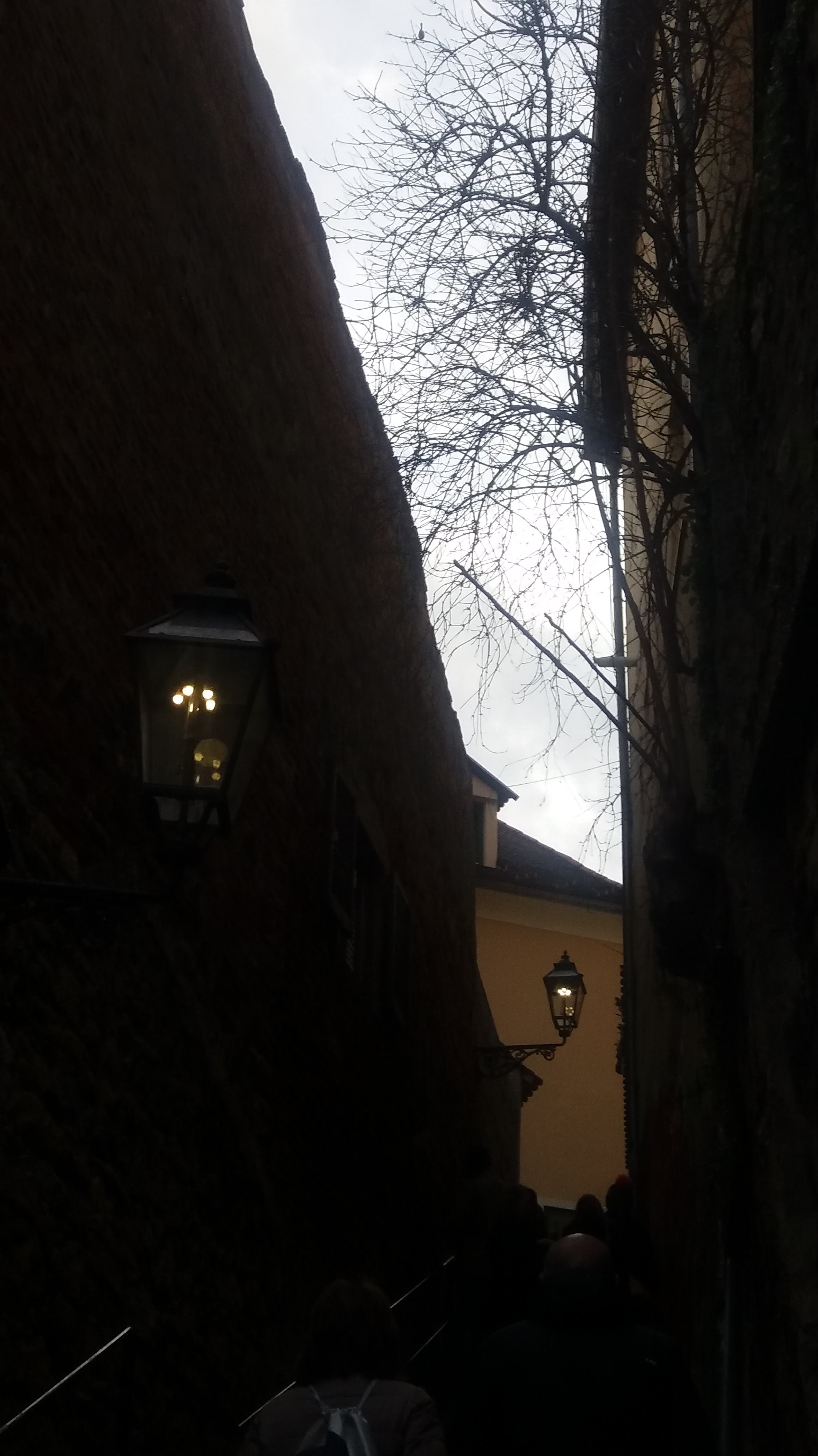
 Climbing towards the Upper town Kaptol, you literally jump into Middle Ages. The houses are smaller, the passages are narrow and combined with stairs called Windmill stairs (because they used to lead towards the old mill) or Stonegate or Meat street etc.
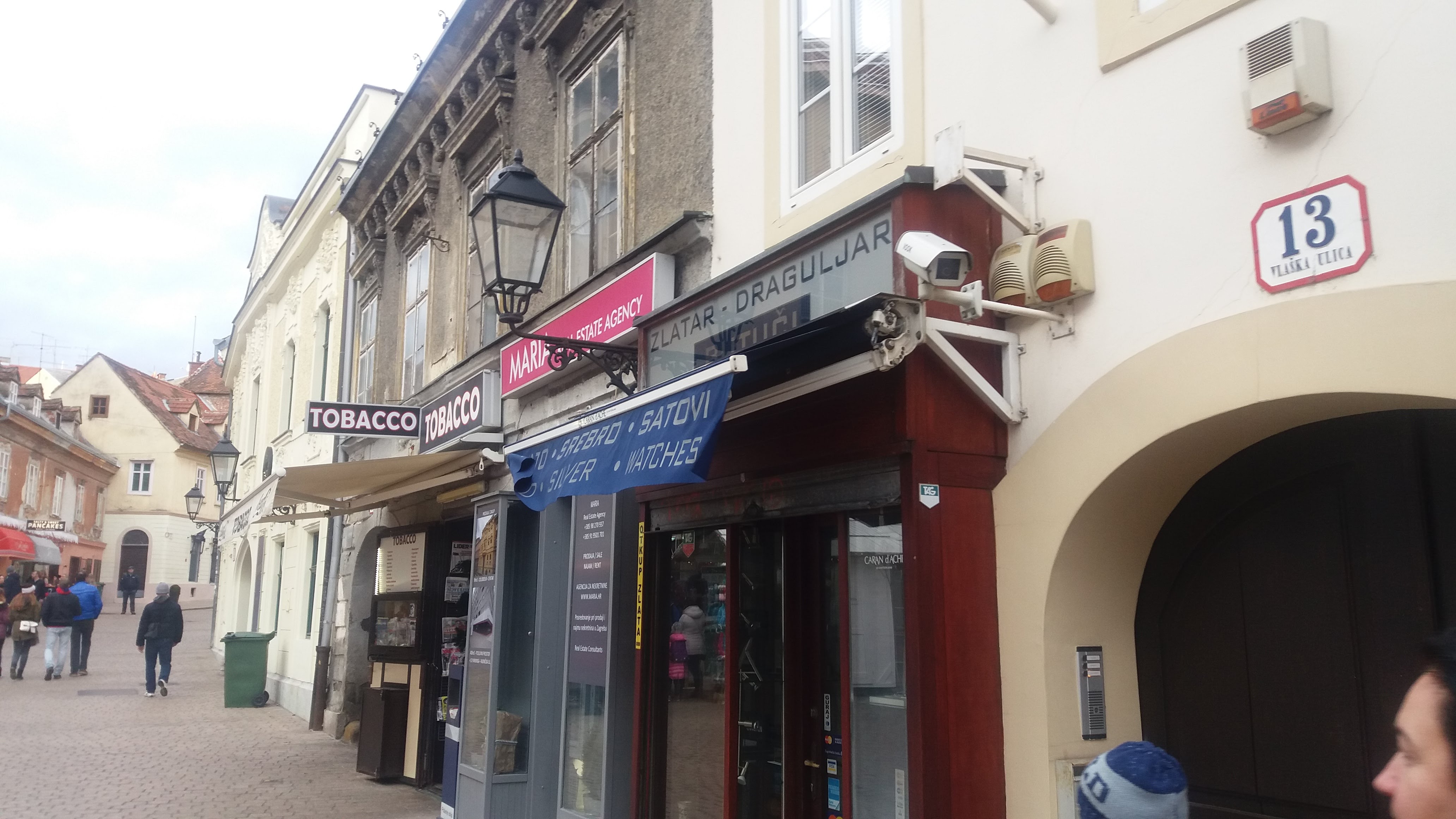
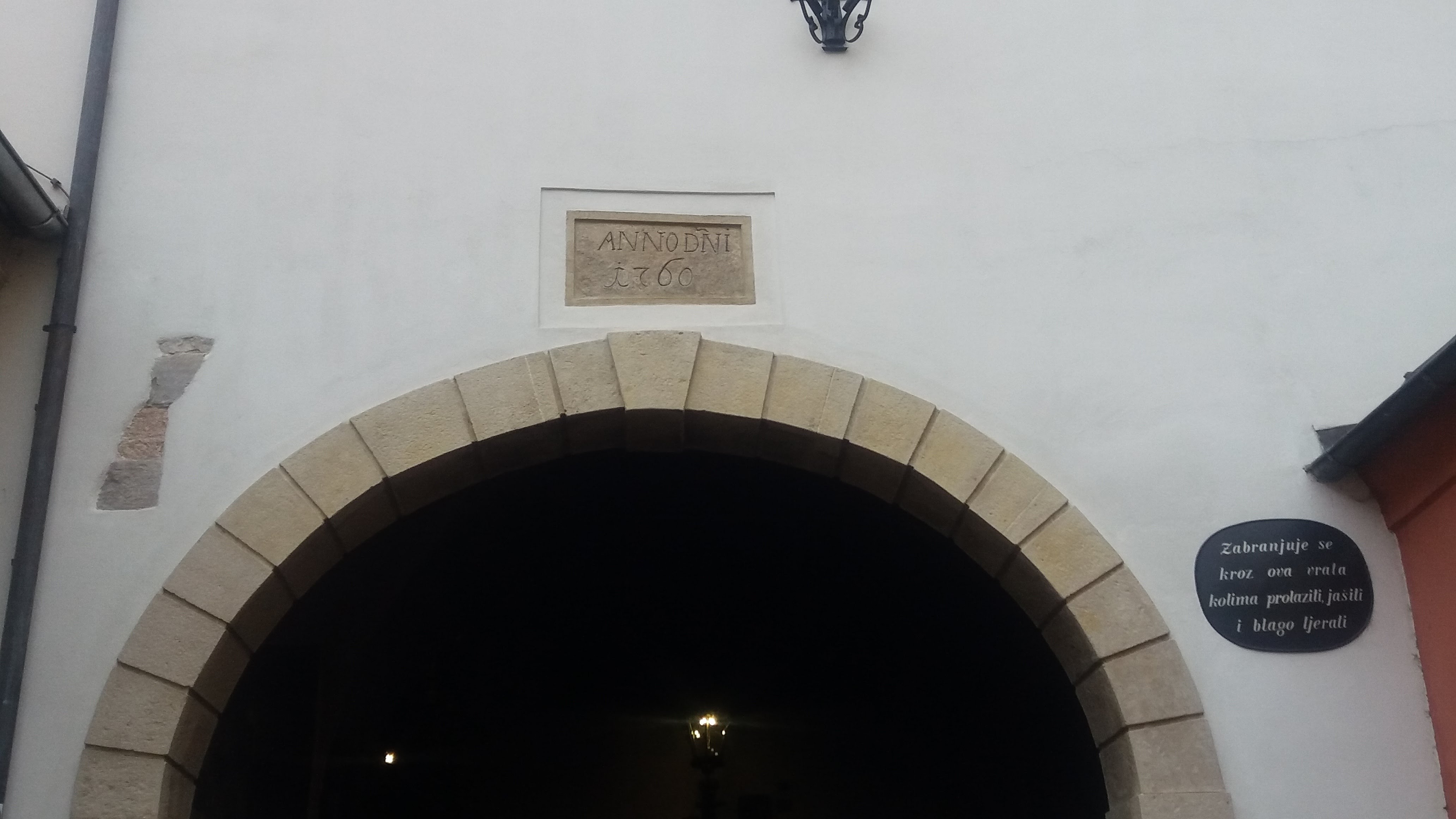
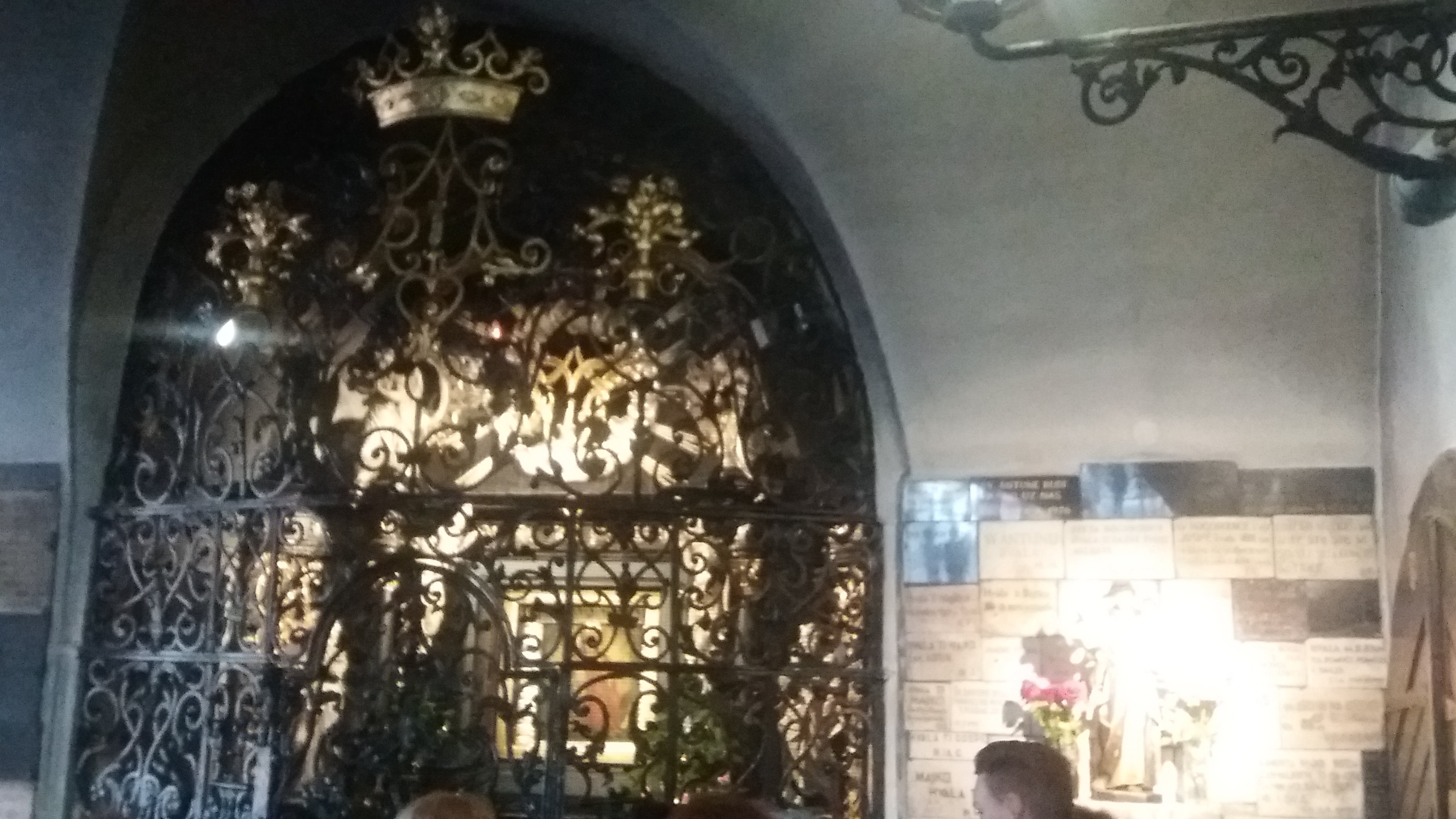
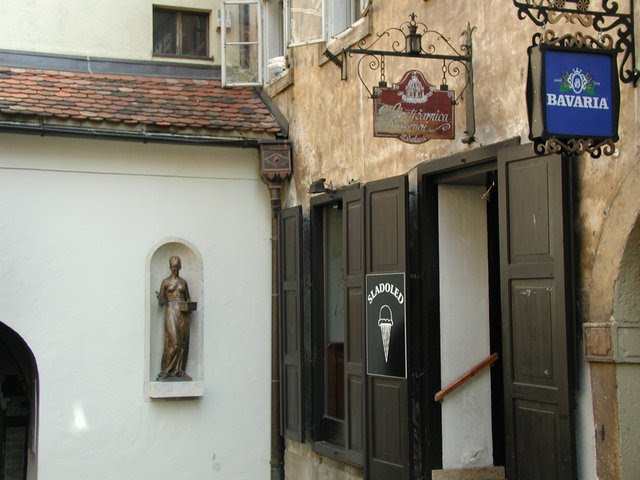
One of the most beautiful entrance to the Upper town is the Stonegate (13th century) with the statue of Virgin Mary inside of it – one of the most recognizable symbols of Zagreb. The story tells that at first there was a painting of Virgin Mary which was untouched after the 1731 fire and it was described as miracle. To commemorate the event, grateful citizens built a chapel within the arch of the old Stone Gate.
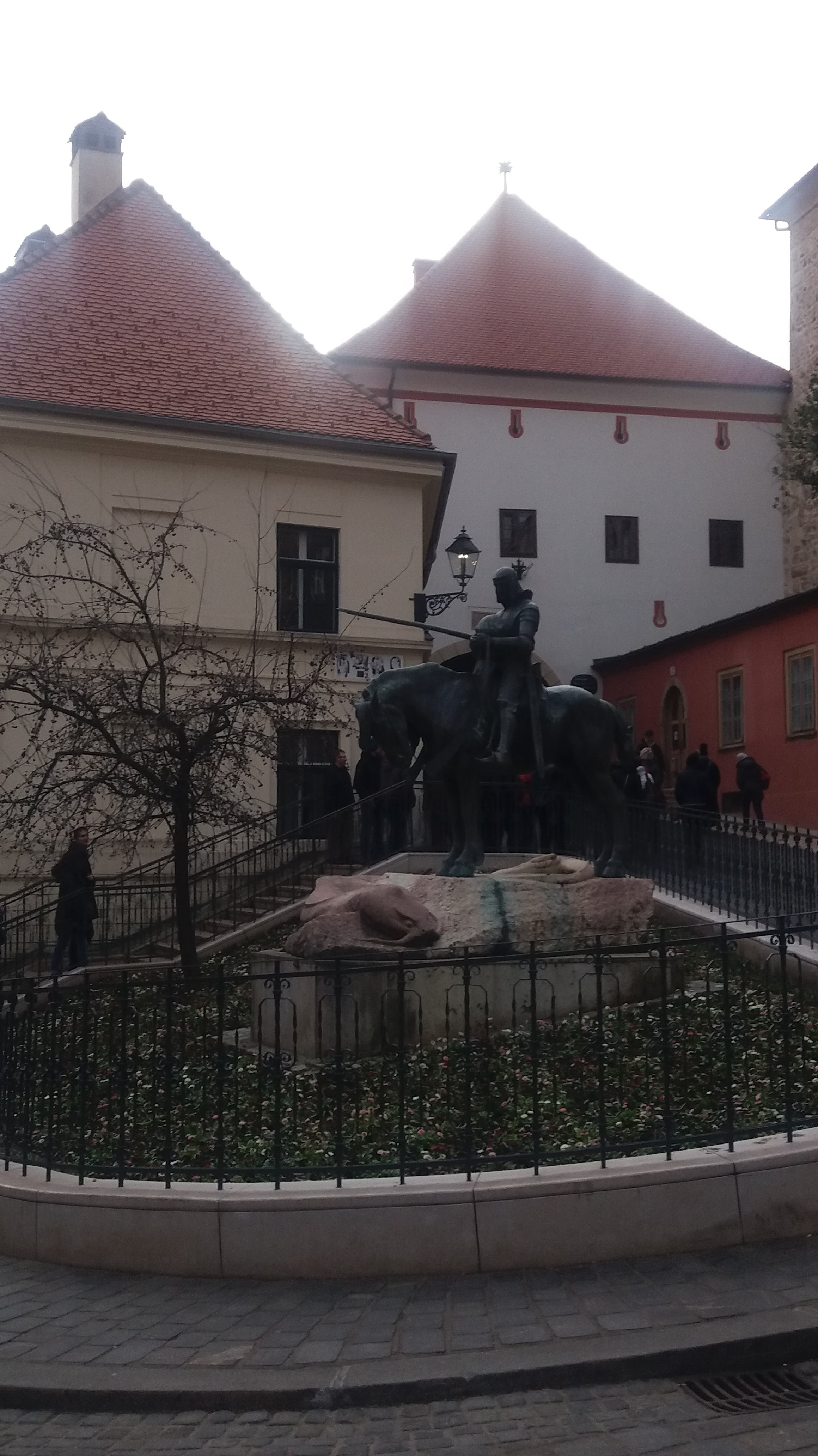
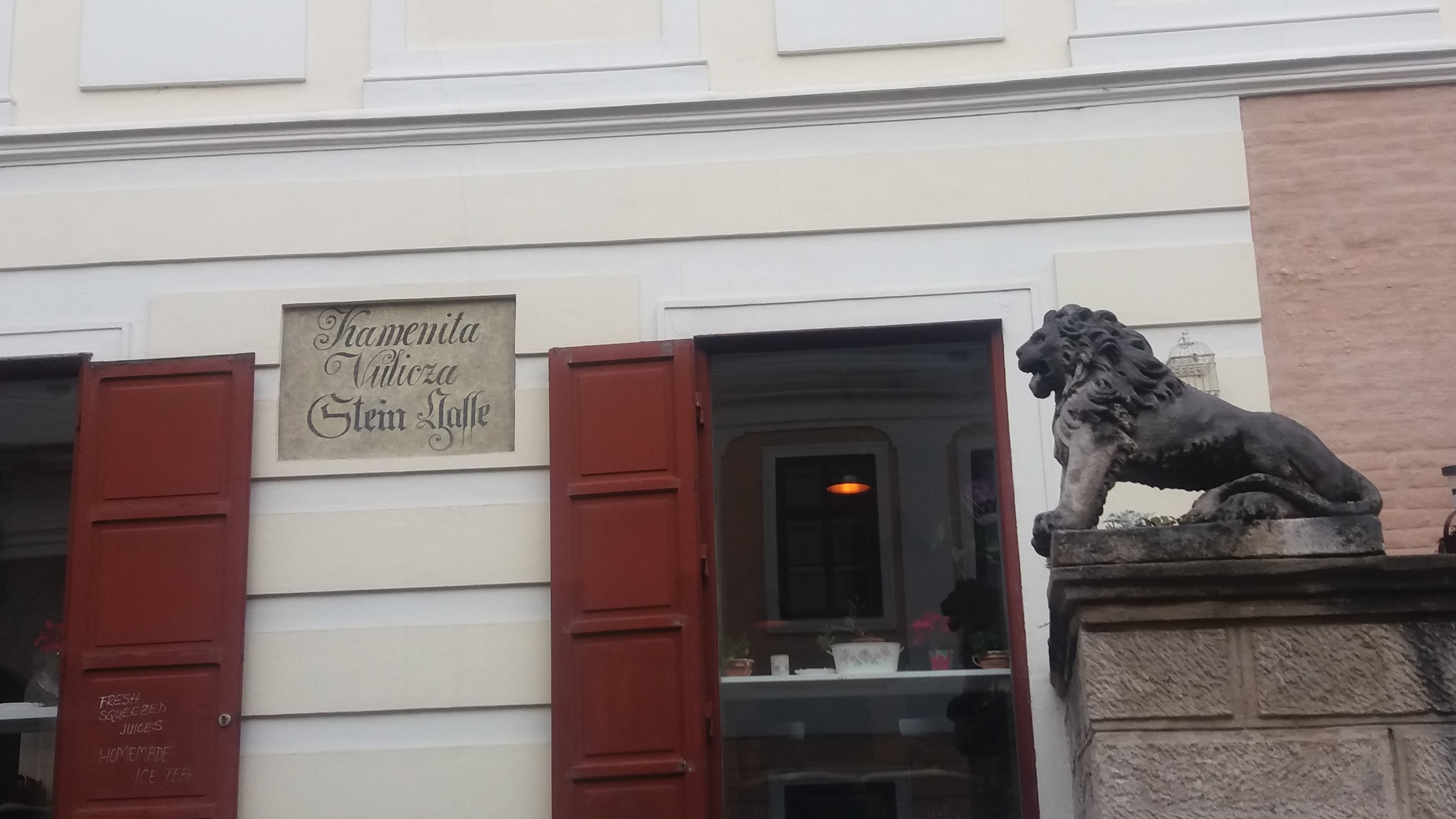
Fun fact, next to the Stonegate, you can find the lion which holds the chains from the boat of Admiral Nelson from the battle against Napoleon at Trafalgar. (the link brings you to London and Trafalgar square where I was almost killed by an ambulance).
The Upper Town Kaptol functioned as the typical European hanseatic (free) city. It became free when ungarian king in 13th century needed to escape from Otomans. The city gave him the shelter and got the Charta of the Free Hanseatic city as a compensate.
Famous Croatian writer August Senoa, 19th century, belonging to the Croatian realism in literature, described in his novels the life of poor people and the rise of the handcrafters and citizenry. One of my favourite novels in the Goldsmith’s Gold. The Treasure is actually young Dora Krupiceva, beautiful, poor but nobel. Today you can find her statue next to the Stonegate as well, holding the keys of the gates.
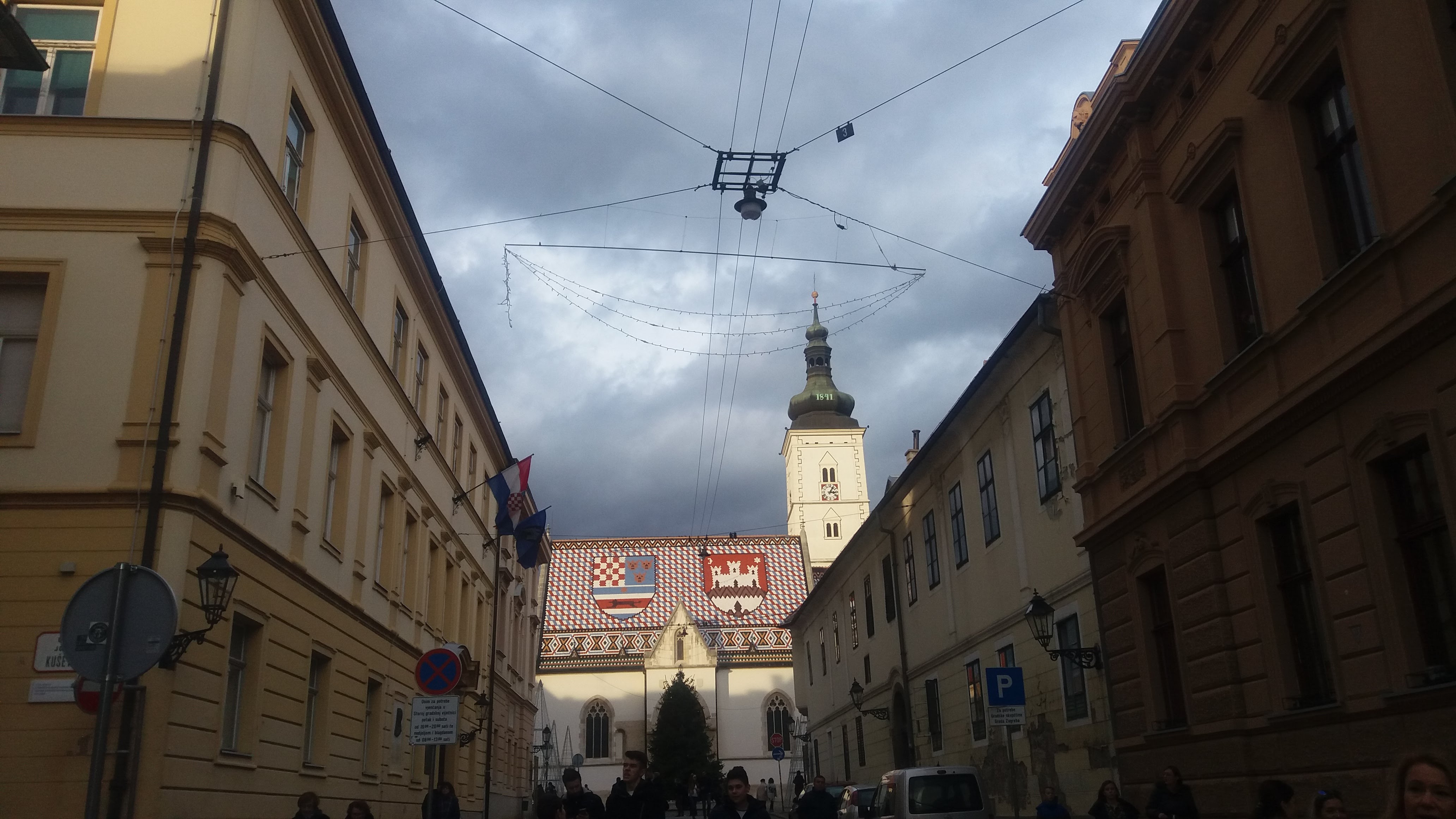
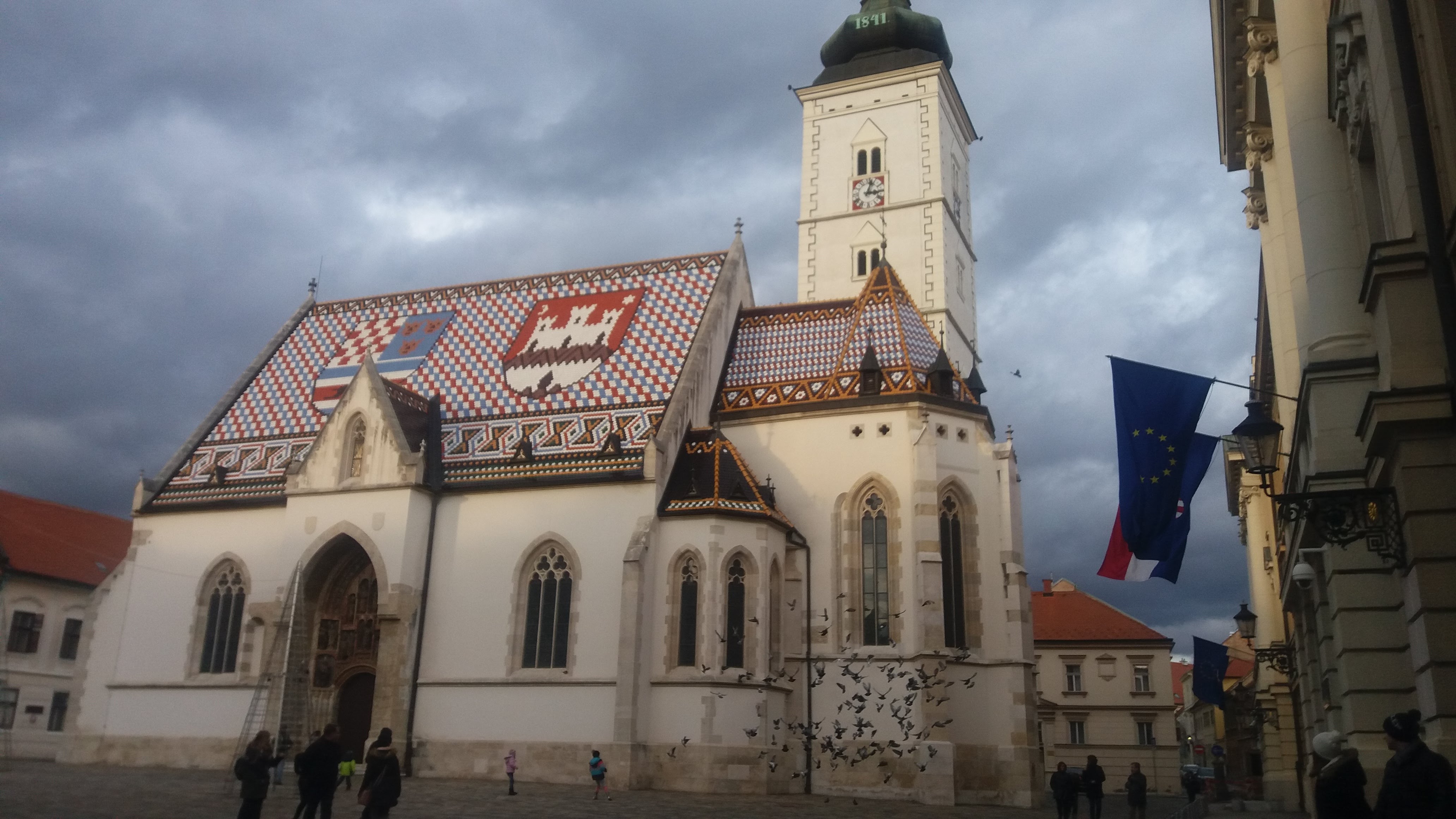
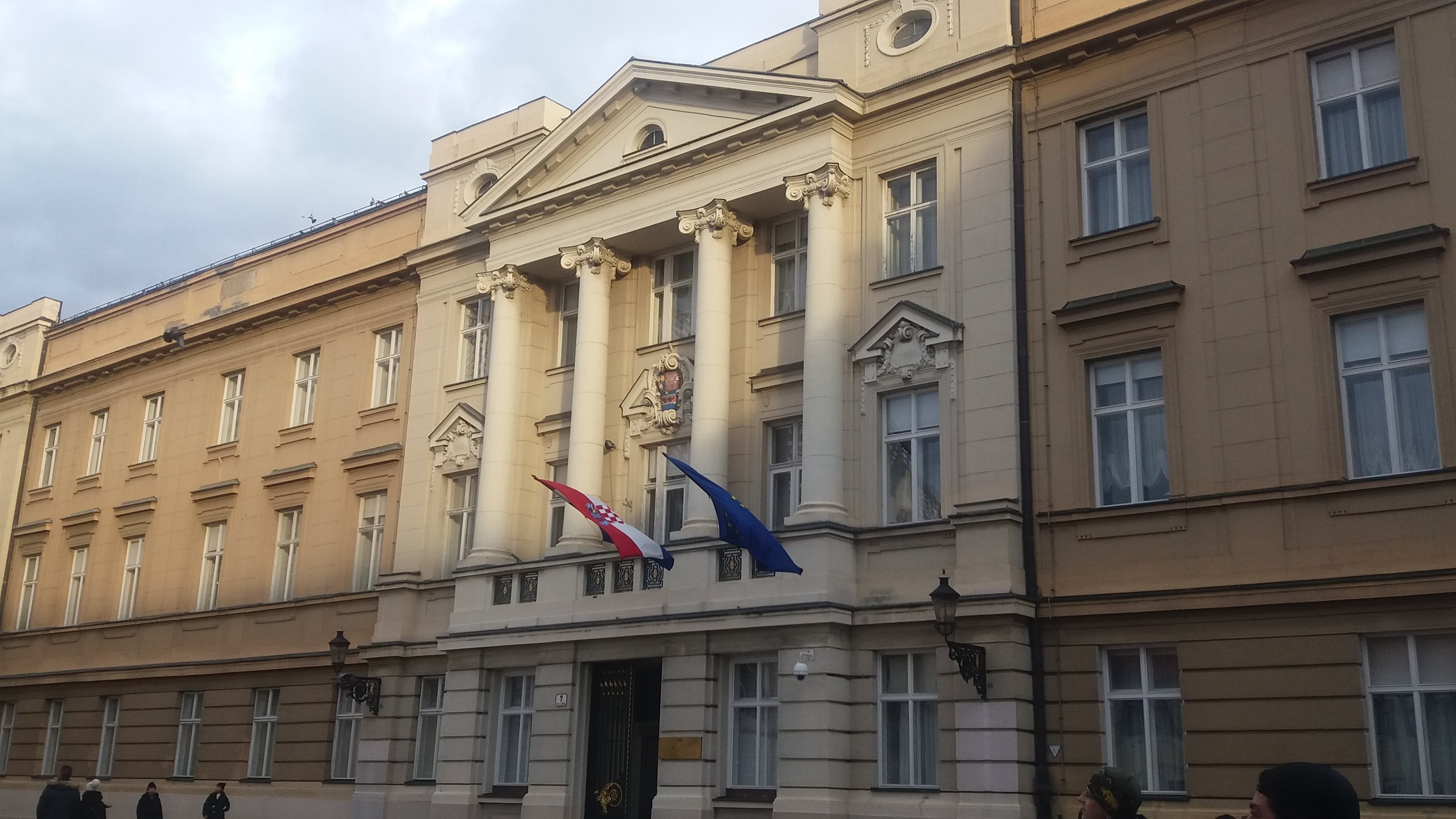
The main square of Kaptol is St Marko’s Square where is the Parliament and the Government of Croatia. Less important than the beautiful St Marko’s Church from 13th century with the oldest Coat of Arms of Zagreb (on the rooftop).
Very similar stories about the citizens of Kaptol of its time were written by Marija Juric Zagorka. She was the woman ahead of the society, publishing her novels under man pseudonym. Her famous stories about the women who were accused for witch crafting are all over the Upper Town. The legend says they gathered around the Tower of Lotrscak.
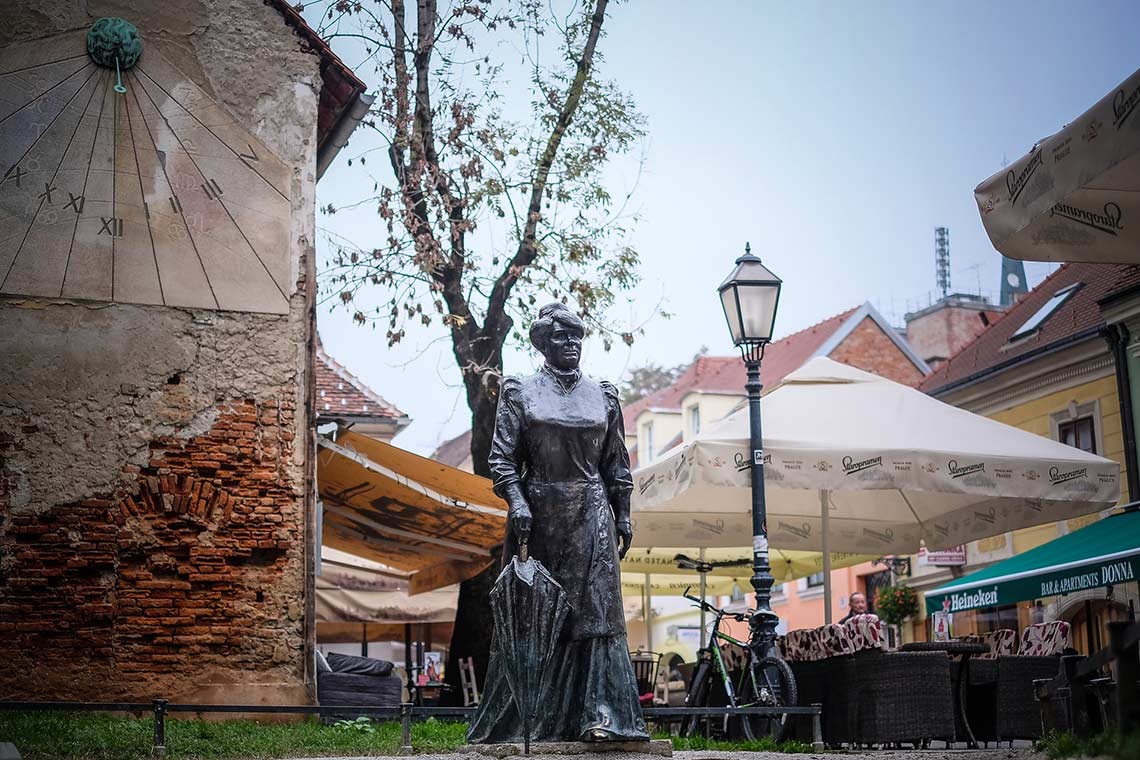

Worth to mention here that every day at noon, the Cannon of Gric breaks in the memory of the Victory over Ottomans in 15th century.
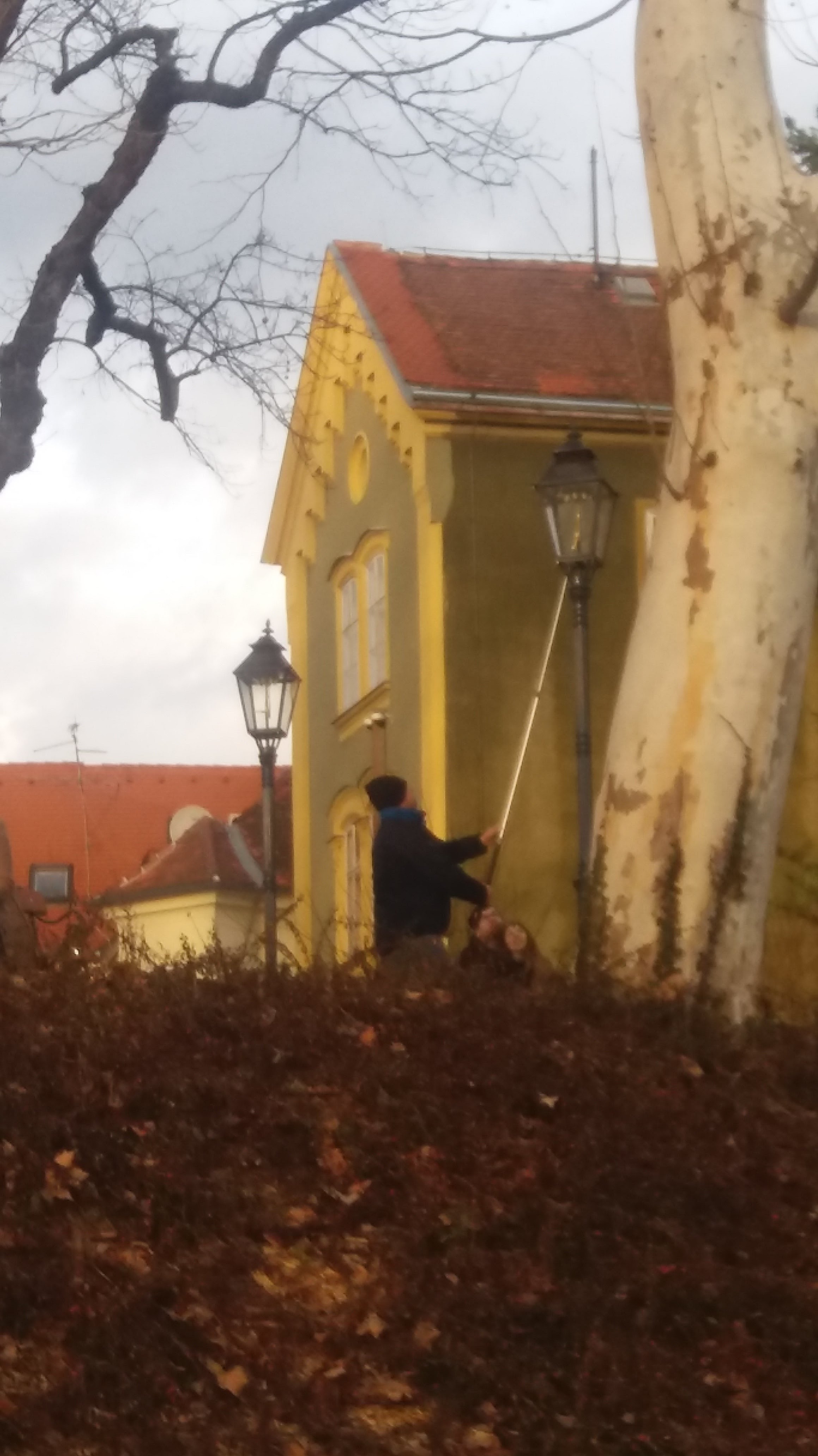
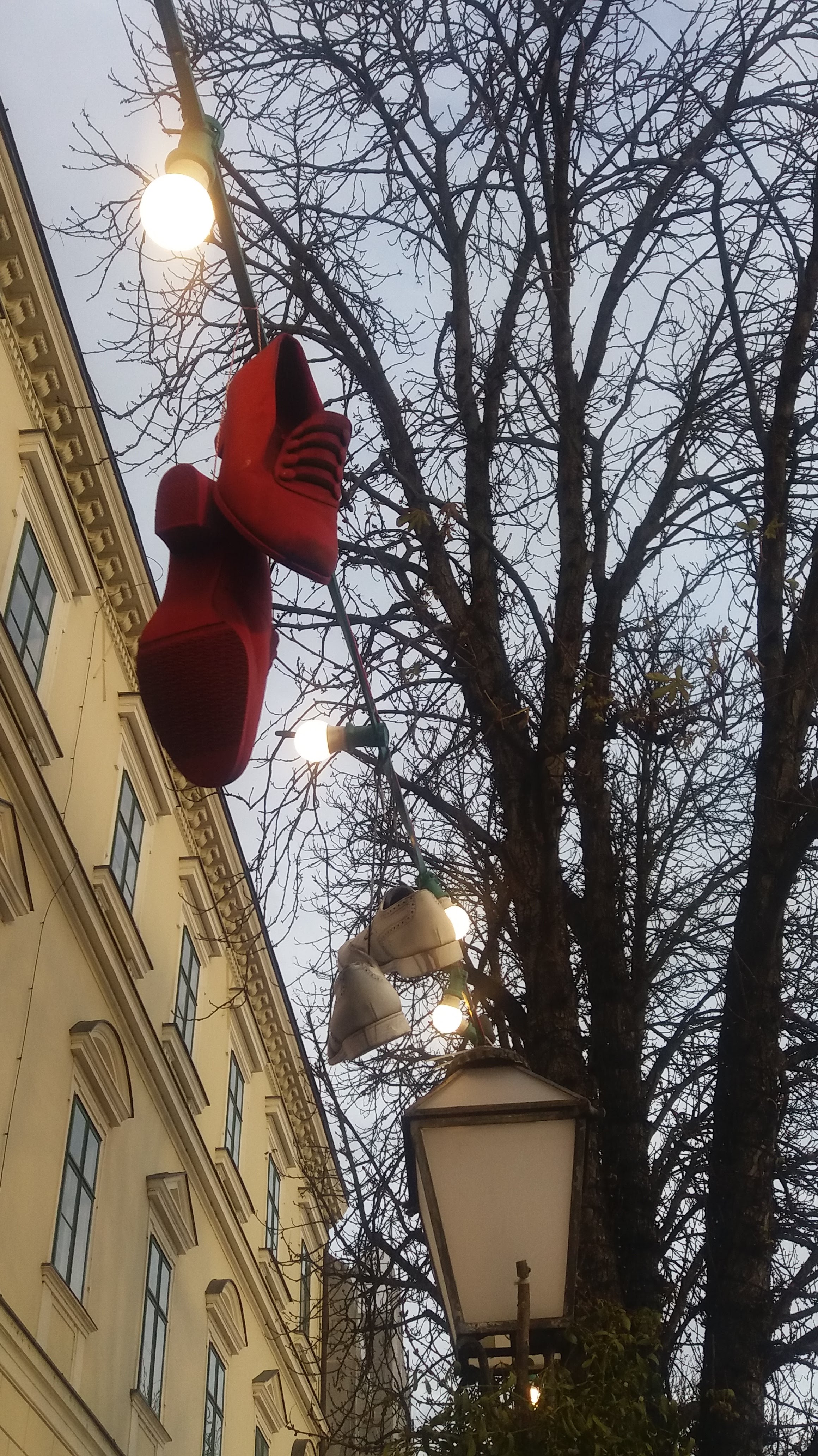
Upper Town is famous by its narrow streets and the extra nostalgic moments give the lanterns. The profession of the person turning on the old lanterns laterns still exists in the Kaptol. O tempora, o moris…
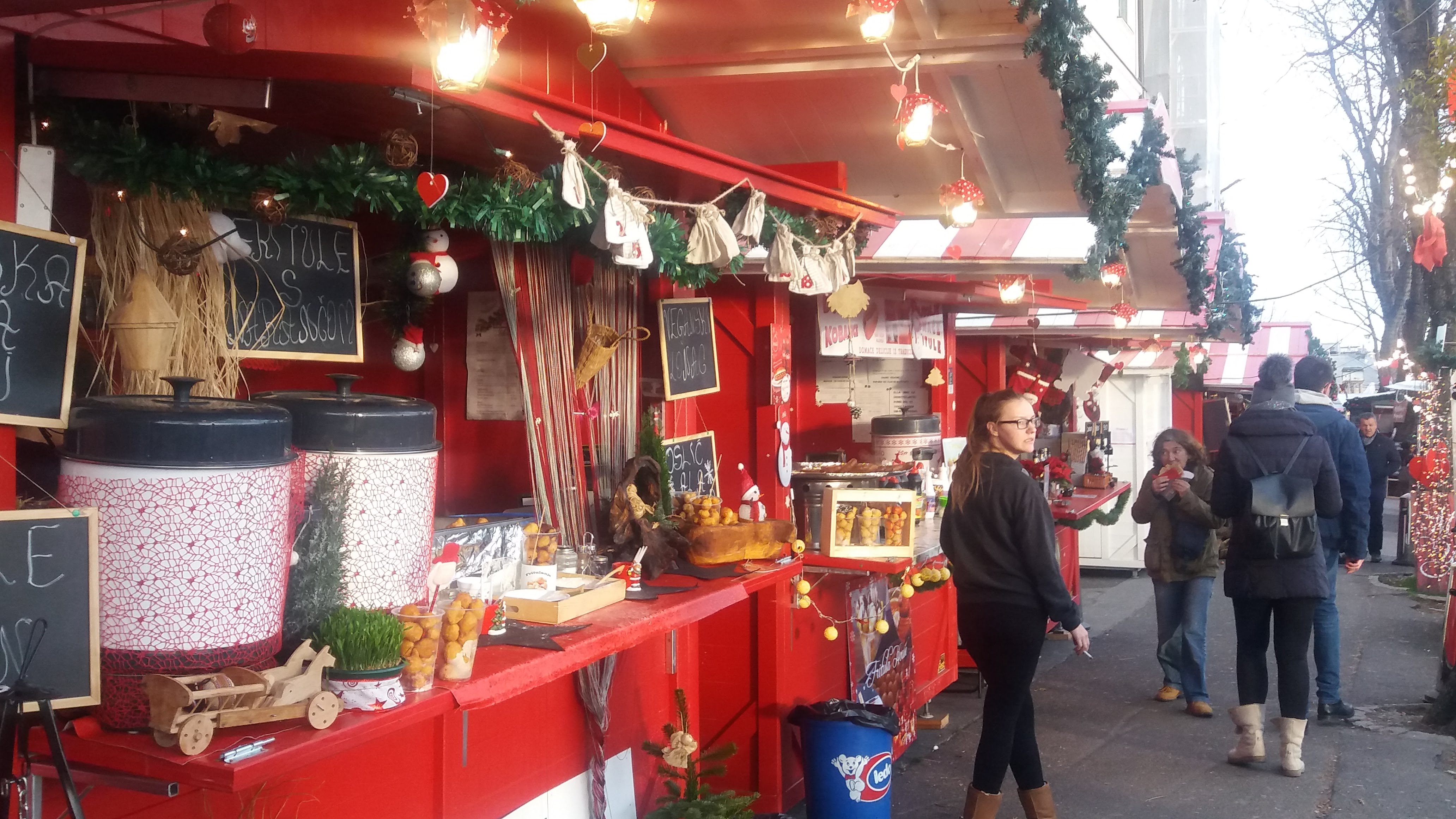
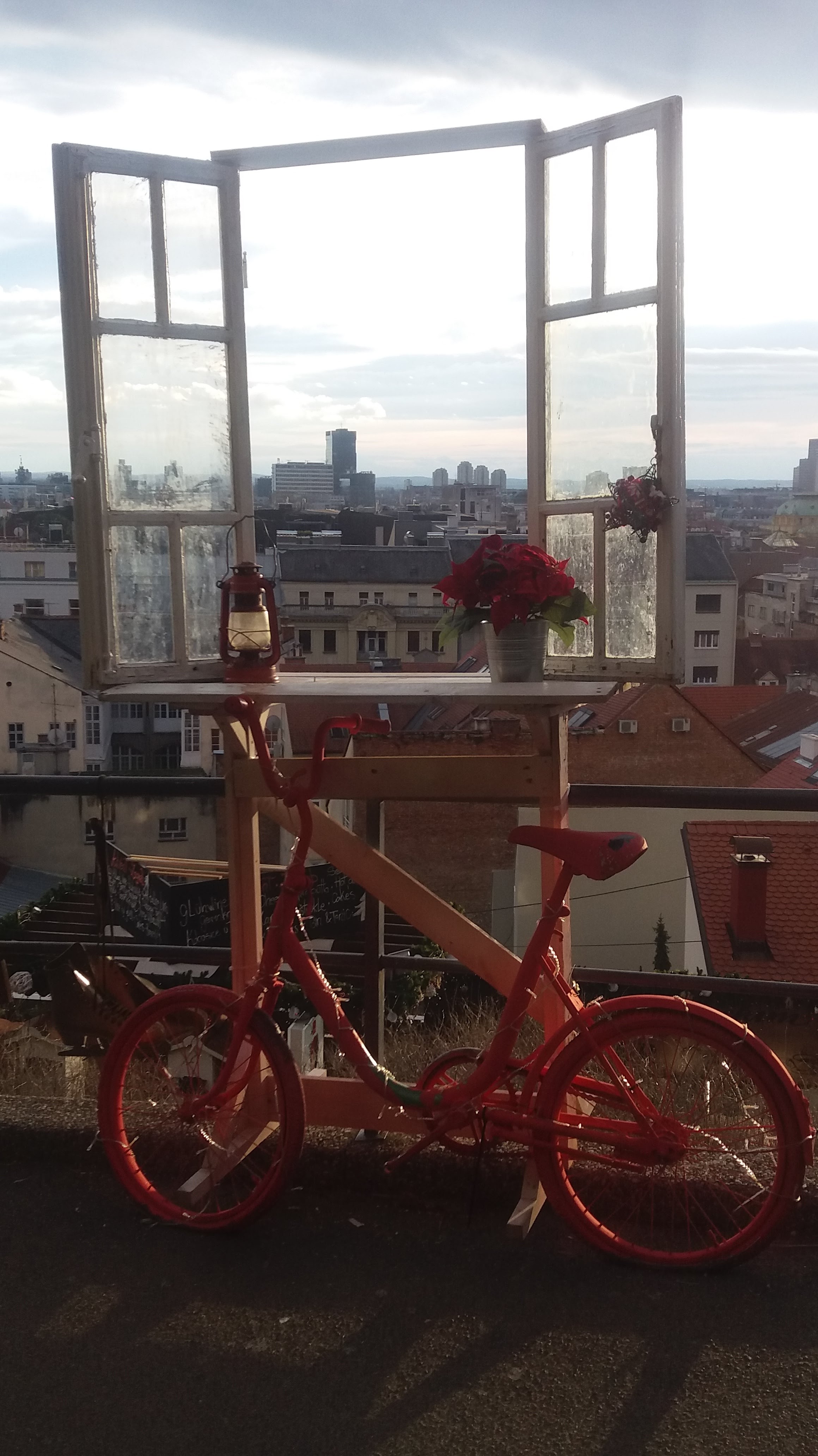
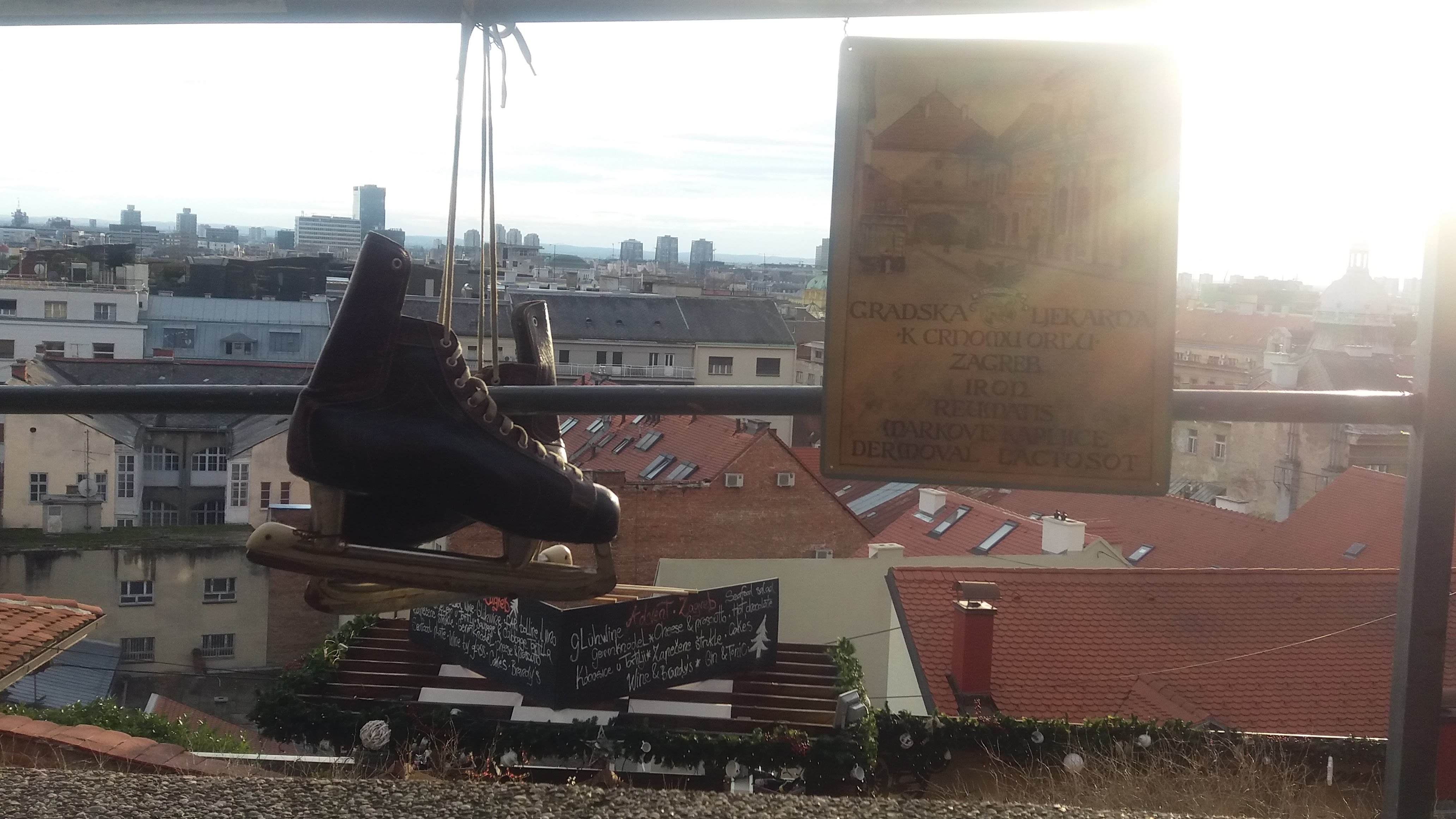
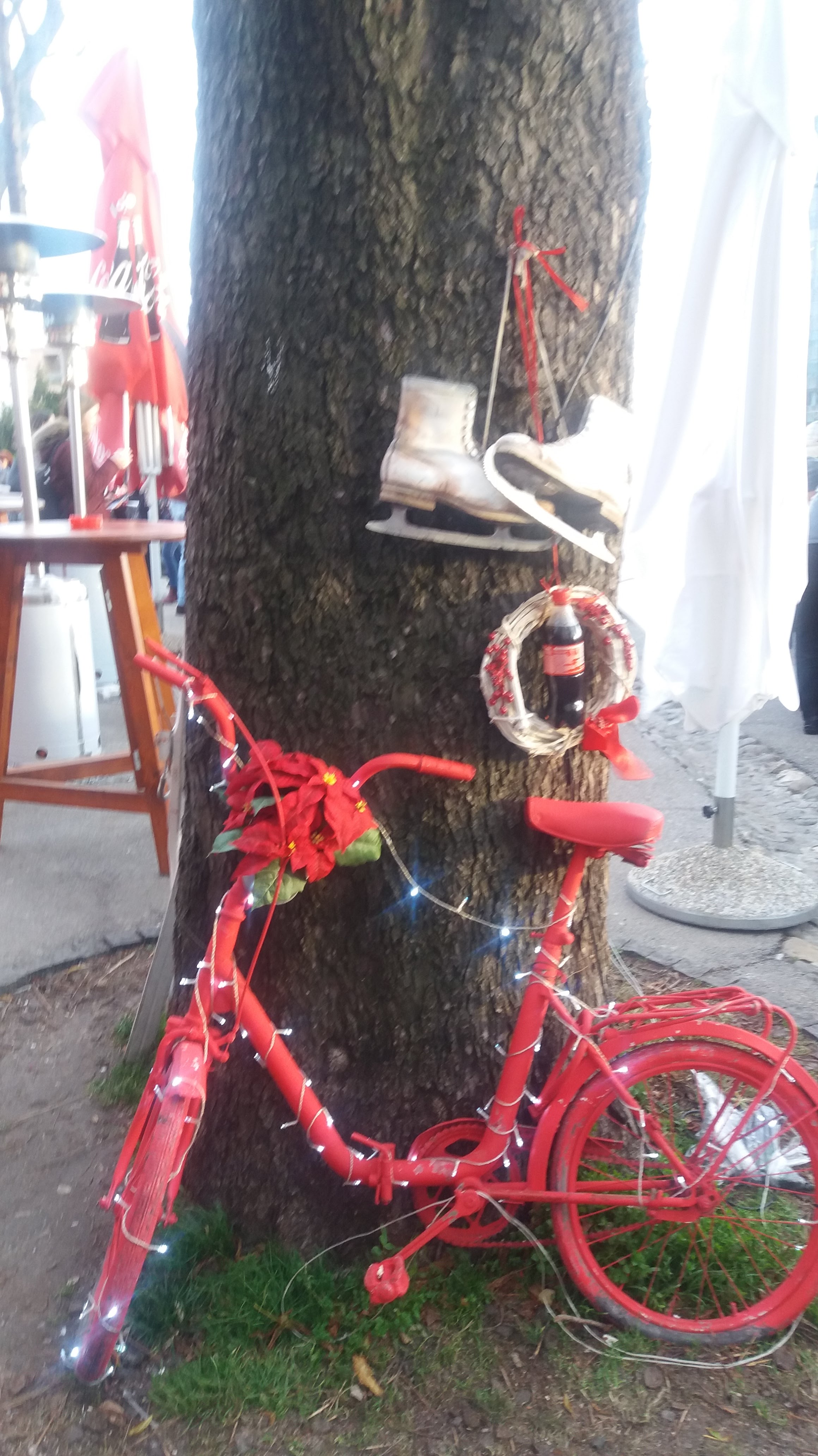
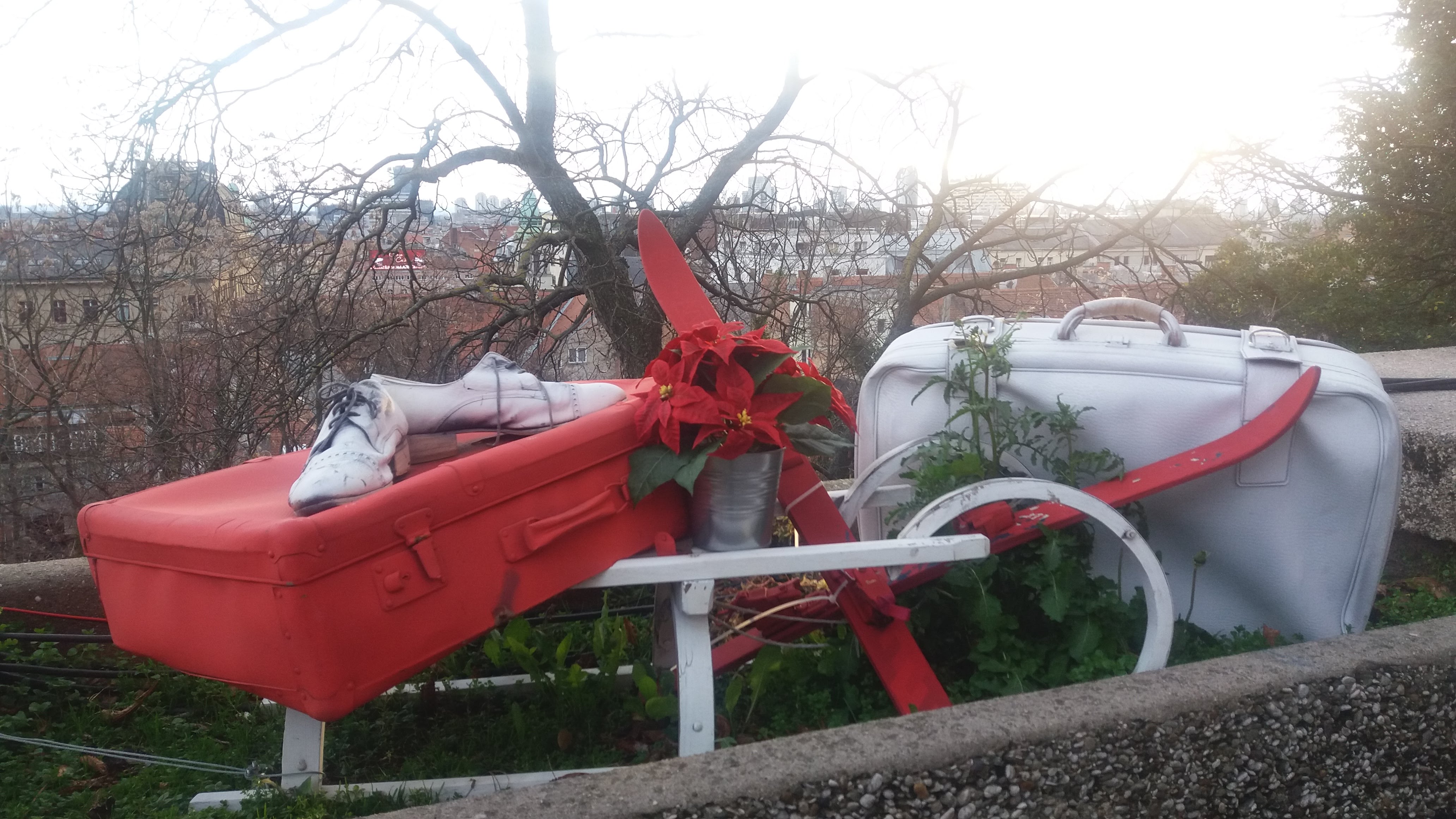
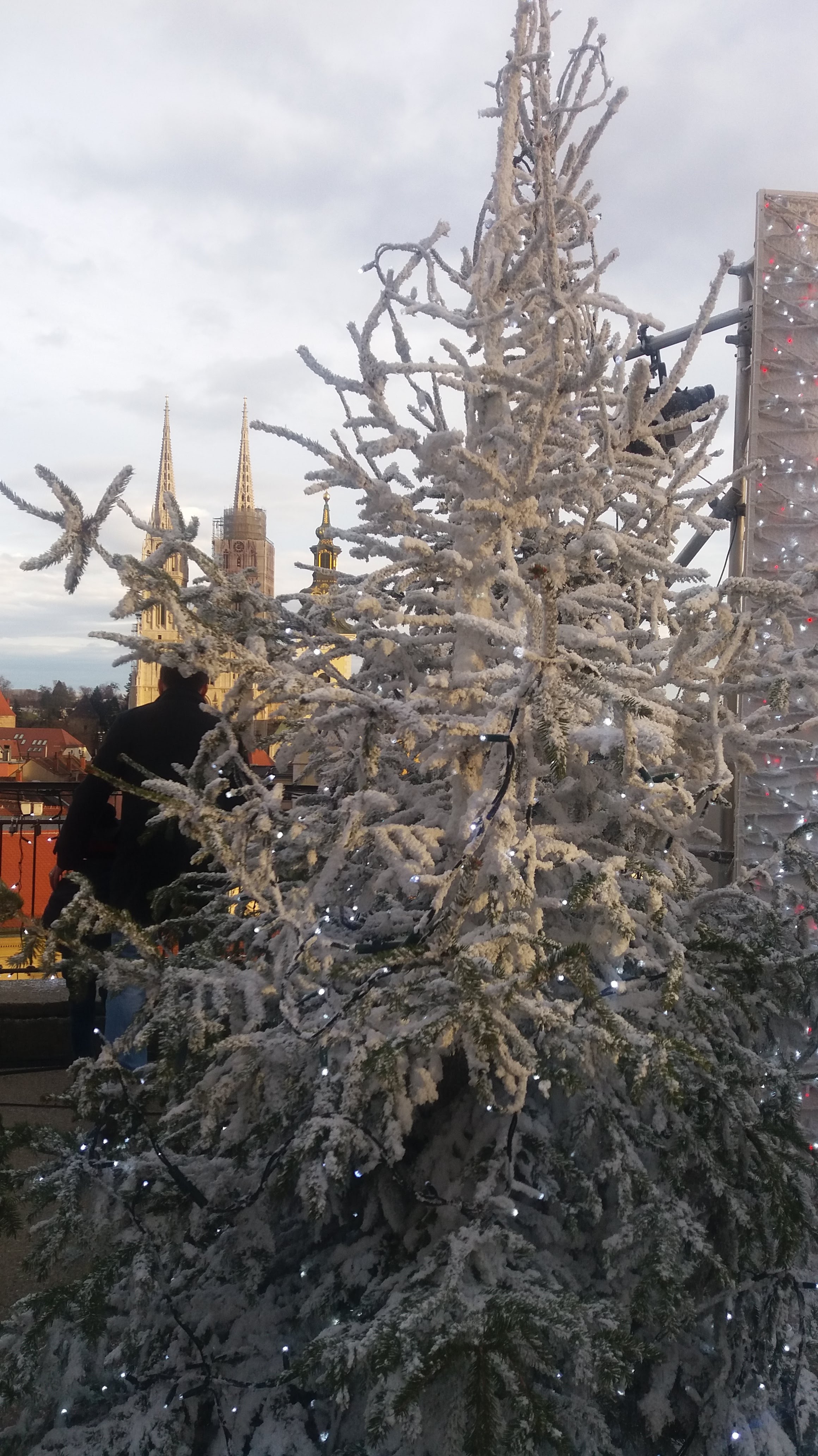
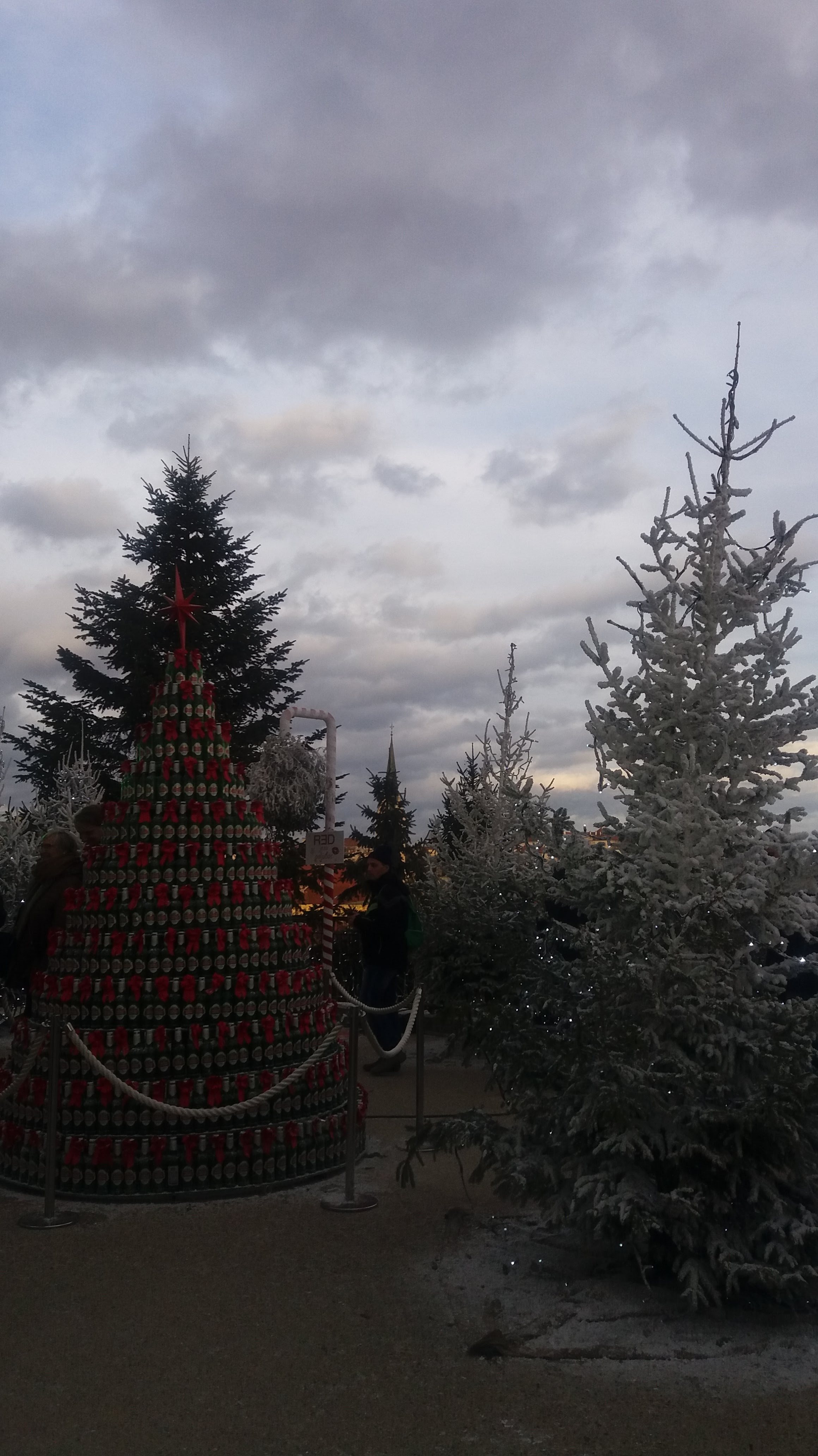
The best part of Advent in Zagreb is happening just here, at Kaptol, at Strossmayer’s promenade with the wooden houses, view on the city and the snow white – red decoration of the 1920’s when Zagreb started to breathe in its own way and citizenship to fool around.
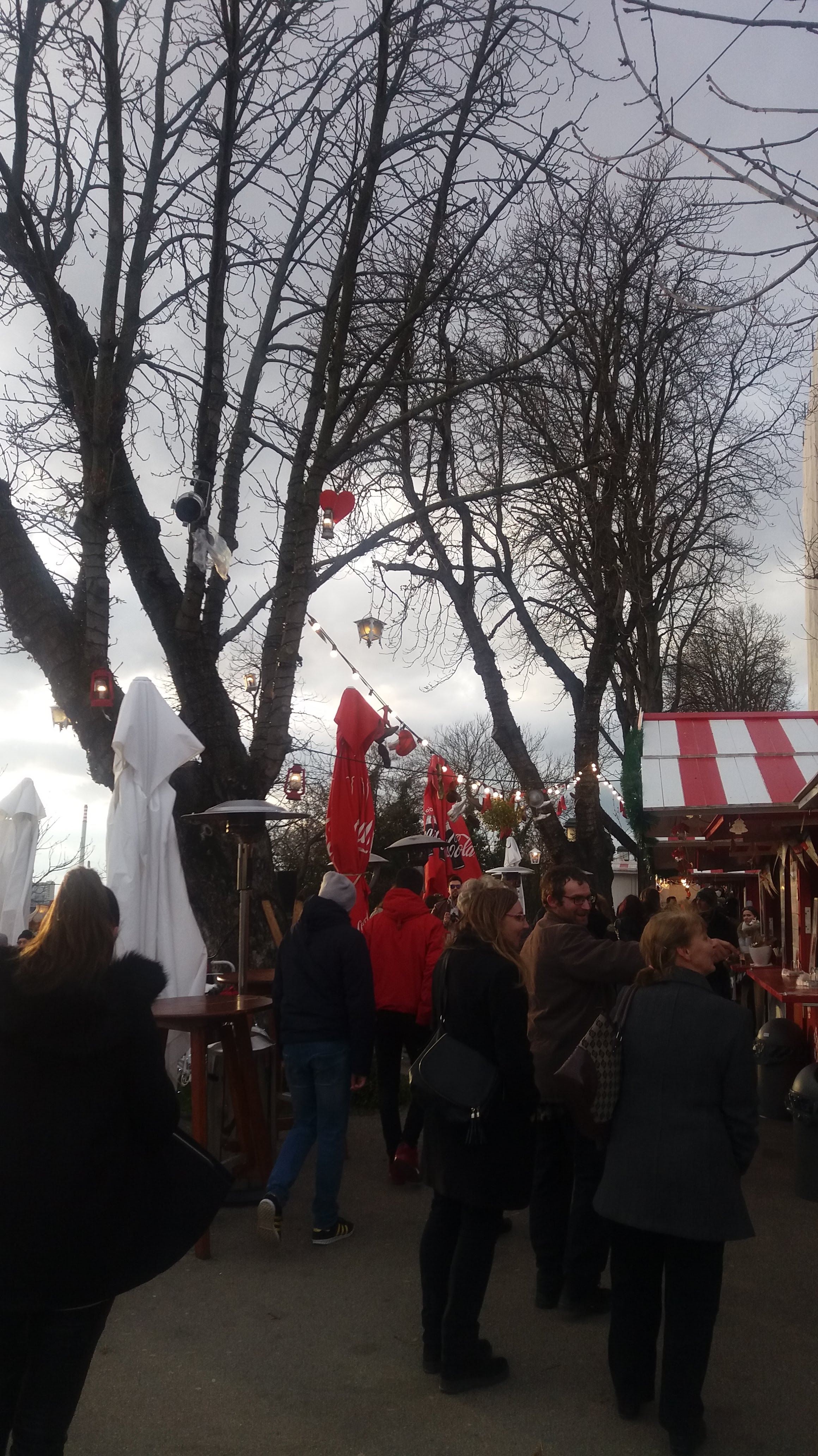
You can enjoy the view on Lower Town Gradec and New Zagreb (developed in the times of Yugoslavia as of 1950’s).
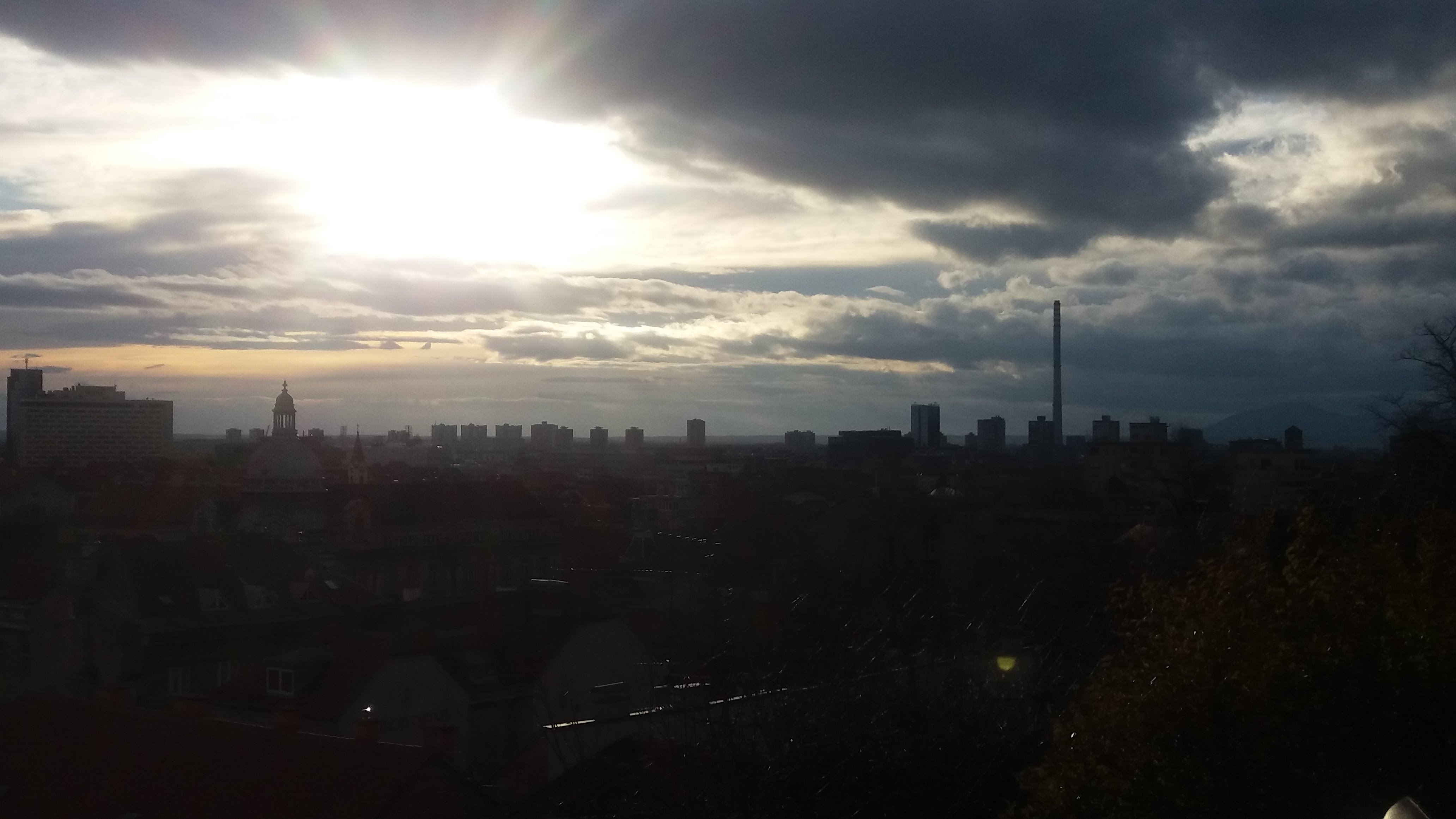
I enjoyed every detail capturing the moments and getting inspired for my Instagram story.

Once more, the Cathedral from here:
Very important thing and famous Croatian brend from the Kaptol is Museum of Broken Relationships. Nowadays the exhibition is all around the world with many broken hearted contributors, but it all started from here. My favourite item is the bicycle. After the break up, the girl didn’t have courage to get him back. After some time, she visited her ex, sat on the bike and drove out of the relationship. It was liverating for her, she said.
After the walk at the Strossmartre, we were going back down towards the Lower Town Gradec. On the right side is the World War II Tunnel now decorated with many colourful storytelling decorations. Every other day the choirs are performing too.
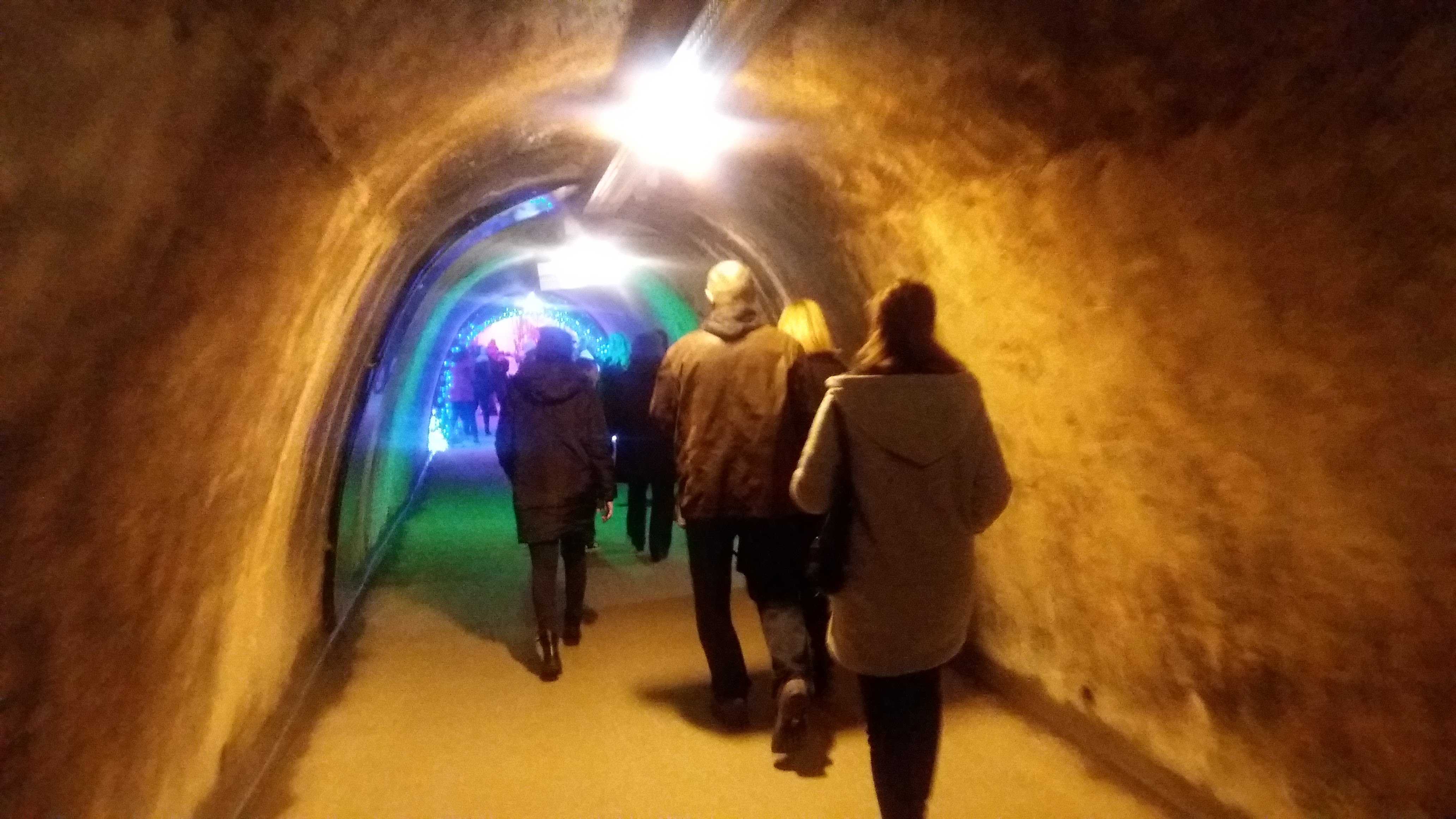
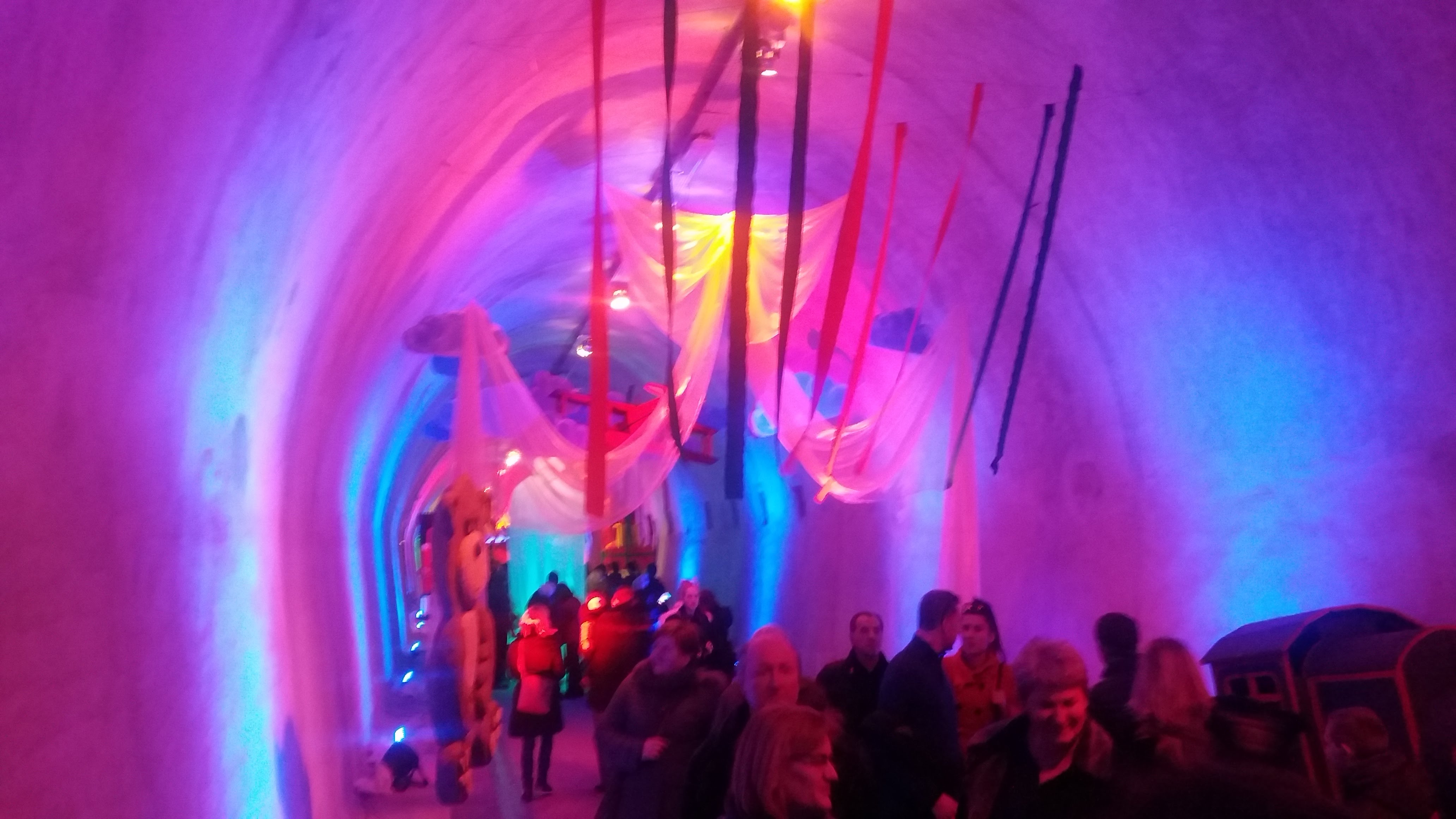
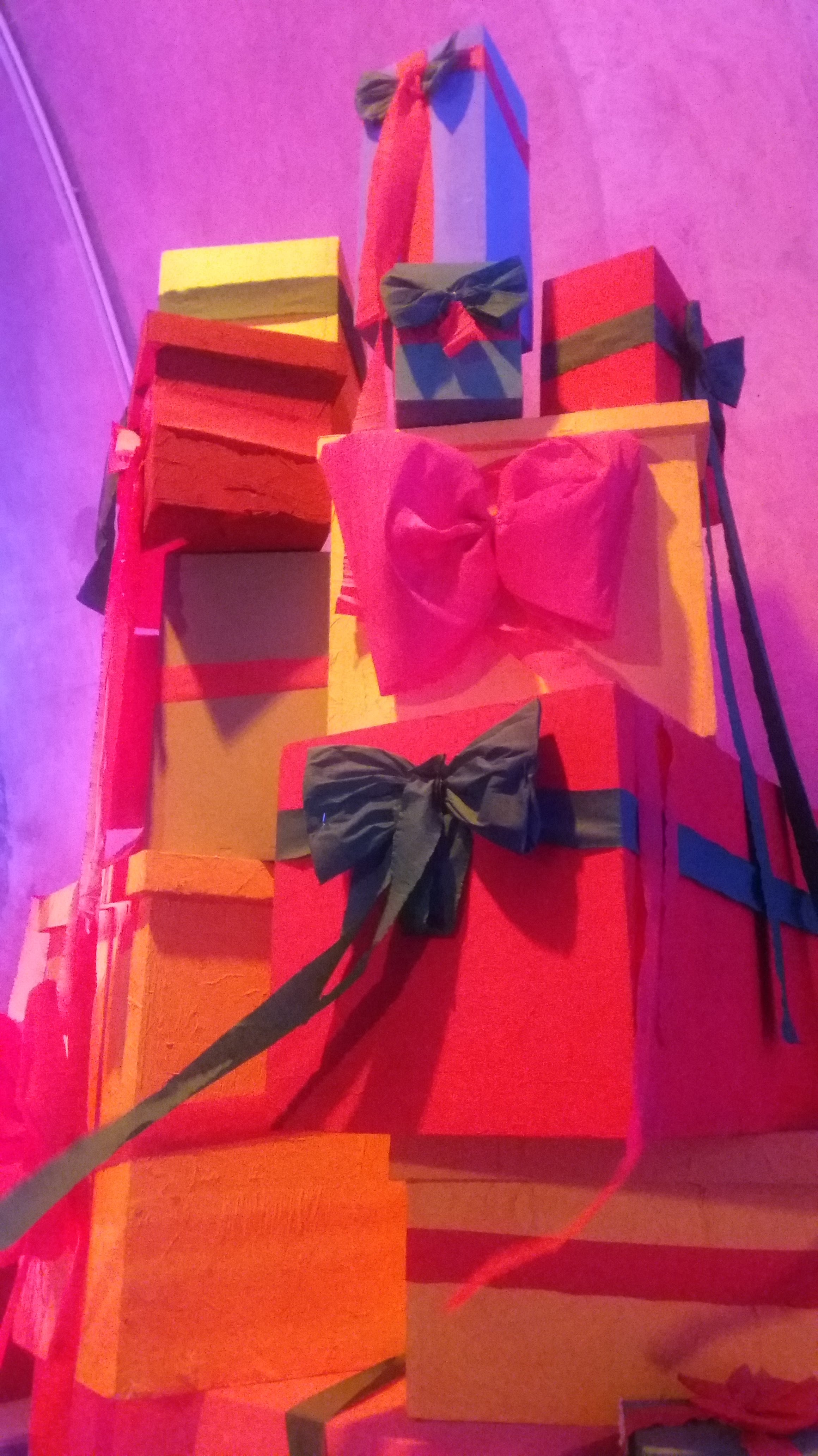
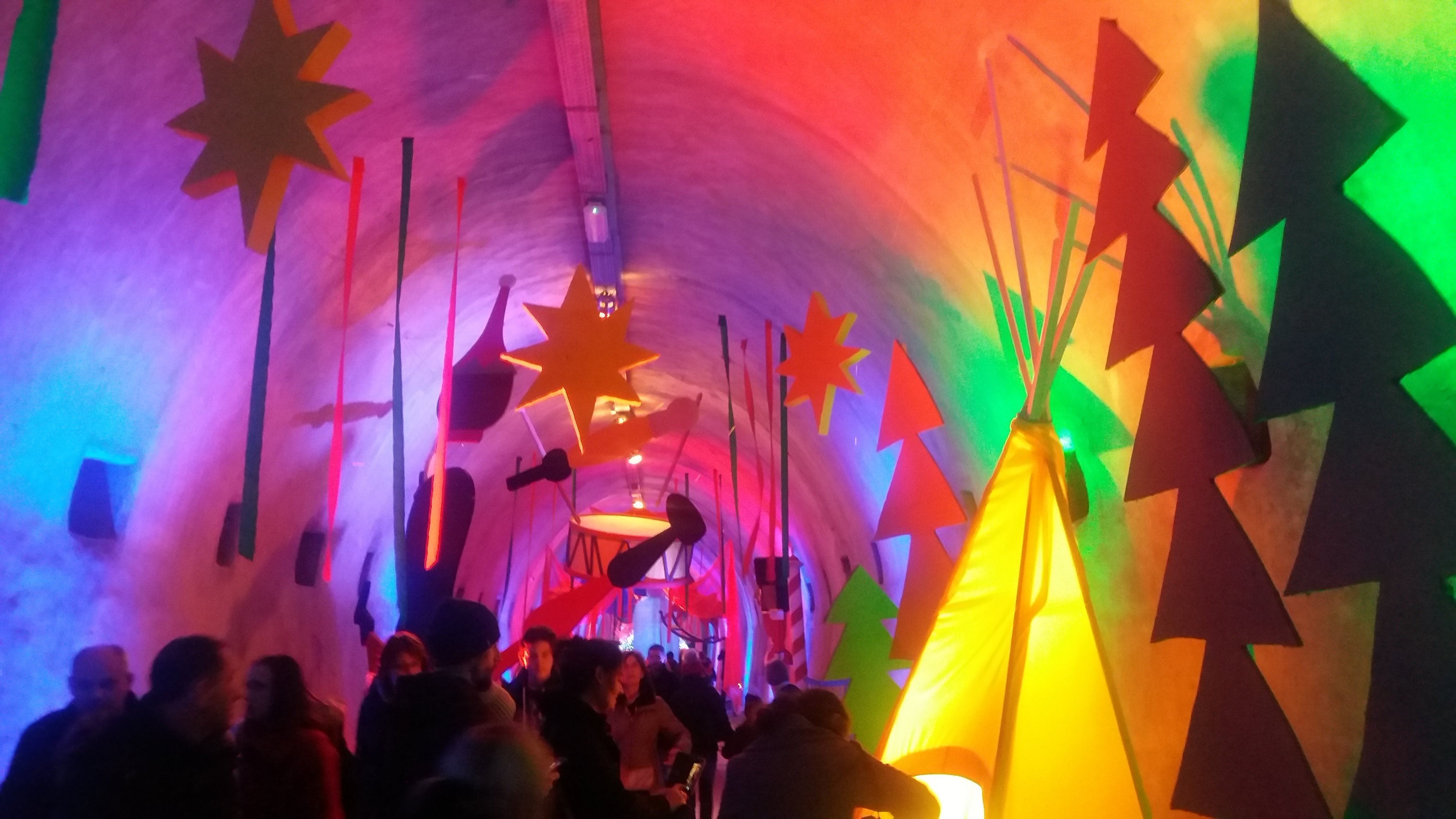
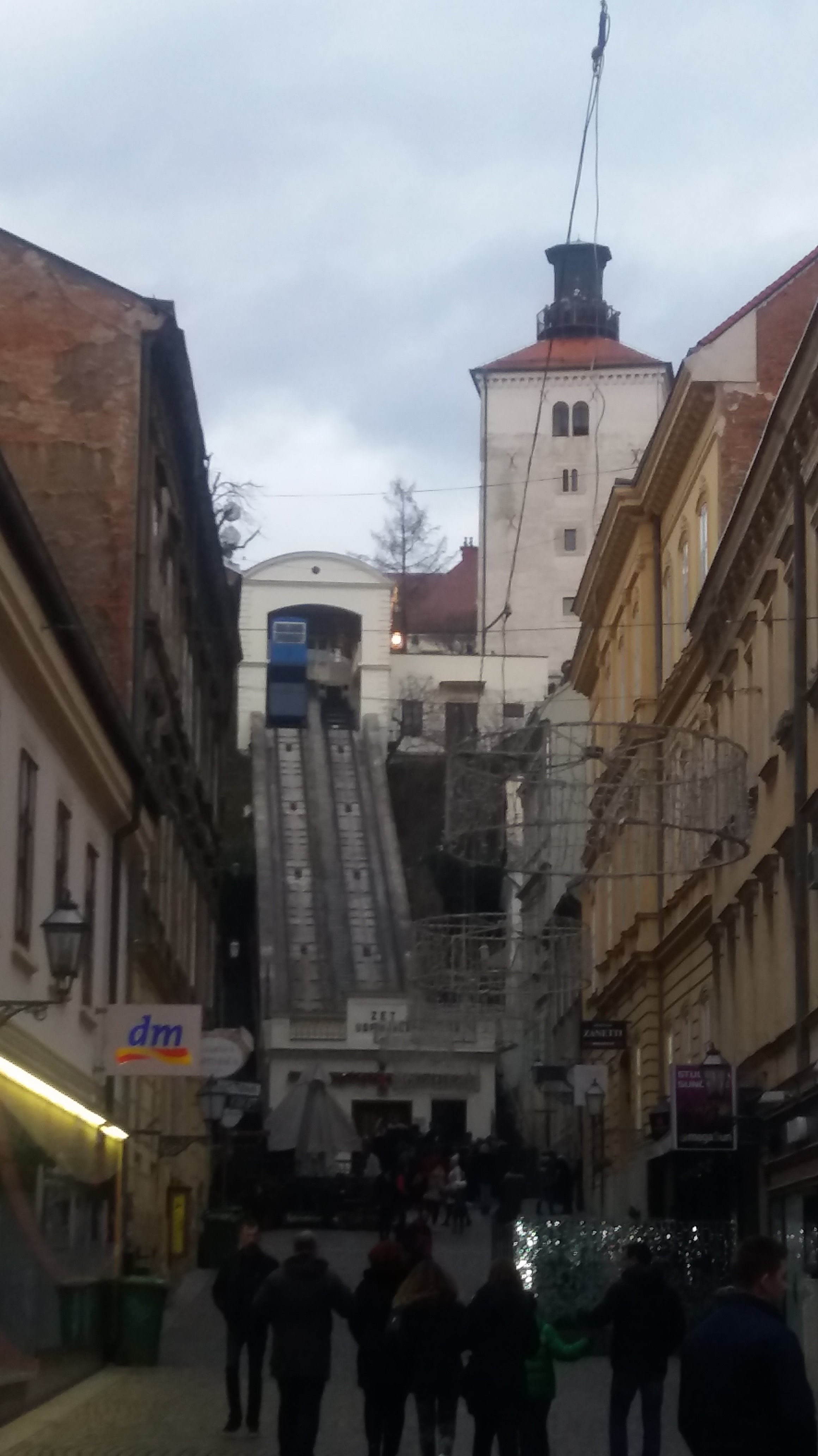
The tunel is T-shaped so one of the exits is at the funicular. The shortest funicular in Europe. It brings you back to Kaptol.
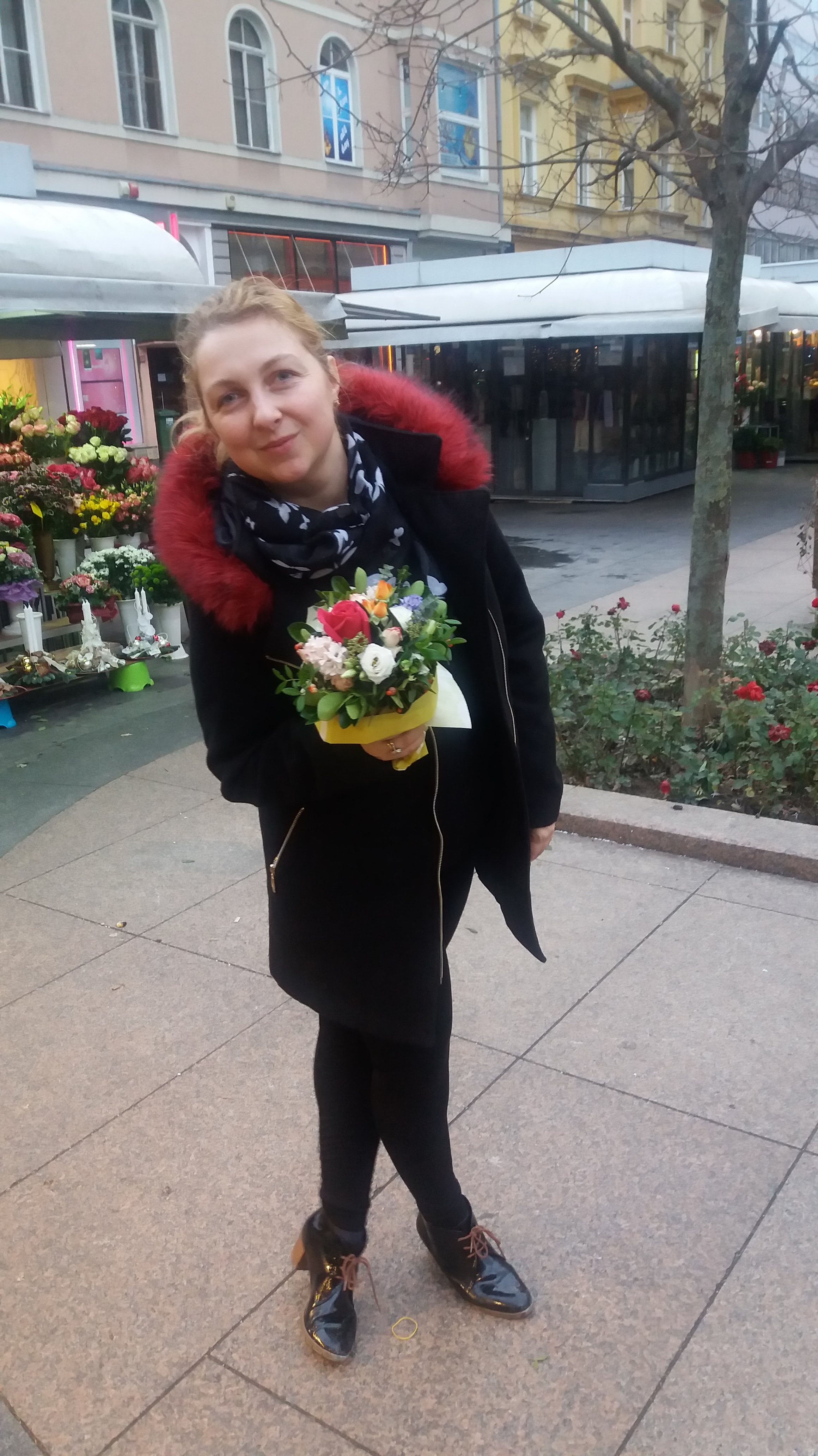
We continued going down down to Gradec to visit the nearby Flowered Square (even tough it is not its official name, but the citizens call it Cvjetni trg – because of the many flower shops there). Also, this is the place where many popular Croatians drink coffee and spend their time, especially Saturdays. It is also the so-called Spitza, meaning the celebrities peak when many journalists go around with their camera too, looking for some paparazzi shots. If you’d like to be seen, be sure you put some fashionable clothes and you will end up in magazines as a fellow stylish Croatian.
Personally, I just bought myself a bouquet, the so called puslec.
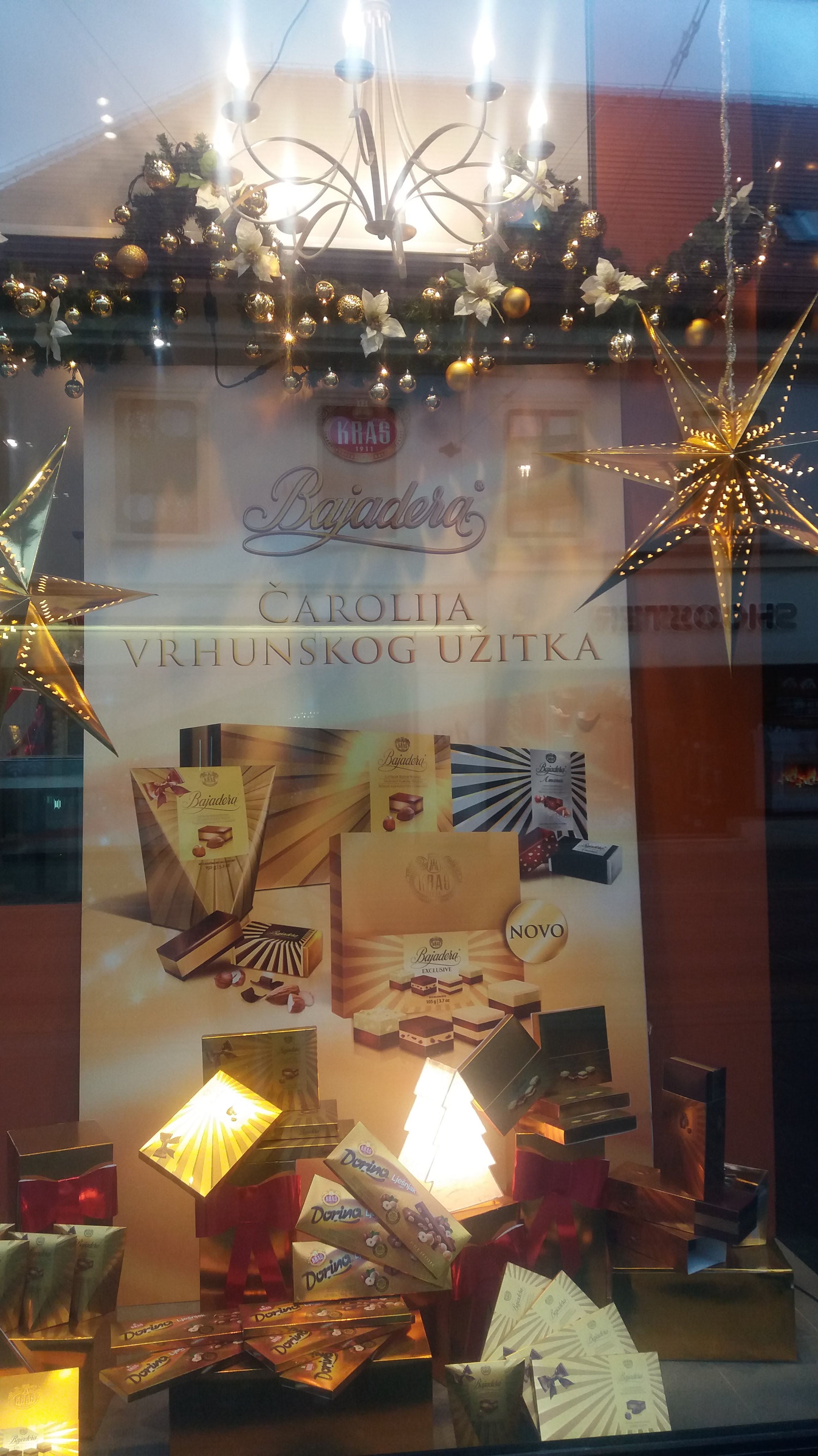
We finished our day at Kraš bomboniere bar having a hot chocolate and trying typical famous chocolates Bajadera and Griotte. Mr Kraš used to be in love with the prima balerina Bajadera from the Croatian National Theatre (also built by Habsburgs) so he named his chocolate after her. Thee romantic Croatians! 🙂

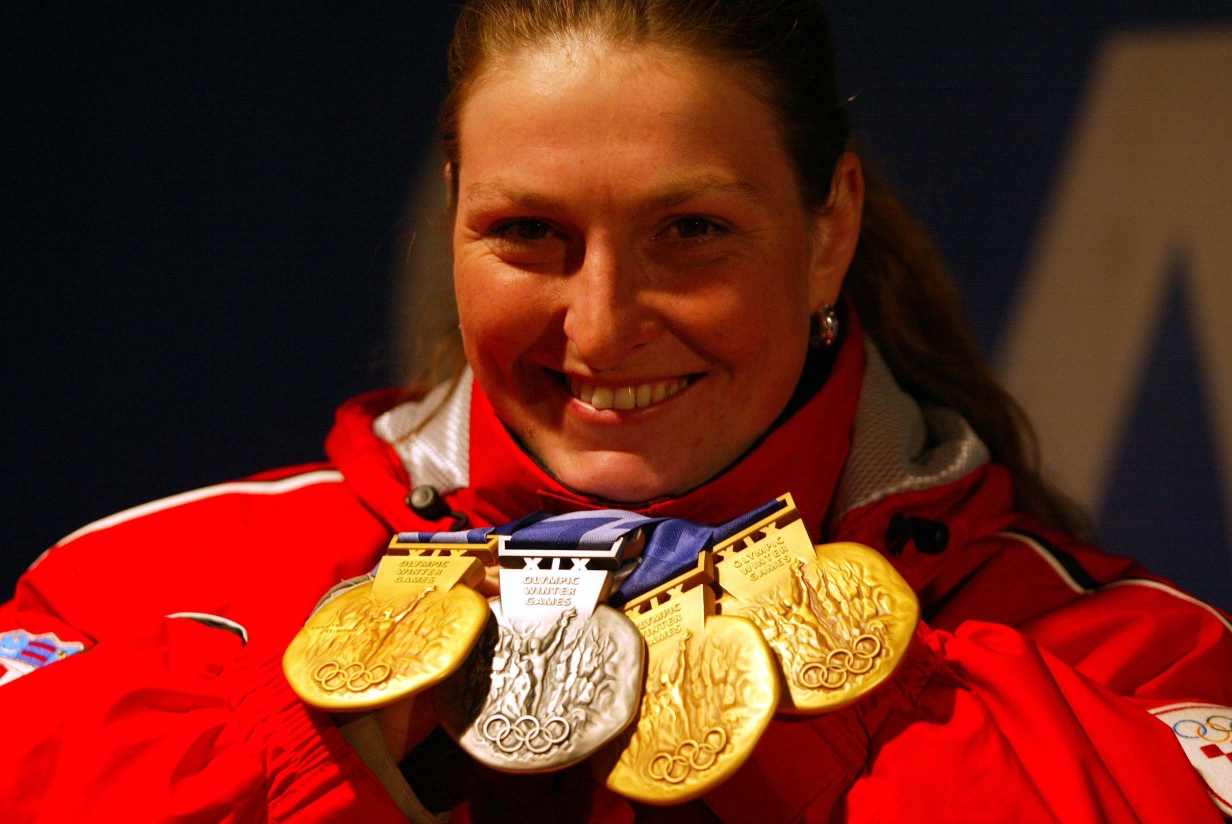
Croatians are also very proud on the best ski driver in the history of skiing. Her name is Janica Kostelic, she won the several World Cups, becoming one of the three women ever winning thge World Cup races in all of the sport’s five disciplines.
Kostelić is the only woman to win four gold medals in alpine skiing at the Winter Olympics (in Salt Lake City 2002 and Torino 2006), and the only woman to win three alpine skiing gold medals in one Olympics (2002).
Thanks to her, the World Cup named after her: The Snow Queen Trophy is brought to the Sljeme Peak and Medvednica mountain- favourite destination of Zagreb citizens during the summer and winter time as well. They call it the lungs of the city because of the many alpine trees.
The Snow Queen Trophy is part of the Advent in Zagreb. Just ask any ski racer and they will always tell you that they have the best atmosphere here in Zagreb as the crowd is so into this sport.
This year, the numbers drawing will be at park Zrinjevac and the ski racers will come on ice skates. 🙂

 RED RIDING HOOD
Very comprehensive look at advent, wow! And wonderful photos. Thank you for sharing 🙂
LikeLike
Very lovely photos hope I can visit this place.
LikeLike
Last year I have been at advent. I love to visiting it during the working days because it’s less crowded. I especially liked the upper town 🙂
LikeLike
wow nice pictures! I always wanted to visit Croatia and so far have only seen Dubrovnik, but definitely want to see Zagreb, Split and Hvar!
xx
lau
http://www.malibluemymind.com/2018/01/games-lions-play.html
LikeLiked by 1 person
nice writeup!!!
LikeLike
I have already been to Zagreb but never in December I must say it looks very magical! Need to visit
LikeLike
Nice post keep it up
http://www.gearvideo.blogspot.in
LikeLike
As someone who really wants to travel to Croatia and a History and Politics student, this article was amazing! You wrote it so well and it makes me want to go sooo bad! Keep up the good work
LikeLike
Beautiful pictures! I especially loved all the Christmas lights. I bet those places were magical at night time! Thank you for sharing.
LikeLike
Zagreb looks amazing. Thank you for writing such an excellent and informative article. Kudos to you.
LikeLike
Very comprehensive and lovely pictures. Thanks for sharig
LikeLike
Zagreb isn’t somewhere I’ve considered visiting before – mainly because I didn’t think there was much there to do! Apparently I was wrong though, haha – I love all of your suggestions, and am going to reconsider adding Zagreb to my list of places to go 🙂 x
LikeLike
This is Great ❤
LikeLike
Zagreb is a city rich with Roman history. The architecture looks inspired from it. The city has both modern and traditional look. Thanks for sharing details about the city.
LikeLike
Amazing
LikeLike
Usually I don’t read post on blogs, but I would like to say that this write-up very pressured me to check out and do it! Your writing taste has been surprised me. Thank you, very great post.
LikeLike
Hello are using WordPress for your site platform? I’m new to the blog world but I’m trying
to get started and create my own. Do you require any html coding knowledge to make your own blog?
Any help would be greatly appreciated!
LikeLike
If you are going for best contents like myself, only go to see this site daily since it provides quality contents, thanks
LikeLike
hello!,I like your writing very much! percentage we keep up a correspondence extra about your
post on AOL? I require a specialist on this house to resolve my problem.
May be that’s you! Having a look forward to see
you.
LikeLike
I have learned result-oriented things as a result of your weblog. One other thing I’d like to say is newer pc os’s usually allow a lot more memory to be played with, but they as well demand more memory space simply to function. If your computer is unable to handle more memory as well as newest application requires that ram increase, it usually is the time to shop for a new Laptop. Thanks
LikeLike
I got what you intend, regards for posting.
LikeLike