

Once upon a time….
no actually too many times by far… I have been to Paris and defo going back again and again. I have been blessed in my life to have the extension of the family that lives in le ville where everything is a fairy tale.
I usually do not go back to places I have visited but Paris is Paris! And is just Paris. No cliché.
In 2026 – a bit of Montmartre, a bit of Napoleon
My Paris morning started with a big breakfast at Nezir’s in Montmartre: with a buttery croissant, rich scrambled eggs, and thick Normandy yogurt that instantly took me back to childhood mornings in Croatia with its sweet-sour, full-bodied taste. The butter and jam completed that simple, deeply satisfying Parisian ritual. It was one of those breakfasts that makes the whole city feel warm before the day even begins.
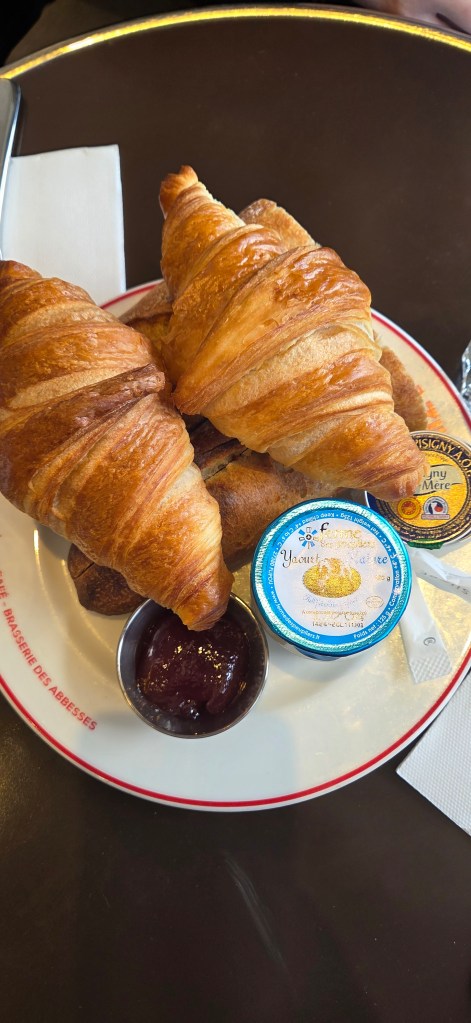
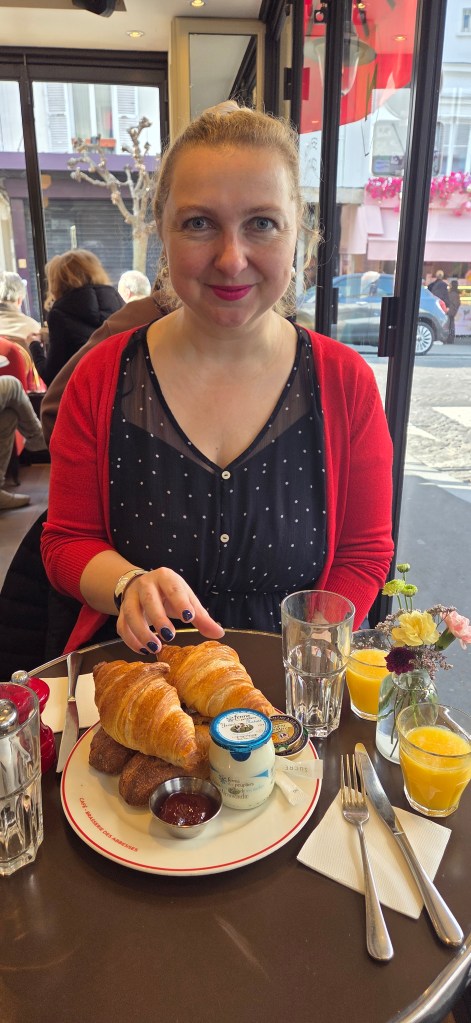
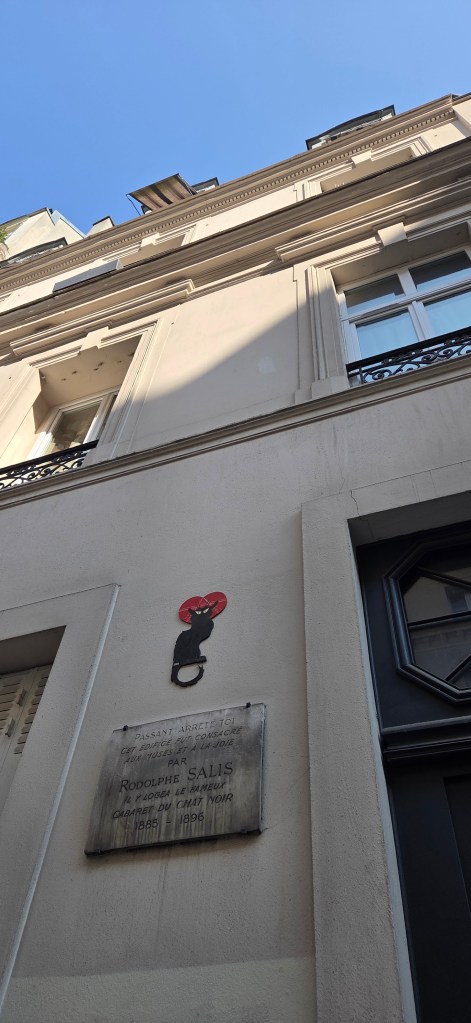
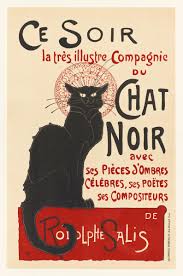
After breakfast, we continued on foot through Montmartre and noticed a plaque on a façade marking the home of Rodolphe Salis, the legendary founder of Le Chat Noir, one of Paris’s most iconic cabarets.
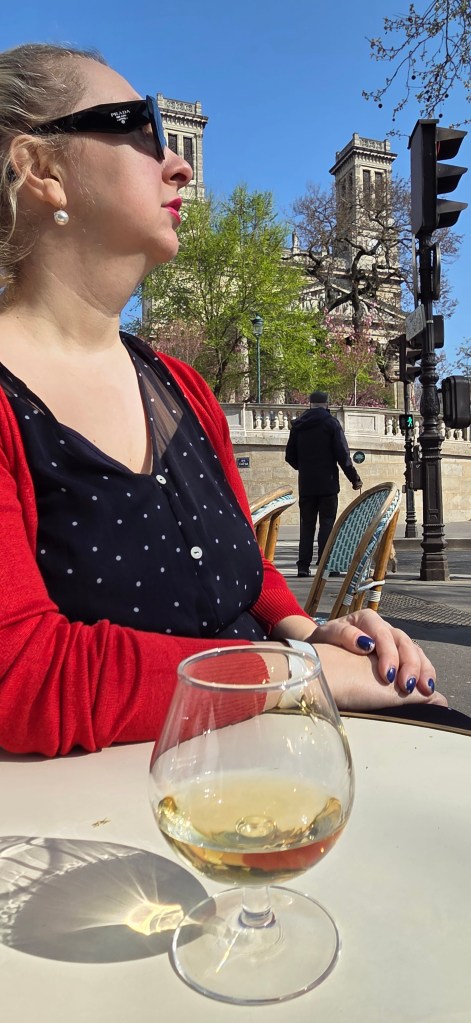
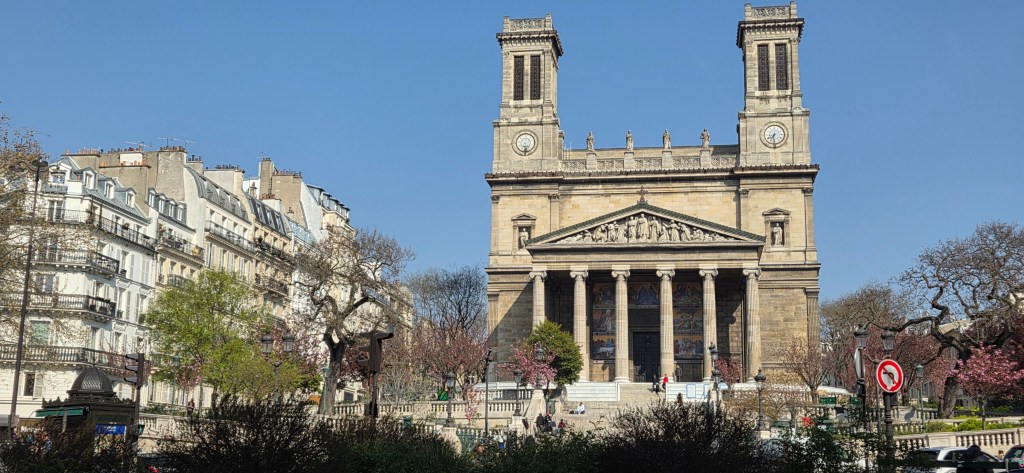
Later, we stopped for coffee at Place Franz Liszt, with the striking Église Saint-Vincent-de-Paul rising just behind the square. The very church was actually visited many times by Franz Liszt as he lived in this area. It was one of those Paris moments where history, architecture, and an ordinary coffee stop effortlessly blended into the atmosphere of the city. This is exactly why I love Paris.
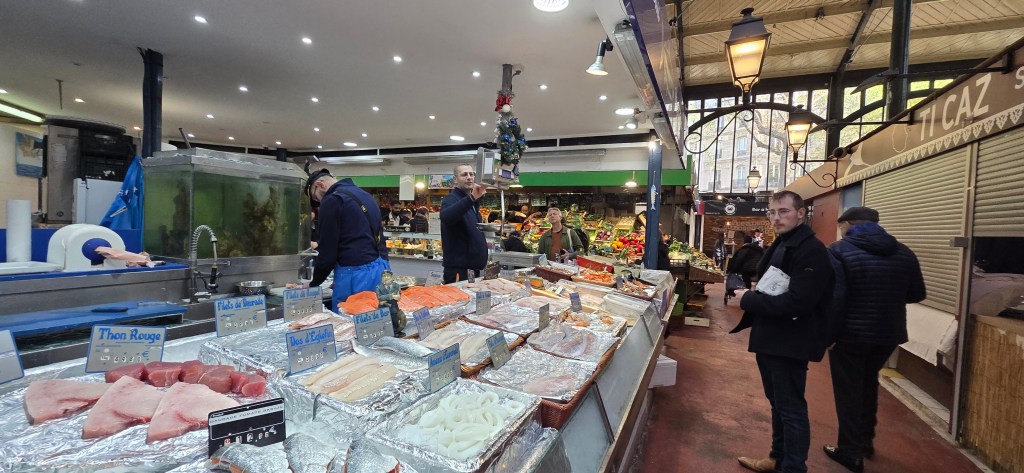
A little further on, we stepped into the Marché couvert Saint-Quentin, one of Paris’s most beautiful 19th-century covered markets. Built in 1866 in the elegant Baltard style of iron, glass, and brick, it is famous not only for its architecture but also for the vibrant mix of cultures and flavors gathered under one roof, from classic French produce to international delicacies. It felt like entering a living piece of Parisian daily life, where the city’s history and its appetite meet in the most natural way.
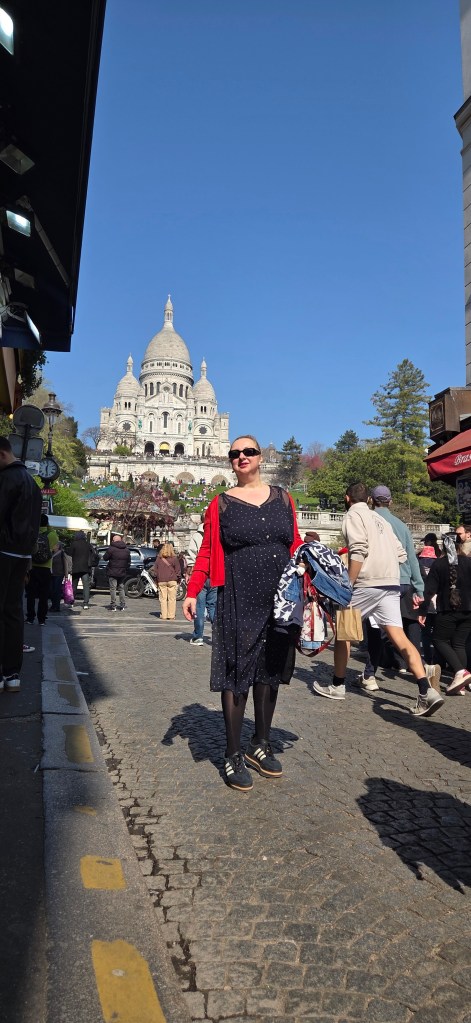
We had a family gathering up in Montmartre in one of the very chic places, so we started to climb back up. Can’t resist this touristy spot 😛
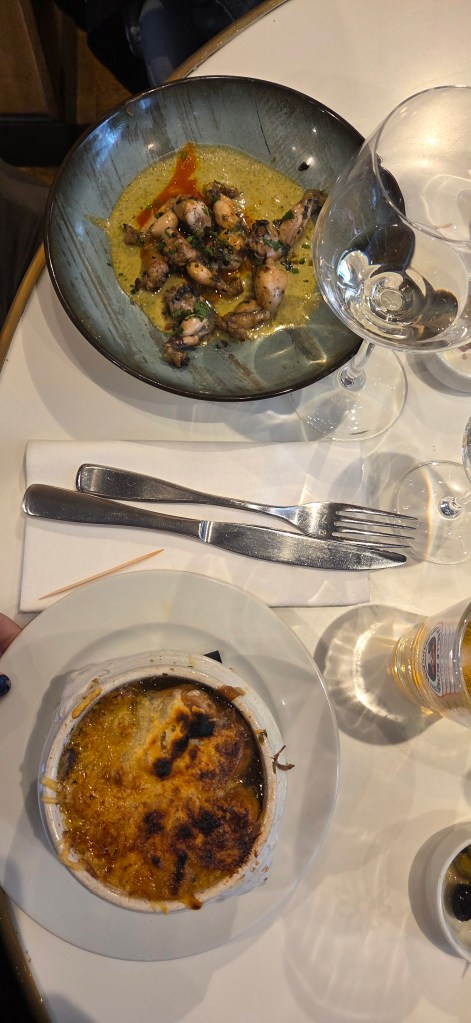
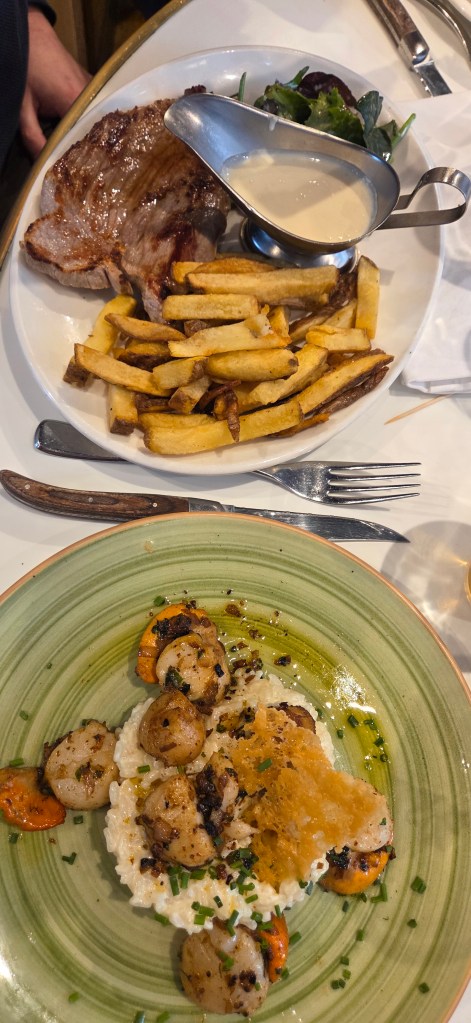
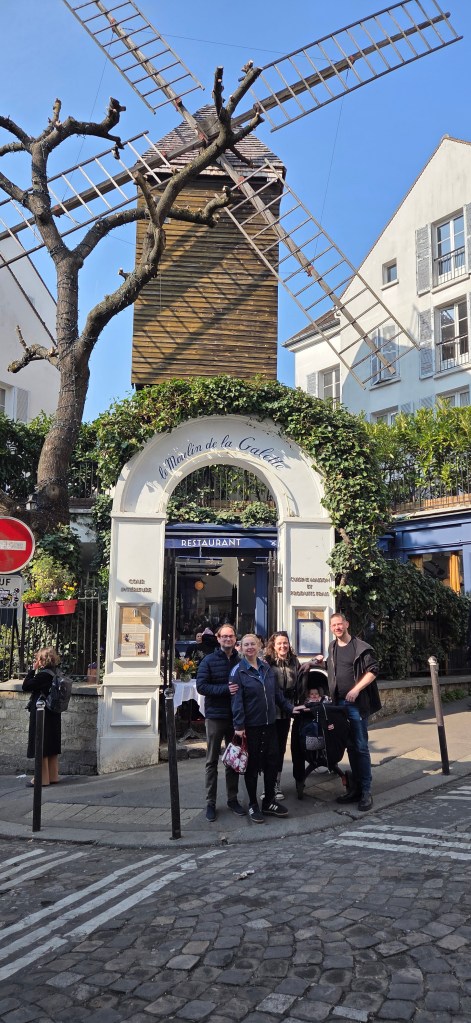
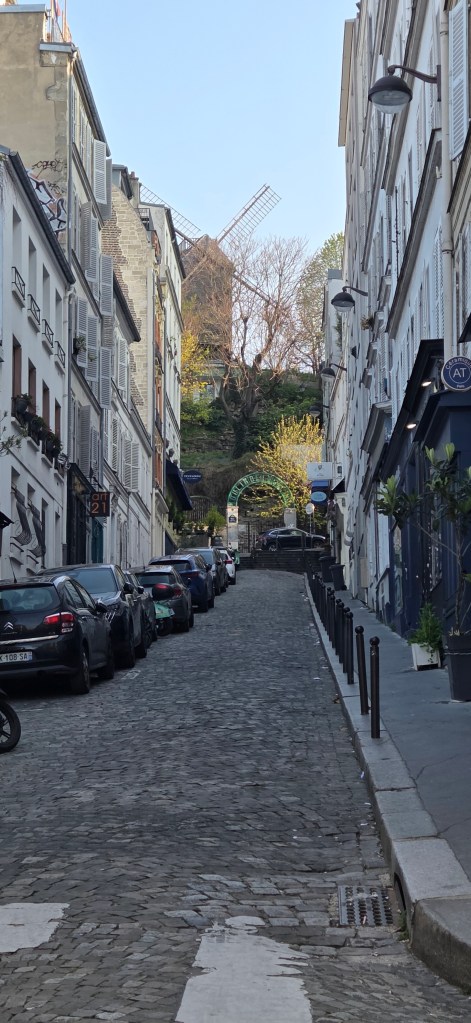
We later had lunch at the legendary Moulin de la Galette, one of Montmartre’s most storied addresses. If you scroll down, you will find many references of this famous site!
Originally a 17th-century windmill, it became a lively dance hall in the 19th century, immortalised by Renoir in his famous Bal du Moulin de la Galette and frequented by artists such as Van Gogh and Picasso. Sitting there today still feels like stepping into the Belle Époque, where old Montmartre’s windmills, wine, music, and bohemian spirit continue to linger in the air.
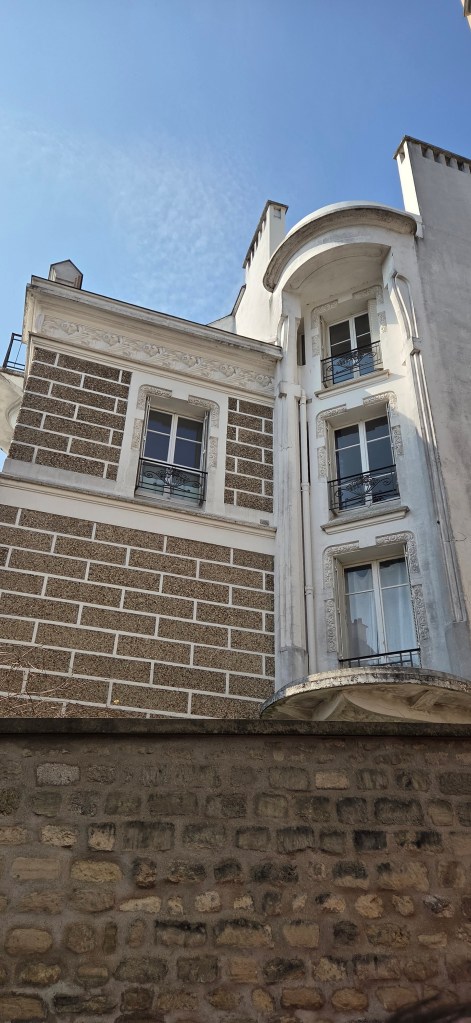
Just nearby, I also discovered Dalida’s house, another quiet reminder of how deeply Montmartre is tied to artists and legends. Dalida was one of France’s most beloved singers and international stars of the 20th century, known for her haunting voice, glamorous life, and tragic story, which made her an enduring symbol of Parisian nostalgia.
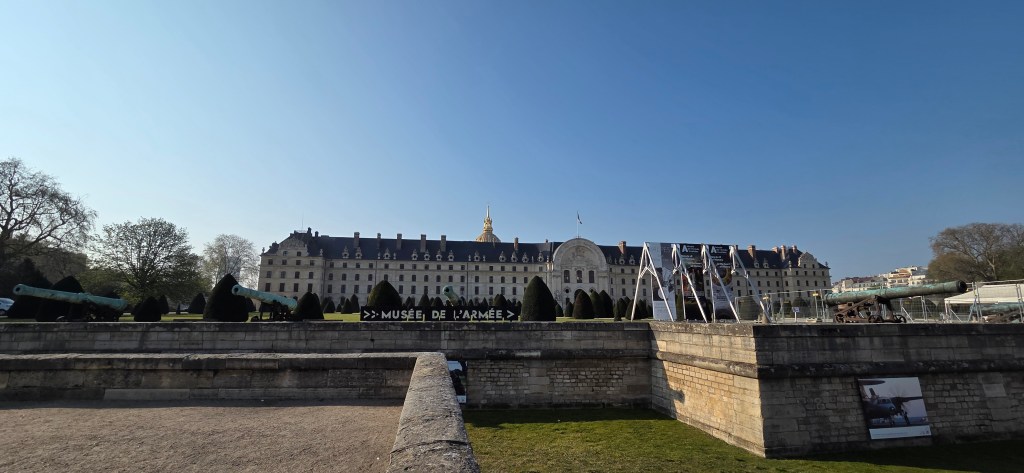
The next day was reserved for Les Invalides. Although I had already been there in 2017 with my brother to visit Napoleon’s tomb, I wanted to return this time to finally complete the experience with the Musée de l’Armée, which we had missed back then.
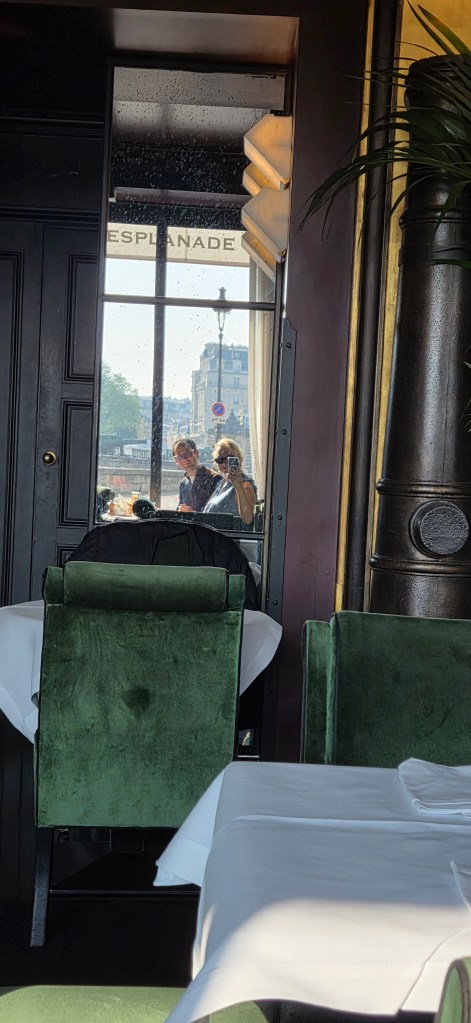
Before that, we stopped for breakfast at Café de l’Esplanade just nearby, a place that instantly pulls you into that elegant Belle Époque mood of Parisian glamour with its polished style and timeless atmosphere.
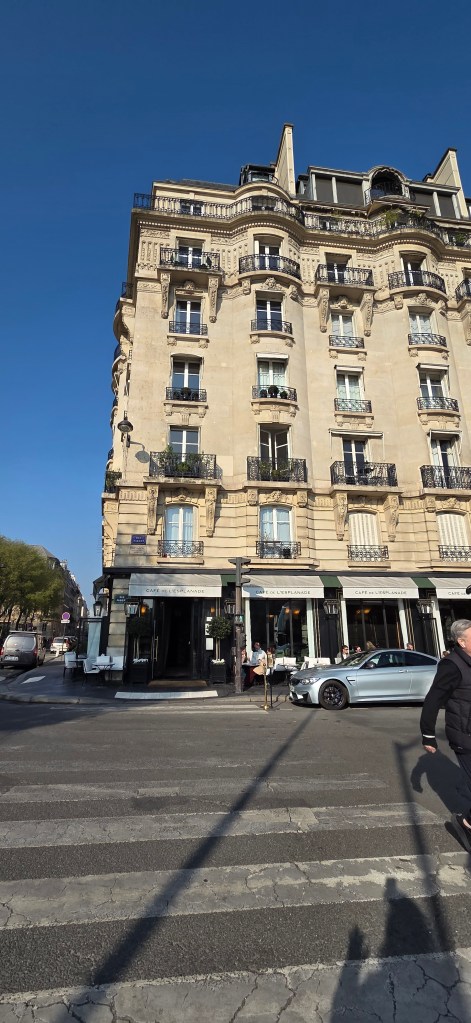
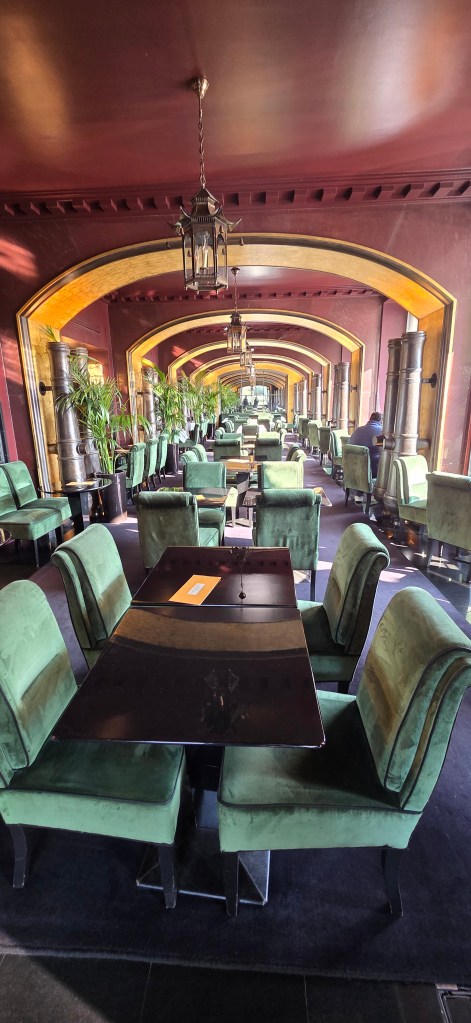
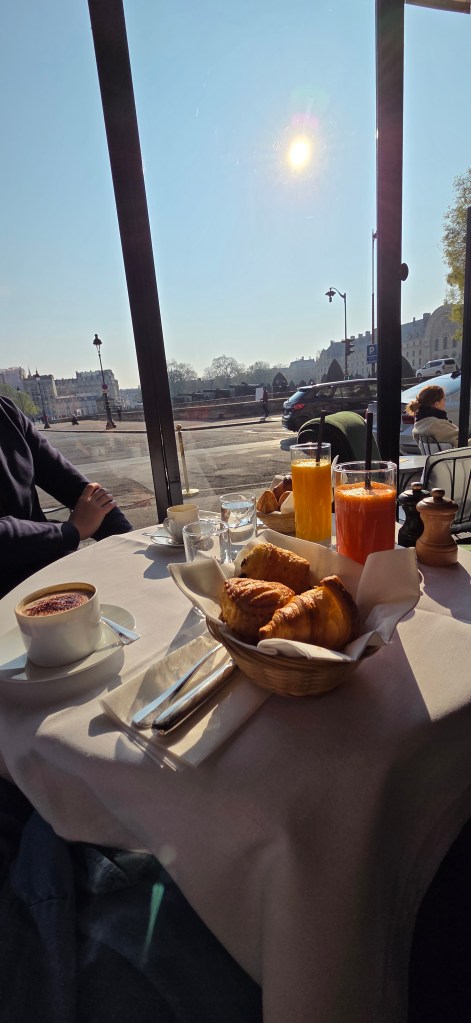
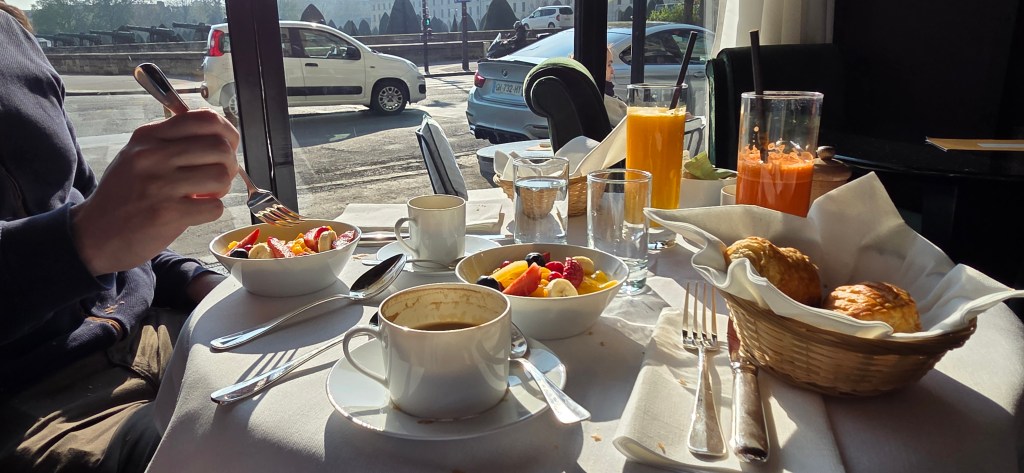
A very chic Paris moment, made even more elegant by the fact that the Eiffel Tower was just within reach, adding that extra layer of timeless glamour to the morning.
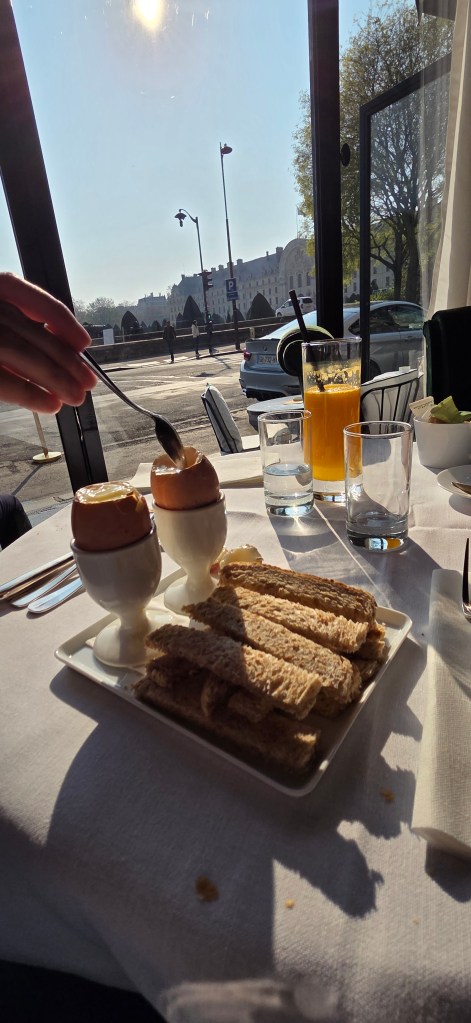
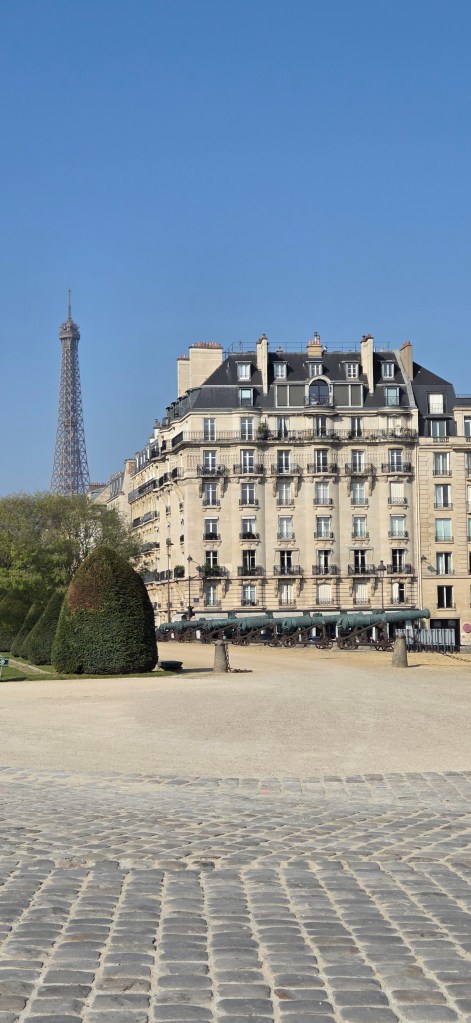
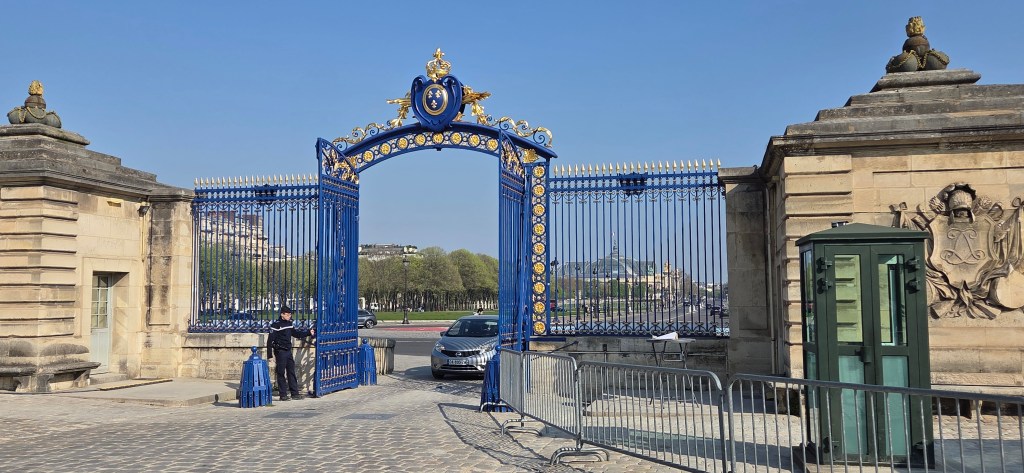
Les Invalides was commissioned by Louis XIV in 17th century as a royal hospital and retirement home for wounded and elderly soldiers, making it one of the most symbolic military monuments in France. Its grand golden dome was later chosen as Napoleon’s final resting place, turning the complex into a place of French military history.
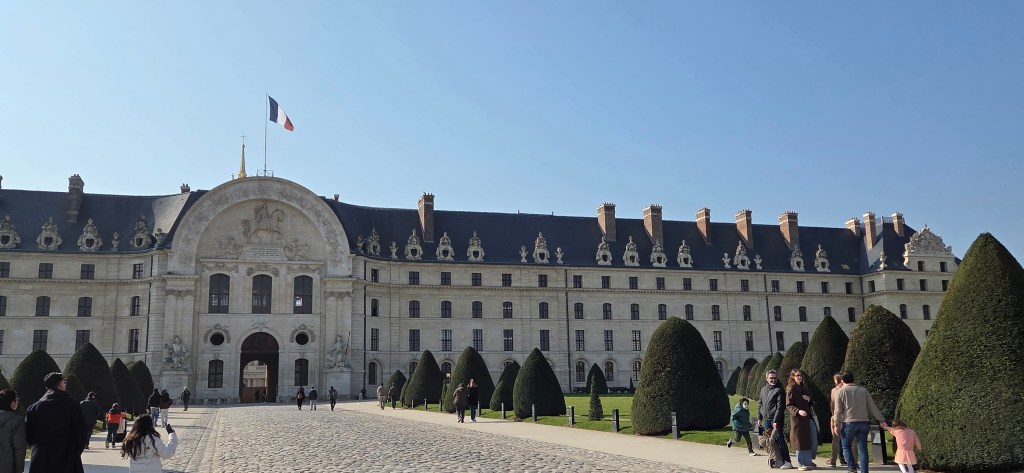
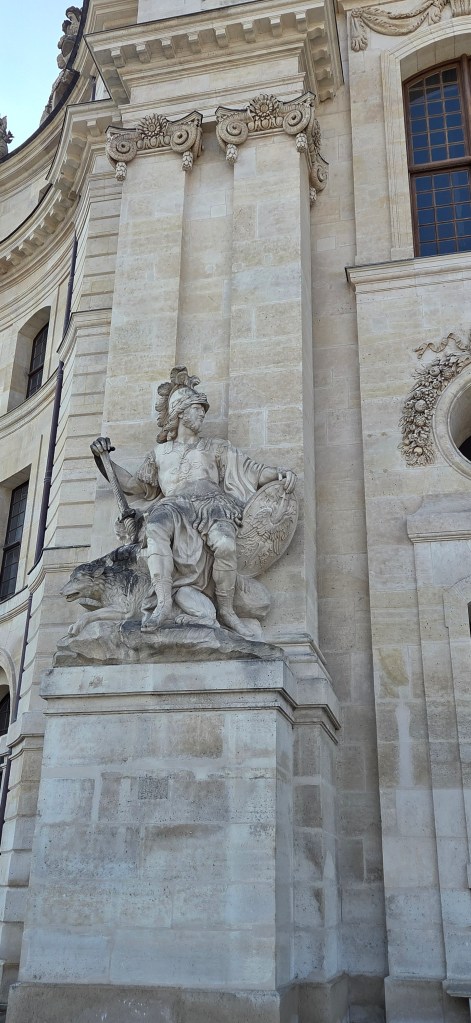
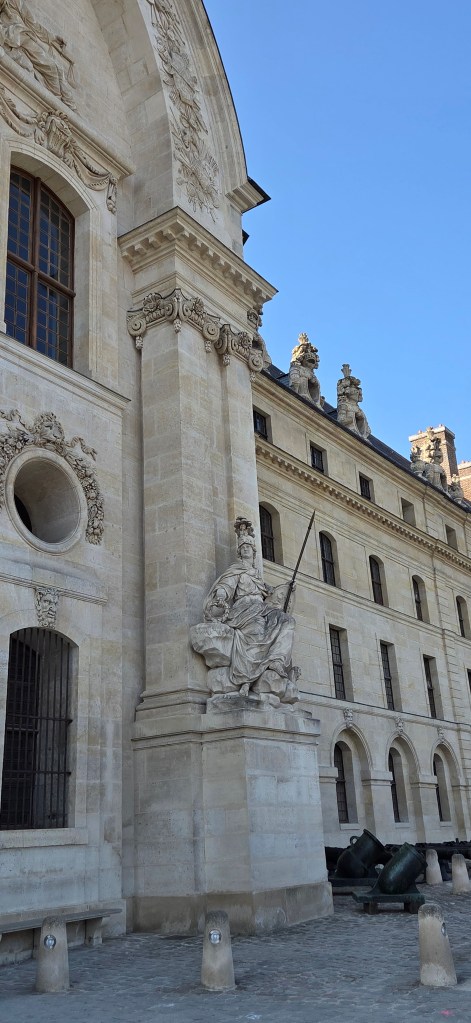
On the façade of Les Invalides, Mars and Minerva stand as stone guardians of war and wisdom.
Napoleon’s tomb is designed with deliberate symbolism: the sarcophagus rests at the center of a circular crypt so that every visitor is forced to look down upon it from above before descending and then up toward it again from below. You are never equal to him.
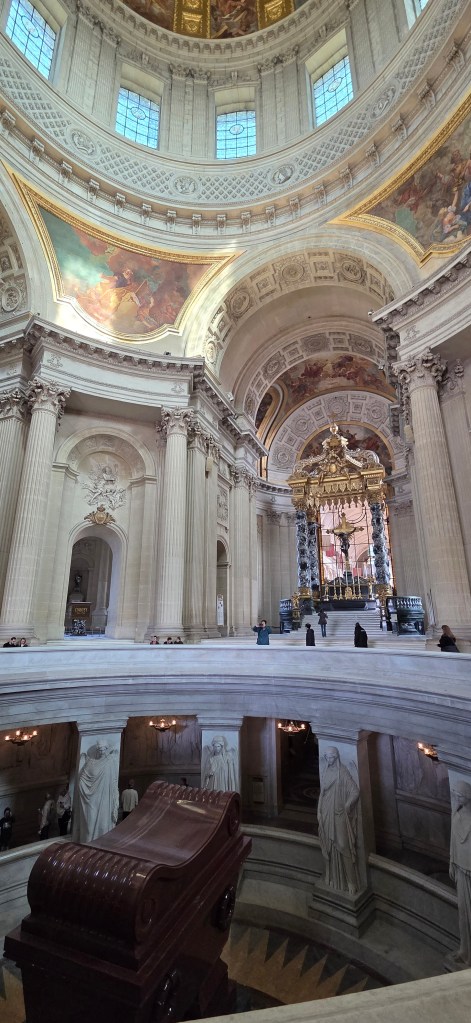
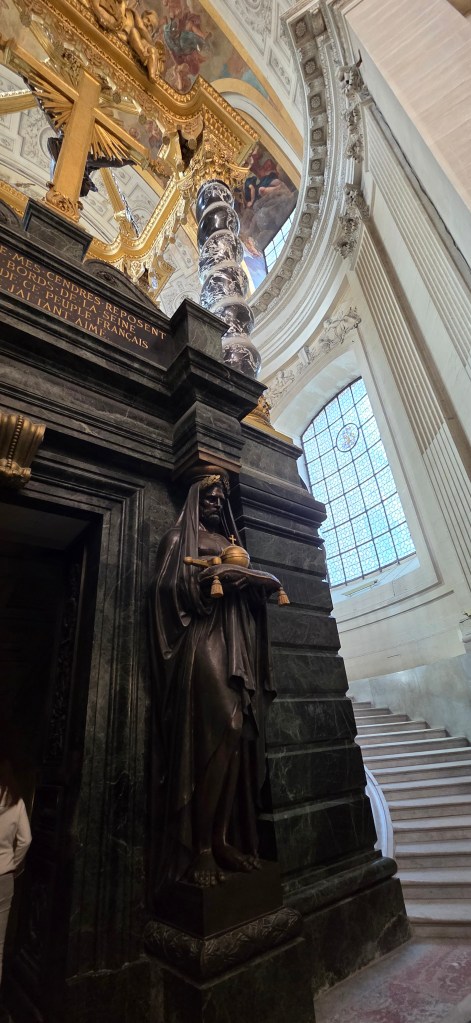
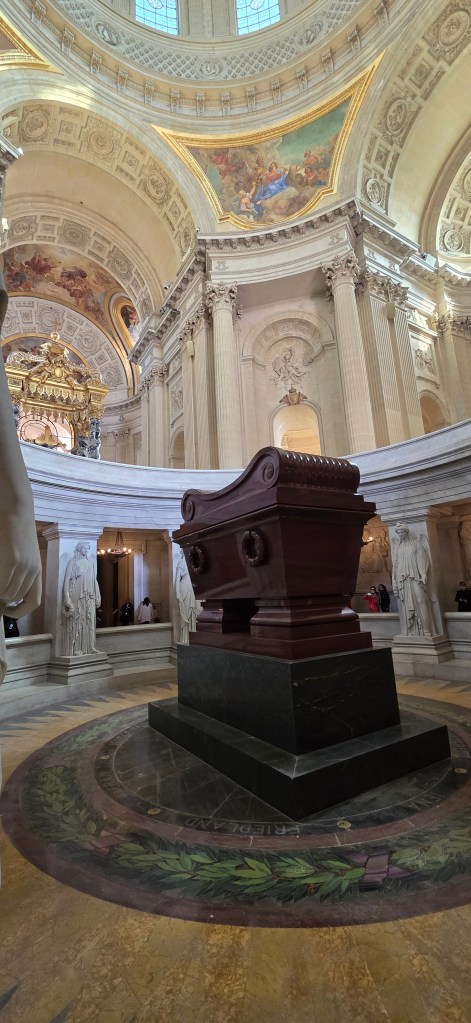
Around the crypt, the names of his greatest battles are carved into the stone, framing the tomb with the memory of conquest and glory.
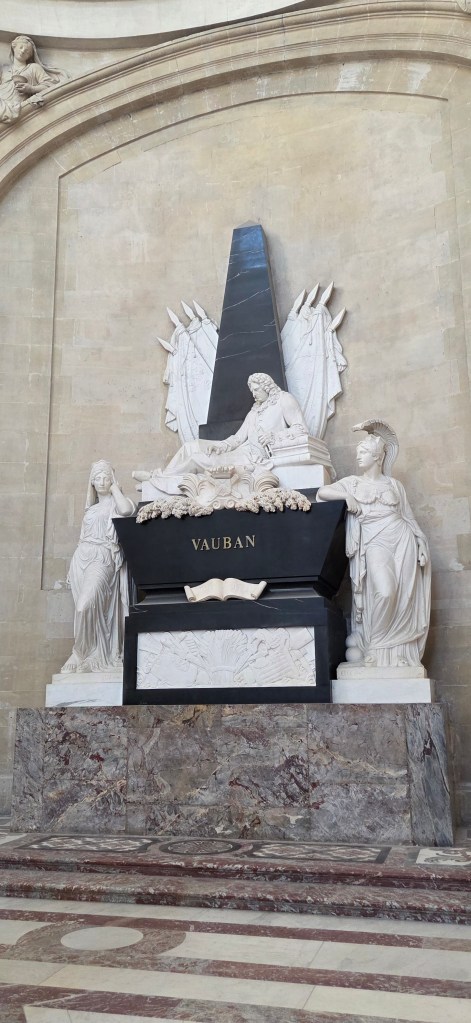
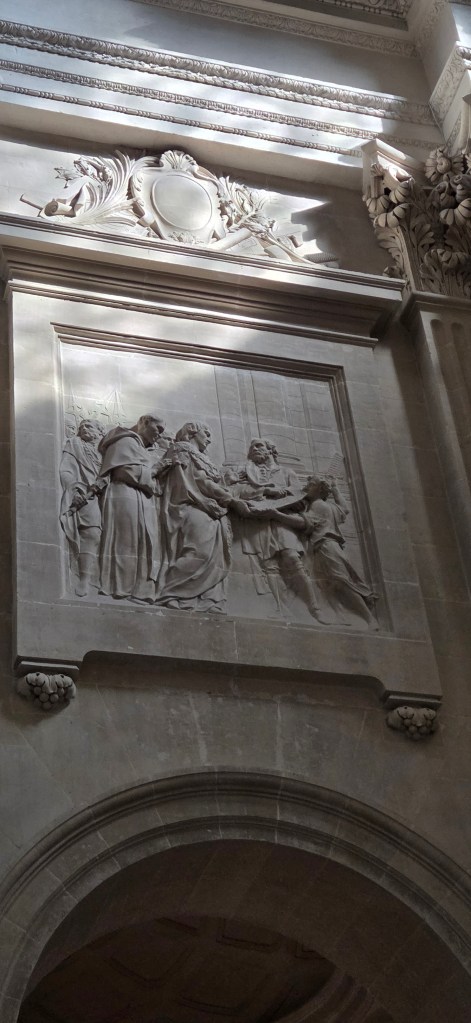
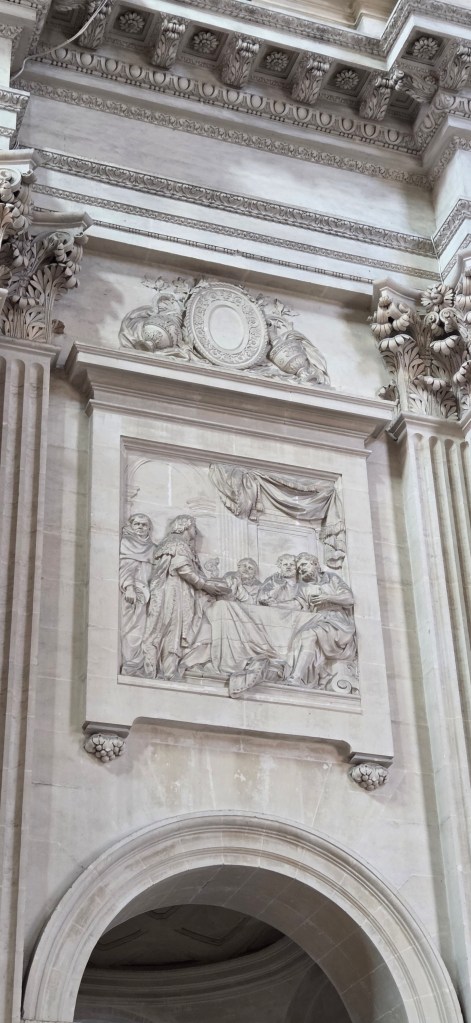
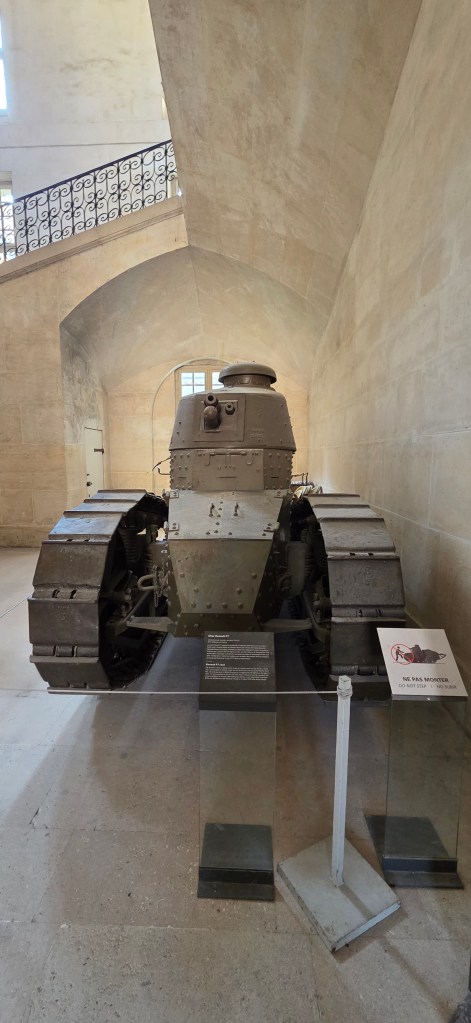
As we moved into the Musée de l’Armée and began the visit chronologically, the first thing that caught my eye was the small Renault FT tank at the entrance. At first glance it almost looks charming in its compact form, but knowing it was one of the defining machines of the First World War quickly strips away any sense of innocence and turns it into a quiet symbol of how modern warfare began to change forever.
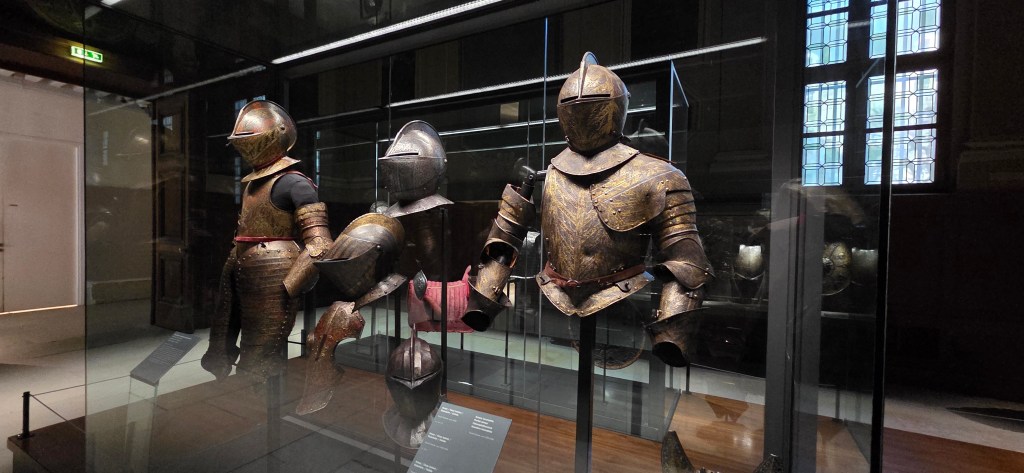
What fascinated me just as much was how the museum’s earlier sections reveal the decorative roots of military culture: the elegance of Mannerist ornament—with exaggerated forms, elaborate armor engravings, mythological motifs, and theatrical flourishes—deeply influenced the French military aesthetic, where even weapons and armor were designed to project prestige, royal authority, and artistic sophistication.
Then these battle tapestries and painted panels depicting campaigns across places like Dinant, Maastricht, and Seneffe—names of the cities that today I pass through in Belgium – but different cityscapes. It was a strange and powerful reminder that history is never as distant as it first appears.
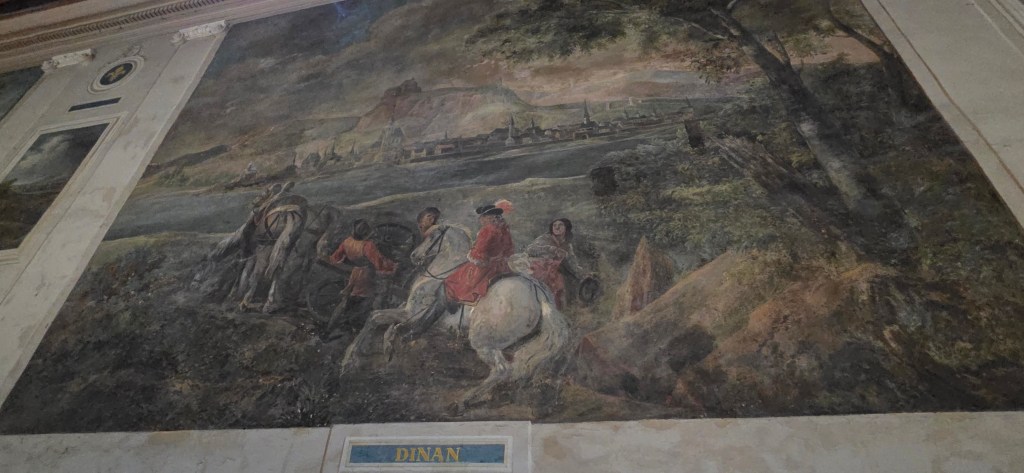
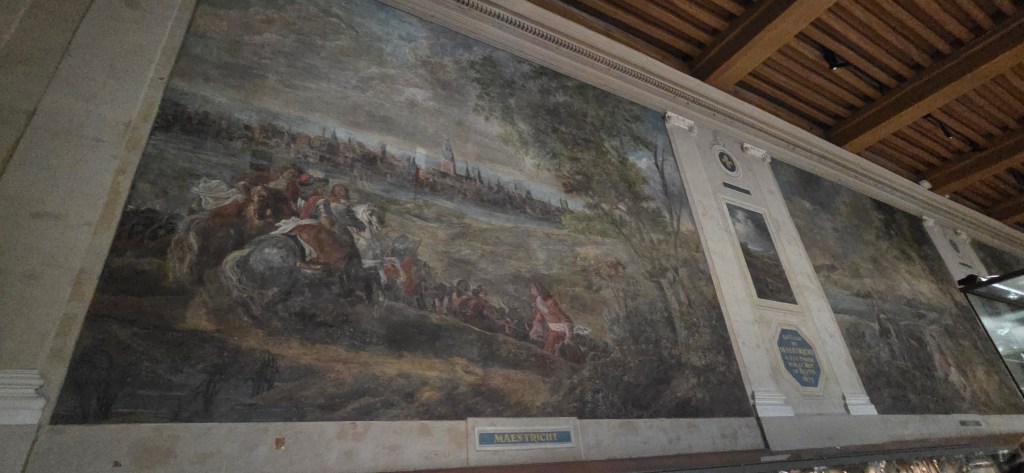
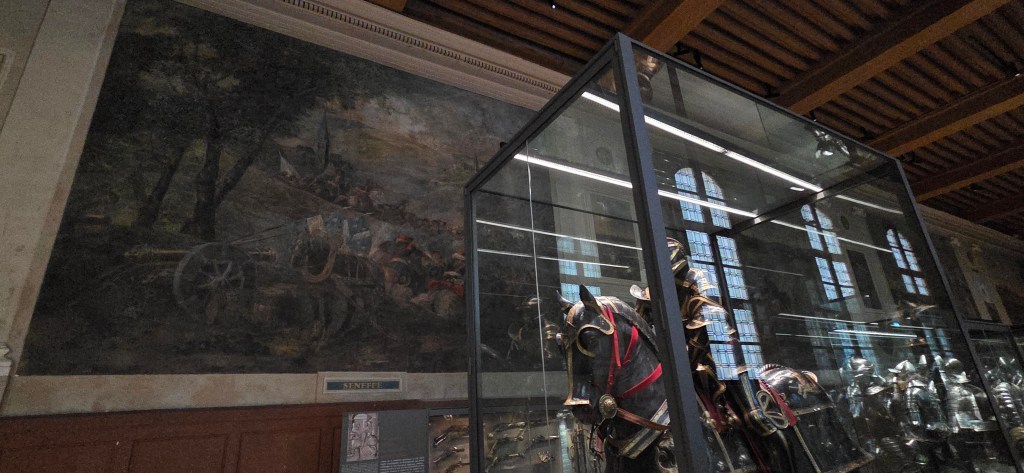
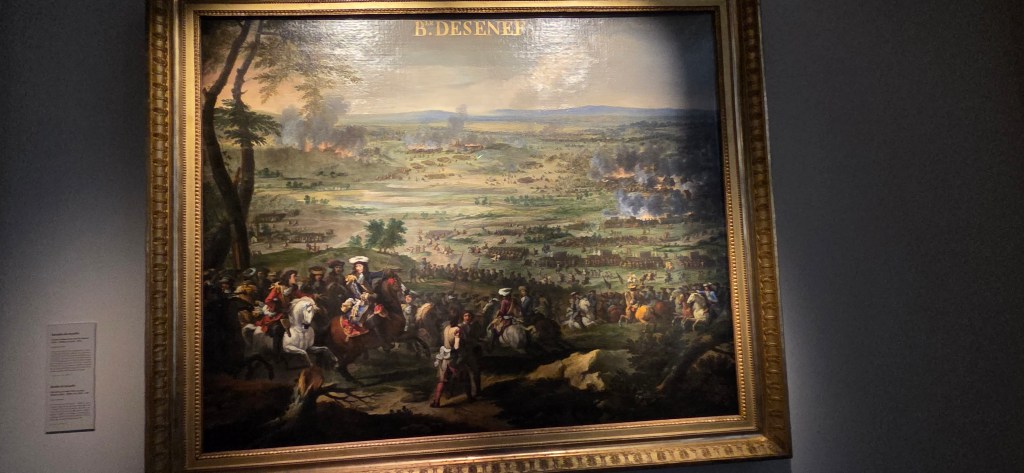
Walking further, the museum shifted from weapons and campaigns into the theatre of power: portraits, uniforms, ceremonial fabrics, and imperial iconography turned military history into political storytelling. What stayed with me most was how war is never remembered only through battles, but through carefully curated images, symbols, and clothing that shape how a nation chooses to see its heroes.
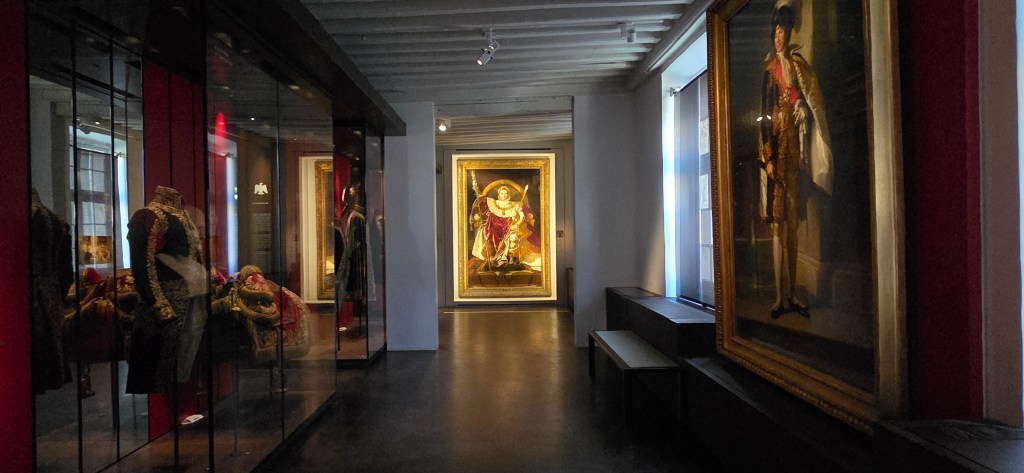
Among the ceremonial uniforms, the hussar attire:
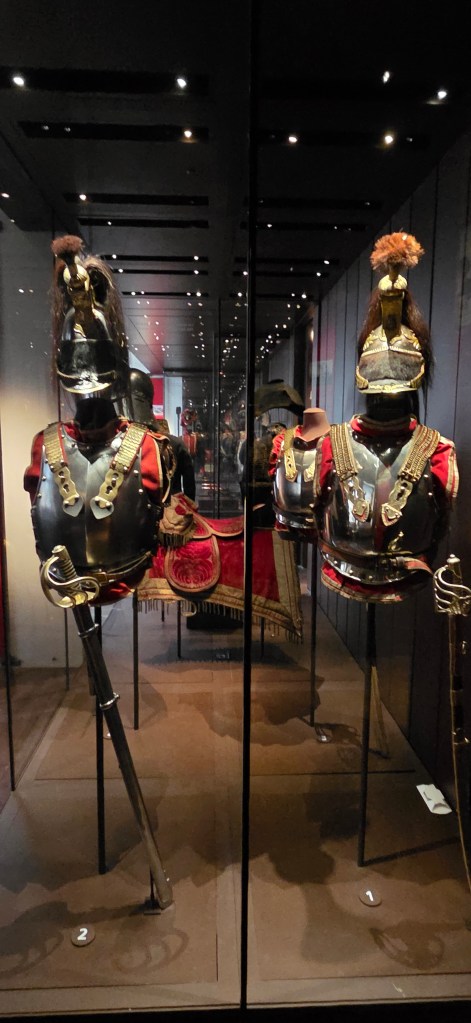
Originally light cavalry warriors of Hungarian and later broader Central European tradition, hussars became famous for their speed, daring reconnaissance, and almost romantic military style. Why? Because they became glorius through literature and operas. A beautiful famous example is Emmerich Kálmán’s The Gay Hussars (Tatárjárás), where the hussar becomes the very embodiment of Hungarian military romance and imperial nostalgia, later embraced by Vienna’s operetta culture as well.
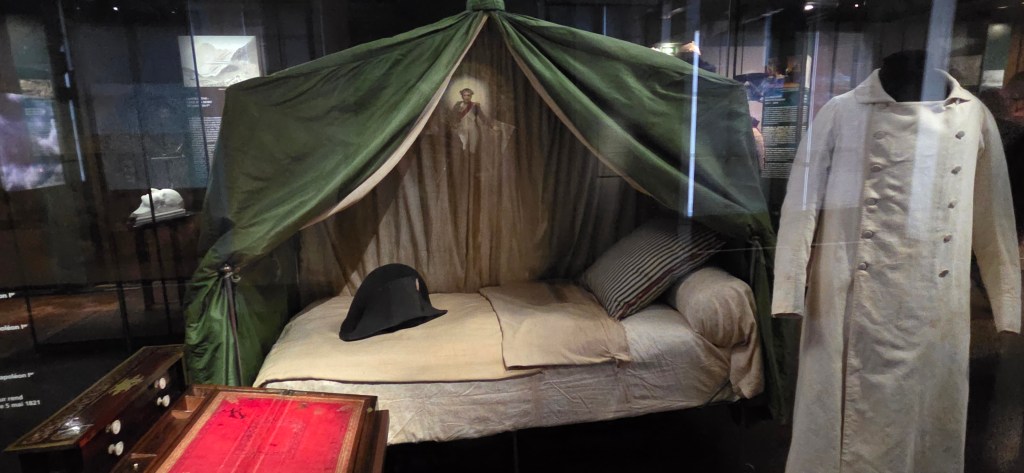
Napoleon’s deathbed, the very bed on which he died in exile on Saint Helena in 1821. After the spectacle of uniforms and imperial ceremony, this quiet object brought history down to its most human scale. No glory this time.
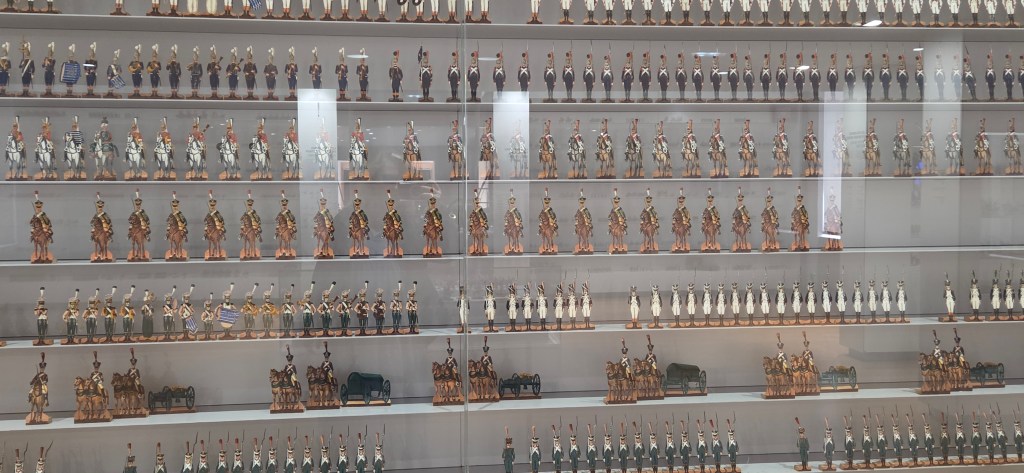
Then these super interesting Wurtz-Pées collection of Strasbourg military figurines. Their origin in Strasbourg is important, because the city spent decades watching armies pass through, which led local workshops to begin producing these military figures. It is a simple but beautiful way of showing how military history was turned into art and memory.
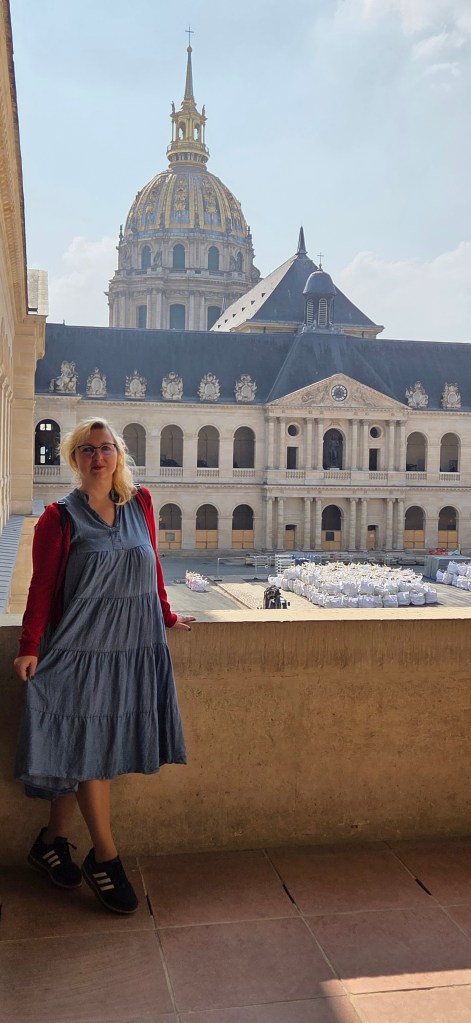
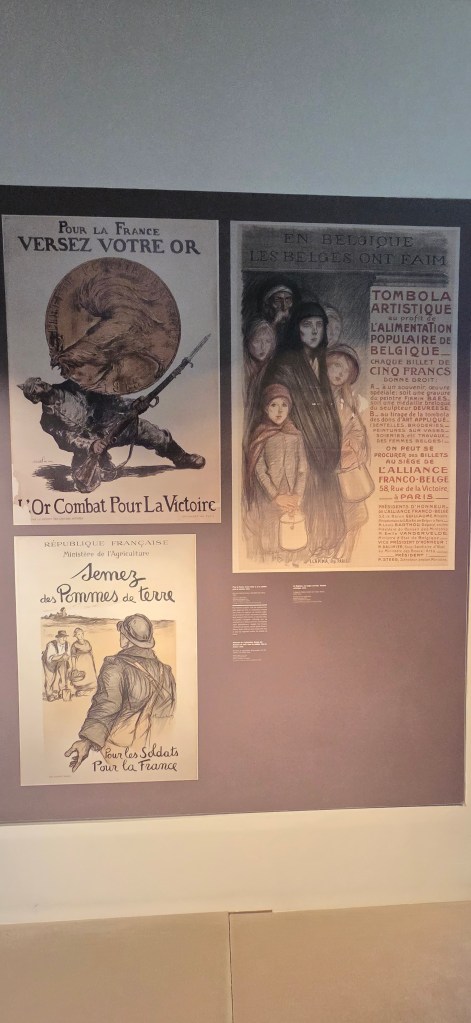
So here I am, standing in the Army Museum—a place so often imagined as reserved for men—while knowing that in the background, and deep within every chapter of this history, there were always women shaping these events too. Some were visible, many remained unnamed, but their presence was just as much a part of the story.
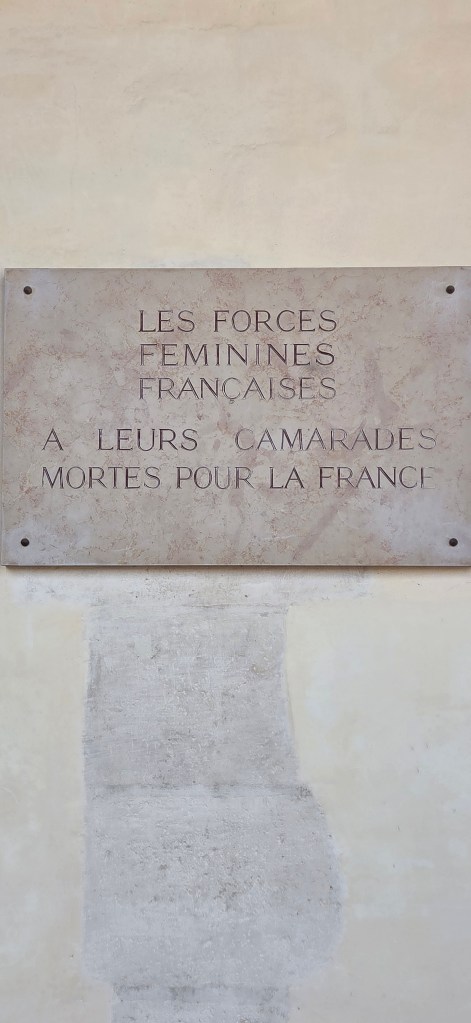
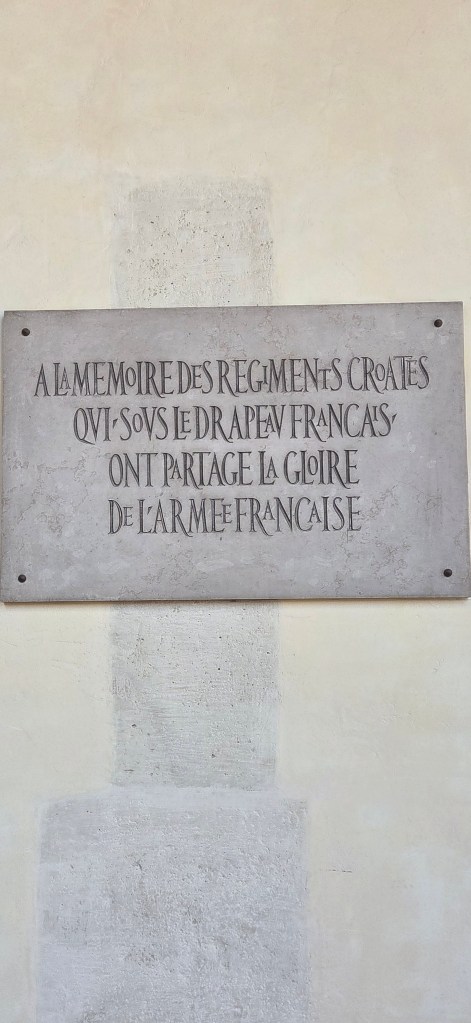
Just look at the propaganda of different wars and different eras: women appear as symbols of the nation, sacrifice, mourning, resistance, and hope, even when history forgot to place them at the center.
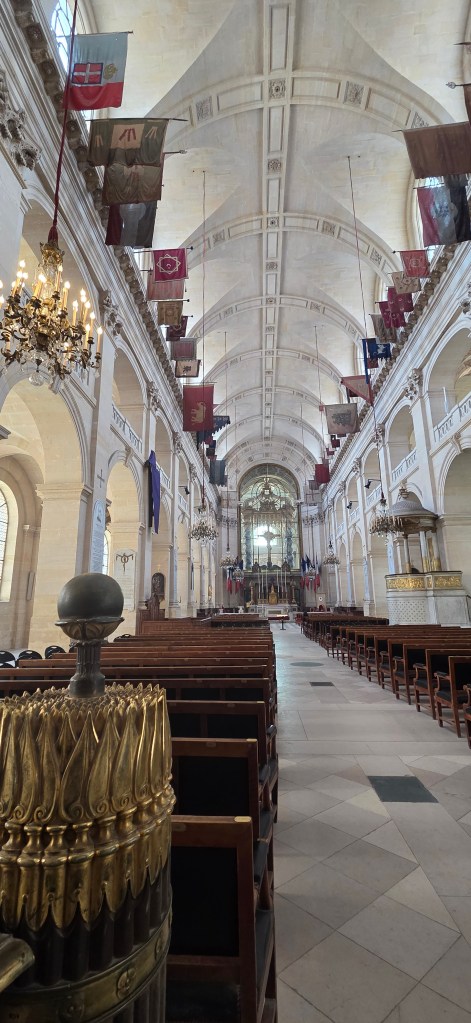
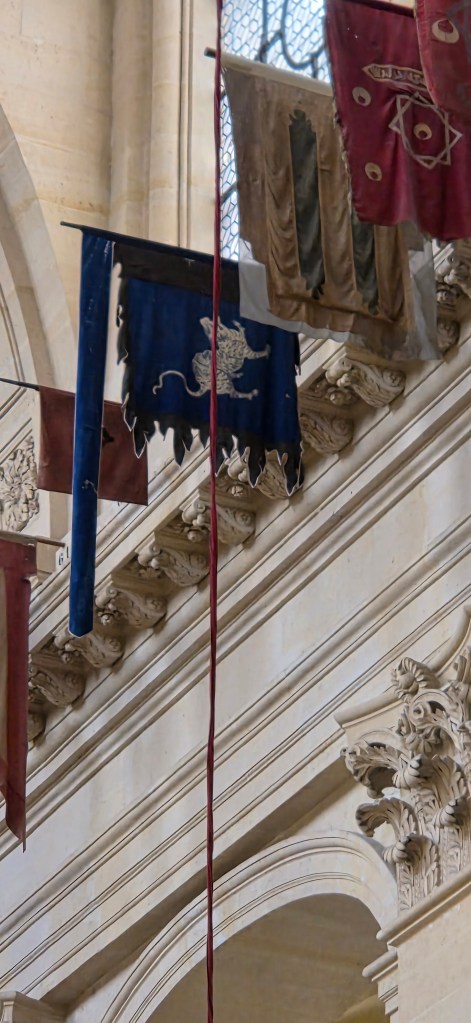
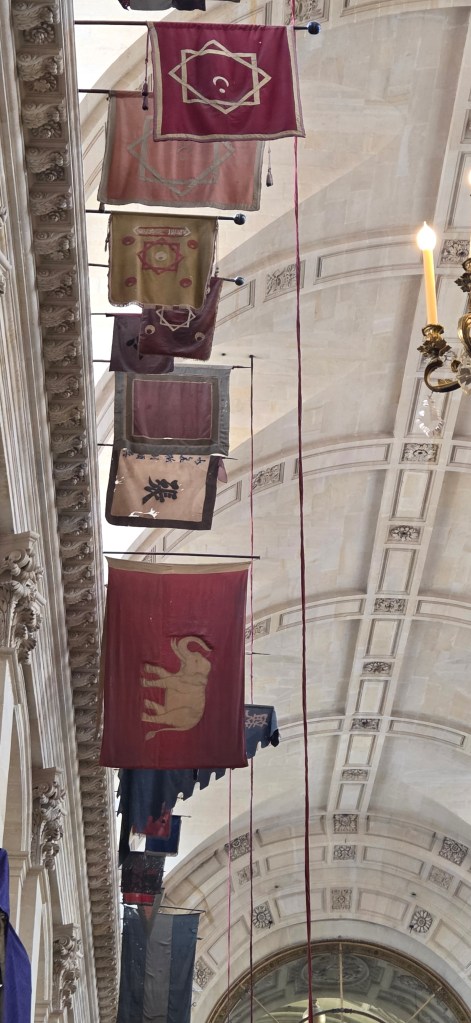
My final memory from Les Invalides was the Cathédrale Saint-Louis-des-Invalides, the soldiers’ church where captured enemy flags still hang from the vault like suspended fragments of history. There was no Dubrovnik Republic flag.
Closing the trip, we had lunch in La Source, near Les Invalides, beside the park where everything was already glowing in fresh spring green. It felt like the gentlest ending possible: I was still thinking about Napoleon and what could have been.
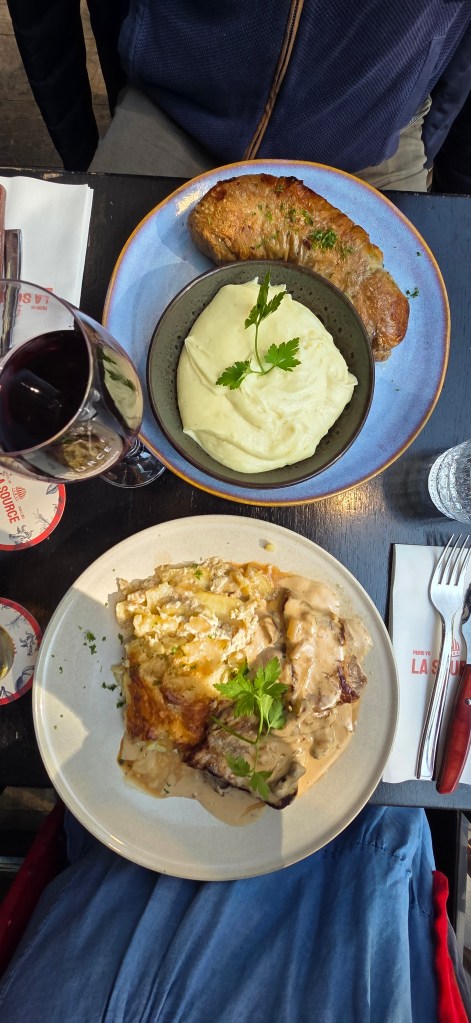
Later I googled 😀 It was Place Salvador Allende! Oh Chile, you follow me all around, reminding me about my promise 😀
In 2025 – climbing the Notre Dame
I went twice – yes, a badass, I did! 🙂 And I am so grateful for this cute Parisian moments – and all the arrondissements I get to discover. This time the focus was the Notre Dame Cathedral.
But first – parking at nearby cemetery of Montmartre.


It’s a bit odd to see the bridge over it, the buildings just above it – spooky, but hey, it’s November. We even got lost walking around, discovering so many famous faces: Dalida, Emile Zola, Hector Berlioz…


This time we arrived from the northern side of Montmartre hill so there was a chance to discover the other side. First things first – lunch! In la Brasserie Le Cepage de Montmartre. I had french onion soup for the start. Cozy, Novemberish.


Now let us stroll down, towards the Le mur des je t’aime. I finally managed to discover its location. I wasn’t impressed, though.


The walk was amazing, romantic. I had a hard time to believe it is November, First time I visited Paris – back in 2013 also in November, I was super cold. Today, the climate changed and people are eating on terraces. With the heaters, of course.


The next morning I took a walk from Montmartre down to 9th arrondissement. My legs went through the Passage Joufroy . Somehow, I always end up at the Boulevard Montmartre – so I made my turns.


And I continued further more towards the Passage des Panoramas that opens as a continuation of the Passage Verdeau. The shops were already decorated for Christmas – but I tried to ignore. Too soon!


I have seen so many cute places to explore, like the gallery of wax figures, so many buffets to sit and have a coffee… But my day was already planned. I flew quickly through the 2nd arrondissement – stumbling upon the Church of St Eustache. As the church is placed right next to the belly of Paris – Les Halles markets, the church finds itself a bit as a protectionist of those that are hungry.


And you wouldn’t believe but on my way out, I spotted the French Ministres of Culture. She said Bonjour! 🙂

And now it was time to climb. I got the ticket as a present. It is still hard to enter the Notre Dame, but somehow, the tickets to climb up were available. We were moving in the groups of 10. I was scared of the claustrophobic passages, but in the end – everything was so well organised.


On the very first stop, you get to see where this ticket will take you. To the heaven, literally!


I saw all of the flying buttresses of the apse of Notre-Dame (from 14th century) opening in front of me, like from the school text book. I couldn’t believe that the techniques I used to study, are now an open source.


We climbed the right tower (looking from the front). The sun hit the light on the city – and everything was here, on my palm, in the 360.


I wanted to cry remembering how French managed to recover their glory so quickly – although all the wood from 13th century burned. What a treasure that disappeared.


But the gargoyles were still there – looking down on us, judging us. Including the most famous one: The Thinker (The Stryge). All the main reasons to buy myself one in the nearby shop. I placed it in my apartment in Brussels – to judge me more.

If you analyse carefully the photo above – you will spot many interesting scenes. It’s a total Brueghel. 🙂
My time to reflect came at Brasserie de lIsle Saint-Louis. I celebrated this mini step of my life with a glass of champagne. I admired the interior – it looked like a medieval brasserie, a typical place of where Quasimodo would stop for lunch, before he rushes back to ring the bells of Notre-Dame.


I climbed further up through the 4th arrondissement.It was time to search for lunch. But as always, in Paris, one gets distracted by many moments.
I soaked the sun, the autumn, the colourful leaves that were falling around.


Dessert was reserved in Stohrer – the oldest patisserie in Paris, since 1730. It was founded in 1730 by King Louis XV’s pastry chef, Nicolas Stohrer. Still located rue Montorgueil, this establishment has taken on mythical qualities over time. Now listed as a historical site, its lavish décor was designed by a student of Paul Baudry, who decorated the Opéra Garnier.


Nicolas Stohrer was pastry chef to Stanislas Leszczynski, Duke of Lorraine, former King of Poland, and father of Marie Leszczynska, who married Louis XV of France. He invented the super famous cake baba rhum. The story goes that Stanislas once complained that his Kouglof (a brioche from Alsace) was too dry, so Nicolas doused it with rum. Nicolas Stohrer was also the creator of many other classic French pastries, such as the Chiboust cream tart, the puits d’amour…
In the very same street, I passed by the façade Au Planteur. This ceramic painting dates from 1890 and depicts the service of a black man serving a white man, seated on bags of what are presumably exotic products, like coffee beans harvested and packaged in a French colony. It is one of the few remaining vestiges of the French colonial era in the capital.

Although to me, everything in this city speaks about the glory of its time. Including the protectorates.
One last before I hit the road to Brussels.

In 2025 – The Moulin Rouge show 💃
I feel incredibly fortunate that my partner’s family calls Montmartre home, granting me the unique opportunity to explore Paris beyond the typical tourist experience.
This intimate connection to Montmartre that i am having thanks to the Universe, has deepened my appreciation for Paris’s enchanting allure, creating more memories.
We arrived late hours again. Living in Brussels, one would say that those 300km are a piece of cake. But everything in life is relative. So is the traffic in Paris. Neverthelss, the next morning I took a stroll down Rue des Martyrs towards Opera Garnier spotting the Passage Verdeau. Full of antiquity.


I continued further down the Rue de Faubourg Montmartre. My target was the recently renovated and opened Cathedrale de Notre Dame. I’ve hit Bourse de Commerce – typical Parisian 19th-century splendid. With a twist: in 16th cenrtury a grand house on the site has been built for Catherine de’ Medici (Italian noble-woman and Queen of France by marriage to King Henry II ). A tower with an encaged observation platform, now called the Medici column, was built beside the hôtel from which observations of the stars could be made for astrological purposes. Astrology was a popular way of deciding on certain politics at the time. 😛


Further away at Les Halles, I stumbled upon the birth-house of Moliere. And this is exact problem of mine with Paris. There is so much history partout that infects me quickly and I loose the track of myself and my target.

Back to the route towards Notre Dame. But this time I ended up at the nearby square of Saint Jacques. What a wonderful park with the spring flowers: daffodils, hyacinths, tulips… with a flamboyant gothic tower, the only remain of the Church of Saint Jacques, burned during the French Revolution.

I was now in 4th arrondissement. So close. Mother called. Time for a champagne with an itsy bity tiny view on the still remaining constructions of the Notre Dame, La Chapelle on the right and the couple of Les Invalides in the right. Equals 27 EUR.


Pinky sunglasses on. Crossing the Pont Notre Dame and finally arriving to the destination. The line was huge. I didn’t get the chance to enter. I wandered around trying to buy myself a scarf for tonight’s show. I packed an evening gown without the elegant cover, not anticipating the cold. In my mind, Paris is always sunny and warm. By the time I arrive to Montmartre, I forget about the awkwardness that led to this touristy place.


The the evening arrived. We went to eat at the famous Pied de cochon. The art nouveau styled brasserie of Paris with the specialties like the pork legs. Bljak.


More champagne. More celebrations and more love that Paris keeps on giving me. Merci ❤


But the night only started. The meal was only an overture to the spectacle of the night. The Moulin Rouge Cabaret. The show started at midnight – with the certain understandings why. I was hyped. The Moulin Rouge is best known as the birthplace of the modern form of the can-can dance. Originally introduced as a seductive dance by the courtesans. This is the reason why I couldn’t take any photo. The rules are super strict and waiters have a sharp eye.


But I am not a newbie. 🙂 As the champagnes kept on popping every 3 seconds, the dancers spreading their legs up high every 2 – I hid my camera behind the bottles and managed to get a shot or two.
My dear sister-in-law excitedly whispered: this is our neighbour (pointing out the cabaret dancer). I found it so Parisian! 😂 that particular moment. They are all called Paris-ville. For a reason. 😀
I barely fell asleep that night. I was signing the dance songs all night long.
The next morning sun hit again. We have just changed the hour into summer mode. With the showed finishing at 2:00 and me being so freaking excited 2 more hours later before I actually fell asleep, I managed to catch about 4- 5 hours of sleep. But nothing can stop me 🙂 I am in Paris. Pinky sunglasses on.
Let us start avec petit dejeuner nearby Moulin Rouge. To go through the show again – mentally.

Which I managed to get for free as the waiter and I crossed each other’s eyes, his tray lost the balance and orange juice was spread all over. 50 EUR breakfast for free. Merci Paris! I will get myself a champagne for 39 EUR at the Brasserie nearby Galerie La Fayette. The price is so far the ceiling that I’ve been paying for a coupe de champagne.


We were trying to reach the Musée de Cluny but again – Paris can be so deceiving and lead you different ways. Like to Place Vendôme. Famous for luxury shopping and Napoleon’s column that commemorates the victory of Austerlitz in 1805. All the war cannons are melted into this pillar, creating a relief of the battle.

I couldn’t resist not to enter to Cartier shop. Facing the 11 security officer at the entrance who were stopping me to point out that there is someone to open the door for me. France is all about the equality. I walked around the exhibition. There were no prices. Many staff wandered around with trays of champagne for the customers. I burst into a cute diamond ring. How much? – I asked. She started to take the ring out, not knowing the exact price, but mentioning that the purity of the diamond indicates it should be around 400,000.00 EUR. 😀

Our walk continued through Tuileries Garden that leed to the Louvre. As I walked through the gardens, I couldn’t not notice the urbanism planning: the Eiffel tower on the left, the exact opposite to Museum is the La Defense. In Paris, everything makes sense and is circled into a great pinky story.


Like many other great stories in history, this one as well starts with a woman. The already mentioned Catherine de Medici. After the death of her husband King Henry II, she was living in the Louvre Palace for some time and build the Tuilleries gardens.

One of my promises for the next time travels to Paris is visiting Louvre Museum inside out. Note to future yourself reading these lines: scroll up! 🙂
In Paris, there is a replica of the Capitoline Wolf. This bronze statue, a gift from the city of Rome to Paris. As only Paris is equal to Rome as the eternal city the so called Lutecia.

I have been portraying this city for so long on this platform here, that I find myself sometimes on a track of a certain historical clue? I put a question mark after this sentence because it gives puzzles. A restaurant of Lutecia nearby offered ancient roman food on the menu, the monument to Romul and Rem, the Museum of Cluny nearby… Latin Quarter? Anyone getting the same clue?

The Musée de Cluny is the Museum of the Middle Ages of medieval art in Paris. It is located in the 5th arrondissement of Paris, as a building that combines Roman-era thermae, the Thermes de Cluny.

The museum houses one of the largest collections of art from the Middle Ages including the iconic 15th-century tapestries known as The Lady and the Unicorn. She has been on my list for some time so far as she kept me fascinated with the millefleur motives.


The art in Middle Ages embraced ancient traditions developing new forms and traditions of production. The art was both sacred and secular. Between Romanesque and early Gothic art, the museum displayed many interesting artistic items:


One of the items that fascinated me was ivory craft that was crafted so delicate that represented two biblical features: on one side was the crussified Christ flanked by the Virgin and Saint John. On the other re the two angels carrying candlesticks. Please, look at this finesse!


Scenes of the Life of Virgin from England, 14th-century crafted in wood was another piece of the museum that entertained me. This altar represents the nativity, the adoration of the Magi, the education received by heart Mother Sint Anne, and finally the Death of the Virgin.

From the other interesting elements, I bring the following pieces of art that came close to my heart:


In 2024 – Part ll – Olympics
Funny to ready my words written below in the section 2024 – Part l, when I wrote that I couldn’t use the worse timing to travel to Paris due to farmers’ demonstrations. Turns out, I can always beat episodes of my life for yet another degree. This time I was travelling to Paris for the Olympics. All the roads were blocked. And as always, last 10 km by car took an hour and a half – the amount of the total journey from Bruxelles.
But let me start chronologically.
My brother arrived 2 days ahead in Bruxelles – the flight was late due to the re-direction of all the France air traffic to the nearby countries. We took a car and hoped for the best. Once approaching the Boulevard Périphérique of Paris – the troubles started. One line was always closed for the Olympics traffic. The number od the police officers and sirens passing by was mouth-opening. The spirit was there. Everybody knew they are about to participate something grandiose.

Upon our arrival, we decided to seize the rest of the day and explore Montmartre. I owe the true Montmartre atmosphere to my brother since we visited Paris together in 2017. You can scroll down to explore that particular year. 😛 You will see how Montmartre was in rainfall, and no bar or cafe was open – no artists or market. My brother mocked me, saying I had deceived him.
But this time, the luck (or the sun) was on our side. Just before the heavy rain started – which would not stop until the end of Olympics – we took a fabulous walk around Montmartre.


I guess the most famous restaurant around is the brasserie La Mère Catherine. Founded in turbulent 1793, it is one of the oldest restaurants in Paris. A plaque at its entrance gives a folk etymology of the word bistro: that in 1814, while a group of Russian soldiers were dining at Mère Catherine, they asked for drinks, bystro (Cyrillic: быстро; Russian: “quickly”). Thereafter, “bistro” became a description of a restaurant where you could get food or drink quickly. Funny how the word travels through the languages. In Croatian, the word bistro means clear.

I wasn’t amazed by artists that much. They all paint the caricatures and simple paintings in the very same style. Hence, we went further towards the church The Basilique du Sacré-Coeur de Montmartre. I won’t repeat what I wrote about it below. 🙂


The basilica overlooks the entire city of Paris together with the two bronze statues: statue of Joan of Arc and Saint Louis (Louis IX). What a magnificent place!

During the Belle Époque from 1872 to 1914, many artists lived and worked in Montmartre, where the rents were low and the atmosphere pleasing. The bohemian activities were all around the place.


Nevertheless, the night arrived., the rain started, and we left towards our stay. I am lucky to have the extension of the family living in Montmartre so I am blessed with many bohemian stories. 🙂 The next day was historic!
We woke up in the morning and took a walk from Montmartre down to Galerie Lafayette and Opera Garnier and back through Rue des Martyrs and Quartier Pigalle. We heard that morning that there were some terrorist attacks in the suburbs. Good, I thought to myself. If that’s the only and the closest thing they can do – let them be. Luckily – no victims.
I have never seen Paris clean like this. I have never seen it without any traffic. All the roads were closed. Roaddddds turned into pedestrian zones full of police officers in sorts of uniforms. Some of them were from other countries: like South Korea, Germany, Italy etc. There was a pressure in the air: both meteorological and psychological. We continued walking towards the Senne. All the neighbourhoods were closed and we had a problem finding the entrance to the Opening Ceremony. Neither did the police officers know much about it.


There was a tension. People couldn’t enter in their streets. I have seen Air BnB’s guests struggling to explain to police officers they have to enter this particular street as their stay is there – but somehow they haven’t been properly registered or on the list. We continued finding our entrance – back and forward – all around the closed areas. Finally, we understood we had to walk more towards La Madeleine and down again towards the Place de la Concorde. The entire 8th arrondissement was closed. I was exhausted. Until that point, I already had 50,000 steps in my phone app. And the Olympics hadn’t even started yet.
And then finally we found entrance N26. Now we had to queue for only 2 more hours. But nothing was tough at that point – except the air. We were queuing at the Place de la Concorde towards Port de la Conférence. At the same time, it was the parking and turnaround point for the limousines that were bringing the sports delegations. The sirens were all around the city. The air is even heavier. The police officers are at the peak of the attention.
The queue was moving slowly. I didn’t dare taking my phone out because I was afraid that the battery won’t last. I had the entrance QR codes for both my brother and me on the phone. The security was at its highest. We finally entered and arrived at the Sine. The air changed. The people have already taken their positions. We scooped in between and held the fort! Two more hours to go!

But once it started – nothing was heavy anymore! Lady Gaga was dancing, it was raining, we were at the river waiting for the first boat. You could have followed the TV show and both live as the screens were all over the place. The emotions were high!

The first boat, of course, was the Athens! Second, boat was the hosting France. When Croatia arrived – everyone in the public let us through – closer towards the river in order to cheer for the athletes. There was so much solidarity around.


The rain started to fall heavier and heavier. I was dancing. The night was coming – we were dancing. I went to the toilet and grabbed the beer. There were so many emotive moments to remember.

Finally, Celine Dion started to sing. The City of Lights lived up to its name as the lighting of the Olympic cauldron took centre stage just behind us – at Jardin des Tuileries.
Heavy rain wasn’t enough to dampen the spirits of athletes and fans. This genius cauldron was made in a tribute to French pioneers brothers Montgolfier as part of a hot air balloon. The Cauldron itself was 30m high and featured a 7m diameter ring of fire, which housed the actual flame and symbolised one of the French Republic’s three core values: fraternity.


I mean, there were so many symbols that we were unwinding for days. Unfortunately, there were some bad unwinds. I turned off my phone as I flew further south to Spain. Nobody will take away this life moment I had with my family. I participated in a once-in-a-lifetime show. The show that took in the most grandiose city in the world. I participated globally.
The rain was still falling. People ended up the show and started to move. The police officers were standing still. We thanked each of them as we were walking back up to Montmartre. Only 90,000 steps were done that day. 🙂
The Eiffel Tower that night was the shiniest ever.
Merci Paris!
Gloire a la France!
In 2024 – Part l
I could have not chosen the worst time to travel to Paris as the all roads from Brussels were blocked due to the farmers’ demonstrations . The usual roads via Mons or Lille were completely blocked. The only possible route was going down to Charleroi towards Reims. It took us 5 hours but the final destination was worth it. I mean, Paris is worth it!
On our way. we passed the French Ardennes which are famous for a good wild boar.


This time the visit was focused on Paris-Ville only. The charming old neighbourhood where most of the talented academics, painters, writers, poets, and philosophers lived from the Greatest to the times of the Lost Generation.
Paris is an old city that has recently celebrated its 2,000th birthday. Arriving in Montmartre is not easy. Driving in Paris is not easy. Seeing certain neighbourhoods is not easy either.


In Paris – you have to put your pinky glasses on and see the Paris that you want to see. There it is. But dig deeper.
As we parked the car around Pigalle, we started to explore. Pigalle is famous for being a tourist district, with many sex shops, theatres and adult shows on Place Pigalle and the main boulevards. The neighbourhood’s raunchy reputation led to its Second World War nickname of “Pig Alley” by Allied soldiers. Le Divan du Monde and the Moulin Rouge, a world-famous cabaret, are both located in Pigalle. Apparently, Charles Boudelaire was a frequent visitor. 😛
I have chosen a nice cafe’ at the Boulevard Clichy – the position was remarkable. Worth of being noticed.


The Art Nouveau is expressed here in door frames, cornices, scrolled and flowered balconies. It didn’t take me long to notice the Art Nouveau metro stations designed by Hector Guimard. At the time, it was characterized by a rejection of historicism and traditional architectural forms, due to a flamboyant use of floral and vegetal designs. Today it’s how we recognise the style.

Moving back in time, to one century before – I had a chance to visit the Musée de la Vie romantique. The house that is now turned into a museum was home of Dutch-born painter Ary Scheffer, one of the prominent artists of the time, close to King Louis-Philippe and his family.
For decades, Scheffer and his daughter hosted Friday-evening salons, with regular attendance of famous talents of the time like Frédéric Chopin, Eugène Delacroix, Franz Liszt, Charles Dickens, Ivan Turgueniev etc.


The owner of the house left us plenty of his and his friend’s paintings. I took a photo of some of them, which I found interesting to remember.


One of the paintings that I spent a bit more time on was the portrait of Brazilian Princess Joinville of Habsburg. Also known as Dona Francisca who was a princess of the Empire of Brazil (as daughter of Emperor Dom Pedro I, who also reigned as King Dom Pedro IV of Portugal, and his first wife Maria Leopoldina of Habsburg). As Dona Francisca married François d’Orléans, son of the French king Louis – who was friends with our host 🙂 we get to understand how her portrait ended up here. Habsburgs everywhere!

As Ary Scheffer was a friend of Frederic Chopin, you get the chance to see the plaster casts of Chopin’s delicate left hand. What an intrigue here!

The salon where the Friday events were happening is pure romanticism throwback and all the items there have remained intact and in their original place. A true treat for all the romantics that adore history.

As I said, the focus is on the Montmartre area. So let me give you a few more photos of the buildings and their facades – to keep the atmosphere here and get out of the era of romanticism. 🙂


Somehow, we got down to Galeries Lafayette and entered the magazine in the 9th arrondissement of Paris. The architecture of the store is art nouveau – bien sûr, with a remarkable dome and a panoramic view of Paris that has made it a tourist attraction.


As the Opéra Garnier is nearby, I made a small detour to have a look and admire this historic opera house at the Place de l’Opéra. It was built in the 19th century at the behest of Emperor Napoleon III. The Palais Garnier has been called “probably the most famous opera house in the world, a symbol of Paris like Notre Dame Cathedral, the Louvre, or the Sacré Coeur Basilica”. This is at least partly due to its use as the setting for Gaston Leroux’s 1910 novel The Phantom of the Opera and later the musical.


Circling back towards Montmartre – to this most bohemian of Paris neighbourhood, I have passed by many restaurants, brasseries and cafes. It was almost impossible not to stop in one of them. As a huge seafood lover, my choice fell to Grand Café Capucines. It was opened in 1875 and offers plenty of art nouveau and explicism.

The choice of food is fresh seafood on the platter. Hint: start with a good old french onion soup 🙂 It tastes super good after spending your day in the cold boulevards of Paris.


The 9th arrondisement is rich with the number of theatres and music venues and as such attracted many famous regulars including Émile Zola, Pyotr Ilyich Tchaikovsky, and Guy de Maupassant. During the Belle Époque, the locals living there included Oscar Wilde, and the then Prince of Wales and future King of the United Kingdom, Edward VII.


One of the Places of interest is Le Figaro – a French daily morning newspaper founded in 1826. Which makes it the oldest, actually. It was named after Figaro, a character in a play by polymath Beaumarchais (18th century) one of his lines became the paper’s motto: “Without the freedom to criticise, there is no flattering praise”.

Anyways, trying to come back to Montmartre 😛 known for its cobblestone passageways, its village atmosphere, its nightlife, and for the artists who found a home there more than a century ago. You will always pass by something thrilling here. I stumbled upon the flea market, or in french marché aux puces.
My eyes discovered the latest hype in Paris – le colis perdu. It’s a sort of a tombola, a scam if you’d like – where the local Arabs wrap the package and sell it for 10 EUR. They say it is bought from the post office but I am pretty sure it’s a scam. Nice one though 🙂 I like the idea a lot. It is a surprise for both the giver and recipient.


The next morning I started properly with the cafe, champagne and a croissant. Life was so simple but fulfilled with joy. Everyday Parisian? Perhaps.


Montmartre is famous for its artistic heritage. It has a distinctive village atmosphere. Climbing up, I noticed some art that used some fun play with words. To the linguist like myself, these were absolutely nailing.


Passing by the Church of Saint-Jean de Montmartre – mission impossible. It was art nouveau, although to me looked more like an Anglican church. I learned it is relatively new, since the beginning of the 20th century.


Back to more walks through Montmartre. I can get pretty annoyed by the fact there is no place to sit and everyone can reach into the plate of the neighbour. But in Paris, you take it as a charm.

Lunch was – of course, more seafood. Paris is renowned for its varied and refined cuisine. In the heart of this bustling metropolis, seafood lovers can enjoy a unique culinary experience. Seafood platters have become a must for connoisseurs looking for fresh seafood and subtle flavours.


And if you are a fan of Amélie – the movie with Audrey Tautoum the Cafe des 2 Moulins is the right place for you. Here everything remained intact, just as in times when the same Amelie bartened here.


Montmartre used to have fifteen windmills but now there are only two left on the Butte. Since the 17th century the windmill has been known for more than just its milling capabilities. Nineteenth-century owners and millers, the Debray family, made a brown bread, galette, which became popular and thus the name of the windmill and its businesses, which have included a famous guinguette and restaurant. In the 19th century, Le Moulin de la Galette represented diversion for Parisians seeking entertainment, a glass of wine and bread made from flour ground by the windmill. Artists, such as Renoir, van Gogh … have immortalized Le Moulin de la Galette; likely the most notable was Renoir’s festive painting, Bal du moulin de la Galette.

The Moulin de la Galette is now a restaurant that offers fine food in a relaxed and light-filled space. Looking into both locations and comparing, is it possible that there is a certain decadence visible? I mean, Renoir’s painting is full of well-dressed people, dancing under the clear sky, trees, chandeliers and romantic lights…


Anyways, back to positive Paris Montmartre thoughts. I went more up the Montmartre neighborhood. Set 130 meters in altitude, is the high point of the French capital attracting always more tourists as the years go by. And it can be explained! The famous Basilica of the Sacred Heart proudly standing at the top of the hill is the second religious monument the most visited in Paris, after Notre-Dame.


Criticism of the church by leftist journalists and politicians for its alleged connection with the destruction of the Paris Commune continued from the late 19th century into the 20th and 21st centuries, even though the church had been proposed before the Paris Commune took place. In 1898, Emile Zola wrote sarcastically:
France is guilty. It must do penitence. Penitence for what? For the Revolution, for a century of free speech and science, and emancipated reason… for that they built this gigantic landmark that Paris can see from all of its streets, and cannot be seen without feeling misunderstood and injured.


Dinner was reserved in La Mascotte Restaurant. I think this was the best coquille Saint-Jacques I have eaten in my entire life. The service was great, nothing like when they say the Paris waiters are rude. I never had such an experience. Except once, and the waiter was from Bosnia claiming he was true Parisian because he was born in Paris. -.-
Anyways, sea food!!!!


The next morning was the morning to go home. I had one last turnaround Anvers and Rue des Martyrs. I made sure I bought enough stash of cheese, bread, charcuterie and butter. Oh, and I stopped for one last cafe au lait, champagne and croissant. 🙂


I mocked the Parisian lifestyle of living. Everything has to be small, unmatching but somehow charming. The joke goes so far that the old doctors’ waiting chairs are used to have a coffee in the street. I mean, you have to draw the line somewhere. Perhaps we can do that before we use the plastic chairs from the 60s as the terrace chairs. They just don’t belong there.

Visit with my brother in 2018
So let’ start first what everybody expects: the Eiffel Tower. And yes it is true, just like in american movies, it appears and peaks from almost every streat. My brother and I were the entire time playing this cou-cou game with it. 🙂


As you can see, the Eiffel Tower from Avenue Kleber. Of course, it was raining. Paris has the best PR of all the cities. It is called the city of lights and always shown with sunshine. But actually, it is kinda grey and rainy most of the time.
Tourists that come to visit Paris and are caught by the rain, think they have just been unlucky. But actually, it is quite normal weather over there…

So, the story about the site is familiar, isn’t it? In 1889, at Champ de Mars it was constructed for the World’s Fair by Gustave Eiffel as a symbol of industrial revolution of that time. It was supposed to be removed as many Parisians didn’t like the ugly construction in the city. But it remained the global icon with the apartment of his creator at the top and restaurants with the view on the city.


The best look at the tower and place to take the best photos is Trocadero.
Not so long time ago, Hiter took his photo from here just after the Nazi’s entered the city. His most famous photo is actualy from Trocadero.
Today it is also the place where all the fashion peeps, bloggers and Eiffel tower lovers take photo for their life memories. O tempora, o moris!
My brother and I have also whitnessed weddings and photo sessions there. Sometimes it was too much as we would see pink limos stopping the traffic or old suga daddy groom with his too young diggers trying to have that perfect wedding in Paris when thousands of other turists are on their photos too.
But then again, who are we to judge? 🙂

The second fashionista popular thing in Paris is Champs-Élysées. It iused to be a walking path for Parisians during the kingdom where the king would also talke his walk from his previous palace in the center. Later the seat of french kingdom will be moved to Versailles (I will get to that too). 🙂
Today the avenue is known for its theatres, cafés, and luxury shops, (seriously, there are Ferraris and Lambourginis parked in front of shops like Louis Vuitton in order to sit inside the car and take a photo – and all that for 199 EUR!) for the annual Bastille Day military parade, and as the finish of the Tour de France cycle race. The name is French for the Elysian Fields, the paradise for dead heroes in Greek mythology but also there are many statues of famous french politicians, like ex-prime minister Clemencau. It is one of the most famous streets in the world.


The avenue leads towards the Arc de Triomphe de l’Étoile, the monument at the center of Place Charles de Gaulle (french general and statesman from Lille). The étoile or “star” because of the juncture formed by its twelve radiating avenues.

The Arc de Triomphe honours those who fought and died for France in the French Revolutionary and Napoleonic Wars, with the names of all French victories and generals inscribed. I found the name of the croatan division too from the region of Dalmatia. Beneath its vault lies the Tomb of the Unknown Soldier from World War I.


The third famous thing about Paris are churches. Most particularly Notre Dame Cathedrale – a medieval Catholic cathedral on the Île de la Cité (island in the middle of Paris, on the river Sorbonne – where from the entire french empire started). Widely considered to be one of the finest examples of French Gothic architecture, it attracts milions and milions of visitors.


Inside we visited the throne where Napoleon was crowned, another statue of Jeanne d’Arc (just like in Reims) and the Tresory.

As I started to explain, Île de la Cité is where all started centuries ago and the residence of the Kings of France until the 14th century was Sainte-Chapelle: considered among the highest achievements of the period of Gothic architecture. It was commissioned by King Louis IX of France to house his collection of Passion relics, including Christ’s Crown of Thorns—one of the most important relics in medieval Christendom.
Please note the blue (royal colour as the royal blod) stained glass and the natural light show!


Then Basilique royale de Saint-Denis, which is in St Denis quarter, in the outskirts of Paris – a bit dodgy area… a large medieval abbey church, completed in 1144, but originalley a Gallo-Roman cemetery in late Roman times.

The basilica became the burial place of the French Kings with nearly every king from the 10th to the 18th centuries being buried there, as well as many from previous centuries – e.g. king Louis XVI and queene Marie Antoanette. (It was not used for the coronations of kings, that function being reserved for the Cathedral of Reims).


The tombs of Louis XVI – the Sun King and Queen Marie Antoinette were demolished after French Revolution in 1791. since the devastated mass, disapointed in french kings and frustrated because of the poverty, was digging the graves in search of the jewelry. Hence their tombstones are modern marble with an inscription characteristic of today’s graves.


But my total honour went to Catherine de’ Medici, daughter of Lorenzo II de’ Medici (Florence, 16th century) an Italian noblewoman who was queen of France from 1547 until 1559, as the wife of King Henry II. Being the daughter of influenced family, she had extensive, if at times varying, influence in the political life of France and for a time, she ruled France as its regent.
Her husband, King Henry II excluded Catherine from participating in state affairs and instead showered favours on his chief mistress, Diane de Poitiers, but Henry’s death thrust Catherine into the political arena as mother of the frail fifteen-year-old King Francis II whom she managed to put on the throne upon his adultry. Women rule through the history behind the curtains. 🙂

For the great view on the city, there is a Montmarte.
There is more than 250 steps to get there, but the view is breathtaking.

Montmartre is primarily known for its artistic history, the white-domed Basilica of the Sacré-Cœur on its summit, and as a nightclub district.

Near the end of the 19th century, during the Belle Époque, many artists had studios or worked in or around Montmartre, including Claude Monet, Pablo Picasso, Vincent van Gogh etc. Montmartre is also the setting for several hit films. Nowadays there are many restaurants with live music, artists and sellers of antiquities so it gives still the c’est la vie charm.


Talking about cabaret (form of entertaining music/ dance of 19h century), just beneath Montmartre there is famous Moulin Rouge (eng red windmill). A historical place, best known as the spiritual birthplace of the modern form of the can-can dance- originally introduced as a seductive dance by the courtesans.


During the World War ll was famous as the gathering of the Nazi soldiers and courtesans who were most of the time the spies, using their seduction as the main arms.
The other place for clubbing and student life is defo the Latin Quarter where the famous Sorbonne University is.

Collège de Sorbonne, founded in 1257 as the third oldest university in Europe (after Bologna and Oxford) has mediaval surroundings and this bohemian atmosphere of students and professors

Now about the gardens of Paris!
Currently the closest one is Jardin du Luxembourg.

The Jardin des plantes is the main botanical garden in France. My brother and I have visited there French National Museum of Natural History.


The third garden I have visited is Tuliers. The palace and garden itself were a royal and imperial palace in Paris which stood on the right bank of the river Seine. It was the usual Parisian residence of most French monarchs.


The Tuliers garden actually leads towards the Arc de Triomphe du Caroussel de Louvre. The arc was built to commemorate Napoleon’s military victories of the previous year.

And as you can see on the photo above, the Louvre Museum is just there. The world’s most visited art museum with one of the biggest surfaces in the world.


The other side of the Tuliers gardens leads towards the Place da le Concorde and the Luxour Obelisk – a 23 metres high egyptian obelisk, originally located at the entrance to Luxor Temple, in Egypt. In early 19th century was brought to Paris as a gift.

This square used to be a place of guillotine.
Another impressive square is Place de la Republique containing a monument which includes a statue of the personification of France, Marianne. Same Marianne is the motiv of E. Delacroix painting Liberty Leading the People, which celebrates the French Revolution (nowadays in Louvre Museum – photo above).

Place de la Bastille is where our hotel was and where the Bastille prison stood until its physical destruction during the French Revolution in 1791. If you go there, do not wander around asking the locals Where the Bastilla is? It is destroyed and the opera house is built on its place.

We visited as well the Napoleon’s tomb at Les Invalides. The building containins museums and monuments, all relating to the military history of France, as well as a hospital and a retirement home for war veterans. The Musée de l’Armée is pretty impressive leading the visitor throgh the french military hisotry!


The Palais de Justice is among the oldest surviving buildings of the former royal palace together with the Sainte Chapell (mentioned above). It is where Marie Antoinette was imprisoned before being executed on the guillotine.

l horloge

The Hôtel de Ville has been the headquarters of the municipality of Paris since 14th century. As everything in Paris, the building is impressive gothic towered building…

Let’s just take a break for a while and look into this:


… au continuer s’il vous plait 🙂
Centre Pompidou is a complex building of Museum of National Modern Art, kinda funky building – it was complited in 1977. What a year! 🙂

And what is France without the football? Stade de France!


In case this post hasn’t have enough of burial and necrofil moments, let me show you the Père Lachaise Cemetery: being called the biggest concentration of human intelligence (or what it used to be).


And for the end… couple of photos of Senne river and the bridges: Pont Neuf and Pont Royal.


Paris, see you next time soon!
trully yours
🙂
Third time is a charm they say!
This time the visit was reserved for the magnificent halle of expositions at Musée du quai Branly – Jacques Chirac. The exposition was about indigenous people of North, Central and South America. Little political scientis who spent its time in Chile, was heartbeated. 🙂


From there you can see the Eiffel tower wherever you look around.

And just across the quai is the tunnel and the square above it that comemorates the place where Princess Diana died in 1997.

Paris – fourth time – again and again
Just to let you know, the river Seine is still there. 🙂

And so was L’Arc de Triomphe, but in different condition: wrapped! It was a temporary artwork for Paris realized in partnership with the Centre des Monuments Nationaux and in coordination with the City of Paris. It also received the support of the Centre Pompidou. The Arc de Triomphe was wrapped in 25,000 square meters of recyclable polypropylene fabric in silvery blue, and with 3,000 meters of red rope. L’art pur l’art.

Nevermind, let’s do miles and miles of shopping through the Champs Elysee. This time it was less people around due to pandemic times. But still, in front of some branded shops there were lines and lines of people waiting to enter. Perhaps I will never understand… 🙂


Place de la Concorde was, as always – amazingly windy and rainy. I guess the charma goes around as the place was the site of many notable public executions, including the executions of King Louis XVI, Marie Antoinette and Maximilien Robespierre in the course of the French Revolution, during which the square was temporarily renamed Place de la Révolution.

And the updates on the tragic Notre Dame? Well, sad and distinct. It is now one big construction site and there is no entrance to it. In fact, there is a huge fence far away around the church which allows you to admire the building only from the distance.

Jumping to a moment when my mother is buying an umbrella – with a typical Paris printed item. She was shopping, I had a view on the rainy Paris at Île-de-France before the lunch time. 🙂


Lunch was scheduled in amazing La Poule au Pot, dedicated to king Henry IV who insisted in medieval times that once a week his vassals eat hen soup in order to enhance their nutrition. We ate this very hen, fois gras and charcuterie.

With such a strong nutrition recommended by the king Henrey IV, it was easy to climb to Montmartre. There were many people, as always. Many merchants trying to sell you any item as a souvenir. Many painters, musicians and souvenir shops.


And then Louvre! Huge line, many patient people that came to see the art and historical collections. Our last day was super sunny. I was standing in line with the cold sun on my back, watching the gallery security to open the gate. It’s a meditation of itself. 🙂 I knew I will see some of my favourites.


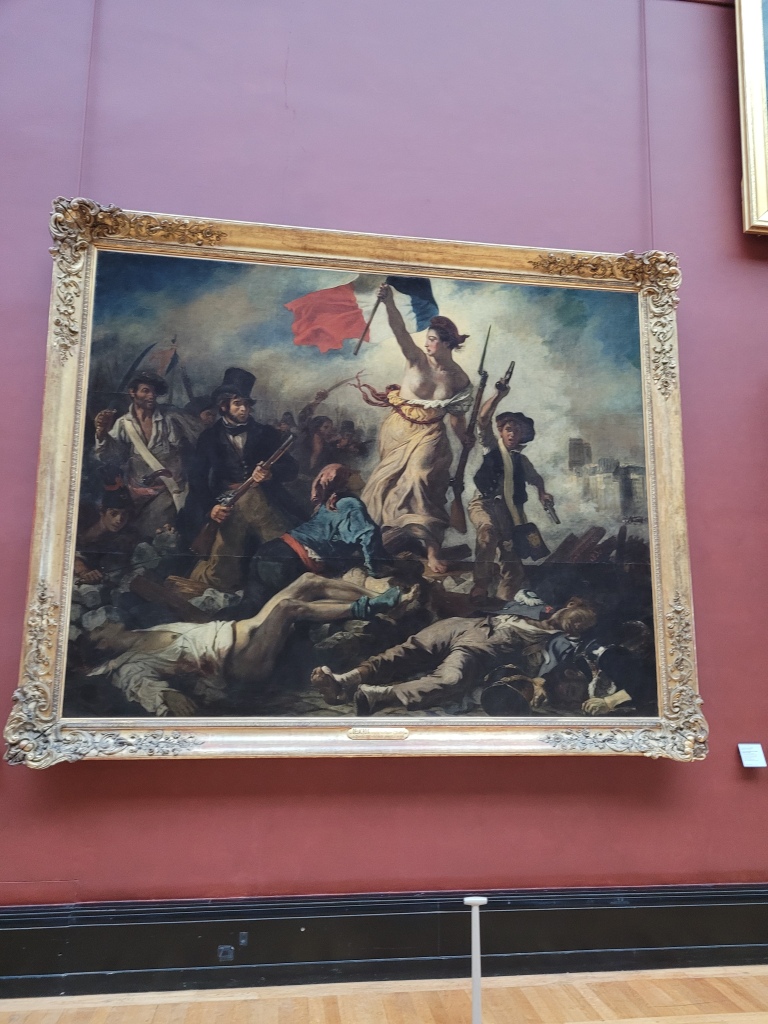


à la prochaine 🇫🇷
 RED RIDING HOOD
Lovely pictures.
LikeLike
Paris has always been on my bucket list and after reading such an amazing post I think I’ve been tantalised to visit it asap!
LikeLike
Paris is on my bucket list. Really informative and interesting post and I loved learning about the famous sites. I learned loads (every day is a school day!).
LikeLike
I love this! Great photos. I’ve always wanted to go to Paris!
LikeLike
Very jealous of the creme brûlée, it looks delicious. The inside of the cathedral is stunning as well.
LikeLike
Very informative post with nice visuals. I went to Paris many many years back and wish you go again.
LikeLike
Paris is gorgeous and your photos show that! I would love to go back to Paris someday. Thank you for all the information in your post!
LikeLike
Paris always looks postcard perfect. But, I’ve heard so many bad experiences or people just calling it overrated that it worries me what has happened to this city of love.
LikeLike
What’s your favorite thing about Paris? I have been only once when I was 10, contemplating giving it another try 🙂
LikeLike
Ehi ehi, next time you’ll go I recommend the Belleville (19th) and the Canal Saint Martin (10th) districts. Less touristy, definitely truer 🙂 (have been living there for 3years) Enjoy!
LikeLike
So true, can always go back to Pari(s)! I’m from Australia and have visited twice too! Great photos and lots of info !
LikeLike
Wow! You really were able to hit all the hotspots! The only place I think we missed were the gardens but it was raining (as you pointed out it does All the time!!). Lovely to bring back so many memories through your photos.
LikeLike
Thanks for sharing your experience.. It’s somewhere I have yet to go see properly and I can’t wait until I do! I’ll definitely be playing the game of trying to spot it on every street as well!
LikeLike
Hey nice.. Post and interesting 😘
LikeLike
I am so amazed with your blog! Definitely one to keep eyes on. You travel to such beautiful places on Earth, you are so blessed! I hope to visit Paris soon. It will always be everybody’s dream. 🙂
LikeLike
I apologise, but, in my opinion, you commit an error. I suggest it to discuss. Write to me in PM.
LikeLike
I am genuinely thankful to the owner of this site who has
shared this fantastic article at at this place.
LikeLike
Hi, i read your blog occasionally and i own a
similar one and i was just wondering if you get a lot of spam responses?
If so how do you protect against it, any plugin or anything you can recommend?
I get so much lately it’s driving me crazy so any assistance is very much appreciated.
LikeLike