

Koki the rooster, Lupo the dog, Burlón the cat and Tonto the donkey. And me. Starring in Brother Grimm’s story in Bremen. 🙂 The story tells they formed a band playing guitar, drums, trumpet and saxophone with the aim of winning a contest in the city of Bremen.
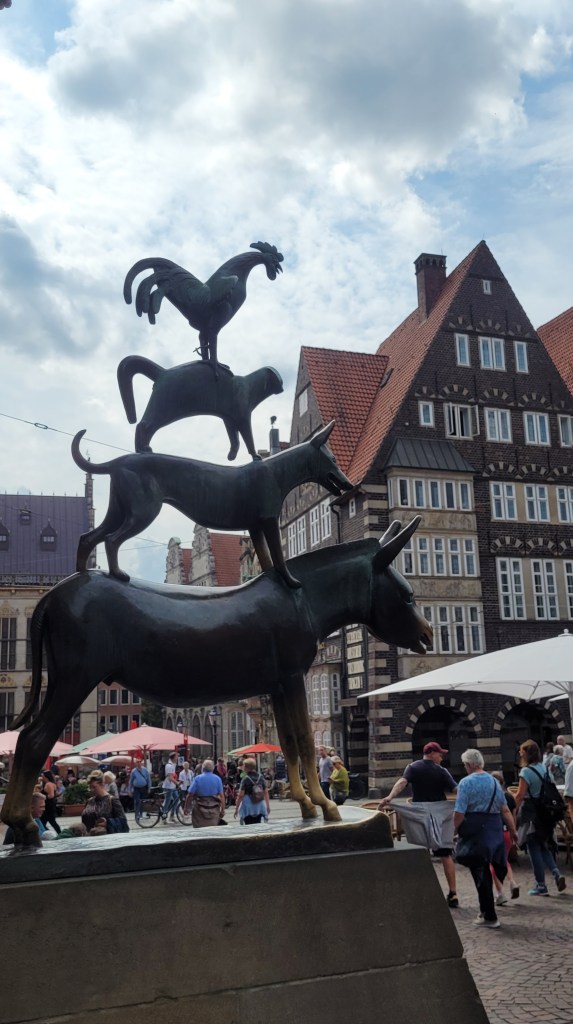
Let’s start at the beginning. In medias res is not my style.
Located in northwestern Germany, Bremen is also known as a beautiful ancient merchant city with the gentle river Weser flowing through. Back in time, Bremen was part of the Hanseatic League, an alliance of trading cities in the late Middle Ages.
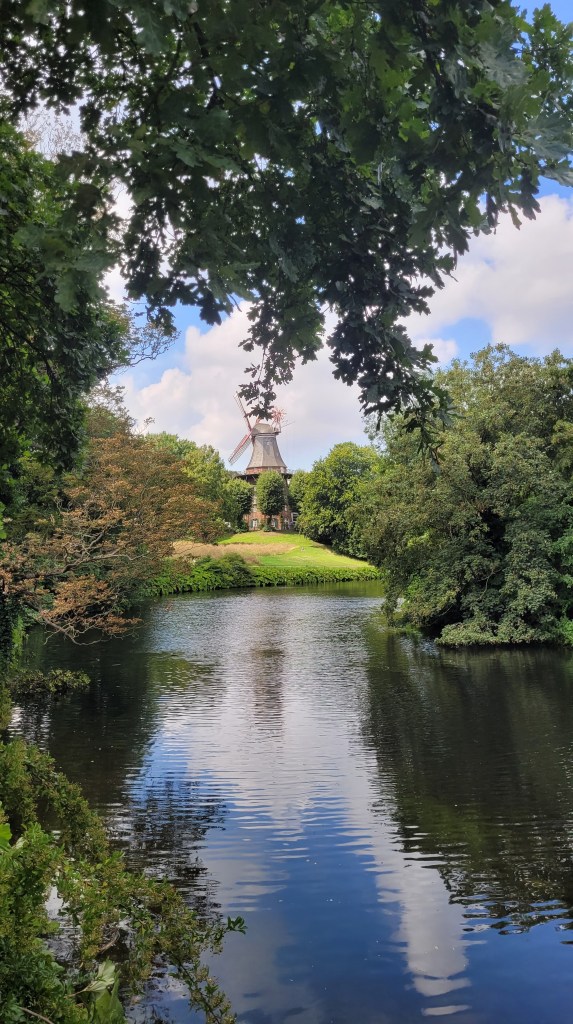
To come to the city and trade was an important activity in Middle Ages. In those times in Bremen, pigs were herded from the farm to the market along Saustrasse (“pig street”), today known as Sögestrasse. Hence the statue of the shepherd with its pigs at the very entrance to the city center.

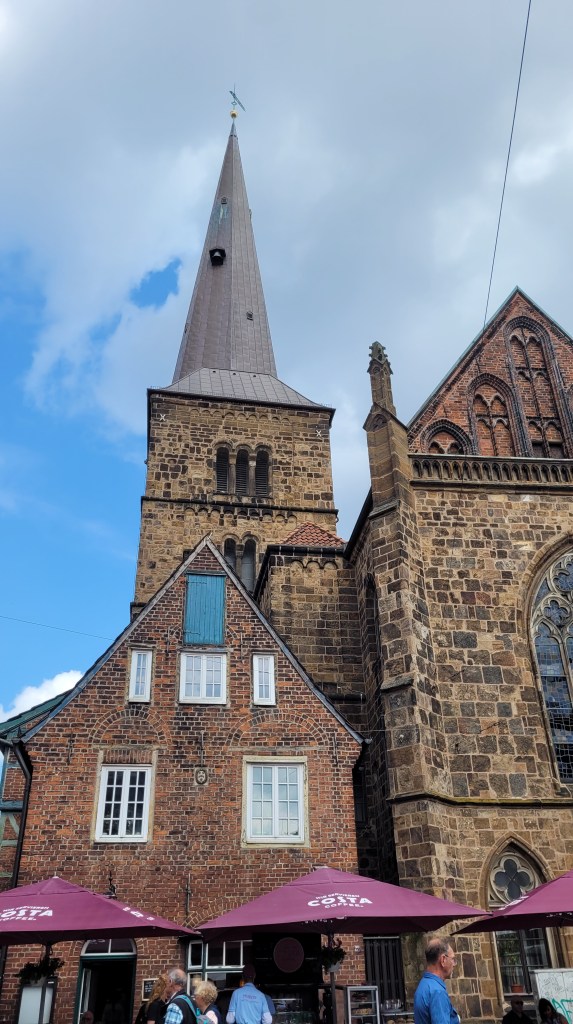
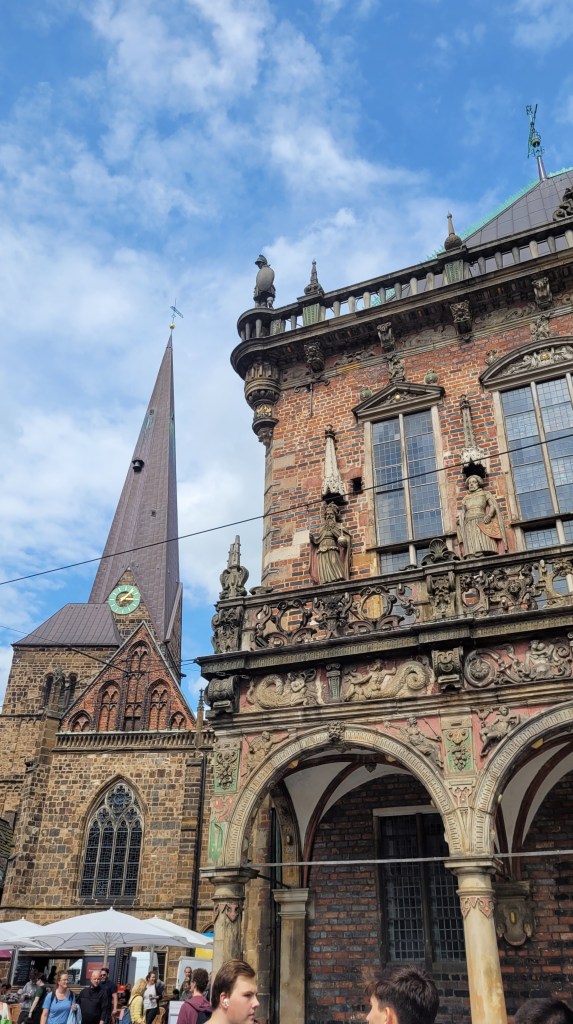
When I arrived to the main square, there was so many items to carefully look around that I got Stendhal syndrome. The Church of Our Lady was open to explore although it was empty from inside. Protestants again. And a fire in 1944.



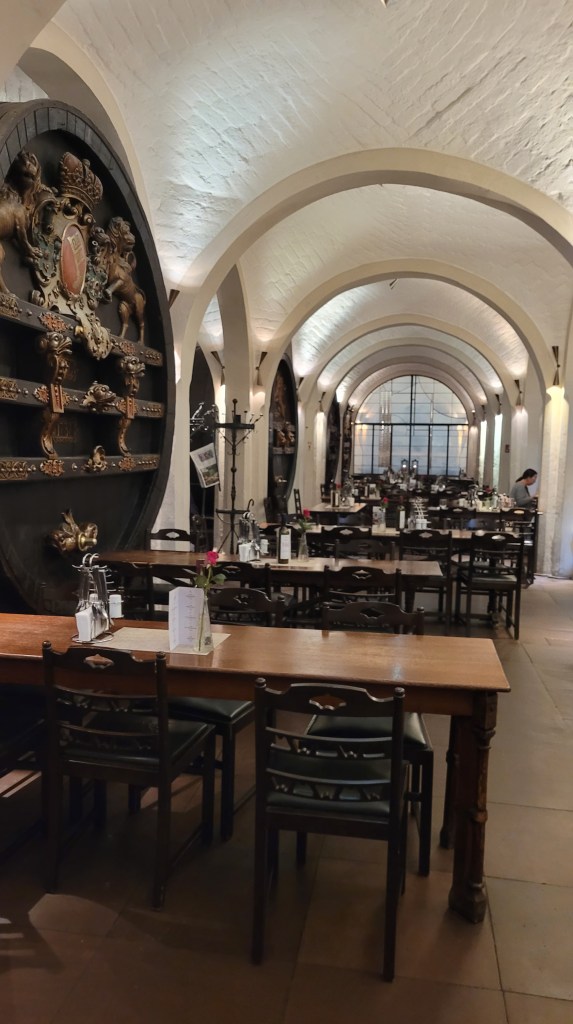
Just next to it is a Bremen Ratskeller – a restaurant in centuries-old cellar with vaulted ceilings. This looked amazing to be explored. Note the old emblem: the keys of Saint Peter with a labyrinth/ path to find a way to God. The emblem is one of the motivfs of this beautiful medieval city.

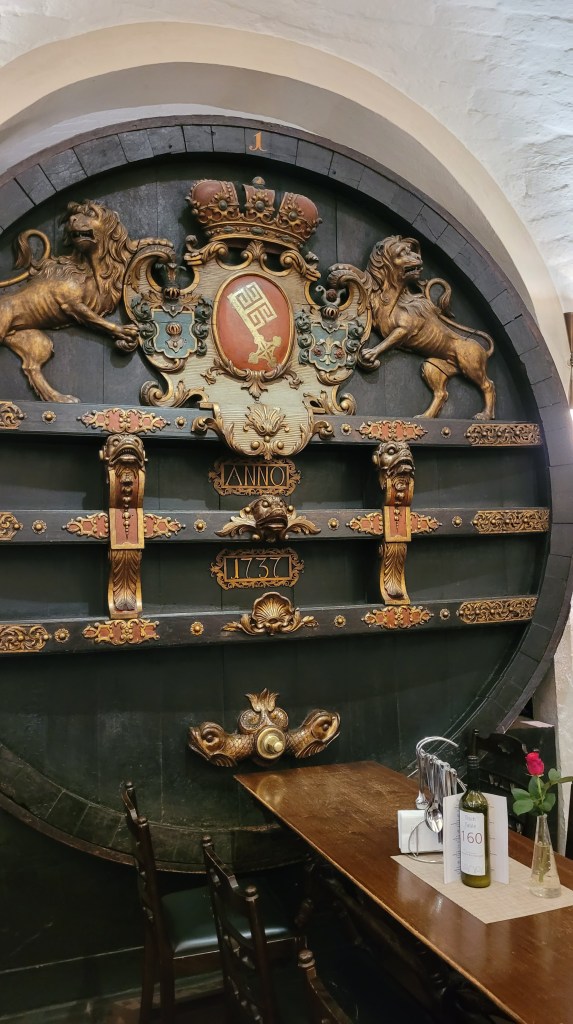
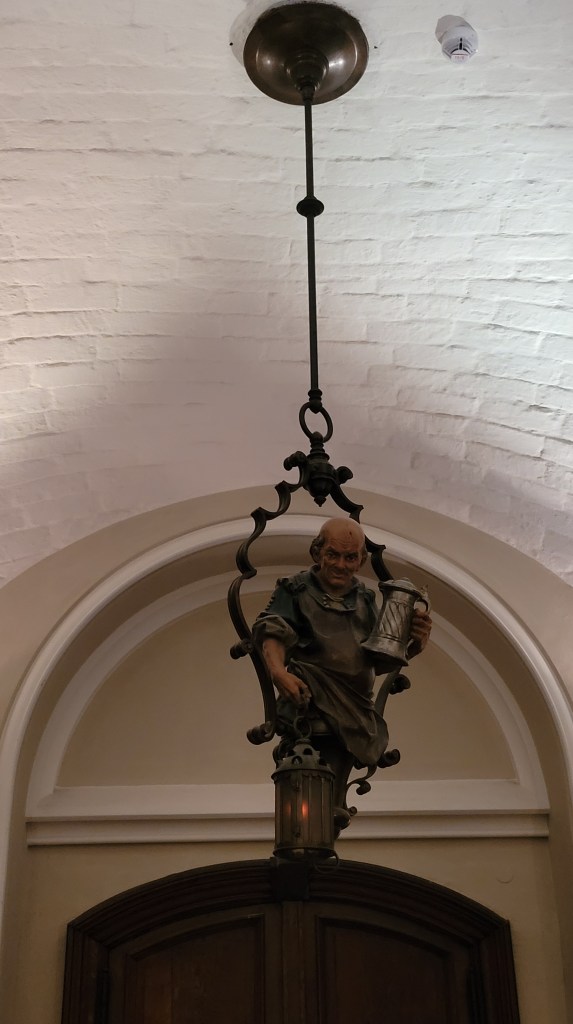
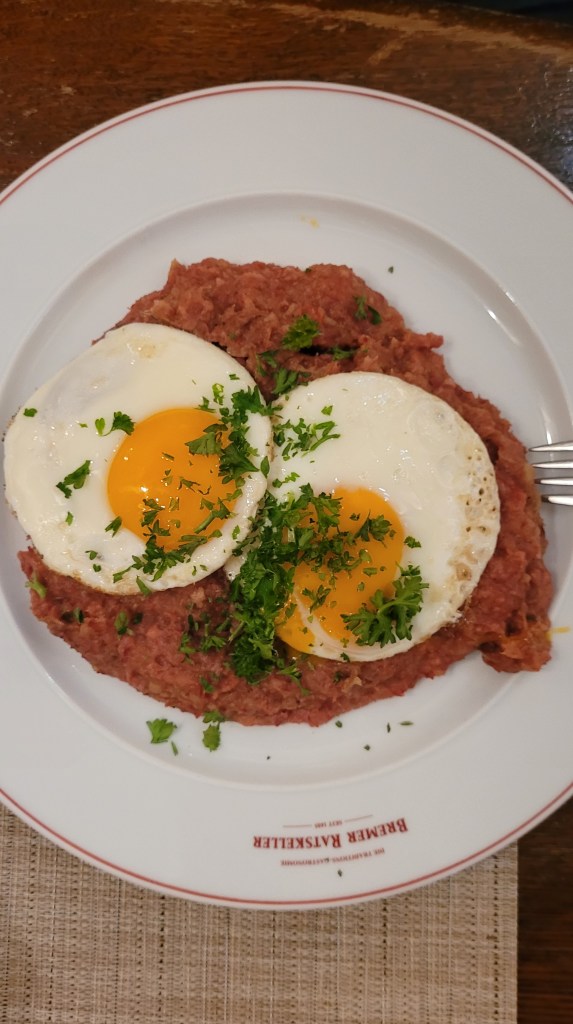
Visiting Bremen you can not help but experience some restaurants with traditional German dishes. We ate home made Labskaus: consisting of salted meat or corned beef, potatoes, onion, pickled herring and fried eggs, served with some pickled radish. Nothing fancy but very local.


The new city hall was built in 1412. And this is the one of the most beautiful city halls I have seen. The typical Gothic architecture here is quite similar to the Town Hall in Brussels with many old buildings surrounding a large square. And just next to it is St Peter’s Cathedral from 13th century.
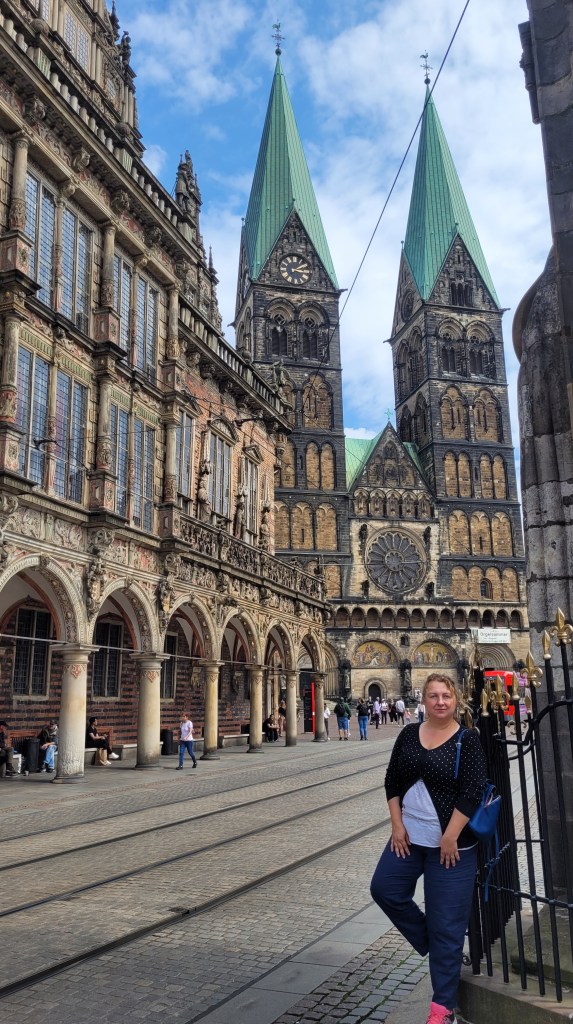


Just look at those details. Wherever you look, there is something symbolic. It is a testimony to the development of civic autonomy in the Holy Roman Empire.

One of my favourite things in Bremen is a statue of Roland, erected in 1404 facing the cathedral, and showing Roland, paladin of the first Holy Roman Emperor Charlemagne and hero of the Battle of Roncevaux Pass. In high school, we had to read La Chanson de Roland. An 11th-century chanson de geste based on the Frankish military leader Roland at the Battle of Roncevaux Pass in AD 778, during the reign of the Carolingian king Charlemagne. It is the oldest surviving major work of French literature so seeing this statue was just a mind blown to me.
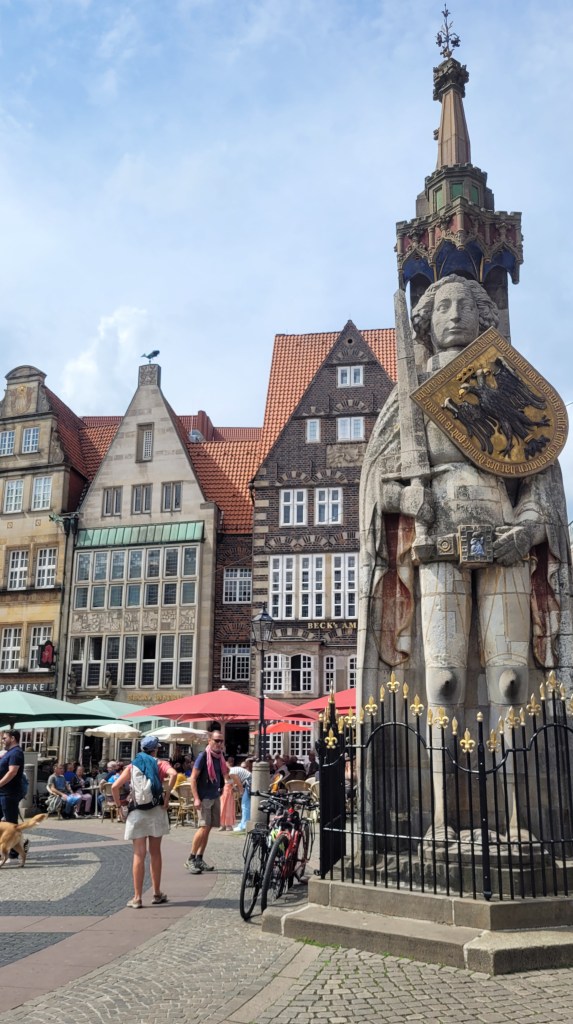
Statues of Roland appear in numerous cities of the former Holy Roman Empire, as emblems of city liberties, Stadtrechte. The Roland statue at Bremen is the oldest surviving example. From Bremen the symbol of civic liberty and freedom spread to other cities and has become a symbol of the new Europe.

While I sit and have a Bremen beer called Becks, here couple of more details spotted in the city bursting of miniature sculptures and stories to tell.


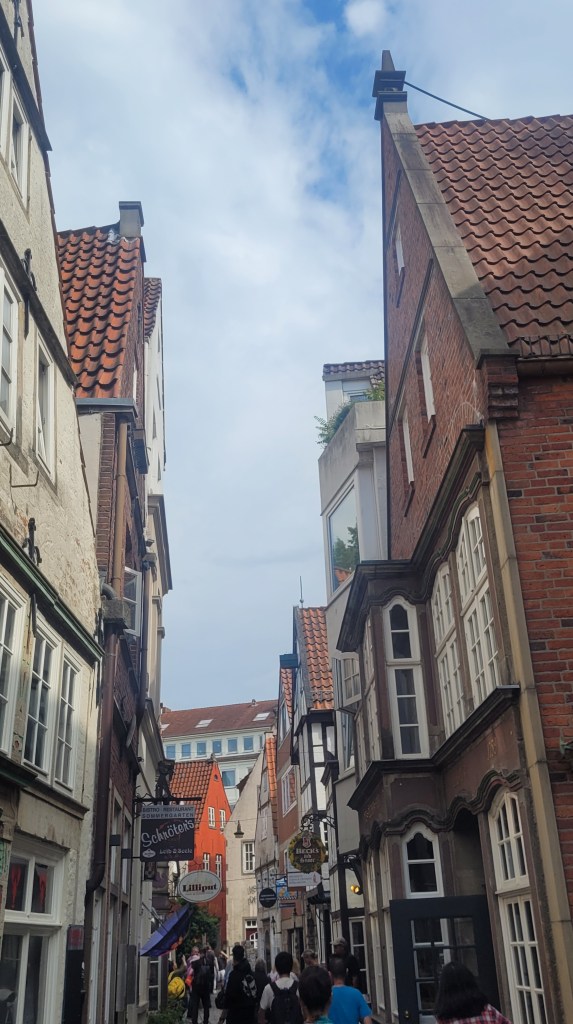
Schnorr Quarter is the oldest neighbourhood in Bremen was once the poorest part of the city, right next to the River Weser, but now it’s Bremen’s most beautiful place. It’s a maze of narrow, cobblestoned lanes lined with well-preserved 15th- and 16th-century buildings. Taking a walk in this quaint, vintage district gives you the opportunity to discover a nice arts and crafts scene, jewellery and clothing shops, as well as cafés and restaurants where you can stop for a break. Bremen people call it “the living room of our town”, which says a lot.

 RED RIDING HOOD